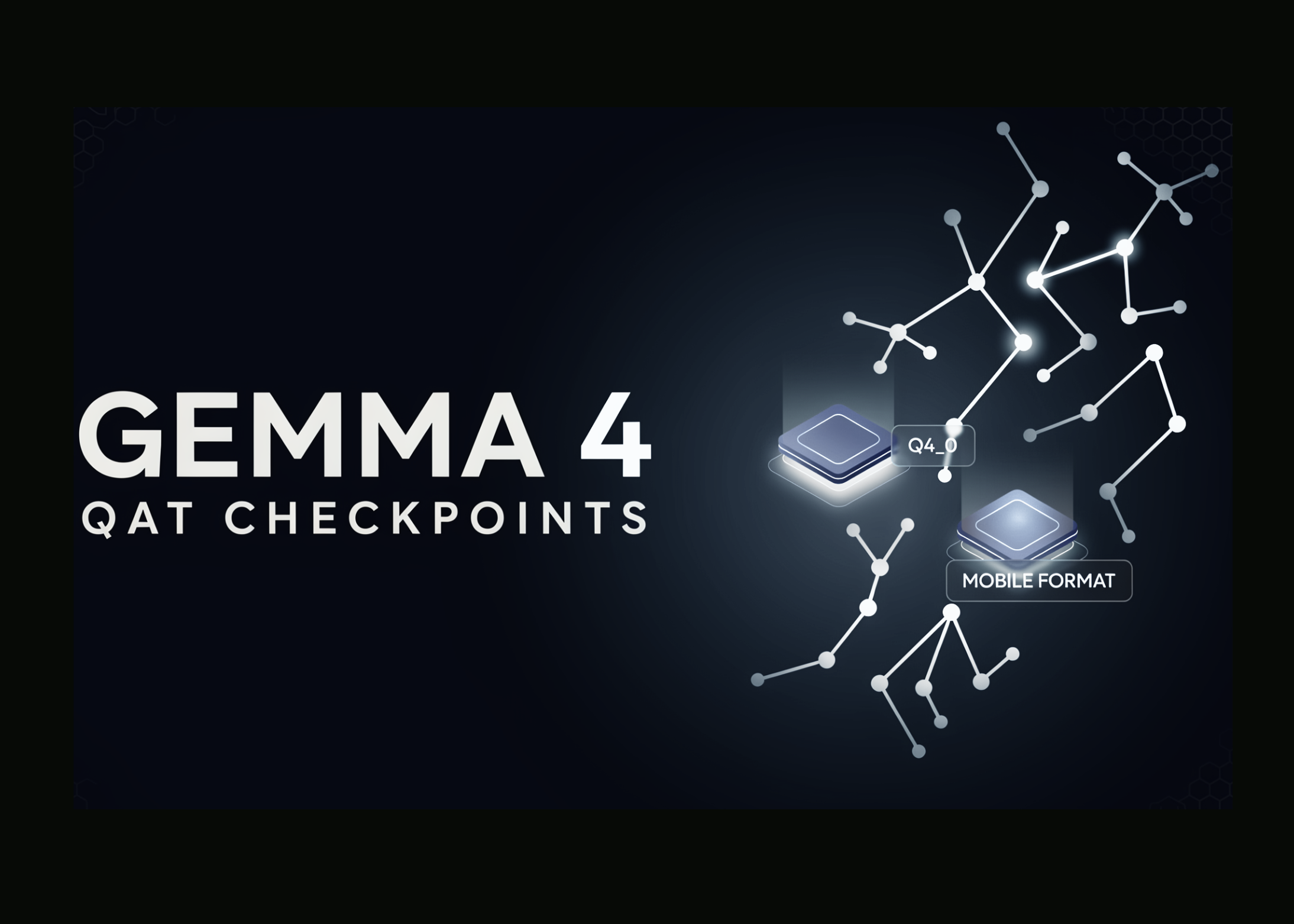
Google DeepMind released Quantization-Aware Training (QAT) checkpoints for the Gemma 4 family. The release targets local deployment on edge devices and consumer GPUs. It follows the Gemma 4 launch in April and a 12B model two days earlier.
We compared the available Gemma 4 edge-model formats using only published numbers. The goal was simple. Show what each precision level costs in memory. Then show what QAT actually changes.
What QAT actually does
Quantization shrinks a model by lowering weight precision. Standard Post-Training Quantization (PTQ) compresses a finished model. That often degrades quality. QAT instead simulates quantization during training. The model learns to compensate for the precision loss.
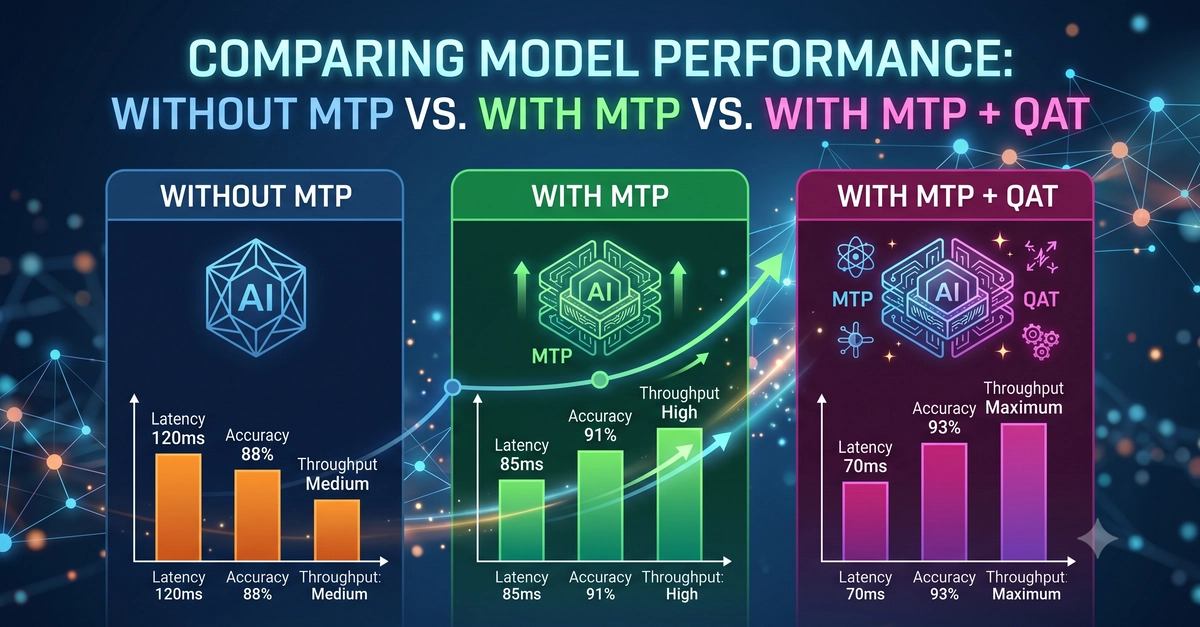
Google’s AI team states its QAT results yield higher overall quality than standard PTQ baselines. Google did not publish Gemma 4 QAT benchmark scores in the announcement. For context, Gemma 3 QAT cut the Q4_0 perplexity drop by 54% using llama.cpp evaluation. We cite that only as prior-generation precedent.