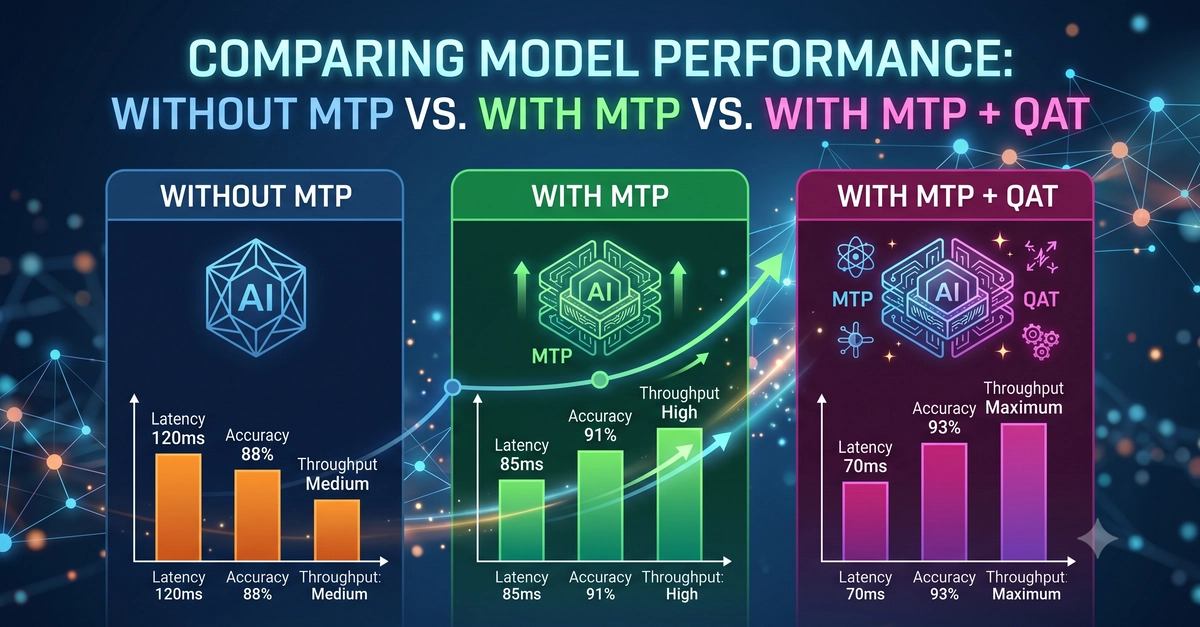
What: Google shipped quantization-aware-trained (QAT) checkpoints for the Gemma 4 family — open weights that were trained to survive being squeezed down to 4-bit (and 2-bit on the decode layers).
Why: Low-bit weights are how a real model fits on a phone: Google reports the compact E2B size lands at about a 1 GB memory footprint, small enough to run on consumer hardware instead of a datacenter GPU.
vs prior: Versus post-training quantization (PTQ) — which rounds the weights to the low-bit grid after training and falls off an accuracy cliff at very low bit-widths — QAT simulates that rounding during training, so the weights learn to sit on the grid in the first place.
Think of it as
a singer rehearsing on a cheap keyboard with only a few keys