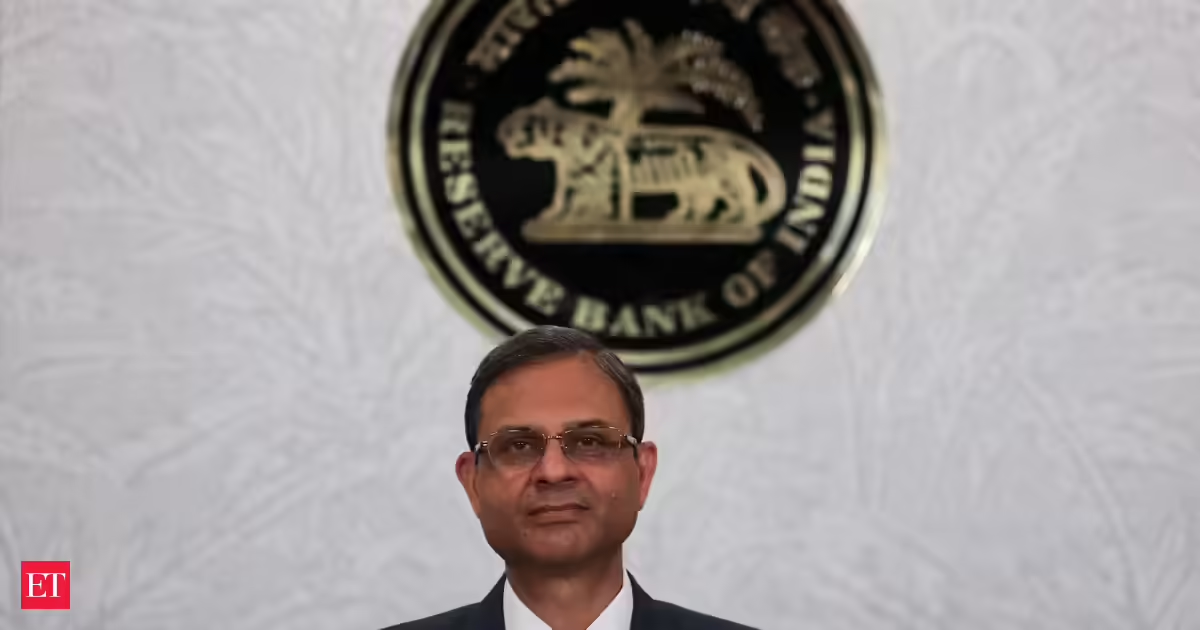
SynopsisIndia's central bank holds interest rates steady despite rising inflation. The focus shifts to stabilizing the rupee with a new dollar deposit scheme. This move aims to attract foreign currency and boost confidence. While offering gains to non-resident Indians, it comes at a significant cost and distorts market rates.IANSIt is a bit of a puzzle for a Monetary Policy Committee with an inflation-targeting mandate to unanimously vote for keeping policy rates and stance unchanged after listing about half a dozen factors that would fuel price rise."Although risks of higher inflation have amplified, the MPC felt it would be prudent to wait for greater clarity to emerge,'' said RBI Governor Sanjay Malhotra.Central banks more inclined towards growth in the past few years have often waited for inflation to get entrenched before biting the bullet. But the fallout has been awkward. The delay in raising the cost of funds post Covid from near zero levels forced steeper increases than it would otherwise have been. In 2022, the RBI had to raise policy rates in an off-cycle meeting.The state of the rupee appears to have overshadowed the threat of inflation. Its record lows and the threat of the less relevant, but psychologically important level of ₹100 to the US dollar, have driven decisions.To prevent a further immediate slide of the currency, the RBI has dusted off its playbook-subsidise dollar deposits. It has said it would bear the cost of hedging of FCNR (B) deposits and external commercial borrowings by state-run companies.Also Read | RBI MPC highlights: Top decisions announced by Governor Sanjay Malhotra & CoIn a way, this is also a throwback to the pre-liberalisation era when the central bank had a programme known as FCNR (A) where it bore the exchange rate risk but discontinued it due to high costs.The latest move is estimated to bring in about $40 billion to $50 billion which would be sufficient to arrest the slide and bring in the much-needed confidence. With this and the scrapping of tax on government bonds for foreigners, policy makers have bought time. But this comes with a huge cost and distorts the markets.Prevailing global market rates indicate that banks may have to offer as much as 6.5% to lure US dollar deposits based on the current swap rates of about 4%. Factoring in hedging costs of about 3.5%, the price the RBI may have to pay works out to as high as 10%.While non-resident Indians are set to gain from the country's economic pain, it also makes it easier for banks to raise overseas funds than to struggle to lure domestic savers for deposits. For banks that have been paying 7.7% for one-year market funds, it's a blessing.Also Read | India can return to 7% GDP growth path in FY28 with macro stability, supply measures: CEA NageswaranThis comes at a time when the MPC has decided to keep the policy rate unchanged at 5.25% despite forecasting inflation above its target of 4%, though it has a two-percentage-point leeway.Indian savers have reasons to feel deprived. The common man is already feeling the pinch. Fuel and vegetable prices are up at retail outlets. The second order effect is felt with consumers being charged disproportionately by transporters. It is a matter of time before this feeds into the rest of the economy and becomes a spiral.Beyond the war-triggered surge in bond yields, fiscal deficits in the developed world are beginning to worry bond vigilantes. In a connected world, an emerging economy with a trade deficit cannot afford to have a narrow yield gap with the US treasuries. High equity valuations are not only deterring inflows but becoming an incentive to sell.It isn't clear whether the MPC debated the lack of capex by the private sector despite lower rates and whether keeping it low despite inflationary pressures would serve the purpose of fuelling growth.The Indian government and companies are already paying higher market prices for funds. If the geopolitical situation transforms to become benign, the MPC's bet may pay off. But if inflation expectations gain momentum, it's only a question of raising rates-when and not whether.(Disclaimer: The opinions expressed in this column are that of the writer. The facts and opinions expressed here do not reflect the views of www.economictimes.com.)Read More News on
For a few dollars more: Inflation bypass can hurt
India's central bank holds interest rates steady despite rising inflation. The focus shifts to stabilizing the rupee with a new dollar deposit scheme. This move aims to attract foreign currency and boost confidence. While offering gains to non-resident Indians, it comes at a significant cost and distorts market rates.
709 words~3 min read