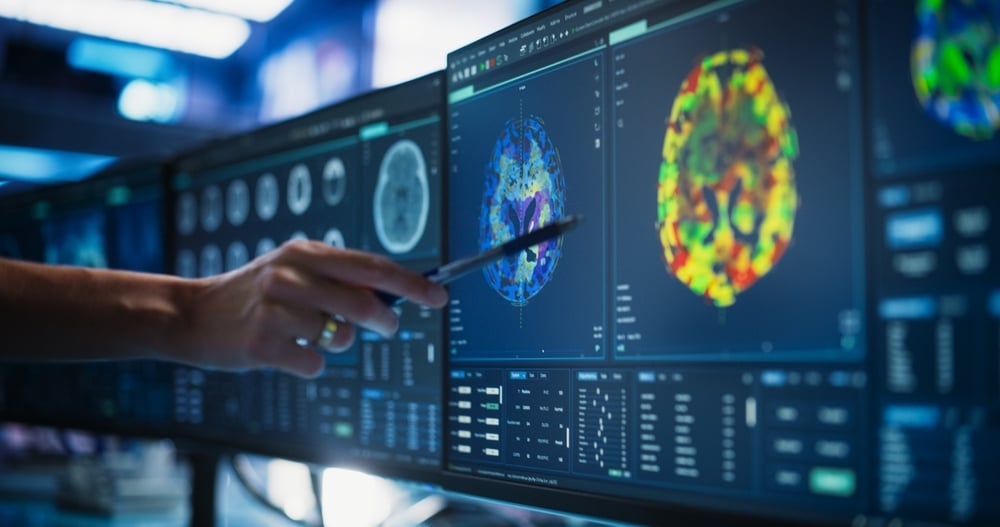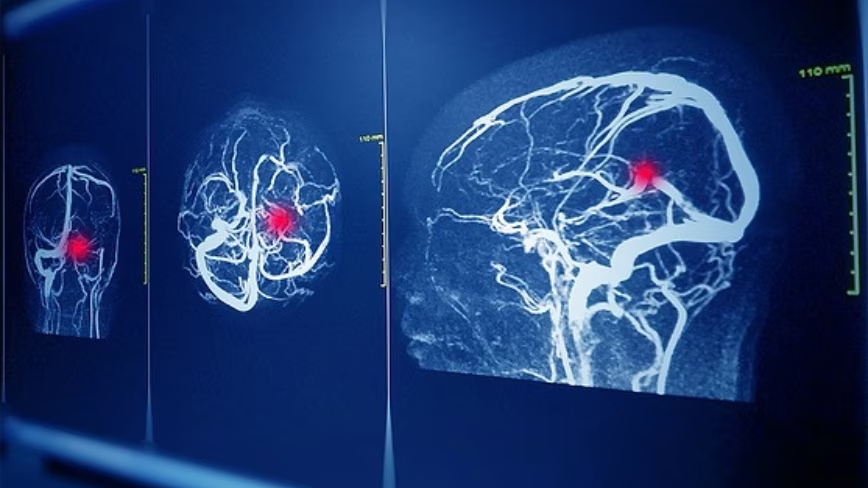
The CLEAR can improve early disease detection, especially in cancer and neurological disorders, and aid in understanding immune responses.
| Photo Credit: Getty Images
Researchers at the Jawaharlal Nehru Centre for Advanced Scientific Research (JNCASR) have developed an imaging platform which can transform protein imaging and facilitate detection of cancer and neurobiological diseases.The imaging platform, Cleavable Light-Erased Antibody Reporter (CLEAR), can help visualisation of an unprecedented number of proteins within the same biological sample using just a single fluorescent marker.Primary orchestratorsAccording to the Department of Science and Technology, proteins are the primary orchestrators of biological function and remain the principal targets for therapeutic intervention, as well as key markers for disease diagnosis.“A comprehensive proteomic map of a tissue sample–capturing the identity and precise spatial organisation of every protein within its native context–could help pathologists in diagnosing cancers or understanding complex neurological disorders. However, mapping a large number of proteins within their native spatial context has remained a major challenge,” the department said.In order to overcome this challenge, the CLEAR can enable scientists to visualise a large number of proteins within the same biological sample using a single fluorophore.While a team led by Sarit S. Agasti designed and synthesised the CLEAR probes, developed the imaging workflow and validated the platform across different biological systems, collaborative efforts with researchers at the Indian Institute of Science (IISc) helped demonstrate the platform in complex biological settings, particularly in immune cell systems.The experimental design, probe chemistry and imaging analysis were carried out within the team.The researchers introduced a light-cleavable probe system that enables repeated cycles of labelling and imaging within the same spectral window.“Unlike existing multiplexing techniques, the CLEAR combines high multiplexing capability with speed, high spatial resolution, and compatibility with delicate biological samples, including live cells. This approach fundamentally redefines multiplexed imaging by enabling virtually unlimited protein visualisation without requiring multiple fluorophores,” the department said.Disease detectionThe CLEAR can improve early disease detection, especially in cancer and neurological disorders, and aid in understanding immune responses.“In the long term, the technology could contribute to precision medicine by providing comprehensive molecular insights that guide targeted therapies. The technology aligns with global efforts toward spatial proteomics and precision medicine,” the department said. Published - June 05, 2026 08:10 pm IST