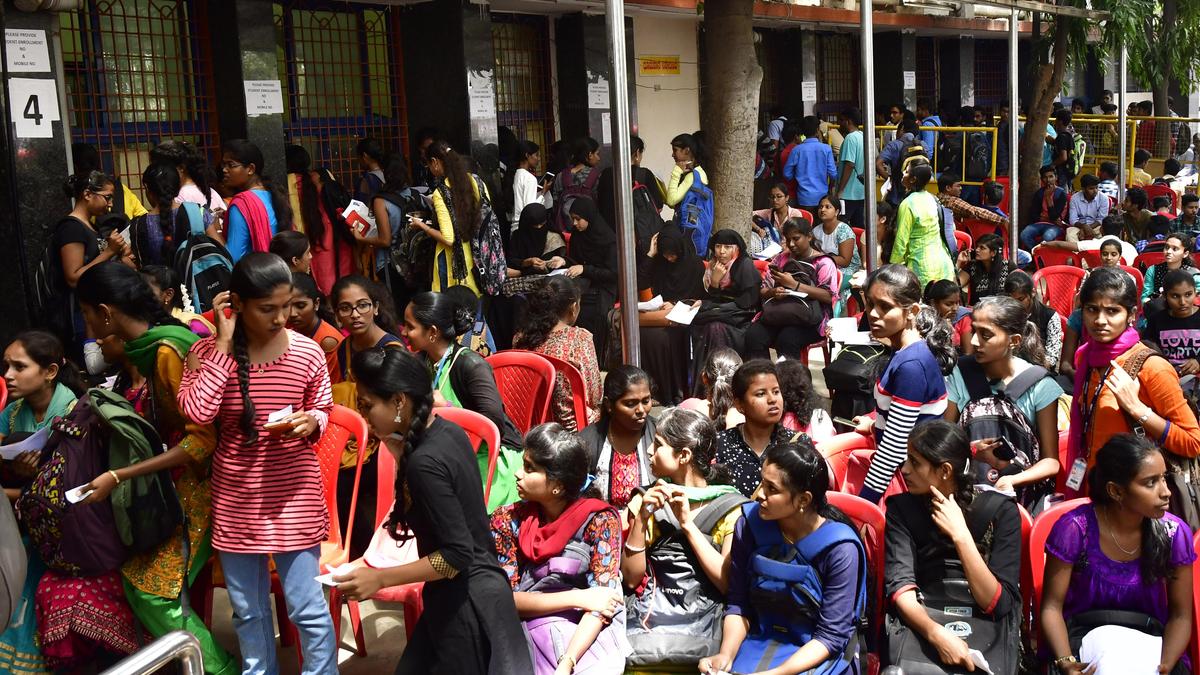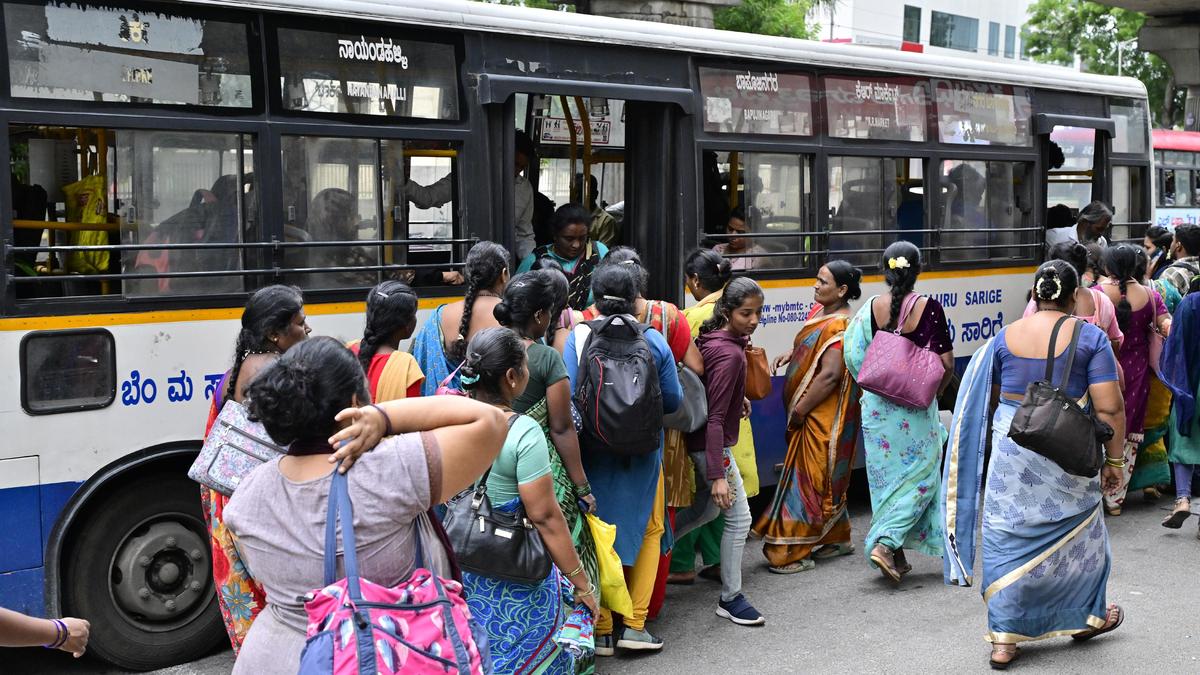
At present, nearly 10 lakh students across Karnataka avail concessional bus passes issued by road transport corporations every year.
| Photo Credit: K. MURALI KUMAR
The newly appointed Chief Minister D.K. Shivakumar’s decision to provide free bus travel to students across the State has been welcomed as a measure that could boost access to education, but transport officials have expressed concerns about its financial impact on the State-run road transport corporations (RTCs), which are already grappling with delayed reimbursements under the Shakti Scheme.Officials from the four RTCs told The Hindu that while the move would benefit lakhs of students, particularly those from rural and economically weaker backgrounds, its success would depend on timely reimbursement by the government.At present, nearly 10 lakh students across Karnataka avail concessional bus passes issued by the RTCs every year. Out of this, seven lakh students from general category avail the pass, while three lakh students from SC/ST community avail the student passes which is reimbursed through the Scheduled Castes Sub Plan (SCSP) and Tribal Sub Plan (TSP) programme of the Social Welfare Department. According to the Transport Department officials, these passes generate around ₹70 crore in annual revenue for the corporations.“Women students are already travelling free under the Shakti Scheme. Male students currently use concessional passes issued by the RTCs. If the government reimburses the revenue loss arising from the new scheme, similar to the Shakti model, there should not be any major issue for the corporations,” a senior RTC official said.Reimbursements for Shakti scheme pendingHowever, the transport corporation sources pointed out that the RTCs are still awaiting substantial dues from the government under the Shakti Scheme, which provides free bus travel to women.According to official data accessed by The Hindu, the four RTCs spent ₹17,647.50 crore on operating services under the scheme between June 2023 and February 2026. During the same period, the government released ₹13,073.75 crore towards reimbursements, leaving pending dues of ₹4,573.75 crore.A source in one of the corporations said that the delay in reimbursements has already put pressure on the finances of the RTCs. “Operational expenses such as employee salaries, fuel costs, fleet maintenance and procurement of spare parts continue to rise. While the RTCs are committed to implementing welfare schemes, delayed payments affect cash flow and place additional stress on day-to-day operations. If reimbursements are released on time, the free student travel scheme can be implemented smoothly without creating a financial burden on the corporations,” the source said.Transport experts echoed similar concerns, saying that welfare initiatives such as Shakti and free student travel have significant social benefits but should not come at the expense of the financial sustainability of public transport operators.“Public transport schemes should benefit both passengers and the corporations that deliver the service. Free travel for students is a welcome step that can improve educational outcomes and mobility. However, the government must ensure prompt reimbursement so that RTCs can continue expanding services, modernising fleets and improving connectivity in rural areas,” Transport expert M.N. Srihari said, adding that a financially healthy the RTC network remains essential for ensuring affordable and reliable transportation across Karnataka. Published - June 05, 2026 08:38 pm IST