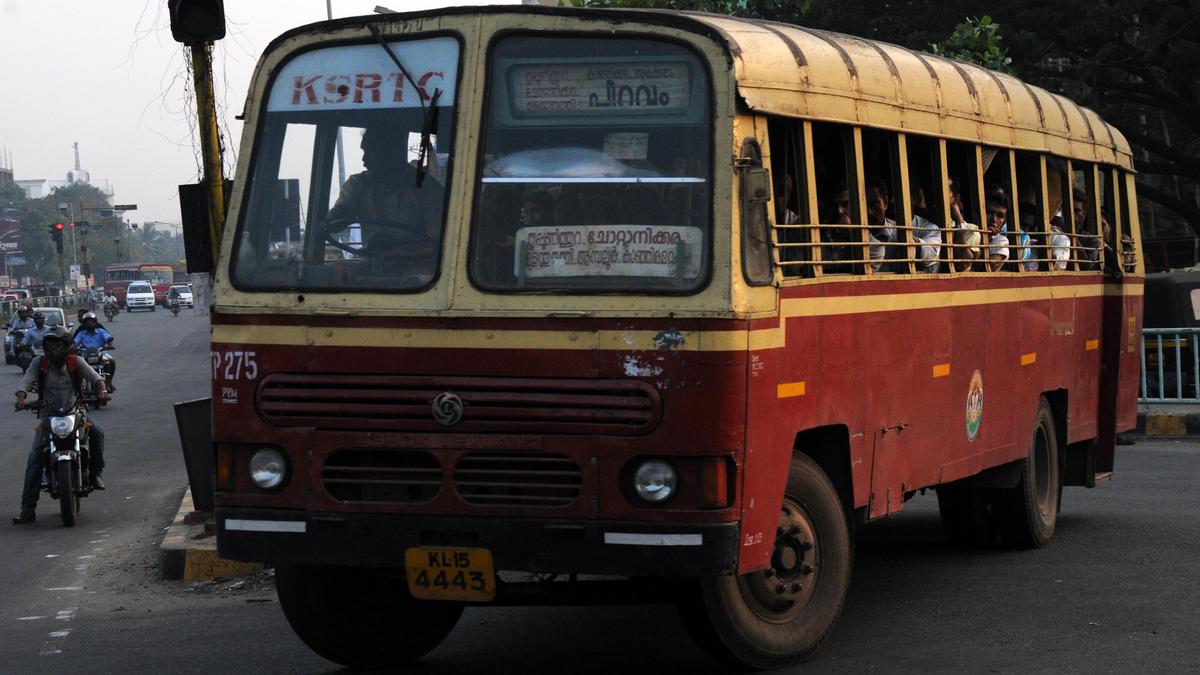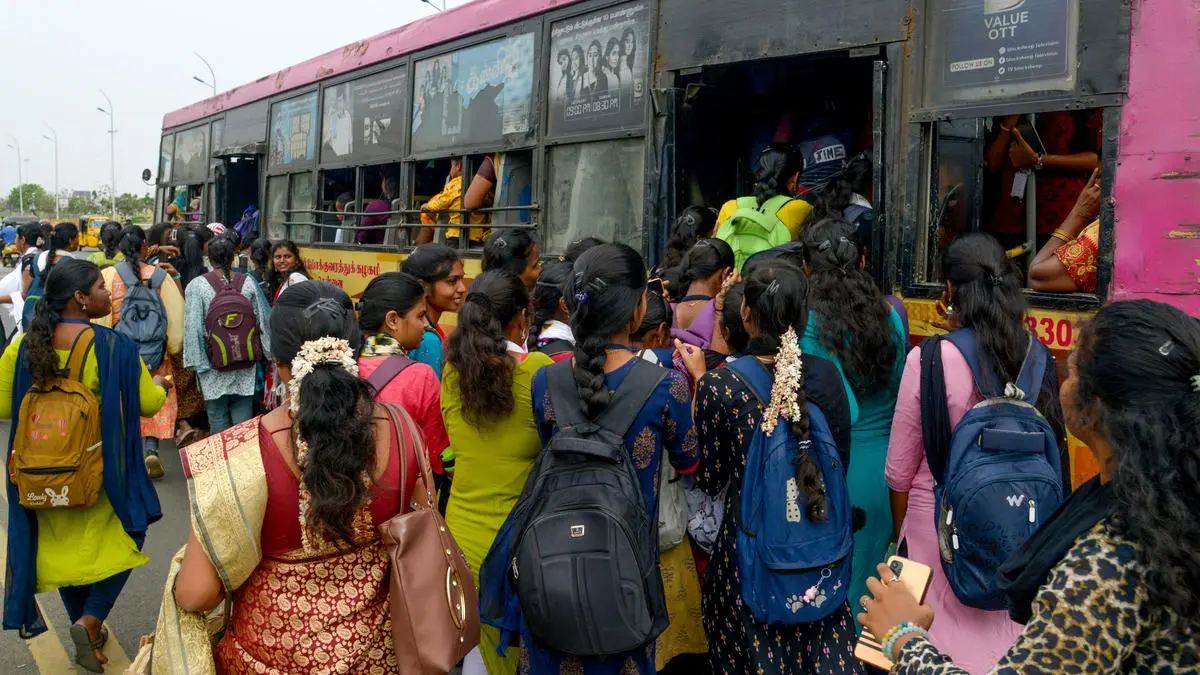
Free bus travel has encouraged more women to use public transport
| Photo Credit:
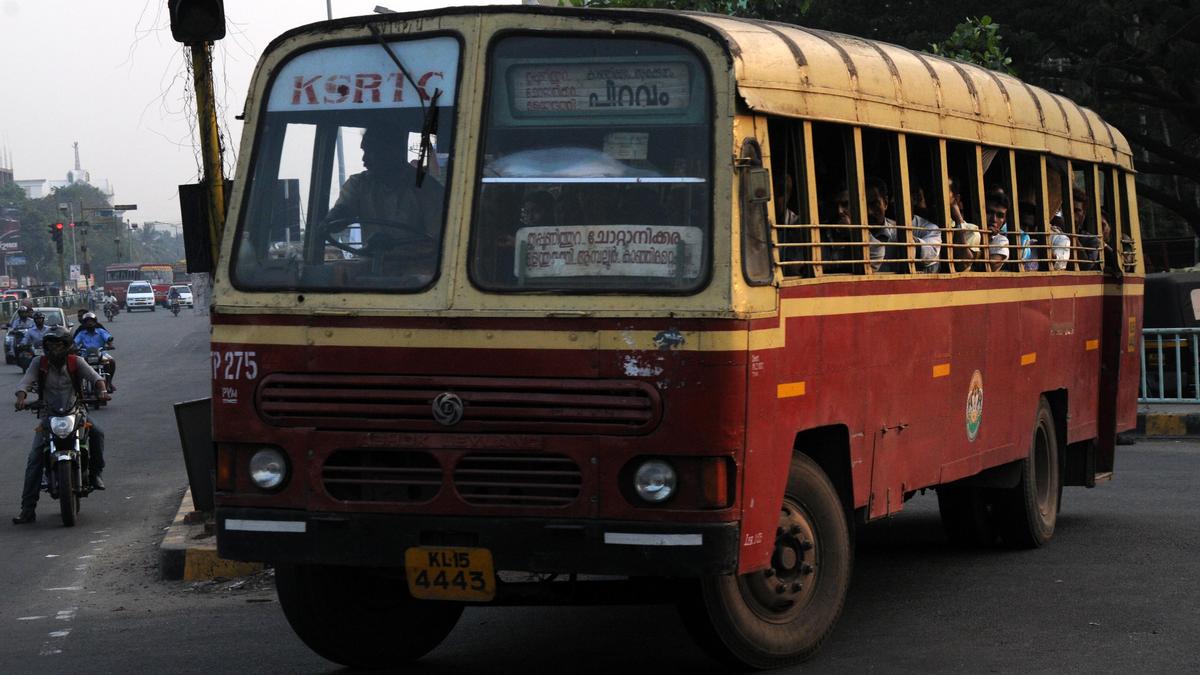
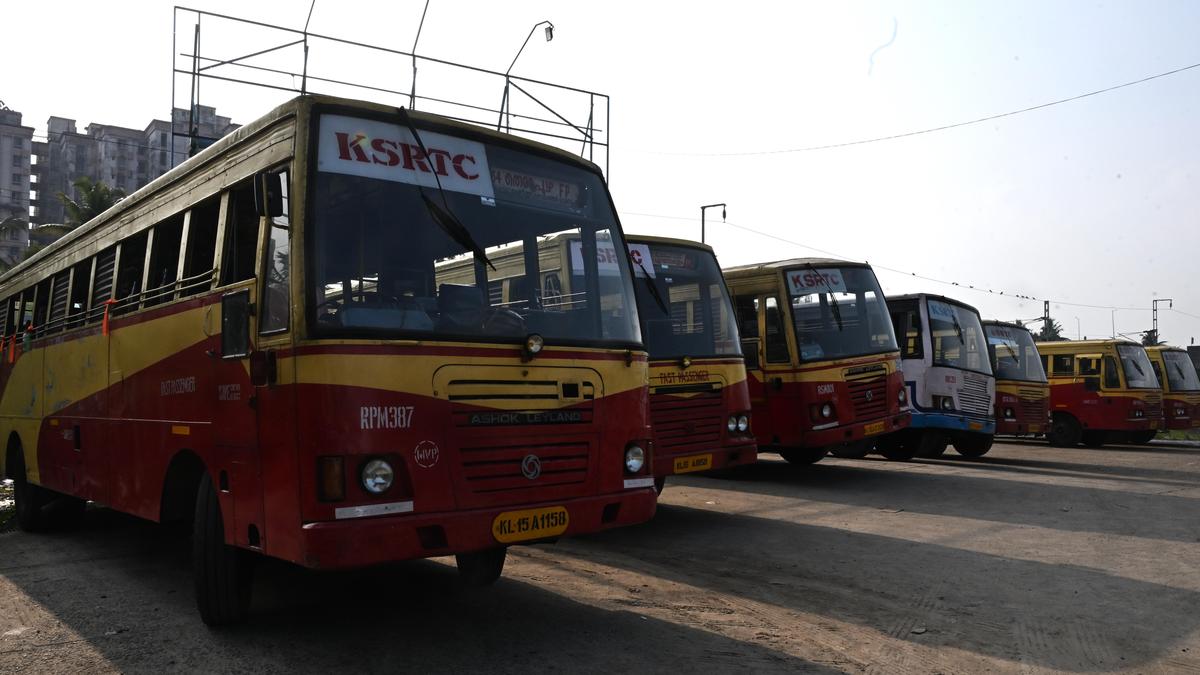
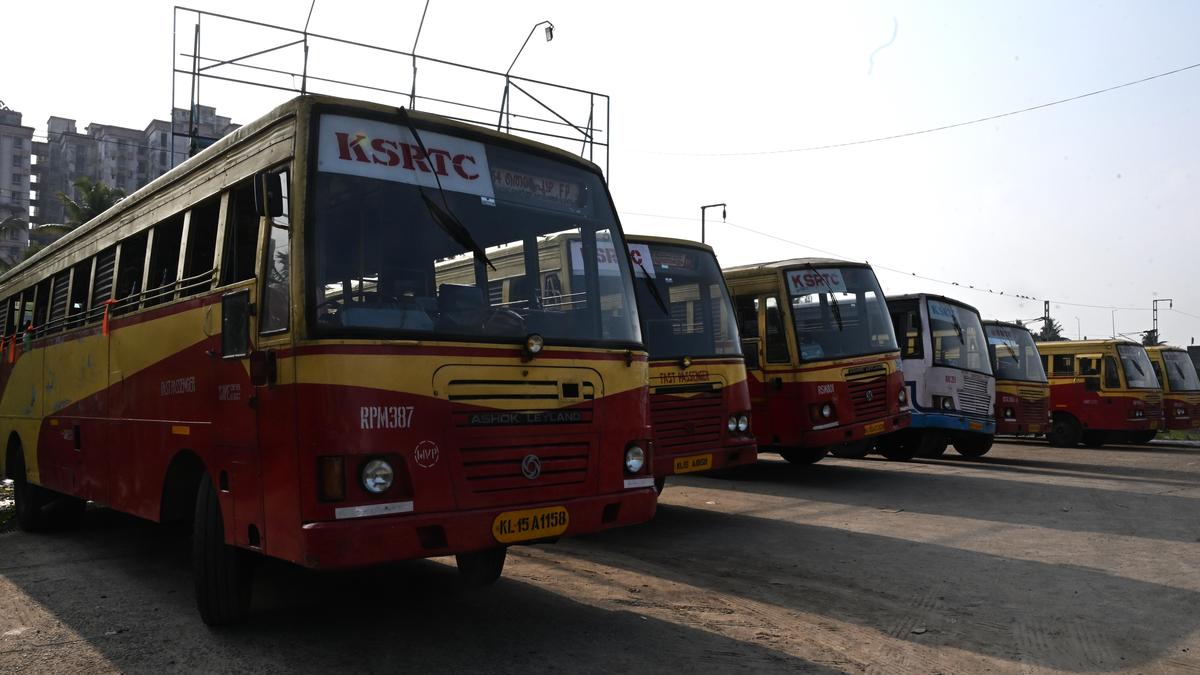
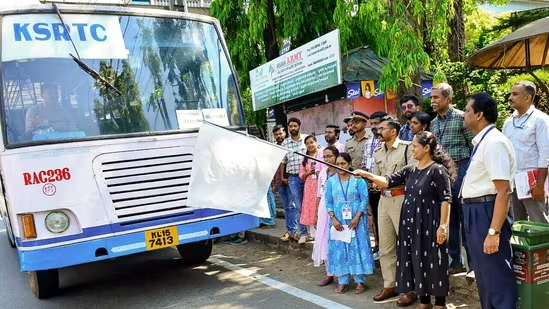
The Kerala government’s proposal to provide free travel for women on Kerala State Road Transport Corporation (KSRTC) buses has triggered an important policy debate.The scheme is to launch on June 15 covering ordinary buses during the first 100 days. The government proposes to conduct a feasibility study before extending it to Fast Passenger buses in the subsequent phases.While the initiative aims to enhance social welfare, its implementation is projected to impose a considerable financial commitment on the State treasury, amounting to more than ₹712 crore annually.Nevertheless, according to the 2022 World Bank report, women account for nearly 84 per cent of public transport trips in India, making this scheme both relevant and worthy of careful discussion.Therefore, evaluating such schemes requires consideration not only of their direct fiscal costs but also of the unseen socio-economic gains and positive spillover.Comparable schemes are in place in other States, such as Tamil Nadu, Punjab, Delhi and Karnataka, which have made public buses free for women. Delhi has seen an increase of over 40 million availing free bus services in the first nine days of the programme.Economic gainsIn Tamil Nadu, the proportion of women passengers boarding buses rose from 40 per cent in July 2021 to 61 per cent in March 2022. The survey conducted by Civic Action Group (CAG) among 3,000 women in Tamil Nadu clearly showed that the scheme has boosted mobility and enhanced social inclusion across sectors.The economic advantage for women is substantial as well. The free fare is beneficial, particularly since short-distance travel on Indian public transport systems are often more expensive, which women mostly undertake.Now, these additional savings for women are being directed toward more useful household expenses, which in turn enhances their autonomy. Since women have access to free bus travel through such schemes, they may be able to travel more for leisure without drawing from household finances.As a result, they may enjoy more “me time,” which many women often sacrifice due to financial constraints.Moreover, greater use of public transport among women contributes to sustainability and supports the attainment of other Sustainable Development Goals (SDGs), beyond gender equality.Pain pointsDespite these advantages, the scheme is not without its drawbacks. Experience from Tamil Nadu and Karnataka suggests that free transport can lead to overcrowding in public buses.Additionally, in Kerala, women passengers may increasingly shift to KSRTC buses after the scheme’s implementation, potentially affecting the State’s broader private bus ecosystem. Private bus operators have already expressed concerns that free travel schemes could severely impact their revenues.Moreover, there are regional disparities that need to be considered, as private buses outnumber government buses in northern Kerala. Unless the State increases the number and frequency of government buses, women from the northern districts will not be able to fully benefit from the scheme.The debate around Kerala’s free bus scheme for women should not stop at its price tag. Kerala’s decision to undertake a comprehensive study before the full-fledged implementation of the scheme should be welcomed.The government can constitute an expert committee to conduct a cost-benefit analysis of the initiative.Inclusive travelFurther, as recommended by the 2022 World Bank study, the government should prioritise obtaining gender-segregated data on travel patterns and accessibility issues.While fare-free bus transport schemes are one option for promoting gender-responsive public spaces for mobility, addressing financial sustainability concerns also becomes a priority.Beyond free public transport, it is also important to consider additional actions such as increasing the supply of buses during off-peak hours, well-maintained comfort stations and other measures that enhance the efficiency of gender-responsive transport systems.In addition, inclusive facilities, adequate toilets and accessible amenities for persons with physical disabilities should be ensured to promote equitable mobility for all.Ashmy Tom is an Assistant Professor at the Department of Economics, Christ University, Bengaluru; Kavitha Nambiar is a Research Scholar at Madras School of Economics, ChennaiPublished on June 9, 2026