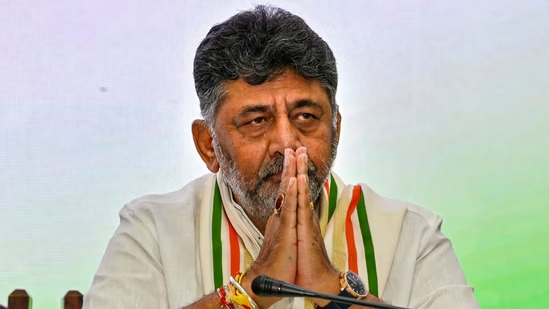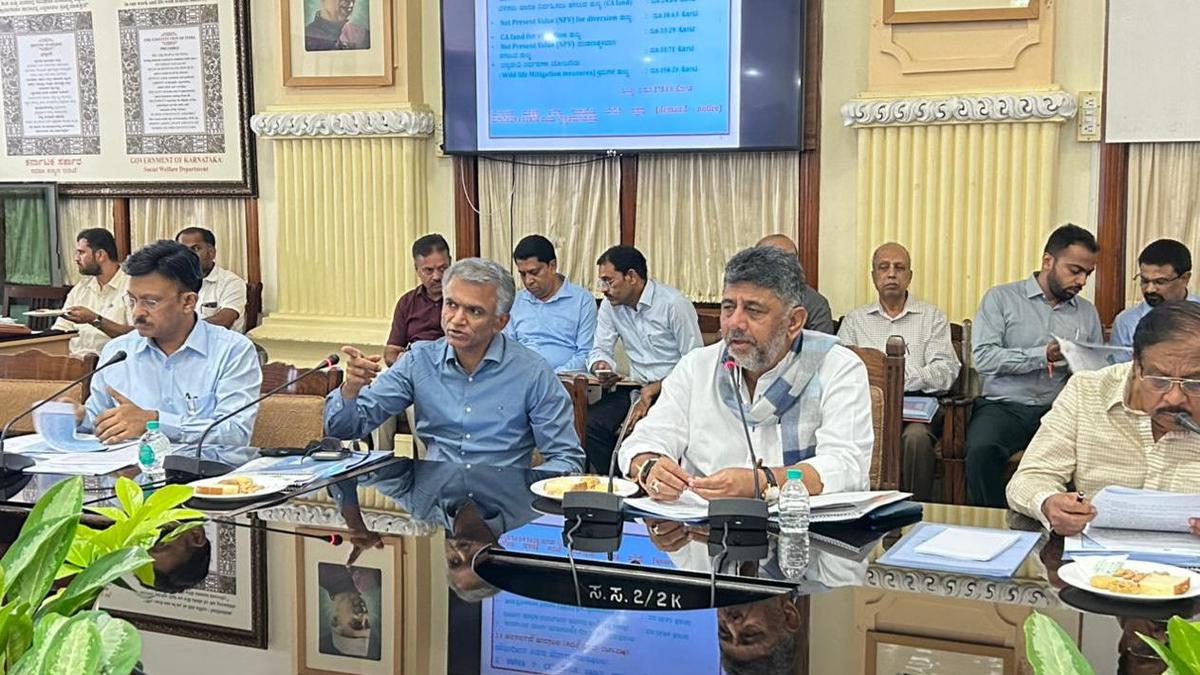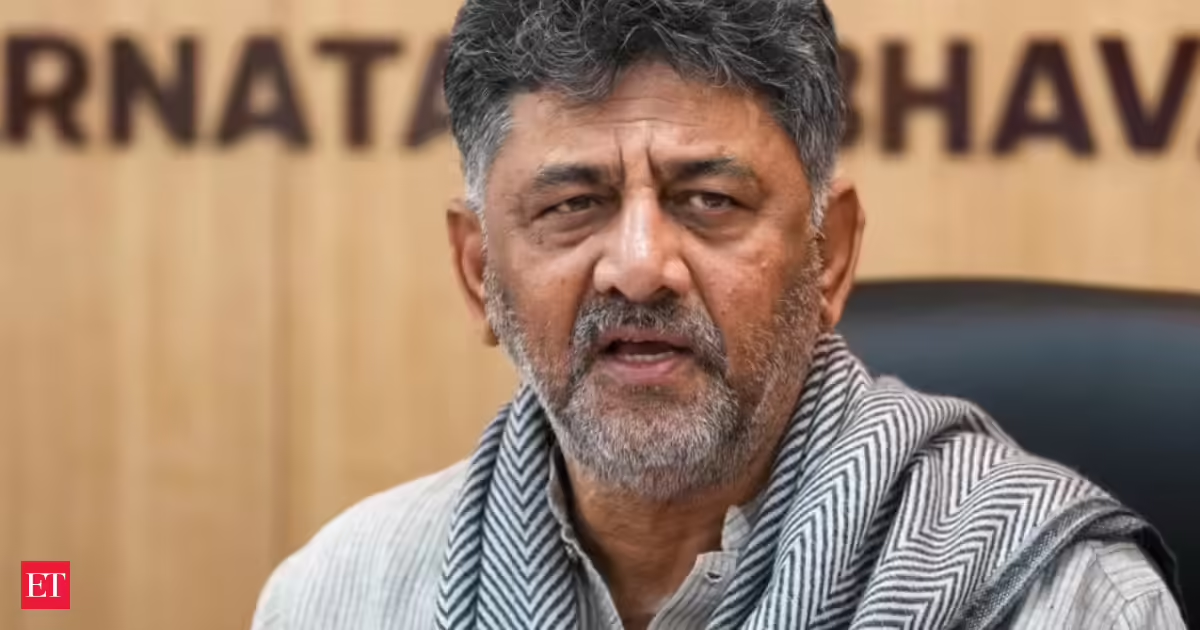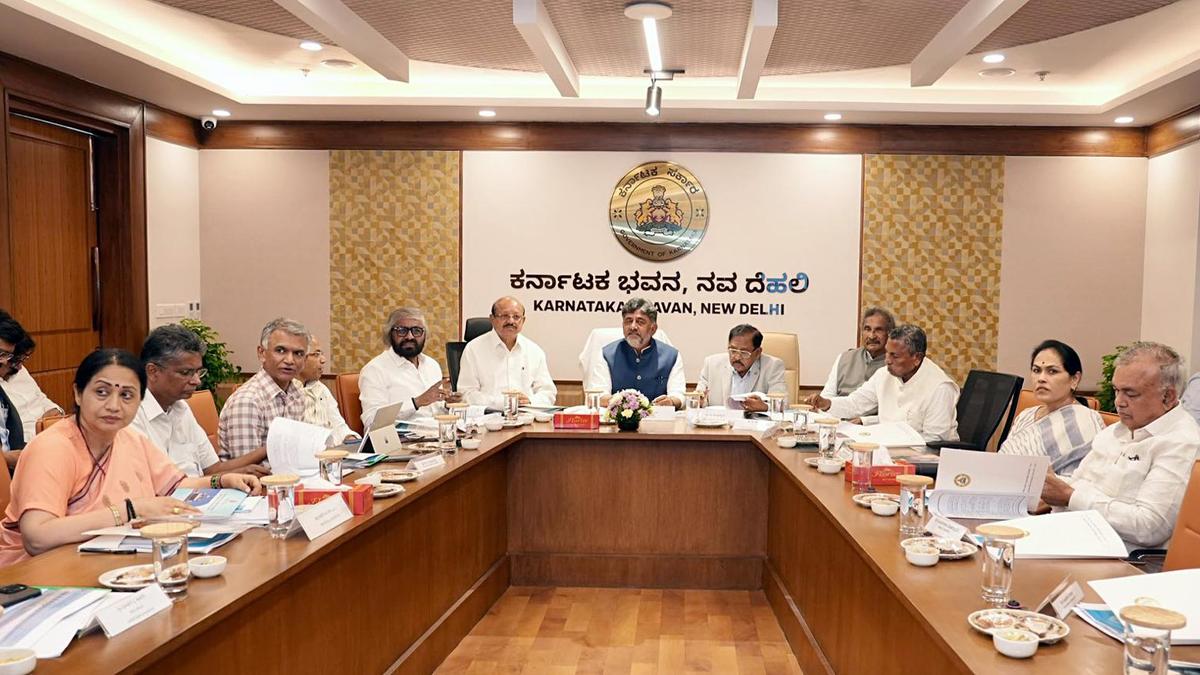
Chief Minister D K Shivakumar on Wednesday urged Union Housing and Urban Affairs Minister Manohar Lal Khattar to expedite approvals for a series of infrastructure and mobility projects in Bengaluru under the Centre's Urban Challenge Fund (UCF), saying the initiatives are crucial to tackling the city's growing traffic congestion and mobility challenges.In a letter to the union minister, Shivakumar said projects worth Rs 13,549 crore are eligible for support under the UCF and sought speedy approvals and release of committed central assistance."These projects will significantly improve urban mobility and help address traffic congestion in Bengaluru. The State Government is committed to taking them forward on a priority basis," he said. Shivakumar handed his letter to Khattar in Delhi on Wednesday, accompanied by Karnataka's special representative in Delhi TB Jayachandra, Economic Advisor to the CM LK Atheeq, Additional Chief Secretary Tushar Girinath. The National Apex Committee has already approved the construction of six sewage treatment plants (STPs) at Madiwala, Bellandur, Kadubeesanahalli, Koramangala, Byramangala and Mylasandra at a cost of Rs 1,350 crore, with central assistance of Rs 337.5 crore. Shivakumar said a central team had inspected project sites and reviewed details of other proposals awaiting approval.Push for Metro Phase-3 double-decker corridorAmong the key projects pending clearance is the double-decker corridor proposed as part of Namma Metro Phase-3.The 44.65-km fully elevated Phase-3 project received approval from the Centre in September 2024. Subsequently, the Karnataka government proposed a double-decker structure along 37.12 km of corridor, with a road flyover at the first level and a metro viaduct above it.The additional infrastructure, estimated to cost Rs 9,700 crore, will be fully funded by the state government.While the Bengaluru Metro Rail Corporation Ltd (BMRCL) board approved the proposal in May 2025, the project requires further clearance as the revised design represents a material change from the alignment originally approved by the Centre. The state has requested permission to proceed, citing Bengaluru's worsening traffic conditions and delays of nearly two years since the project's sanction.Approval sought for revised phase-2 costThe Karnataka government has also sought approval for the revised completion cost of Metro Phase-2.Originally approved in 2014 at a cost of Rs 26,405 crore, the 72.1-km corridor comprising 61 stations has witnessed substantial cost escalation. The revised project cost has been estimated at Rs 40,425 crore, an increase of Rs 14,019 crore.Of the increase, Rs 4,289 crore relates to additional land acquisition costs already approved by the state government. Excluding land costs, the escalation stands at Rs 9,729 crore. The revised estimate has been submitted to the Union ministry for approval.Early nod sought for Phase-3A and RRTSKarnataka has also requested early approval for Metro Phase-3A, a 37.8-km corridor connecting Sarjapura and Hebbal. The project includes 14.28 km of underground alignment and 23.52 km of elevated sections and is estimated to cost Rs 25,999 crore.The revised Detailed Project Report was resubmitted to the Centre in April 2026 after incorporating suggestions from the Union ministry.Shivakumar also sought approval for a Regional Rapid Rail Transit System (RRTS) linking Bengaluru with Mysuru, Kanakapura, Tumakuru, Chikkaballapura and Kolar on the lines of the Delhi-NCR rapid rail network.The state government said the proposed rail corridors would strengthen regional connectivity, reduce pressure on Bengaluru's road infrastructure and support the city's long-term economic growth.
Karnataka seeks fast-track central clearance for Rs 13,549-crore Bengaluru mobility projects
Karnataka Chief Minister D K Shivakumar urged Union Minister Manohar Lal Khattar to expedite approvals for infrastructure projects worth Rs 13,549 crore under the Urban Challenge Fund. These initiatives, including Metro Phase-3 double-decker corridors and revised Phase-2 costs, are crucial for addressing Bengaluru's escalating traffic congestion and mobility challenges.
540 words~2 min read