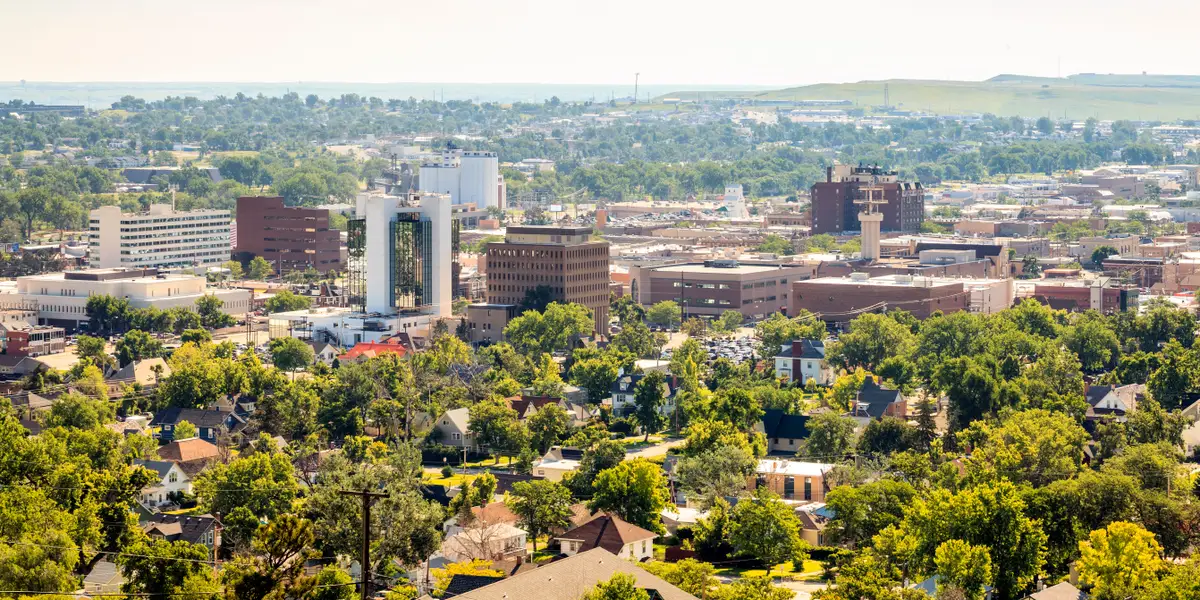
In South Dakota, the median earnings difference between having a bachelor's degree and having some college or an associate degree is $8,509 a year.
Sanghwan Kim/Getty Images
Getting a four-year college education isn't always worth it for everybody — whether it comes down to avoiding the rising cost of a degree or pursuing careers outside a traditional college setting — but in some state economies, not having a bachelor's degree sets you further behind than in others.Business Insider looked at the median annual earnings of adults aged 25 and over across the country, as reported in the Census Bureau's 2024 American Community Survey data, and compared the median earnings of adults with a bachelor's degree with those of adults with some college or an associate degree.We then ranked all 50 states by the percentage difference in median earnings between those two groups, from highest to lowest, to compare extra earnings associated with completing a four-year degree with stopping short of earning a bachelor's degree, while accounting for differences in overall wage levels from state to state.Across all states, one thing remained constant: having a bachelor's degree is almost always associated with higher earnings.On average, bachelor's degree-holders earned 38.6% more than adults with some college or an associate degree, but that ranged across state lines, with the largest gap at 58.5% and the smallest at 17.1%.States with major cities and large professional job markets, such as California, New York, Massachusetts, Illinois, Georgia, and Washington, all ranked among the widest earnings gaps between bachelor's degree holders and those with only some college or an associate degree.On the other hand, states with more rural economies and greater reliance on industries such as agriculture, energy, manufacturing, and skilled trades, such as Montana, Wyoming, and the Dakotas, had the smallest earnings gaps.For some, even a slim advantage can be significant in an uncertain labor market. Others might look at the financial payoff of a college investment and decide to pursue a different career path.The list below ranks states from those with the largest earnings gap between bachelor's degree holders and people with some college education to those with the smallest gap, helping illustrate how the financial payoff of a bachelor's degree can vary across state lines.See where your state ranked.