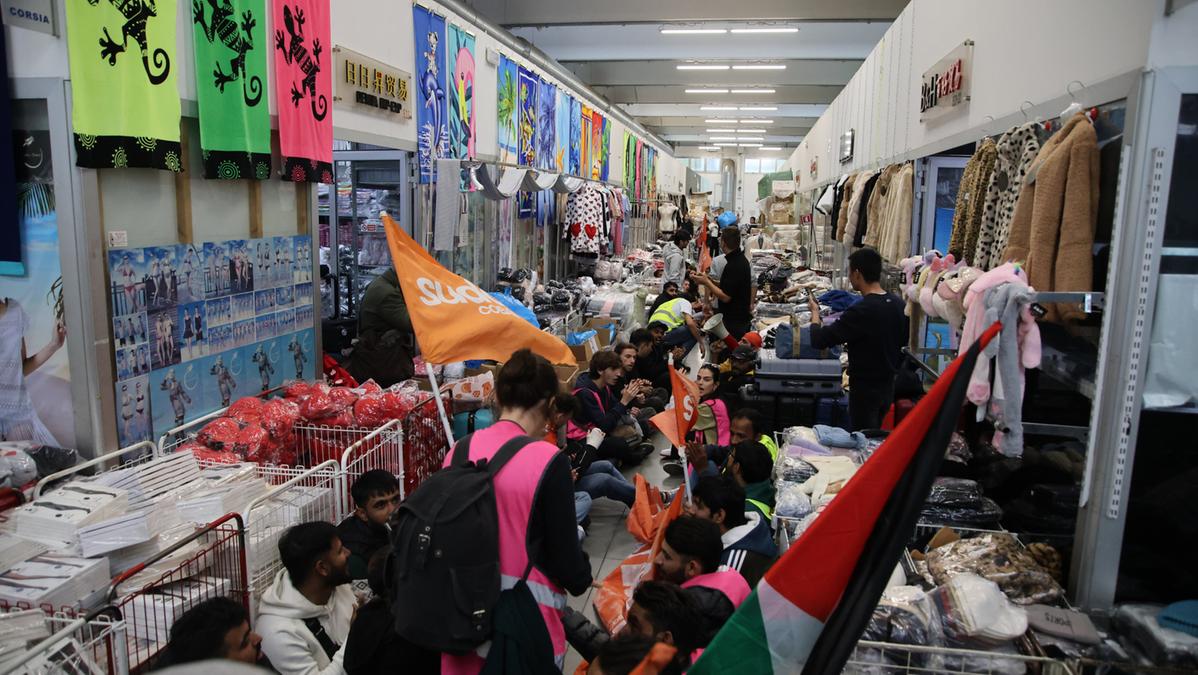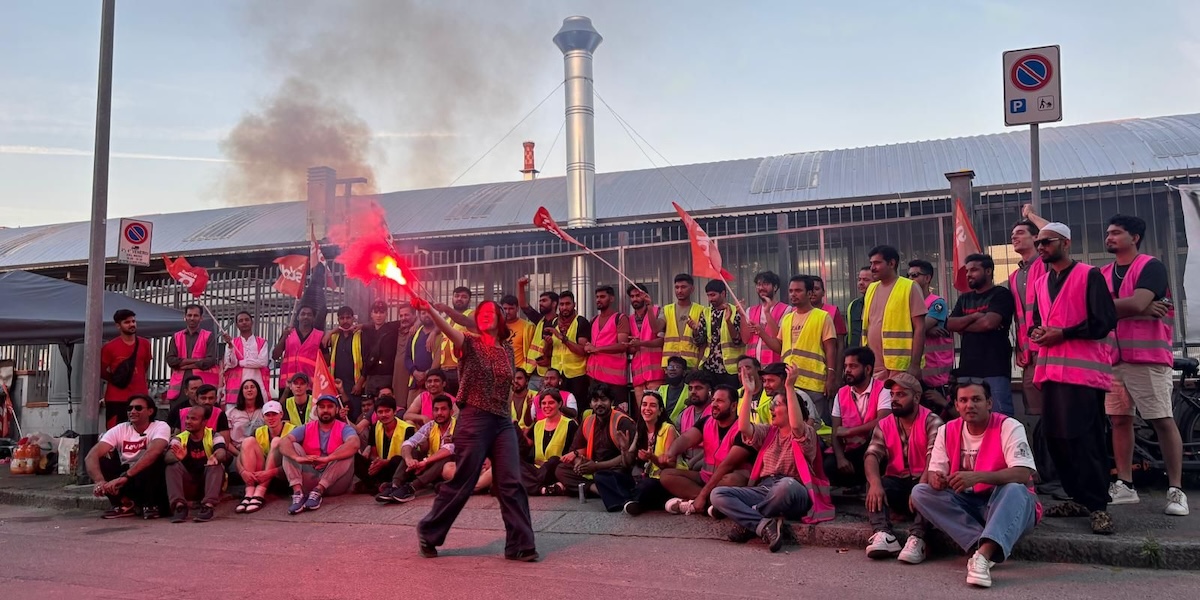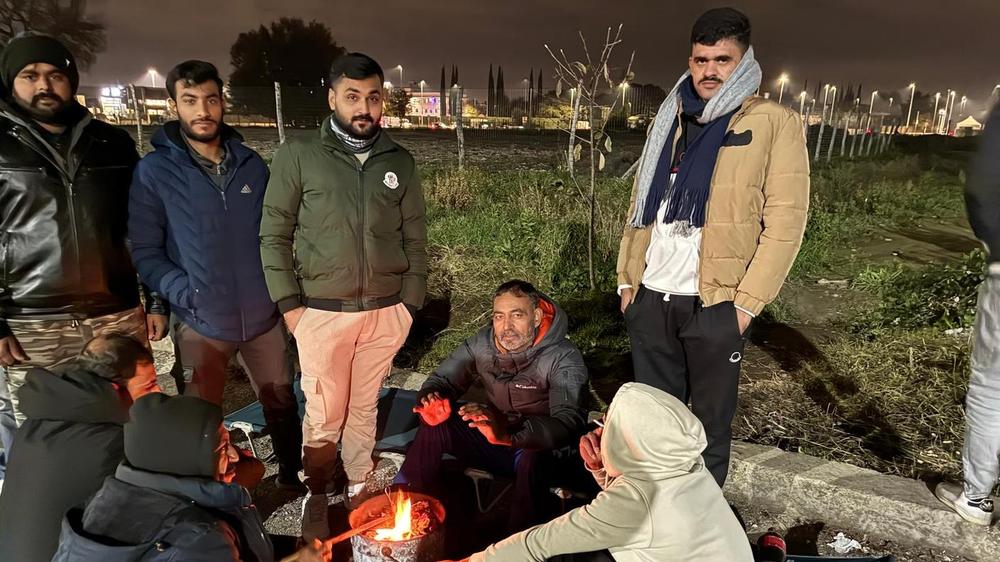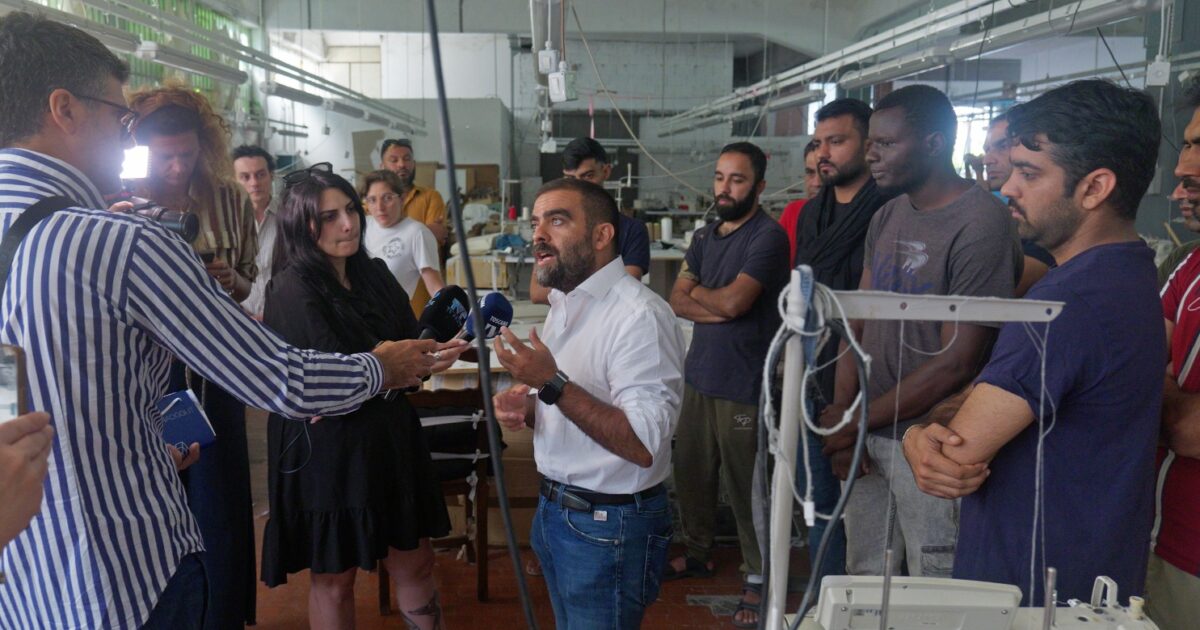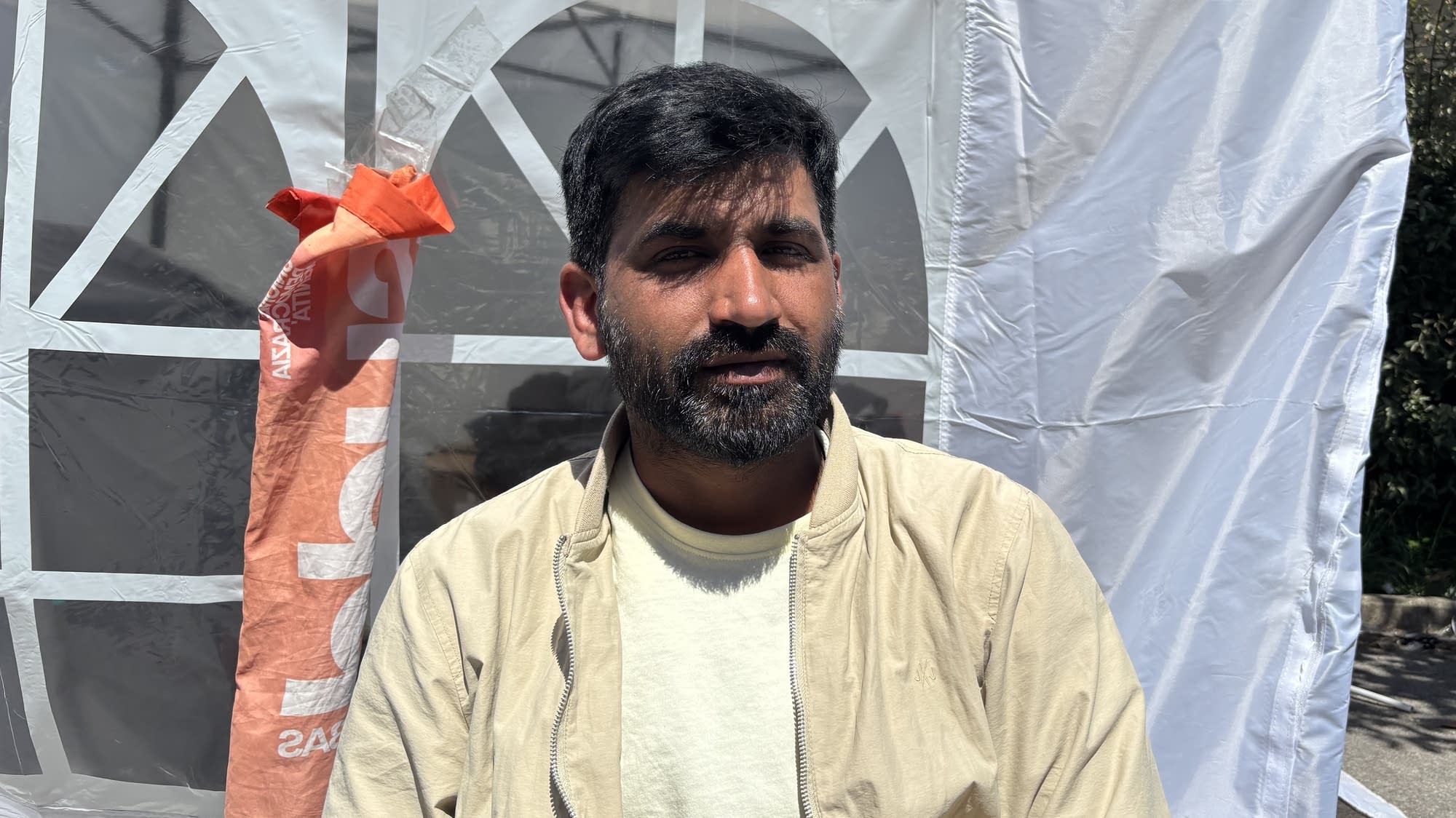
The tents sit in the hot sun on a side street in the industrial area of Prato, Italy. Inside them, there are jumbled mattresses, blankets, and sleeping bags. “Basically, we place ourselves in front of the factories, and we stay there 24/7, and we block the production until we get a result,” said Francesca Ciuffi, an organizer with the union Sudd Cobas.They are camped out in front of a factory that presses and packages finished clothes. Its metal door is closed and locked, shut down by the strike. In 2024, companies in Prato exported more than $2 billion worth of textiles and clothing all over the world. But factories like this one don’t produce a whole shirt or a pair of pants. The industry here has been broken down into small components that are subcontracted and sub-sub-contracted out. One company might sew the front of the shirt to the back, while another sews on the sleeves. Yet another may do all the hems. All that subcontracting means the brands may not know how workers down the chain are treated.“You have 100 components and each factory only makes one component, so you need all of them to function properly,” said Sheng Lu, a professor who studies the global apparel industry at the University of Delaware. Lu said the fractured nature of the industry in Prato makes it nimble, so brands can respond to customer demand quickly. “But at the same time, if even one of them cannot produce the products on time, the entire supply chain can be disrupted,” he said.The union sets up tents at the strike sites; workers stay there 24 hours a day to make sure the factory stays shut down.Alisa Roth/MarketplaceAlso sitting in front of the factory was Abdul Rehma, an immigrant from Pakistan who works for another company, sewing on buttons and putting tags on clothes. Until that company unionized last year, he was working 12 hours a day, seven days a week.“If you are sick, there is no sick leave,” he said. Like Rehman, most of the factory workers in Prato are immigrants from outside Europe, which makes them vulnerable to exploitation.The strikes are working, slowly. But, organizer Francesa Ciuffi said the union also wants to include the brands in the negotiation.“Those at the top of the supply chains are those who really have the power,” she said — the power, she said, to guarantee fair working conditions.
Migrant workers behind "Made in Italy" luxury labels fight for better conditions
Prato, Italy, is a city of under 200,000 near Florence and produces clothing and accessories for brands from Gucci to Zara.
403 words~2 min read