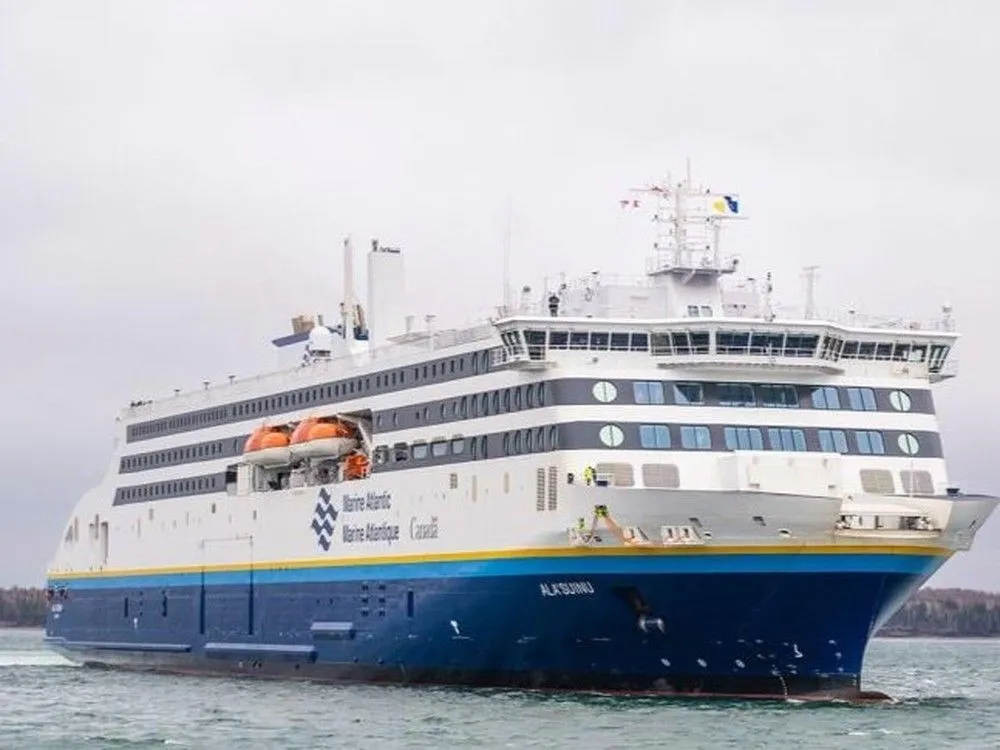
Skip to Content News Archives Economy Energy Oil & Gas Renewables Electric Vehicles Mining Commodities Agriculture Real Estate Mortgages Mortgage Rates Finance Banking Insurance Fintech Cryptocurrency Work Wealth Smart Money Wealth Management Investor Personal Finance Family Finance Retirement Taxes High Net Worth FP Comment Executive Women Puzzmo Newsletters Financial Times Business Essentials More Innovation Information Technology FP500 Podcasts Small Business Lives Told Tails Told Shopping Financial Post Store Obituaries Place a Notice Advertising Advertising With Us Advertising Solutions Postmedia Ad Manager Sponsorship Requests Classifieds Place a Classifieds ad Working Profile Settings My Subscriptions Saved Articles My Offers Newsletters Customer Service FAQ News Economy Energy Mining Real Estate Finance Work Wealth Investor FP Comment Executive Women Puzzmo Newsletters Financial Times Business Essentials HomeNewsTransportationNewfoundland businesses anxious about ferry disruption after union talks break downThe ferry service moves more than half of the goods shipped to and from the island, along with hundreds of thousands of tourists You can save this article by registering for free here. Or sign-in if you have an account.The NL Ferry Coalition is sounding the alarm on an application to remove Marine Atlantic's essential service status. CONTRIBUTEDReducing Marine Atlantic Inc.’s operations between Newfoundland and Labrador and mainland Canada would wreak havoc on the province’s economy.Subscribe now to read the latest news in your city and across Canada.Exclusive articles from Barbara Shecter, Joe O'Connor, Gabriel Friedman, and others.Daily content from Financial Times, the world's leading global business publication.Unlimited online access to read articles from Financial Post, National Post and 15 news sites across Canada with one account.National Post ePaper, an electronic replica of the print edition to view on any device, share and comment on.Daily puzzles, including the New York Times Crossword.Subscribe now to read the latest news in your city and across Canada.Exclusive articles from Barbara Shecter, Joe O'Connor, Gabriel Friedman and others.Daily content from Financial Times, the world's leading global business publication.Unlimited online access to read articles from Financial Post, National Post and 15 news sites across Canada with one account.National Post ePaper, an electronic replica of the print edition to view on any device, share and comment on.Daily puzzles, including the New York Times Crossword.Create an account or sign in to continue with your reading experience.Access articles from across Canada with one account.Share your thoughts and join the conversation in the comments.Enjoy additional articles per month.Get email updates from your favourite authors.Create an account or sign in to continue with your reading experience.Access articles from across Canada with one accountShare your thoughts and join the conversation in the commentsEnjoy additional articles per monthGet email updates from your favourite authorsSign In or Create an AccountorThe ferry service plays a vital role in transporting goods to the island. It moved 100,000 commercial vehicles in 2024-2025, accounting for more than half of the goods shipped to and from the island.It also plays a major part in getting people on and off the island, carrying 360,000 passengers, many of them tourists, during that same ’24-’25 period.“Marine Atlantic, or access to the province, is an economic generator, so we need to think about fresh produce, fresh food, we need to think about hazardous goods, we need to think about things like oxygen for medical supplies, we need to think about explosives for construction and the offshore,” said Craig Foley, chairman of Hospitality Newfoundland and Labrador.Breaking business news, incisive views, must-reads and market signals. Weekdays by 9 a.m.By signing up you consent to receive the above newsletter from Postmedia Network Inc.A welcome email is on its way. If you don't see it, please check your junk folder.The next issue of Posthaste will soon be in your inbox.We encountered an issue signing you up. Please try again“It touches every facet of Newfoundland and Labrador every single day.” Marine Atlantic transports both commercial and passenger vehicles. CONTRIBUTEDFoley was reacting to an application to the Canadian Industrial Relations Board filed by Unifor, which represents some 730 Marine Atlantic employees.The union is asking the board to determine what level of services, if any, must be maintained in the event of a strike.Conciliation talks between Unifor and Marine Atlantic broke down on the second of three days set aside to work out a deal in late April.The conciliation period expires June 8, after which there will be a three-week cooling-off period before workers may strike, or the company can lock them out.Newfoundland and Labrador’s tourism industry is entering peak season, and Foley said hearing a union wants the service reduced is quite concerning.“When we shared it with our membership, we immediately heard the anxiety and angst in membership, because this is the peak season,” he said in an interview.And anxiety about a reduction in service is real.The board has previously ruled twice on this issue, and one of those hearings included testimony from a forensic psychiatrist.In 2004, the late psychiatrist and mental health advocate Dr. Nizar Ladha gave evidence that Gulf ferry service reductions would negatively impact the mental health of those living and working in Newfoundland.“One obvious issue is: How many of those people have illnesses, psychiatric or even physical illnesses, which may cause them stress, psychological distress?” he said.“Those individuals would definitely be affected by such a stoppage by the necessity to make alternate arrangements, especially if they can’t make alternate arrangements. Their illnesses may be precipitated, may be made worse, may go out of control.” A Marine Atlantic ferry approaches Port aux Basques. Photo by Barb Dean-Simmons /Marine AtlanticThe board ruled against an application filed by the Canadian Marine Officers’ Union, which represents ship’s officers and pilots.According to the decision not to downgrade the constitutionally guaranteed link — entrenched as a term of union when Newfoundland and Labrador joined Canada in 1949 — any such move would be detrimental to the mental health of the businesses and residents of the province.“The board concludes that any reduction in the ferry level service would result in an immediate and serious danger to the safety or health of the public,” stated that decision.“The ferry service is the sole accessible link available to a majority of the public for whom there is no alternative realistic means of access.”In 2008, the board reaffirmed its stance following another application, this time by the Canadian Auto Workers (CAW) union.The CAW wanted an order that the services of ship-based, unlicensed personnel represented by the union not be required to prevent “an immediate and serious danger to public health or safety in the event of a work stoppage” at Marine Atlantic.The board maintained its opinion and dismissed the CAW application.“The board is of the view that the ruling in (2004) to the effect that a strike or lockout affecting Marine Atlantic ferry operations between Newfoundland and Nova Scotia would constitute an immediate and serious danger to the safety or health of the public,” that decision stated. The NL Ferry Coalition is sounding the alarm on an application to remove Marine Atlantic’s essential service status. CONTRIBUTEDFoley’s organization is a member of the NL Gulf Ferry Coalition, which has voiced its opposition to Unifor’s application. That coalition includes the Atlantic Chamber of Commerce, St. John’s Board of Trade, the Retail Council of Canada, Municipalities Newfoundland and Labrador and some trucking companies.The coalition has been advocating for Marine Atlantic to expand its service to increase capacity to handle the growing demand for crossings, especially during the peak summer tourism season.Regardless of peak season, Foley stressed a fully scheduled Marine Atlantic service is crucial to provincial economy all year long.In 2025, Marine Atlantic saw a significant increase in demand for space, and booking a crossing on short notice became a challenge, if not impossible, for many.Those same issues still affect Marine Atlantic’s traffic flow. The Crown corporation has a new ferry being prepared to enter service, but that won’t be ready until at least later in 2026. Cars line up on the Marine Atlantic ferry. CONTRIBUTEDIn public communication with its members, Unifor said Marine Atlantic “continues to rely on decades-old decisions of the (Canadian Industrial Relations) Board, which were based on circumstances and conditions which existed some 22 years ago.”According to Unifor, the key issue is that the board must only consider whether there is an immediate and serious danger to the public in order to interfere with workers’ rights to strike.“The right to strike is a fundamental right, and it plays an important role in the system of collective bargaining and in the overall labour relations system in Canada,” the union said. “It is, in fact, protected by the Canadian Charter of Rights and Freedoms and has been upheld by the Supreme Court of Canada.” A seating area onboard the Marine Atlantic Blue Puttees ferry. CONTRIBUTEDA retired politician who fought to improve Marine Atlantic’s operations says there is no way the Gulf ferry service should ever be downgraded from being considered essential to Newfoundland and Labrador.Gerry Byrne, a former federal and provincial minister, said Marine Atlantic employees deserve any wage increases they can get or to resolve any other labour issues they have, but those must be achieved through the collective bargaining process and not by jeopardizing the economy and well-being of an entire province and its residents.He also said the integral aspect of the board’s prior decisions was the mental health of residents and business operators.“When you consider the determinants of mental health and our better, stronger understanding of the determinants of mental health, while I appreciate and would defend every union’s right to challenge the decision of the court, it would be my opinion that the chances of an overturn, or even a modification of that 2004 decision, would not be successful,” Byrne said.East Can Transport Services Ltd., a St. John’s-based trucking company that moves freight and auto, is also part of the coalition.“They do what they got to do, but we just don’t want to see this service deemed non-essential, and then have disruption in the service,” president Jerry Dowden told Postmedia.“It’s a primary trade corridor connecting our province to the rest of Canada. It’s a critical link for business, and we deem it as part of the Trans-Canada Highway.” Join the Conversation This website uses cookies to personalize your content (including ads), and allows us to analyze our traffic. Read more about cookies here. By continuing to use our site, you agree to our Terms of Use and Privacy Policy.
Newfoundland businesses anxious about ferry disruption after union talks break down
Union is asking industrial relations board to determine what level of service, if any, Marine Atlantic must maintain during a strike
1,718 words~8 min read