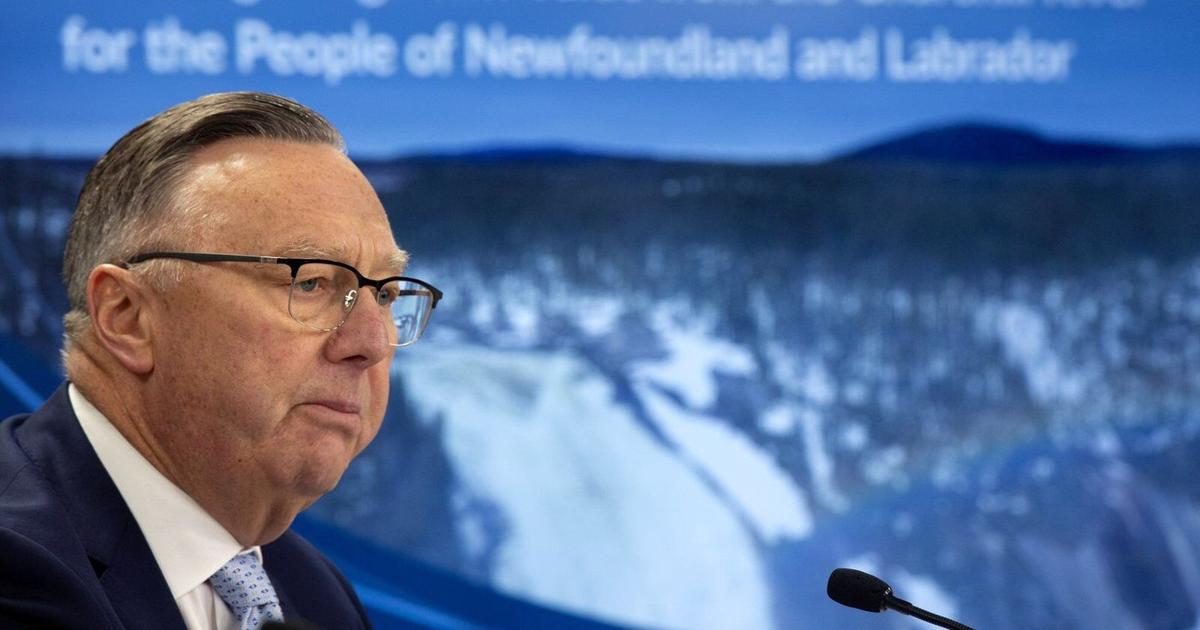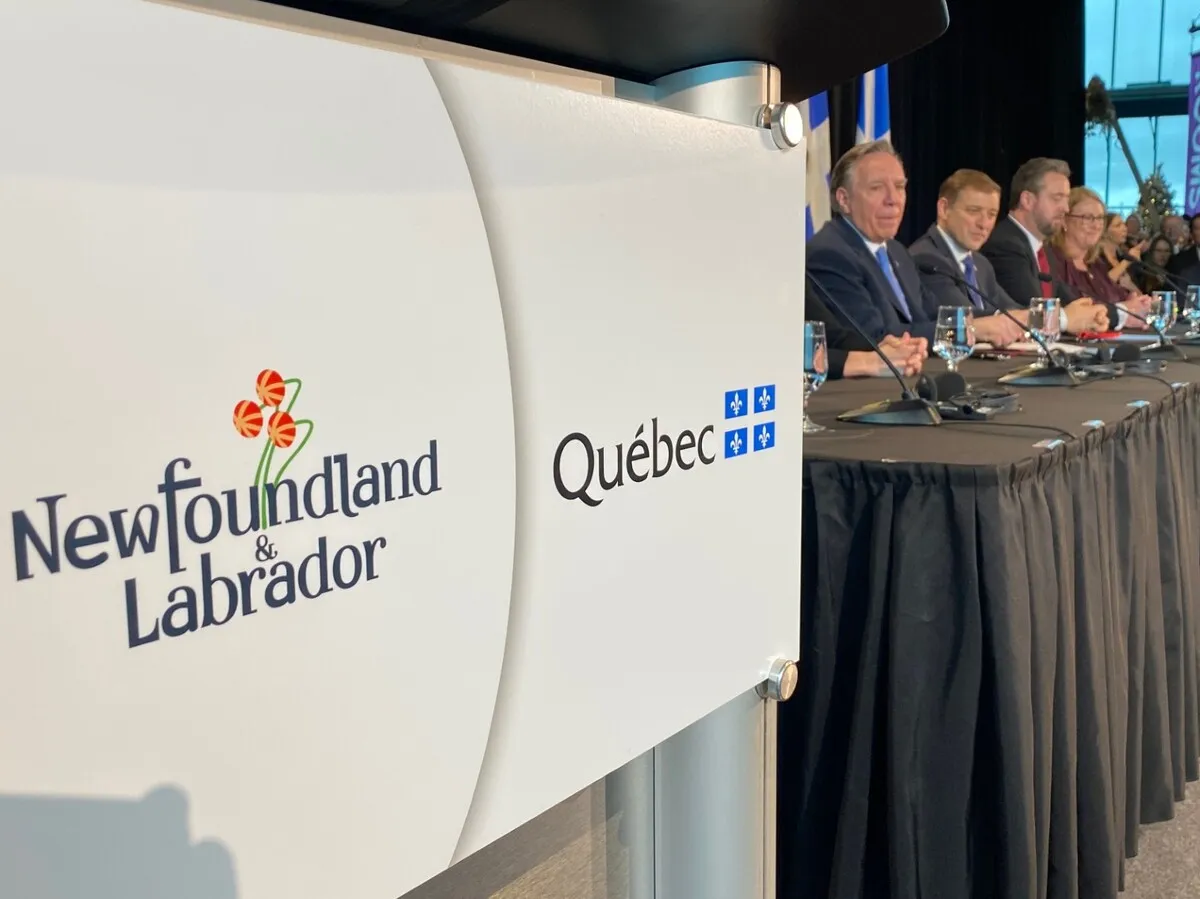
Skip to Content News Archives Economy Energy Oil & Gas Renewables Electric Vehicles Mining Commodities Agriculture Real Estate Mortgages Mortgage Rates Finance Banking Insurance Fintech Cryptocurrency Work Wealth Smart Money Wealth Management Investor Personal Finance Family Finance Retirement Taxes High Net Worth FP Comment Executive Women Puzzmo Newsletters Financial Times Business Essentials More Innovation Information Technology FP500 Podcasts Small Business Lives Told Tails Told Shopping Financial Post Store Obituaries Place a Notice Advertising Advertising With Us Advertising Solutions Postmedia Ad Manager Sponsorship Requests Classifieds Place a Classifieds ad Working Profile Settings My Subscriptions Saved Articles My Offers Newsletters Customer Service FAQ News Economy Energy Mining Real Estate Finance Work Wealth Investor FP Comment Executive Women Puzzmo Newsletters Financial Times Business Essentials HomeNewsHow to judge Newfoundland's next Churchill Falls deal with QuebecAs negotiations near completion, critics say the fine print—not the headline numbers—will determine whether the agreement is a better one You can save this article by registering for free here. Or sign-in if you have an account.In December 2024, Newfoundland and Labrador and Quebec announced a memorandum of understanding (MOU) to replace the 1969 Upper Churchill contract. Photo by Keith GosseTwo prominent critics of the rejected 2024 Churchill Falls power agreement between Newfoundland and Labrador and Quebec say Newfoundlanders should not judge any revised deal by the headline numbers, but by focusing on the details that will determine how much value the province ultimately captures from its hydro resources.Subscribe now to read the latest news in your city and across Canada.Exclusive articles from Barbara Shecter, Joe O'Connor, Gabriel Friedman, and others.Daily content from Financial Times, the world's leading global business publication.Unlimited online access to read articles from Financial Post, National Post and 15 news sites across Canada with one account.National Post ePaper, an electronic replica of the print edition to view on any device, share and comment on.Daily puzzles, including the New York Times Crossword.Subscribe now to read the latest news in your city and across Canada.Exclusive articles from Barbara Shecter, Joe O'Connor, Gabriel Friedman and others.Daily content from Financial Times, the world's leading global business publication.Unlimited online access to read articles from Financial Post, National Post and 15 news sites across Canada with one account.National Post ePaper, an electronic replica of the print edition to view on any device, share and comment on.Daily puzzles, including the New York Times Crossword.Create an account or sign in to continue with your reading experience.Access articles from across Canada with one account.Share your thoughts and join the conversation in the comments.Enjoy additional articles per month.Get email updates from your favourite authors.Create an account or sign in to continue with your reading experience.Access articles from across Canada with one accountShare your thoughts and join the conversation in the commentsEnjoy additional articles per monthGet email updates from your favourite authorsSign In or Create an AccountorDoug May, a retired economics professor at Memorial University in St. John’s, NL, and David Vardy, a former chair of Newfoundland and Labrador’s Public Utilities Board, both formally opposed the 2024 memorandum of understanding (MOU) between the two provinces and have closely followed the negotiations since.With a revised agreement potentially coming as early as next week, they say the public should focus on how much electricity Newfoundland and Labrador keeps, whether it gains the right to sell power to other markets and how much of the project’s economic value ultimately stays in the province.Breaking business news, incisive views, must-reads and market signals. Weekdays by 9 a.m.By signing up you consent to receive the above newsletter from Postmedia Network Inc.A welcome email is on its way. If you don't see it, please check your junk folder.The next issue of Posthaste will soon be in your inbox.We encountered an issue signing you up. Please try againReports earlier this week suggested the revised agreement could include substantially more generating capacity than was considered in the original MOU, nearly 1,000 megawatts of guaranteed transmission access through Quebec and federal financing for the proposed hydroelectric developments.The details have not been made public and Newfoundland and Labrador Premier Tony Wakeham has said negotiations are continuing.May said the rejected agreement should not be used as a benchmark for whatever comes next, comparing it to a student receiving a grade of 30 on an exam, rewriting it and receiving 45.“Is that really a better mark?” he said.Talks between the two provinces are unfolding less than two months before Quebec’s Oct. 5 election. Quebec Premier Christine Fréchette has said the agreement could be jeopardized by a change of government and that she raised the election deadline directly with Wakeham, who has said his province should not be rushed into an agreement.The negotiations seek to replace the 2024 MOU, which proposed an early end to the 1969 Churchill Falls contract that gives Hydro-Québec access to most of the plant’s electricity at about 0.2 cents per kilowatt-hour until 2041. The deal has long been viewed in Newfoundland and Labrador as one of the worst resource deals in the province’s history.After becoming premier, Wakeham rejected the agreement after an independent review in May concluded it was not in the province’s best interests. He then reopened negotiations with Quebec and promised a referendum on any new deal.May said the most important question is whether the new agreement lets Newfoundland and Labrador keep more of the value created by its water resources.“What can you get there for the people of Newfoundland and Labrador in terms of the quality of their lives?” he said. “If you’re going to give something to Quebec … can you use (it) as leverage to get a better Churchill Falls deal?”May said Hydro-Québec is paying Churchill Falls (Labrador) Corp., which owns the generating station, less than the Quebec government does for the right to use the province’s water to generate electricity at its hydro plants.“The cheapest electricity by far in the hydro portfolio is Churchill Falls,” he said.May also said Quebec’s need for Churchill Falls power has increased. Years of low precipitation have left Hydro-Québec with low reservoir levels, forcing it to buy more electricity from outside the province while cutting back exports.In 2025, Hydro-Québec bought 15.2 terawatt-hours of electricity from outside Quebec at an average price of 7.6 cents per kilowatt-hour, according to its annual report, up from 9.4 terawatt-hours at 3.6 cents a year earlier.May said Quebec has been put in “a pretty tough position” over the longer term.But Newfoundland and Labrador does not hold all the cards.The existing Churchill Falls contract legally continues for another 15 years, giving Hydro-Québec access to most of the plant’s electricity at extremely low prices. Quebec also controls the transmission system that provides the most direct route from Labrador to lucrative electricity markets in Ontario and the northeastern United States.Both May and Vardy said transmission rights will be one of the most important measures of any new agreement. Newfoundland and Labrador may own the resource, they said, but realizing more of its value depends on being able to move electricity through Quebec to sell it to other buyers.That’s why reports of guaranteed access to Quebec’s transmission network could prove to be one of the agreement’s most significant changes, Vardy said. If it allows the province to sell electricity directly to third parties, he said that could give the province another source of revenue and a way to determine what its electricity is worth.“I would be happy to see wheeling rights to third parties. That would be a big breakthrough,” he said. “We need to be able to have live actual transactions in order to be able to know whether we’re getting full value in the marketplace.”How much electricity Newfoundland and Labrador retains after 2041 will also matter since it could be sold outside the province or used to support mining, mineral processing and other industrial development at home, he said.But Vardy said people shouldn’t assume more generating capacity automatically means more electricity. Adding turbines at Churchill Falls can increase the amount of power produced at peak times, he said, but the total amount of electricity the plant generates is still limited by how much water flows through it.“When I’m told there are so many megawatts, I then need to be told how many terawatts of energy you are going to go with that,” he said. “There’s only so much water.”Vardy is also calling for any new agreement to undergo a public inquiry led by a Supreme Court judge, with independent experts and the ability to test competing claims, before the province holds its promised referendum.He said the inquiry should establish a clear benchmark for judging whether the agreement makes the province, as owner of the resource, the “principal beneficiary” of its hydroelectric assets.Vardy said the same standard Wakeham applied to the agreement negotiated by former premier Andrew Furey should also apply to his deal.“If the sauce for the goose is sauce for the gander, it would seem reasonable to expect there would be a review of any agreement that Wakeham negotiates as well,” he said.arankin@postmedia.com Join the Conversation This website uses cookies to personalize your content (including ads), and allows us to analyze our traffic. Read more about cookies here. By continuing to use our site, you agree to our Terms of Use and Privacy Policy.
How to judge Newfoundland's next Churchill Falls deal with Quebec
Critics of the rejected 2024 Churchill Falls power agreement say Newfoundlanders should not judge any deal by the headline numbers. Read on.
1,533 words~7 min read