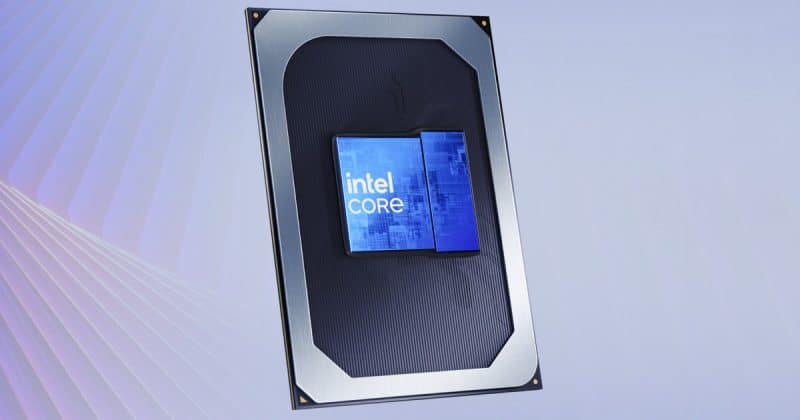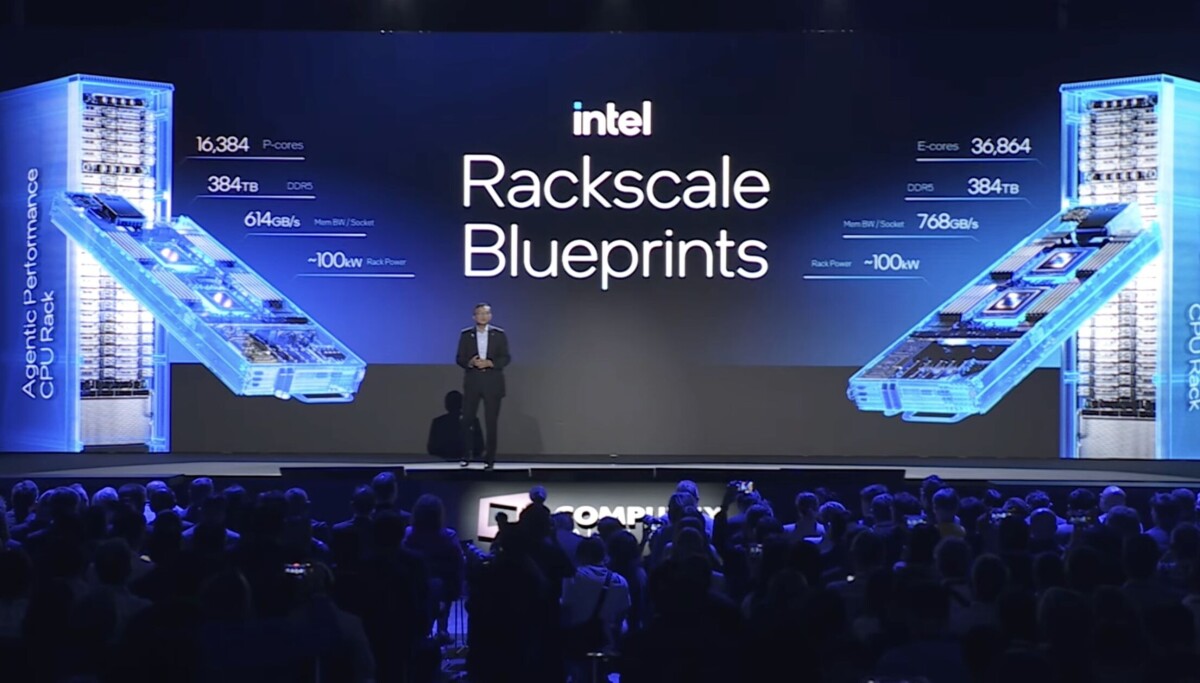
For much of the AI boom, the race was fairly straightforward: build bigger models, buy more GPUs and train faster than everyone else.At Computex 2026, Intel suggested the next phase of AI may be less about the chip itself and more about everything around it.The company arrived in Taipei with a string of announcements covering rack-scale AI infrastructure, enterprise inference clouds, industry-specific AI systems, custom silicon partnerships and new data-centre processors.Also Read: Intel bets big on AI infrastructure with new Xeon chipsIndividually, they looked like product launches. Taken together, they offered a glimpse into how Intel sees the AI market evolving."Today, with the rise of inference, agentic and physical AI, Intel is poised to bring the world new innovations from the chip to systems level," chief executive Lip-Bu Tan said during his keynote.That emphasis on systems was everywhere.Intel announced plans to build rack-scale AI infrastructure with Foxconn and SambaNova, unveiled a new inference cloud architecture, launched Xeon 6+ processors for AI-heavy workloads and expanded partnerships with companies ranging from Siemens and Hitachi to biotech startup Greenstone Biosciences.The message was clear: Intel wants to be more than a company that sells chips.The shift comes as the AI industry itself enters a new chapter.For the last few years, most of the attention has been on training large AI models. That created huge demand for specialised AI accelerators and helped turn Nvidia into one of the biggest winners of the generative AI boom.Now the conversation is starting to change.As AI moves from experimentation to deployment, companies are increasingly focused on running AI applications in the real world. That means serving millions of users, powering AI agents, managing costs and keeping systems running efficiently at scale.Intel believes that transition could reshape how AI infrastructure is built.The company argues that agentic AI systems — which can reason through problems, use tools and complete tasks on behalf of users — require significantly more coordination and orchestration than traditional AI applications. In other words, once AI starts doing things instead of simply answering questions, the infrastructure requirements become far more complex.Industry estimates cited by Intel suggest AI deployments are already moving away from training-era architectures, where a single CPU could support multiple GPUs, towards environments where processor and accelerator requirements become more balanced.That could create an opportunity for Intel.While Nvidia dominated the training phase of the AI boom, the next phase may increasingly revolve around inference, efficiency, deployment costs and infrastructure design.Intel's answer is to move higher up the stack.Rather than talking only about processors, the company is increasingly talking about racks, clouds, orchestration and industry-specific AI deployments. The goal is to capture a larger share of spending as enterprises begin turning AI pilots into production systems.Intel is not alone in making that bet.At Computex, Nvidia unveiled DSX, a platform designed to help customers build what it calls AI factories. The offering combines hardware, software, simulation tools, power-management systems and facility designs into a single infrastructure stack.Also Read: Nvidia CEO Jensen Huang says robotics is South Korea's next big sector, points to 'some suprises'"We're not just shipping chips — we're giving every infrastructure builder a complete playbook to build AI factories," Nvidia chief executive Jensen Huang said while unveiling the platform.The fact that both companies spent Computex talking about systems rather than silicon says something about where the industry is heading.The next AI battle may not be won by the company with the fastest chip. It may be won by the company that can help customers build, deploy and run AI most efficiently.Power consumption, cooling, orchestration software and the cost of generating AI outputs are becoming as important as raw computing performance.For Intel, that shift could not come soon enough.The company spent much of the generative AI boom trying to stay relevant in a market increasingly dominated by Nvidia's AI hardware. Computex offered perhaps the clearest indication yet of how it plans to respond.Rather than competing solely on chips, Intel is betting that the next opportunity lies in the infrastructure that makes AI useful.As artificial intelligence spreads across industries — from manufacturing and healthcare to robotics and biotech — the biggest winners may not necessarily be the companies selling the most processors, but the ones providing the systems those processors run on.And if Intel's Computex strategy is any indication, that is exactly the market it wants to be in.
As AI shifts from training to inference, Intel moves up the stack
Intel is changing its AI strategy. The company is now focusing on building complete AI systems and infrastructure, not just chips. This move comes as AI applications become more widespread. Intel aims to provide solutions for enterprises deploying AI. Competitors like Nvidia are also emphasizing system-level offerings.
722 words~3 min read