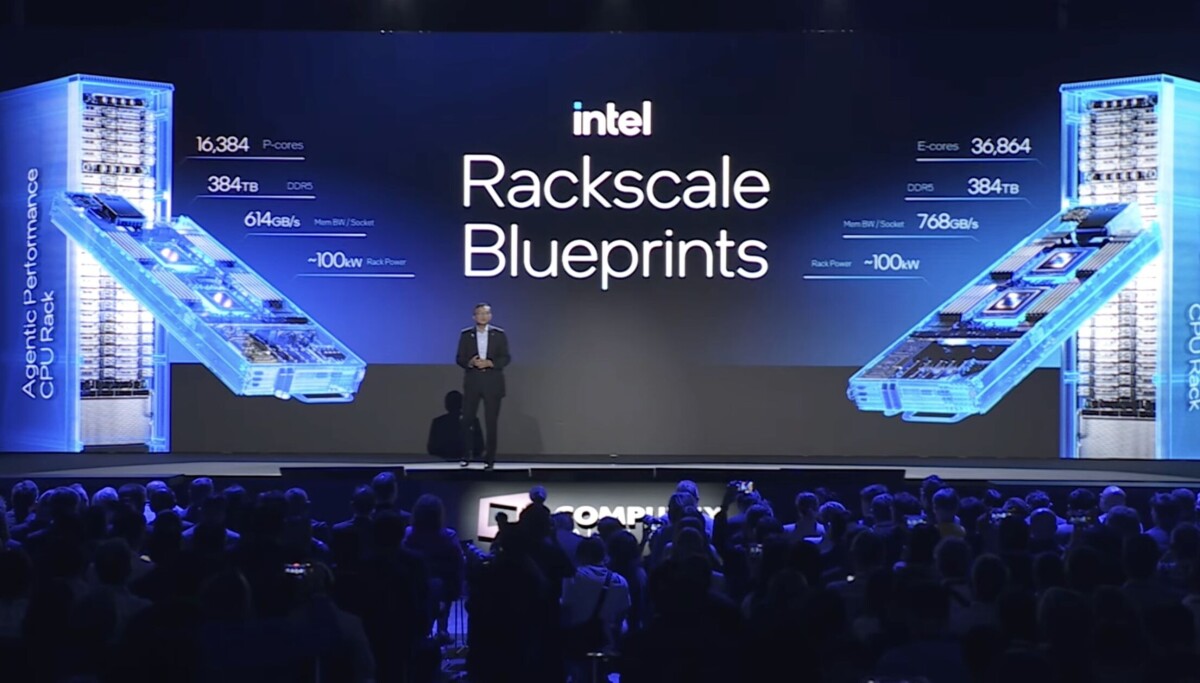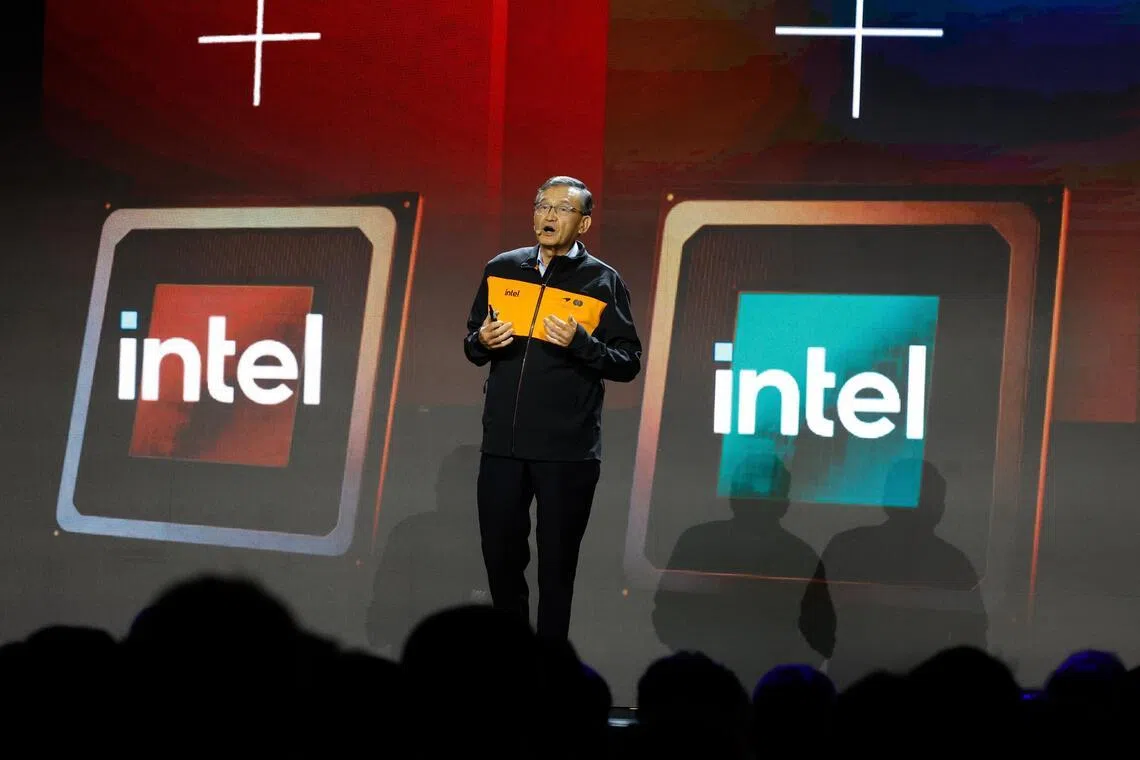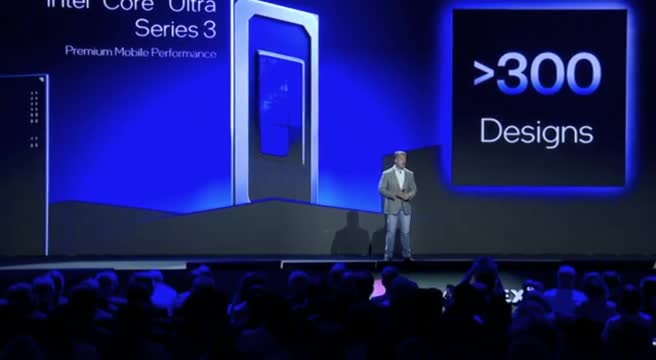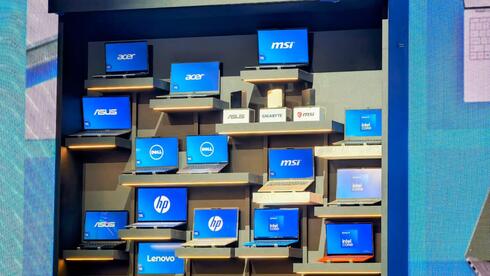
At Computex 2026, Intel unveiled an ambitious AI chip offensive spanning PCs, robotics and edge devices, promoting local AI over cloud, debuting Core Ultra 3 and 18A chips, and taking aim at Nvidia with claims of higher performance at lower costRaphael Kahan, Taiwan| Related TopicsAfter years of criticism over its development pace, Intel opened Computex 2026 with a sweeping chip offensive aimed at redefining the rules of the game in the artificial intelligence era — from personal laptops to the world’s largest data centers.At the core of the new strategy is the full transition to mass production using Intel’s advanced 18A process. Intel believes the market has grown tired of promises of an “all-powerful cloud” and is now presenting a vision in which computing power returns to the edge — to devices sitting on office desks or factory floors.4 View gallery Intel CEO Lip-Bu Tan at an exhibition in Taiwan (Photo: Raphael Kahan)In personal computing, the new flagship Core Ultra 3 series has already won the exhibition’s Gold Award, with the company reporting hundreds of designs currently in commercialization. Intel showcased a broad lineup of computer models, while taking swipes at competitors and emphasizing the wider connectivity options in its devices, unlike those offering only a single USB-C port.4 View gallery Intel showcased a broad lineup of computer models (Photo: Raphael Kahan)The most significant development concerns privacy protection through local processing. In collaboration with AI company Perplexity, Intel introduced the “Perplexity Computer,” based on hybrid AI inference.The companies demonstrated how highly sensitive and confidential financial data from investment funds, including procurement plans under the codename “Project Falcon,” could be processed and analyzed entirely locally on the computer’s GPU and neural processing unit (NPU), without being sent to public cloud servers.At the same time, Intel is making a dramatic move against Nvidia’s near-total dominance of the robotics market. In Taipei, the company unveiled a full stack of hardware, software and development tools designed to shorten the path from robotics labs to industrial deployment, under the concept of Physical AI — robots that understand their surroundings and make real-time movement decisions.4 View gallery Intel showcased a broad lineup of computer models (Photo: Raphael Kahan)At the center of the announcement is OpenVINO Physical AI, an open-source toolkit intended to eliminate the need for manufacturers to build drivers, sensors and control systems from scratch.Intel highlighted its Core Ultra X7 358H processor, which runs a complex robotic AI model 50% faster than Nvidia’s Jetson AGX Orin chip and only 10% slower than the new flagship Jetson Thor T5000 — but at half the cost.As an example, the company presented Ella, an autonomous robotic coffee station developed by SensoryAI, which replaced separate AI accelerators with a single Intel chip now running three different AI agents simultaneously.After decades in which the technological pendulum swung toward centralized cloud computing, the current proliferation of AI agents and vision-language-action (VLA) models is swinging it back toward the edge — to local computers and autonomous robots.Intel is leveraging its longstanding experience in splitting cores between performance and efficiency (P-cores and E-cores) to argue that classical computing architecture is not a dying dinosaur but an essential infrastructure capable of managing the complex operations of the new AI world without exposing organizations’ commercial secrets to vulnerable public clouds.4 View gallery The push into robotics (Photo: Intel)More broadly, all major chipmakers — Intel, Nvidia, Qualcomm and AMD — presented essentially the same approach: a full portfolio of processors for AI computing at the edge, as well as in data centers, from computers to robots and cars. Amusingly, they showcased nearly identical strategies and even similar visual messaging in the graphics used across their presentations.Beyond the novelty, this mainly signals that the commercial battleground has shifted from cloud AI to local AI. No longer just connecting to a chatbot, the focus is now on AI agents installed directly on the device people use, managing tasks without requiring an internet connection. That shift is breathing new life into chip and hardware companies, opening a new horizon for intelligent machines expected to integrate into everyday life in the near future.The reporter is a guest of the Taiwan Chamber of Commerce at Computex 2026.Comments
Intel tries to loosen Nvidia’s AI grip with chips that keep computing off the public cloud
At Computex 2026, Intel unveiled an ambitious AI chip offensive spanning PCs, robotics and edge devices, promoting local AI over cloud, debuting Core Ultra 3 and 18A chips, and taking aim at Nvidia with claims of higher performance at lower cost
696 words~3 min read