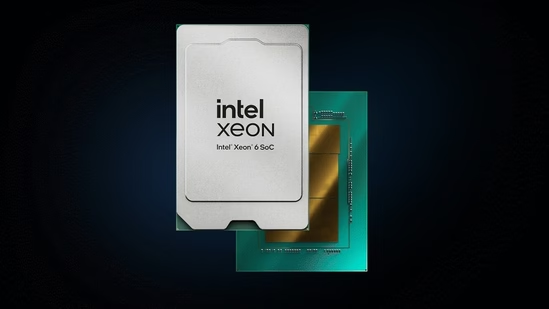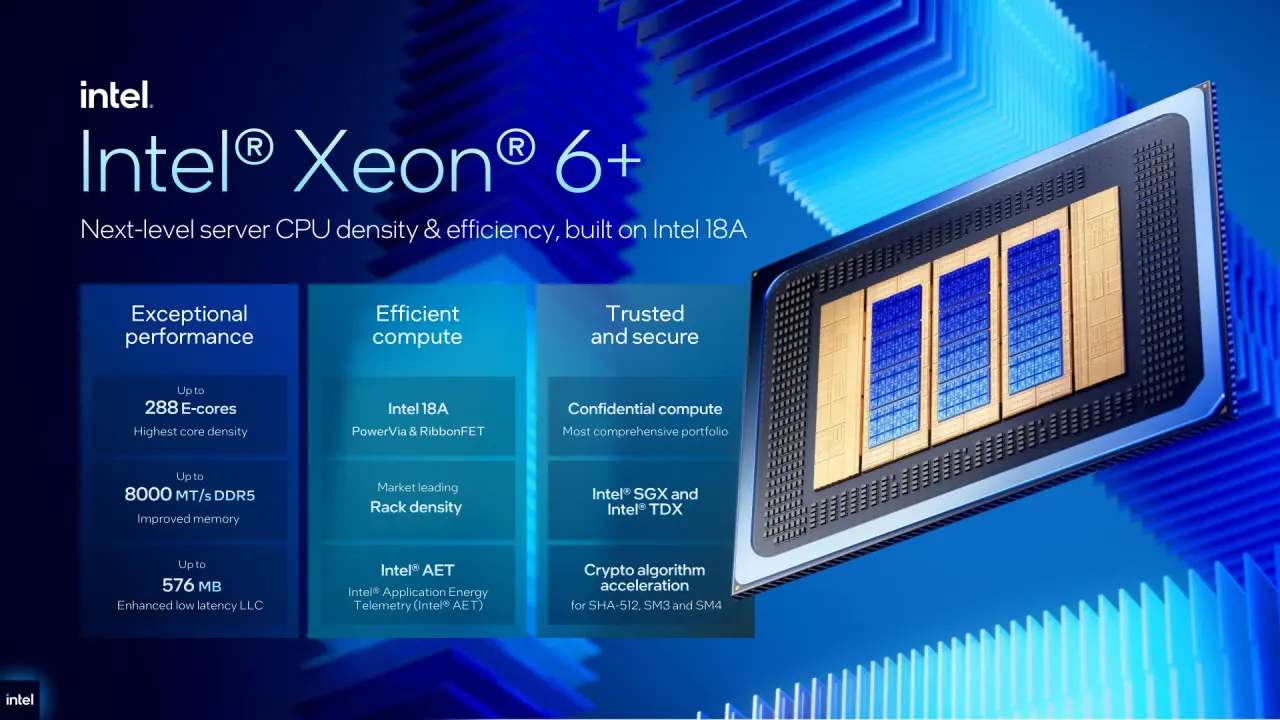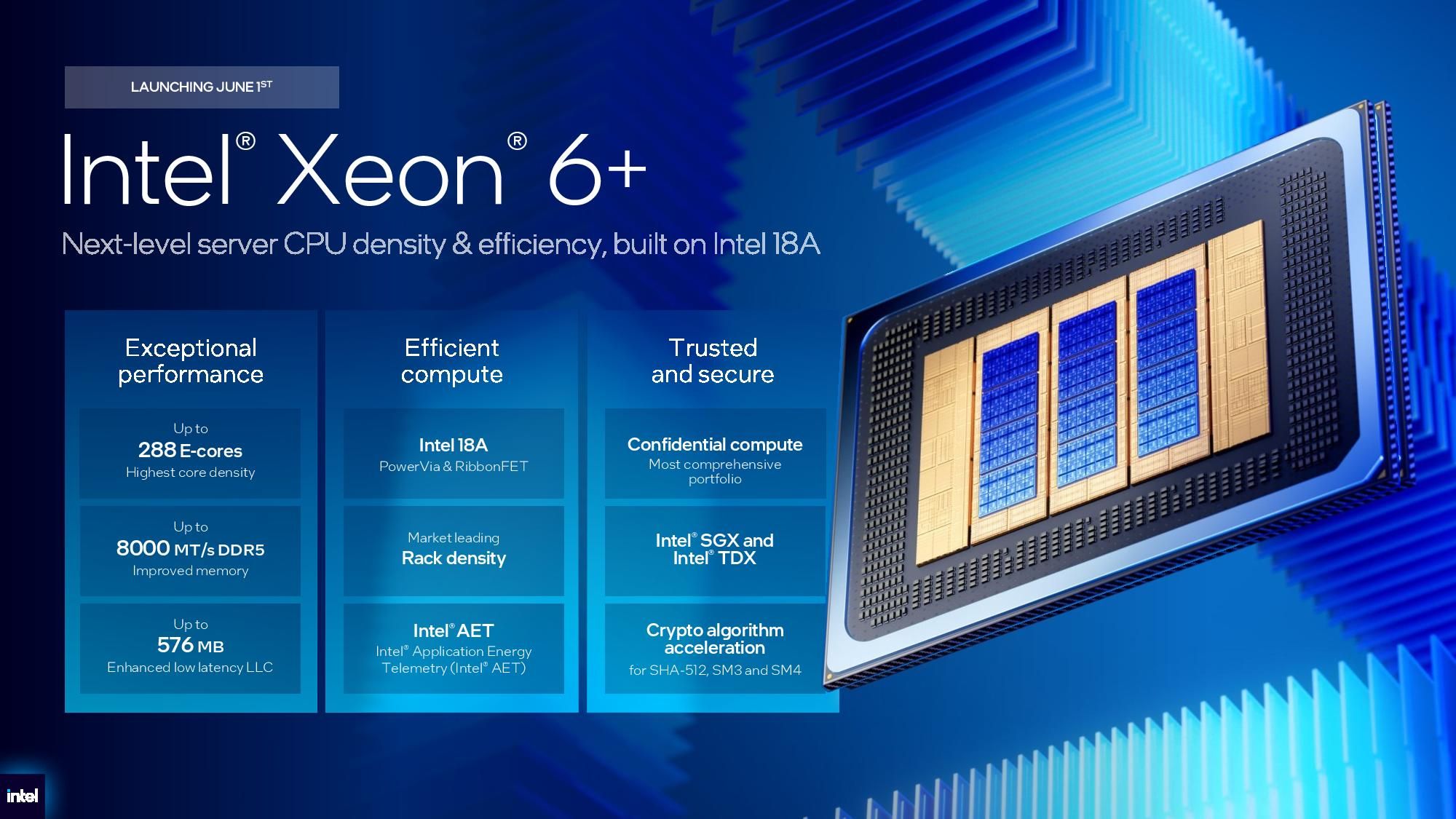
Intel on Monday announced a new range of data centre products, including next-generation Xeon processors, high-speed Ethernet networking solutions and updates to its artificial intelligence (AI) accelerator roadmap, as the chipmaker bets on growing demand for AI infrastructure.The company launched its new Intel Xeon 6+ processors, designed for cloud computing, telecom networks and emerging AI applications that require large-scale coordination between systems rather than just raw computing power.Also Read: India's semiconductor push gets major boost with $3.3 bn Odisha deal with Intel & 3D Glass SolutionsIntel said the new processors are built on its 18A manufacturing technology, marking the first time the process has been used in a data centre CPU.The company argued that as AI systems become more "agentic" — meaning they can perform tasks, make decisions and coordinate actions with less human intervention — data centres are increasingly facing challenges related to managing workloads, moving data efficiently and handling multiple processes simultaneously."The CPU remains the control plane for modern AI infrastructure," said Kevork Kechichan, Executive Vice President and General Manager of Intel's Data Center Group.The new Xeon 6+ chips offer up to 288 Efficient-cores, which Intel claims can deliver up to 2.5 times the performance of the previous generation. The processors also support 12-channel DDR5 memory, 96 PCIe Gen 5 lanes, and Compute Express Link (CXL) technology to improve communication between different hardware components inside data centres.Intel said the chips can enable up to 9:1 server consolidation compared with its second-generation Xeon processors, potentially helping companies reduce hardware footprint and operating costs.Alongside the processors, Intel expanded its networking portfolio with the launch of the Intel Ethernet E835 controllers and network adapters.The products are aimed at supporting AI, cloud and enterprise workloads that require large amounts of data to move quickly between servers.The E835 platform supports network speeds ranging from 10 gigabits per second (GbE) to 200GbE and includes technologies such as Remote Direct Memory Access (RDMA), which allows data to move across networks with lower CPU overhead, helping improve efficiency.Intel also said the networking products offer stronger security through hardware-based protections and are designed to remain in production and support cycles for more than a decade.The company claimed the E835 network adapters deliver higher performance per watt than comparable offerings from rivals Nvidia and Broadcom, a metric that has become increasingly important as data centre energy consumption rises.For small and medium-sized businesses, Intel announced a new 12-core processor in its Xeon 6300 family for entry-level servers. The chip can be installed in existing server designs without requiring major hardware changes, allowing businesses to upgrade computing capacity more easily.Intel also provided an update on its next-generation AI accelerator, code-named Crescent Island, which is being developed for AI inference workloads.Also Read: Nvidia launches chip for Windows laptops in consumer PC pushBuilt on Intel's Xe 3P architecture, Crescent Island will feature up to 480GB of LPDDR5x memory, allowing it to handle larger AI models and memory-intensive workloads. The accelerator uses a 350-watt air-cooled PCIe design, which Intel said is intended to balance performance with energy efficiency.The company said Crescent Island will support a wide range of AI data formats, including newer low-precision formats used to improve AI efficiency, while maintaining compatibility with Intel's existing software ecosystem.The announcement comes on the sidelines of COMPUTEX 2026 which takes place from June 2 to June 5 in Taipei, Taiwan. This year's theme for the annual exhibition is "AI Together" and will have focus on AI & Computing, Robotics & Mobility, and Next-Gen Tech.
Intel bets big on AI infrastructure with new Xeon chips
Intel has unveiled new data center products. This includes the next-generation Xeon 6+ processors and advanced AI accelerators. These innovations are designed to support the rapidly expanding needs of artificial intelligence infrastructure. The company is betting on increased demand for these powerful computing solutions.
579 words~3 min read