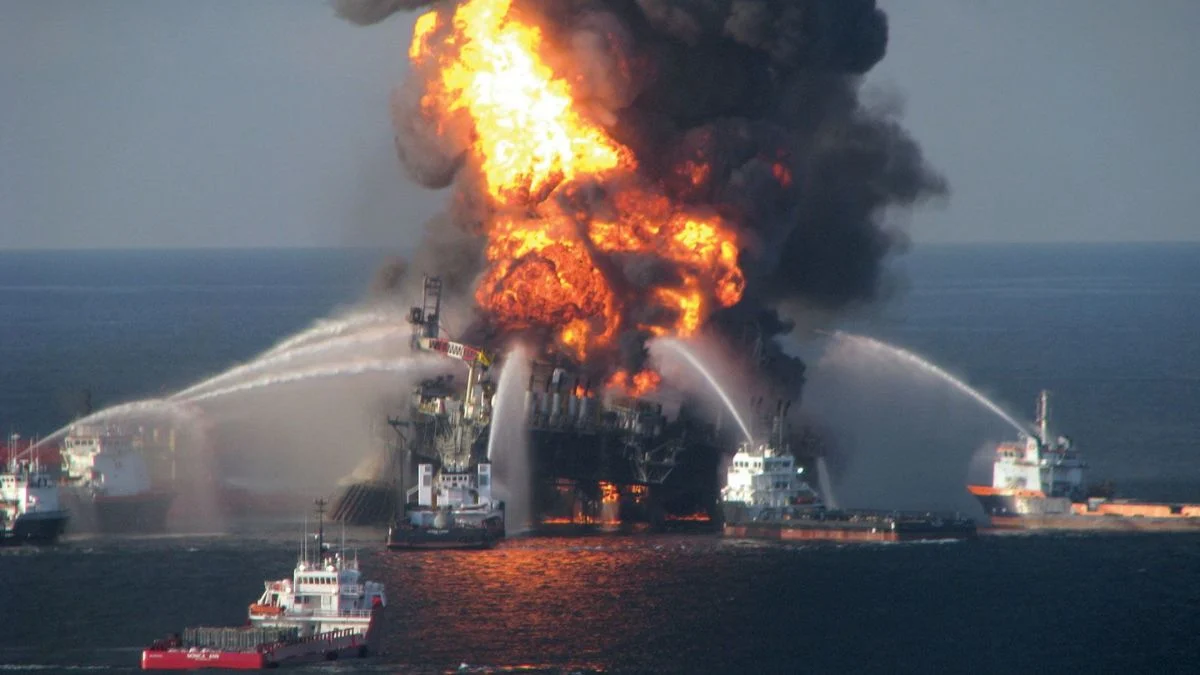
When a major oil spill occurs at sea, emergency crews often face a difficult choice. They can allow the oil to spread across the water, threatening coastlines and marine life, or they can set it on fire.
Burning the oil, a technique known as an in situ burn, can prevent the slick from expanding. However, it also produces thick clouds of black smoke, releases soot into the atmosphere, and leaves behind a layer of unburned residue floating on the ocean's surface.
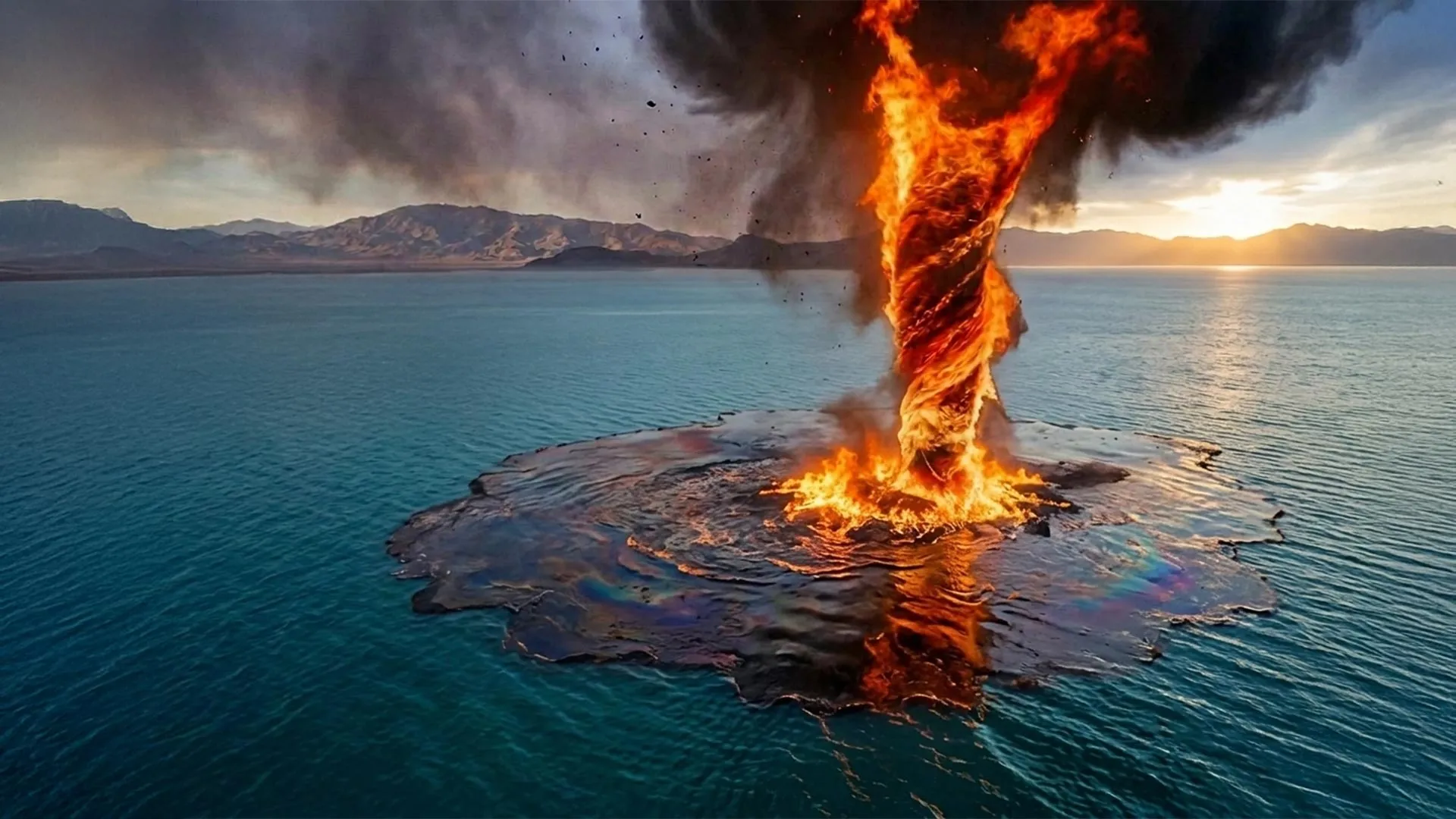
Now, researchers have demonstrated a striking new approach that could make this process far more effective. In a first-of-its-kind large-scale study, scientists created giant fire whirls, spinning columns of flame that resemble fire tornadoes, and found they burn oil faster and more cleanly than conventional methods.
The rotating vortex draws in large amounts of oxygen, creating a hotter and more efficient flame. As a result, the fire whirl consumed oil more rapidly while producing significantly less pollution.
The study, supported by the Bureau of Safety and Environmental Enforcement (BSEE), was led by Dr. Elaine Oran and Dr. Qingsheng Wang of Texas A&M University and Dr. Michael Gollner of the University of California, Berkeley.