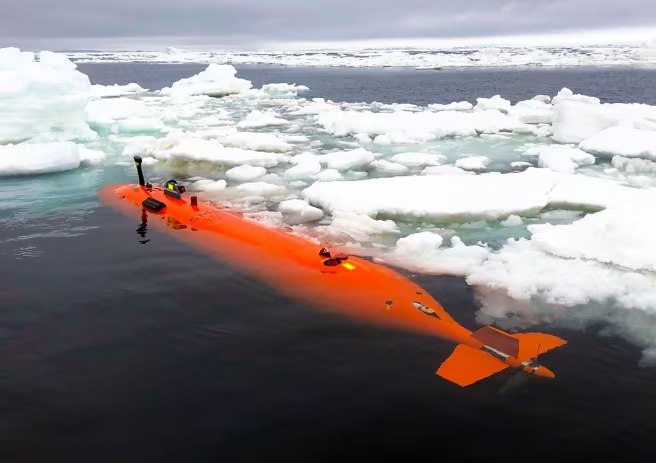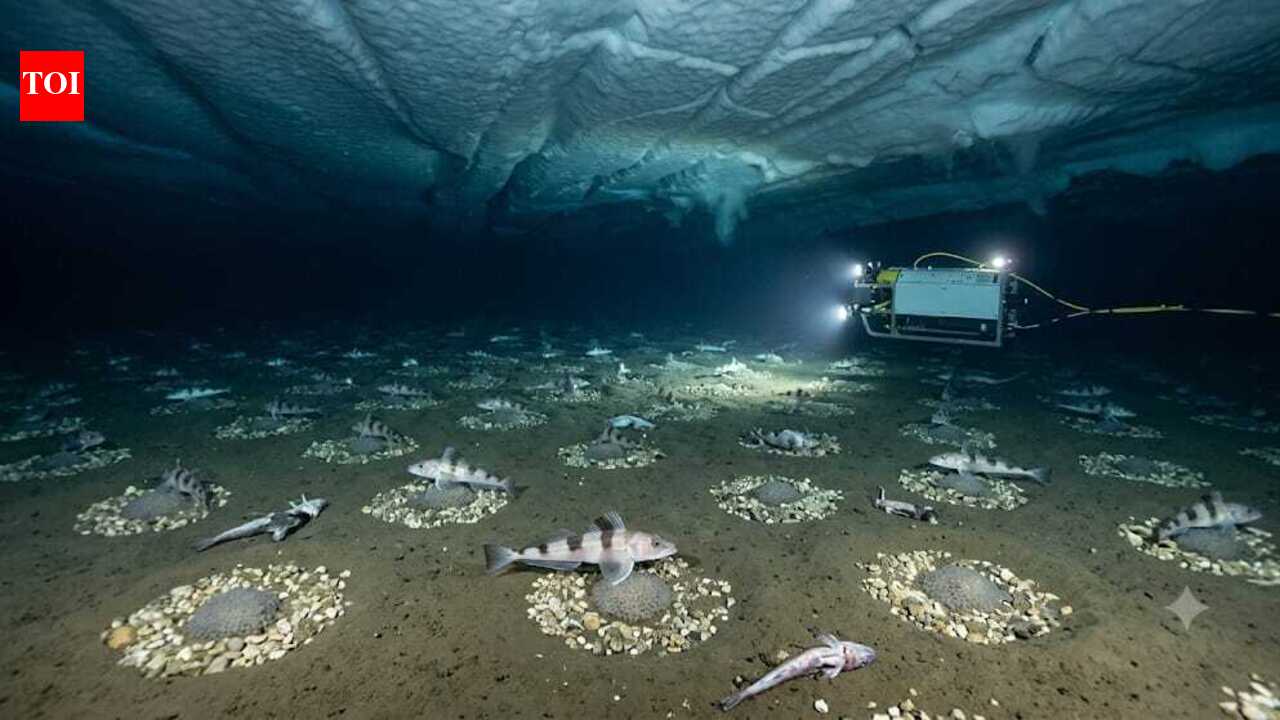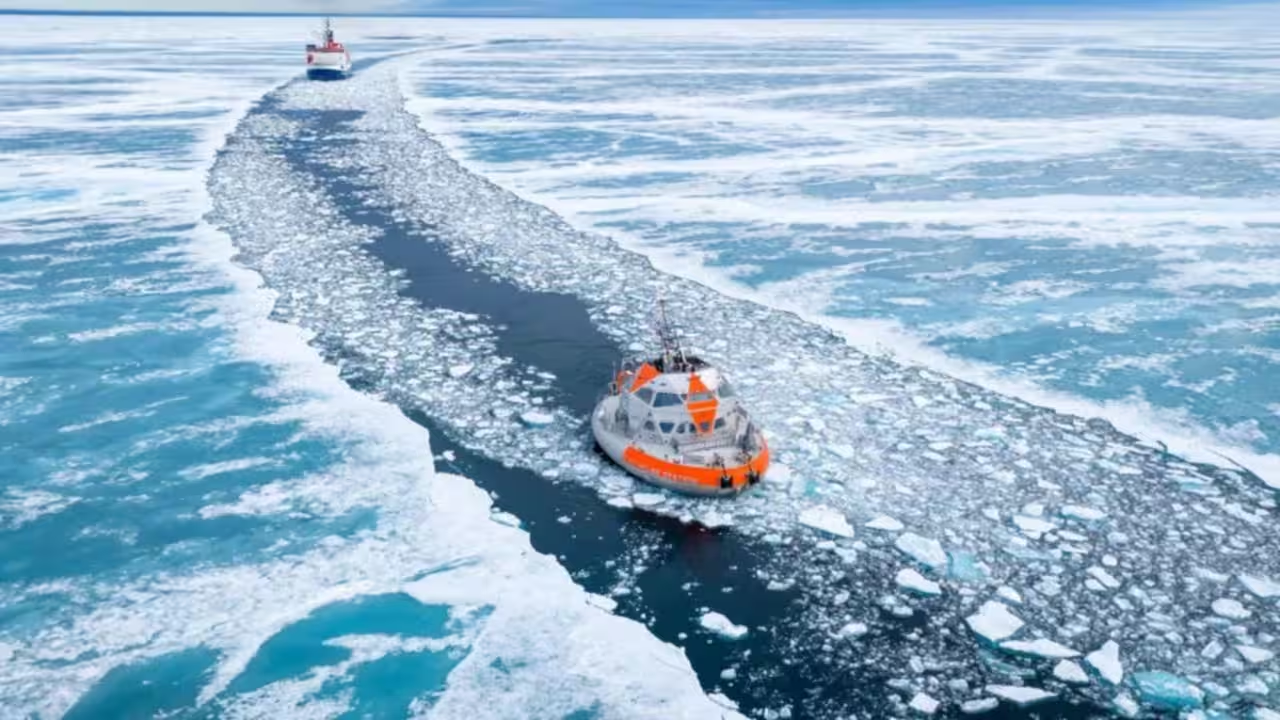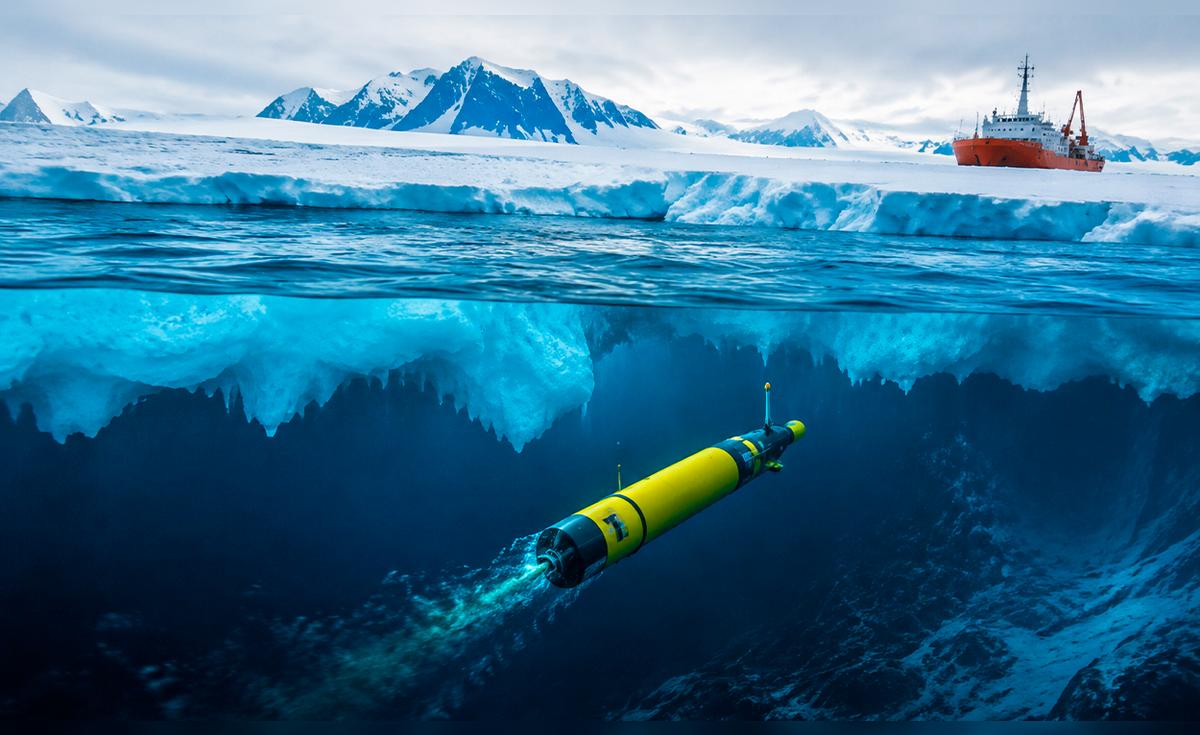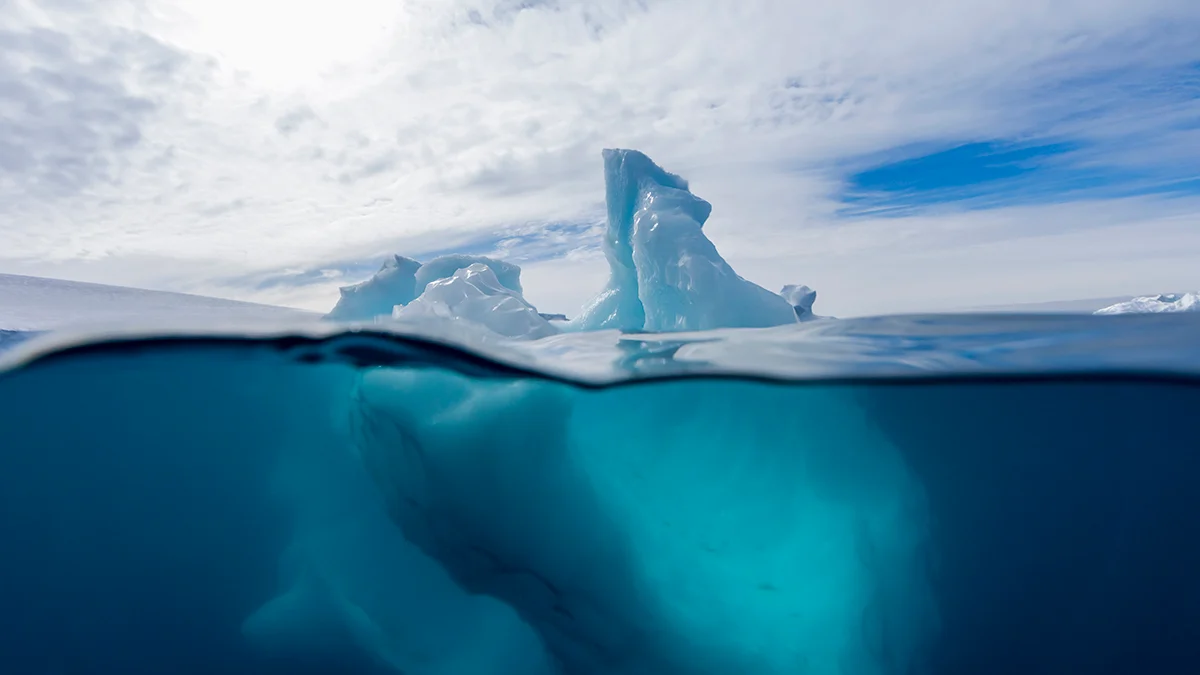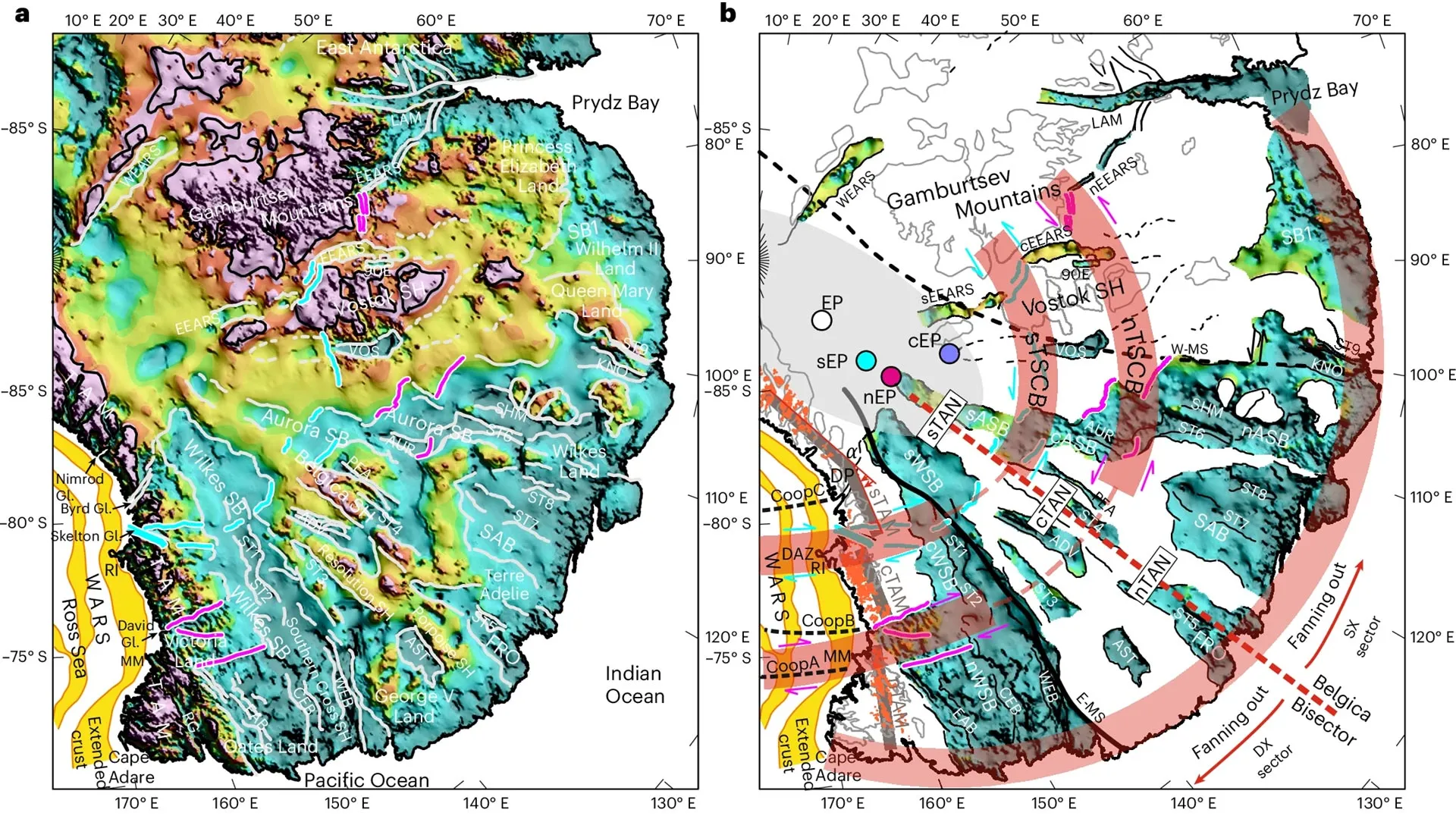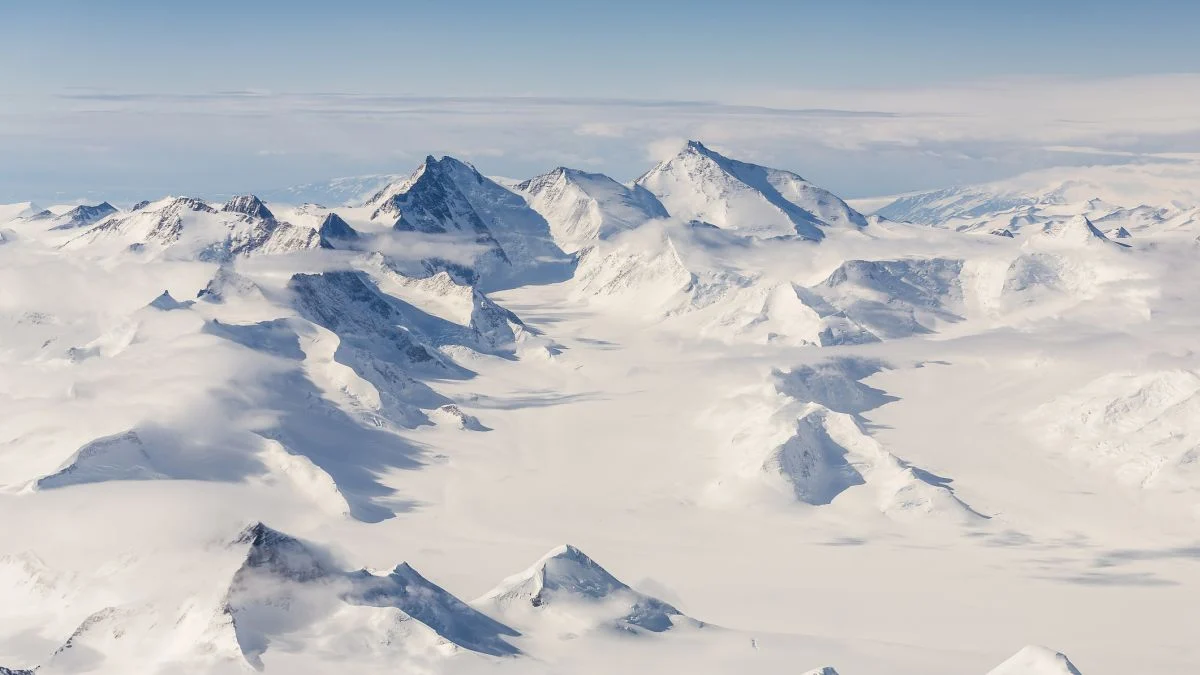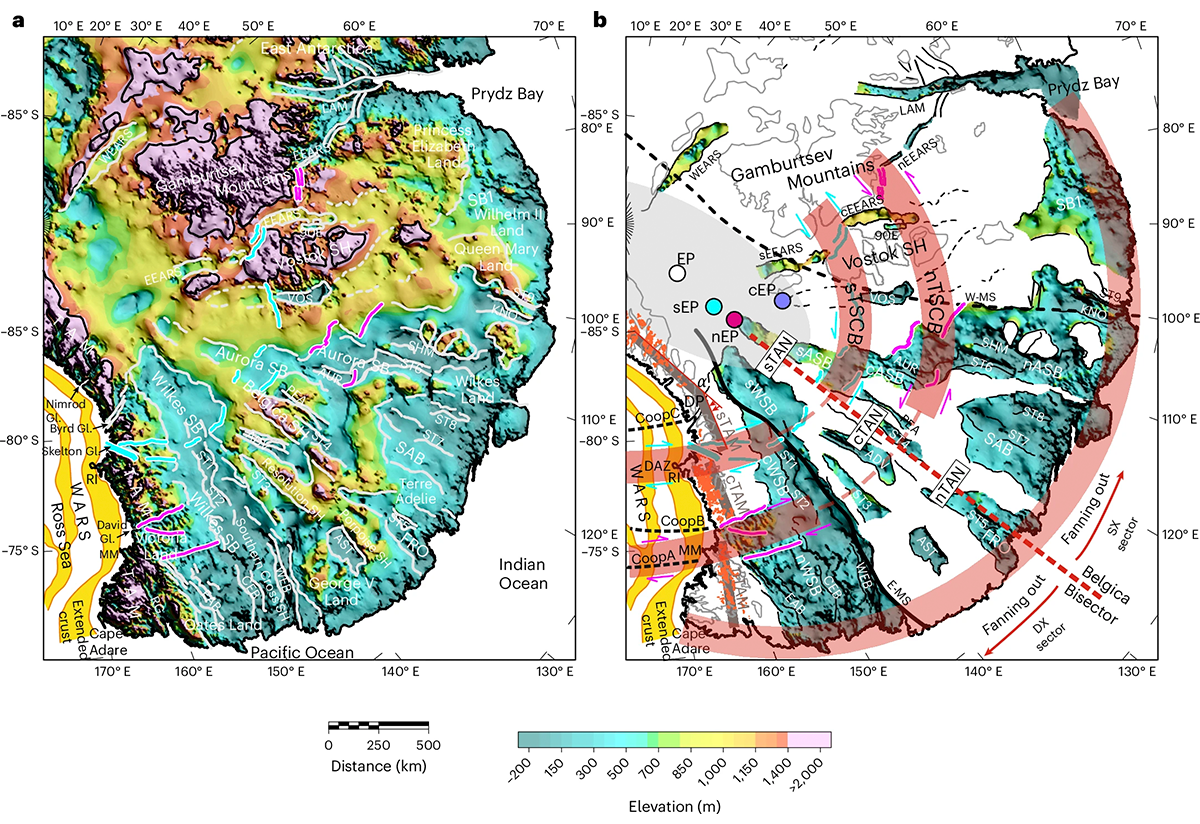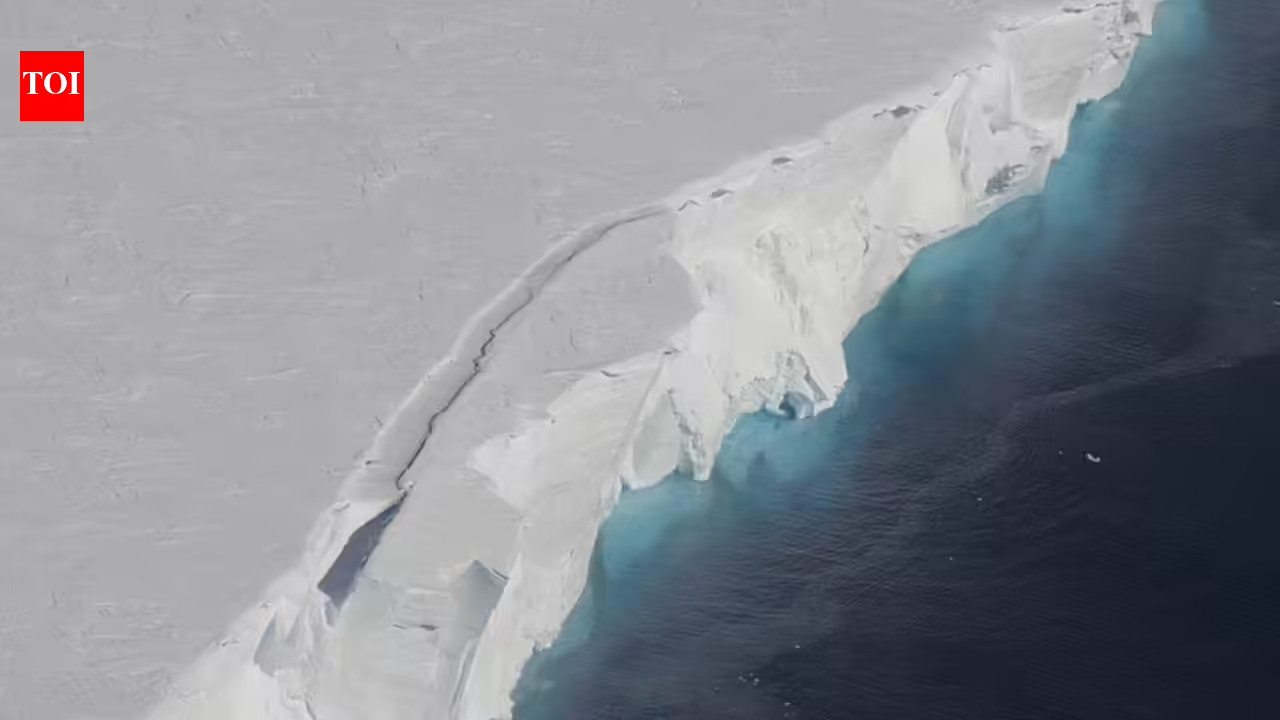
Image of Edge of the Dotson Ice Shelf| Image Credit: Wikimedia CommonsWhen researchers sent a bright orange robot submarine under Antarctica’s Dotson Ice Shelf, into one of Antarctica’s least accessible ice-shelf cavities, they didn't expect it to reveal a hidden landscape far more complex than previously understood. Nor did they anticipate the robot would disappear under the ice two years later and never return.But before its disappearance, the autonomous underwater vehicle, nicknamed Ran, produced a crucial result: the first high-resolution maps of a large section of the ice shelf's hidden underside.Giant terraces, deep channels and unusual teardrop-shaped pits and cracks, carved by ocean water flowing far below the surface, are all visible in the ice. The finding is now offering scientists an unprecedented glimpse into the unseen changes happening below Antarctica, according to a study published in Science Advances.Beneath the ice, a world no one had seenWhat looks to most of us as simply a huge, floating slab of frozen water has a far more complex underbelly.The Dotson Ice Shelf in West Antarctica is located in an area that researchers monitor closely for its vulnerability to ocean warming. Satellites provide scientists with information about what is happening on the surface, while the underside of an ice shelf is another matter. There are hundreds of metres of ice blocking access. No ship can get under there; no diver can reach it.That is where Ran came in. The self-piloting submarine was designed to navigate the darkness between the ocean and the ice shelf undersides.On a 2022 mission, it travelled more than 1,000 km under the shelf over 27 days. Researchers said that Ran mapped some 55 square miles of the ice base at an unparalleled resolution.Neither smooth, nor flatUpon examining the data, the team was surprised at the rough nature of the underside of the ice shelf. The observations showed everything from colossal, step-like terraces carved into the ice, to long channels, and strange, tear-drop shaped cavities that spread across areas experiencing rapid melt.According to lead researcher Anna Whlin of the University of Gothenburg, seeing the images was like the first glimpse we had of the far side of the Moon. That may seem hyperbolic, but only until you realise that, until Ran, the landscape was almost completely unknown.Scientists had pieces of the puzzle, but this was the first detailed overview of the whole landscape.Image of topographic reconnaissance map of the Martin Peninsula area in Antarctica| Image Credit: Wikimedia CommonsThe ocean is doing more workThe findings suggest that some processes occurring beneath ice shelves may be more complex than current models assume. One key finding is that melting under Antarctica’s ice shelves is inconsistent.Warm ocean water melting the ice from below, and currents travelling beneath the ice, are shaping a very diverse landscape. The deep, tear-drop-shaped pits, for instance, suggest that very complex fluid dynamics are taking place very close to the ice-ocean boundary; the shape likely relates to the currents interacting with the ice itself and could influence the rate at which the shelf continues to thin and melt.Why a floating shelf mattersThe loss of floating ice shelves like Dotson doesn't directly cause sea levels to rise, but if their loss of mass accelerated, glaciers behind them would rush into the sea more quickly.The US National Snow and Ice Data Center notes that floating ice shelves play an important role in restricting the movement of inland ice. The melting of ice shelves can indirectly contribute to global sea-level rise by reducing the restraint they place on inland glaciers.The robot that never resurfacedThe robot never made it back. Its discoveries did.The story took an unexpected turn during a follow-up mission in January 2024, when Ran failed to return after a dive beneath the ice shelf. The robot conducted a dive, then the signals ceased, and a large-scale search failed to locate it.While exactly what happened is unknown, Ran’s findings are helping scientists get insights into a part of Antarctica so remote that most people will never know its hidden landscape, even though Ran itself never returned.
A Swedish research robot submarine detects unknown structures beneath Antarctica’s Dotson Ice Shelf, and the find suggests ice shelf’s underside is more complex than expected
When researchers sent a bright orange robot submarine under Antarctica’s Dotson Ice Shelf, into one of Antarctica’s least accessible ice-shelf cavities, they didn't expect it to reveal a hidden landscape far more complex than previously understood. Nor did they anticipate the robot would disappear under the ice two years later and never return.
674 words~3 min read