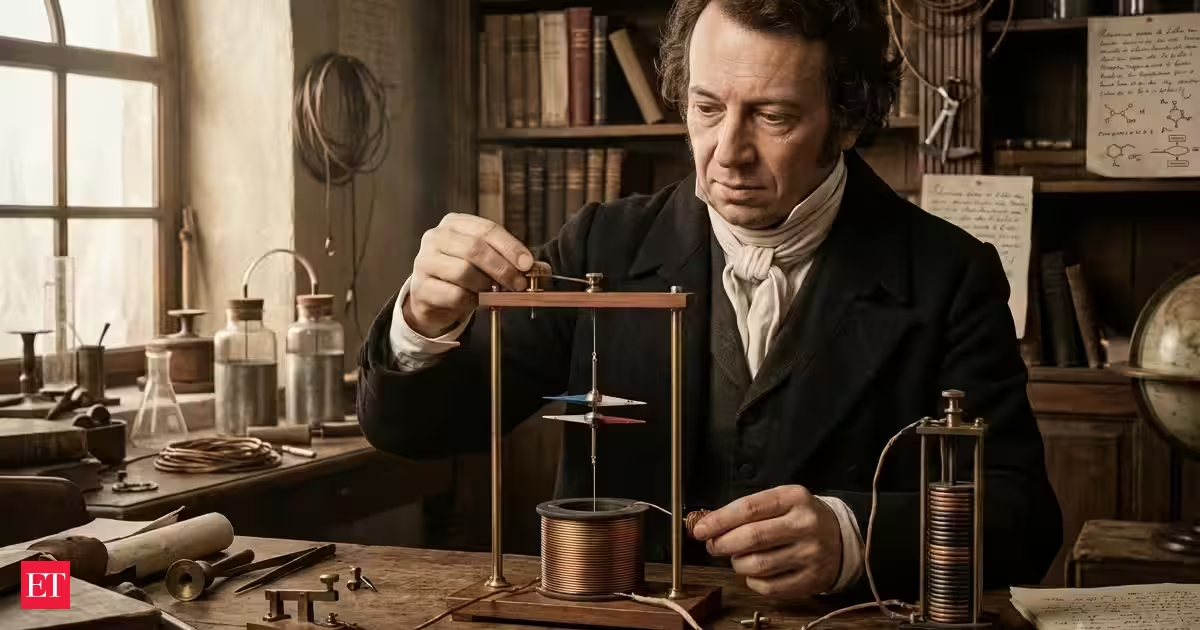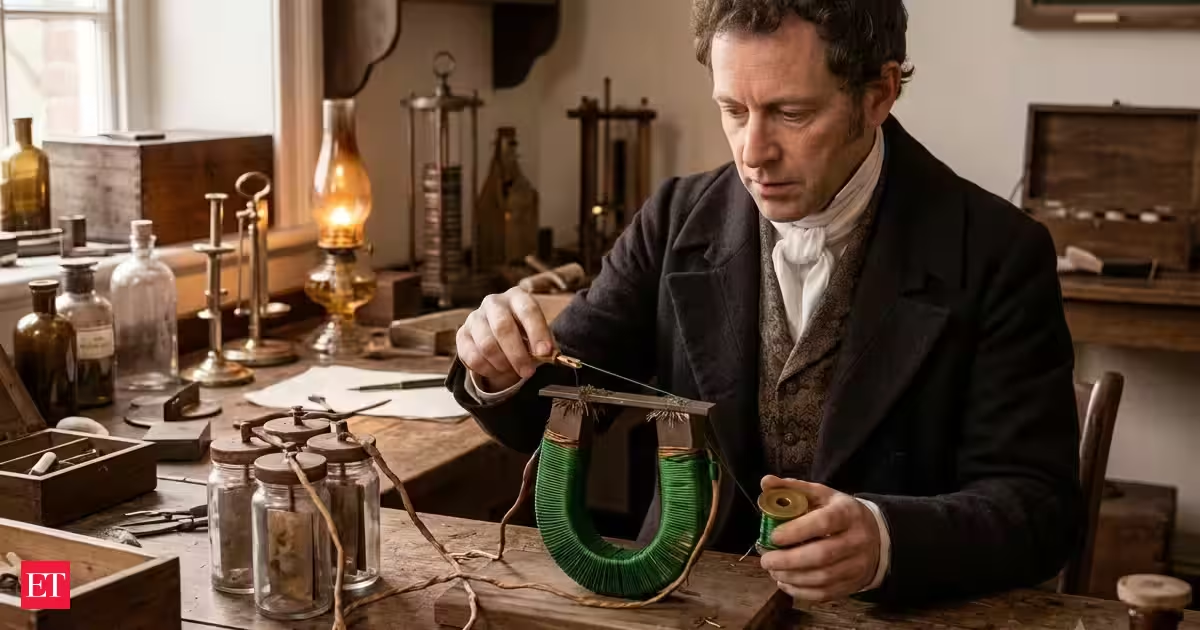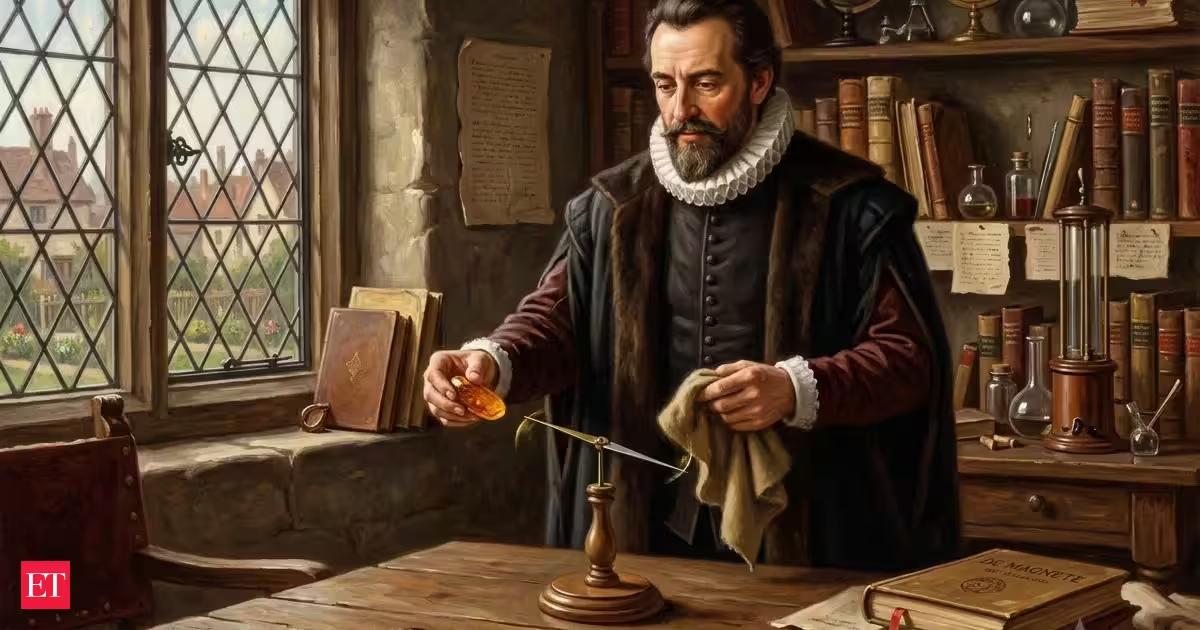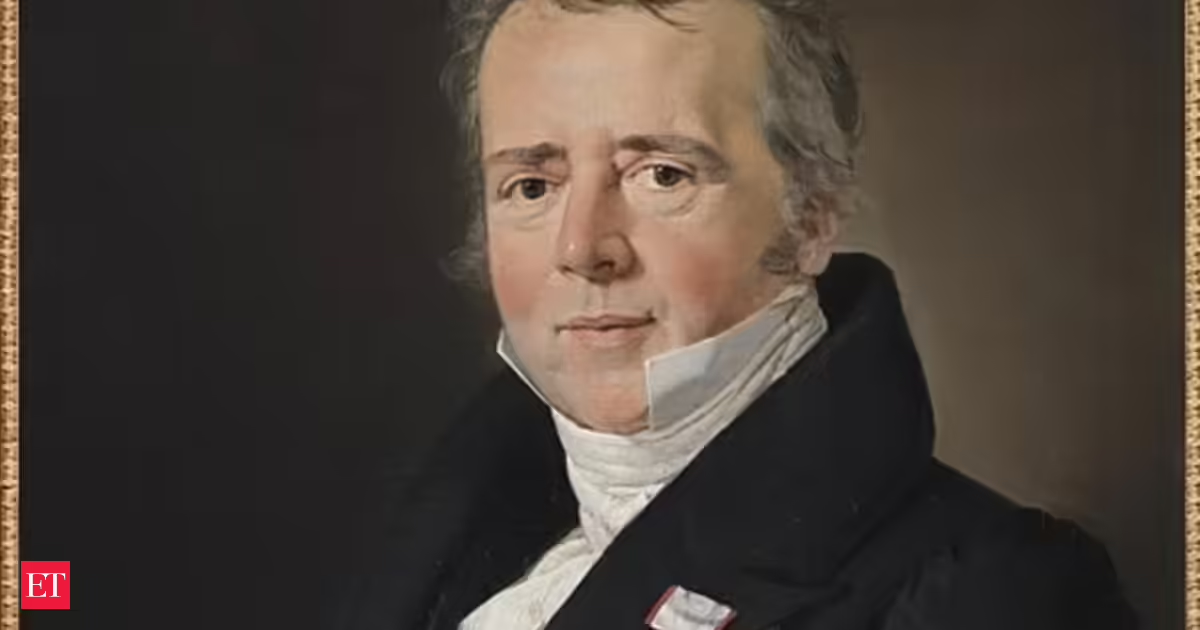
In 1820, Danish physicist Hans Christian Ørsted stumbled upon something huge while doing an experiment during one of his lectures. He saw that a compass needle moved when electric current zipped through a wire. Though the movement was barely noticeable, it showed that electricity and magnetism weren't separate but somehow linked.This finding is key to modern physics today. It makes stuff like electric motors, generators, telecommunication devices, and even computers tick. But here's what's really cool: Ørsted figured out this big idea using just basic stuff, like a battery, some wire, and a compass.That small setup ended up revealing profound truths about our world. So, it wasn’t about how complicated the gear was; it was all about Ørsted spotting a tiny clue and seeing its vast importance.A classroom demonstration became a scientific breakthroughIn 1820, Hans Christian Ørsted, a Danish physicist, made an amazing discovery while giving a lecture. When electric current flowed through a wire, it made a nearby compass needle twitch. Even though the movement was slight, it showed that electricity and magnetism were connected, and this connection is super important for modern physics. It helps make electric motors, generators, telecommunication gadgets, and computers possible. What’s really neat is that Ørsted used simple equipment: a battery, wire, and compass to get this insight. From such a basic setup came major revelations about our world. So, the complexity wasn't in his tools, but in recognizing a small clue's big impact.Hans Christian Ørsted | Wikimedia CommonsThe moving needle revealed a hidden connectionModern physics easily explains this now, but back in 1820 it was totally revolutionary. According to the U.S. National Institute of Standards and Technology, when you pass electricity through a wire, it generates a magnetic field around that wire. So if you put a compass near it, the needle will respond to this field rather than just pointing towards the Earth’s magnetic north pole.The National High Magnetic Field Laboratory adds that Ørsted saw the needle move when he switched an electric circuit on and off. This was key – it meant the needle moved specifically when current flowed. It wasn’t random; it showed a direct link to electricity. Once scientists understood this, a whole new area of research appeared. The compass wasn’t just a compass anymore; it was proof that electricity creates magnetic effects, challenging old ideas and opening up exciting new possibilities.Statue of Ørsted at Oxford | Wikimedia CommonsA small observation sparked a scientific revolutionThe discovery didn't stay as just a neat oddity for long. According to the National High Magnetic Field Laboratory's history of electromagnetism, Ørsted's finding kicked off a big spurt of science action. It involved people like André-Marie Ampère, François Arago, and later on, Michael Faraday. Soon enough, folks all over Europe jumped into figuring out how electricity and magnetism worked together. A review in PubMed Central talks about how Ørsted's experiment gave scientists something hands-on to measure and play around with. When others could replicate that compass needle shifting, they started forming ideas and building stuff from it. In hindsight, what's really surprising is how low-key everything seemed. Nothing grand like boom, bang, or instant wow moment. Just a compass pointing in a weird way and Ørsted getting its importance.His real success wasn't just spotting the needle move. It was knowing that the needle's unusual movement was worth investigating. That small twitch connected two branches of science that had long been studied separately and helped launch the field of electromagnetism. More than two centuries later, it remains one of the clearest examples of how a careful observation can transform the way people understand the natural world.
In 1820, a physicist noticed a compass twitch near a wire, and electromagnetism changed science
In the year 1820, a pivotal moment in science emerged when Danish physicist Hans Christian Ørsted made an astonishing observation. He noticed that when an electric current passed through a wire, it caused a nearby compass needle to deflect. This seemingly simple event uncovered a fundamental relationship between electricity and magnetism, laying the groundwork for modern physics.
601 words~3 min read