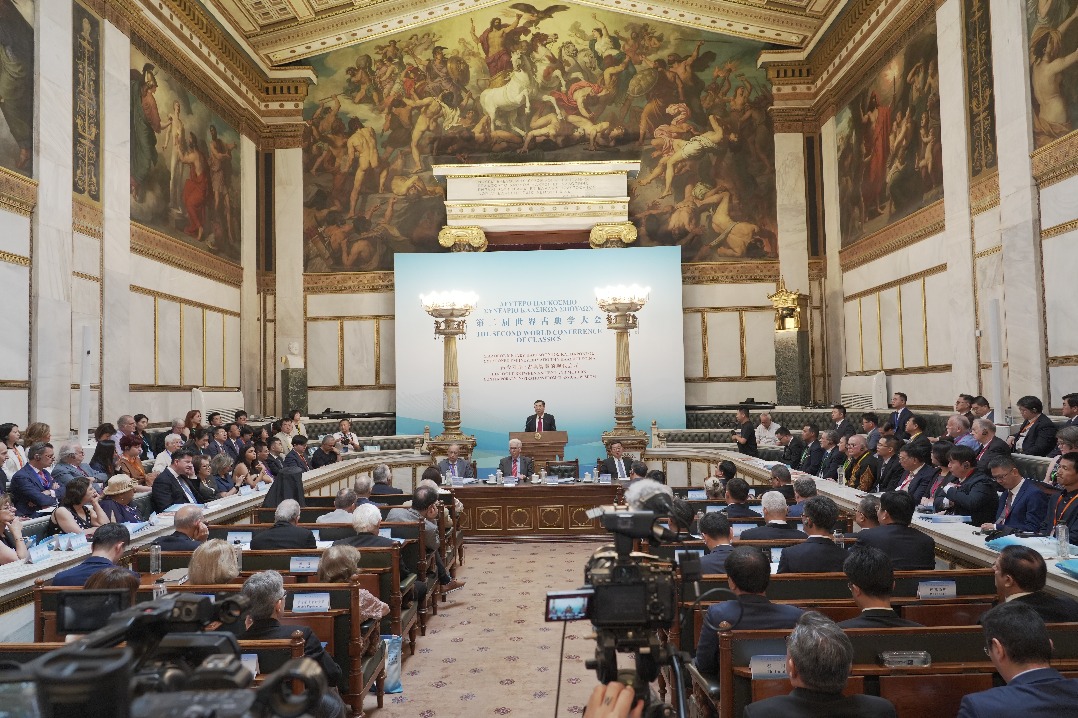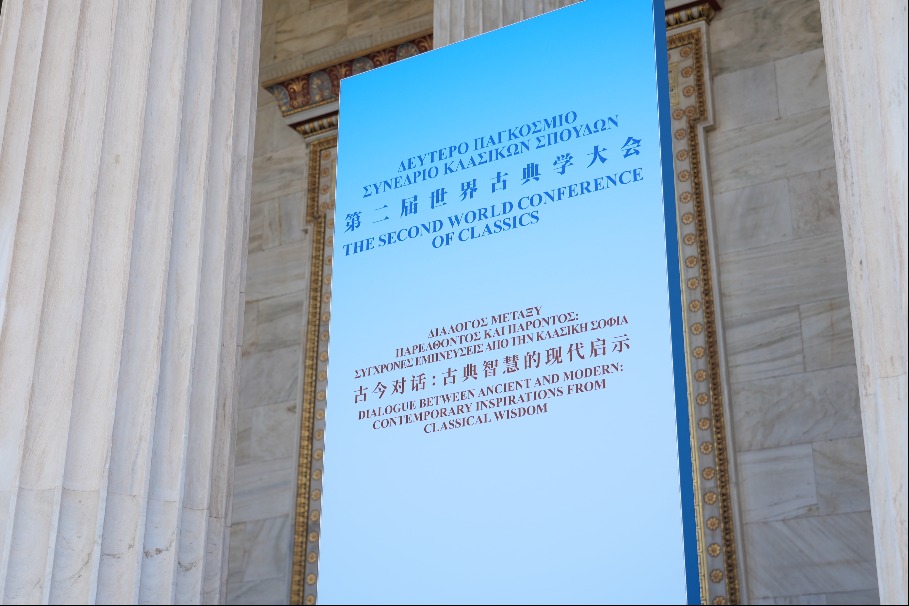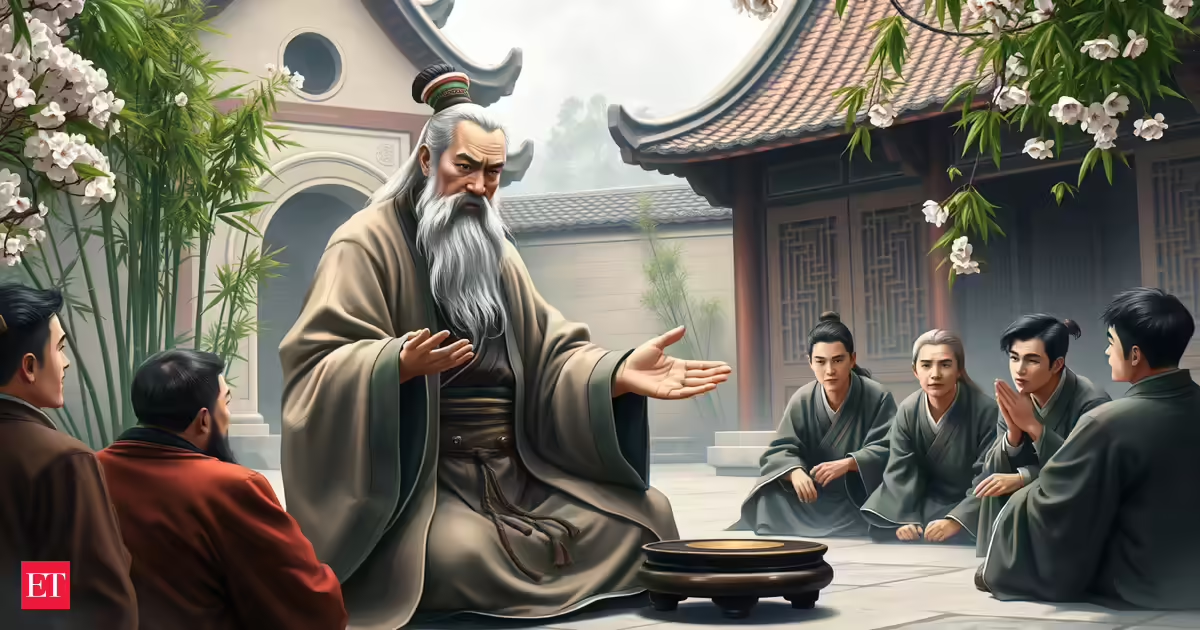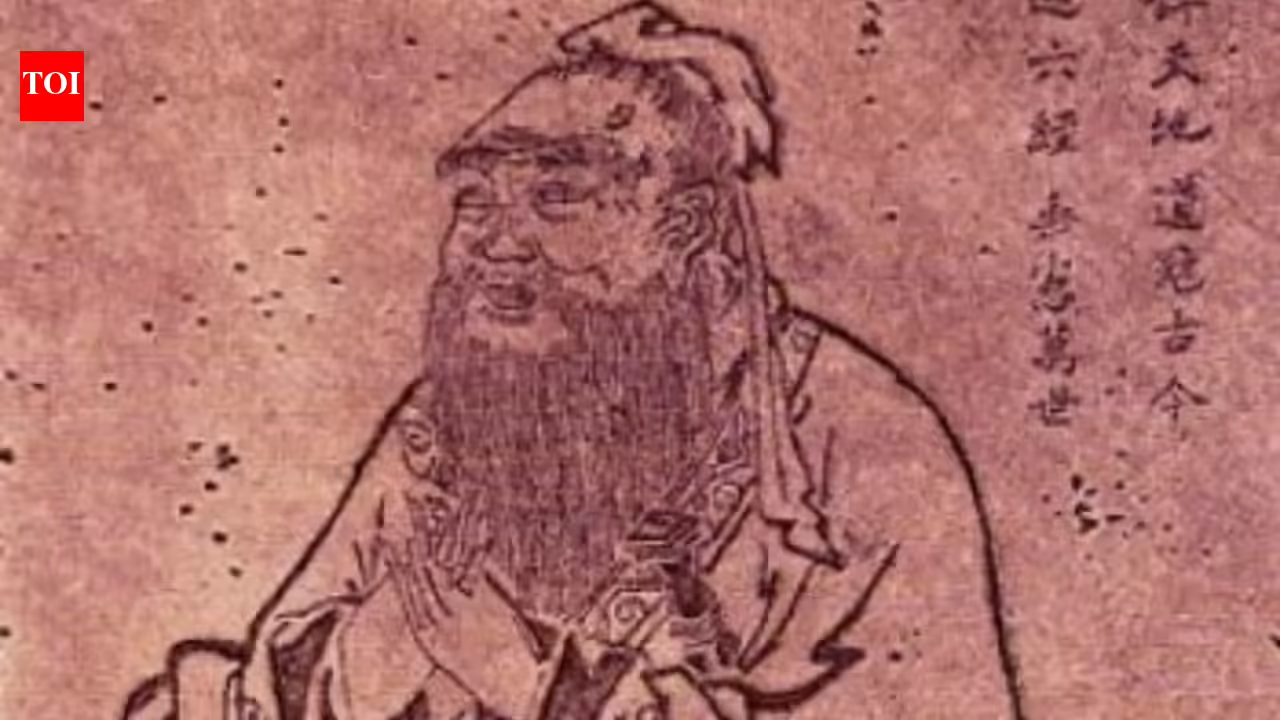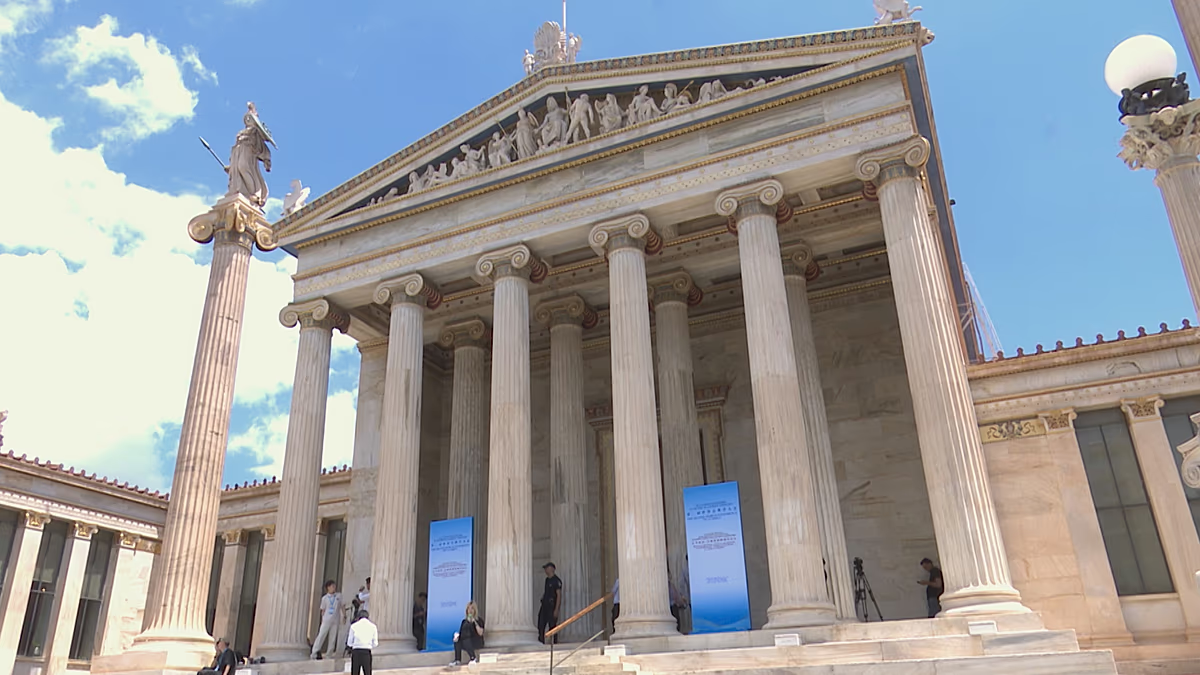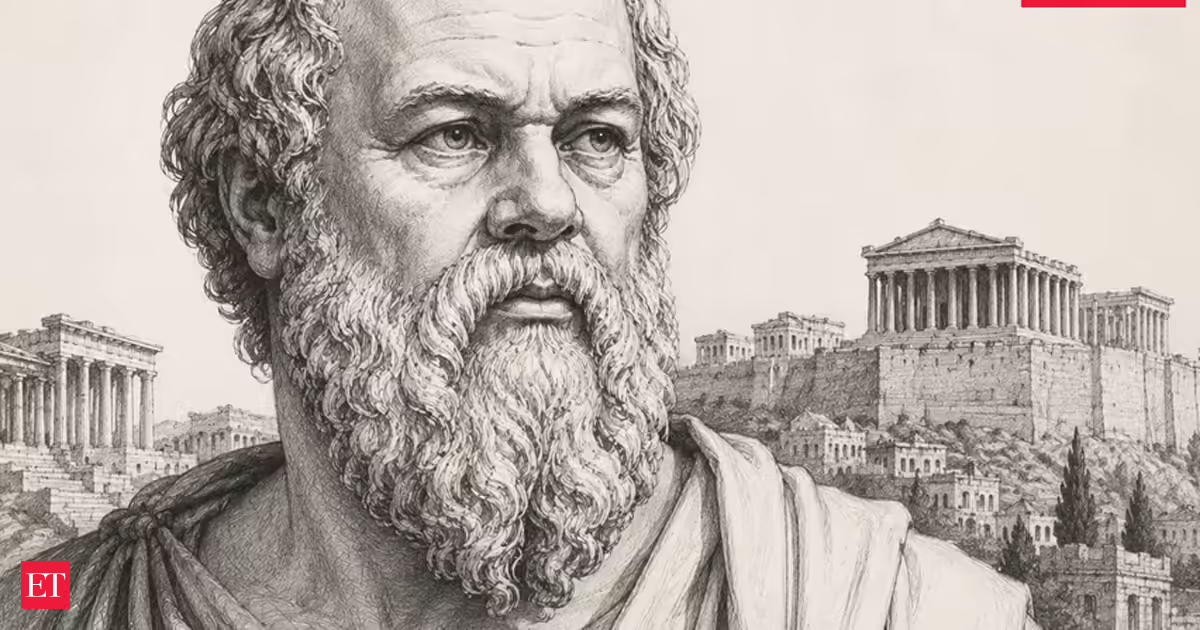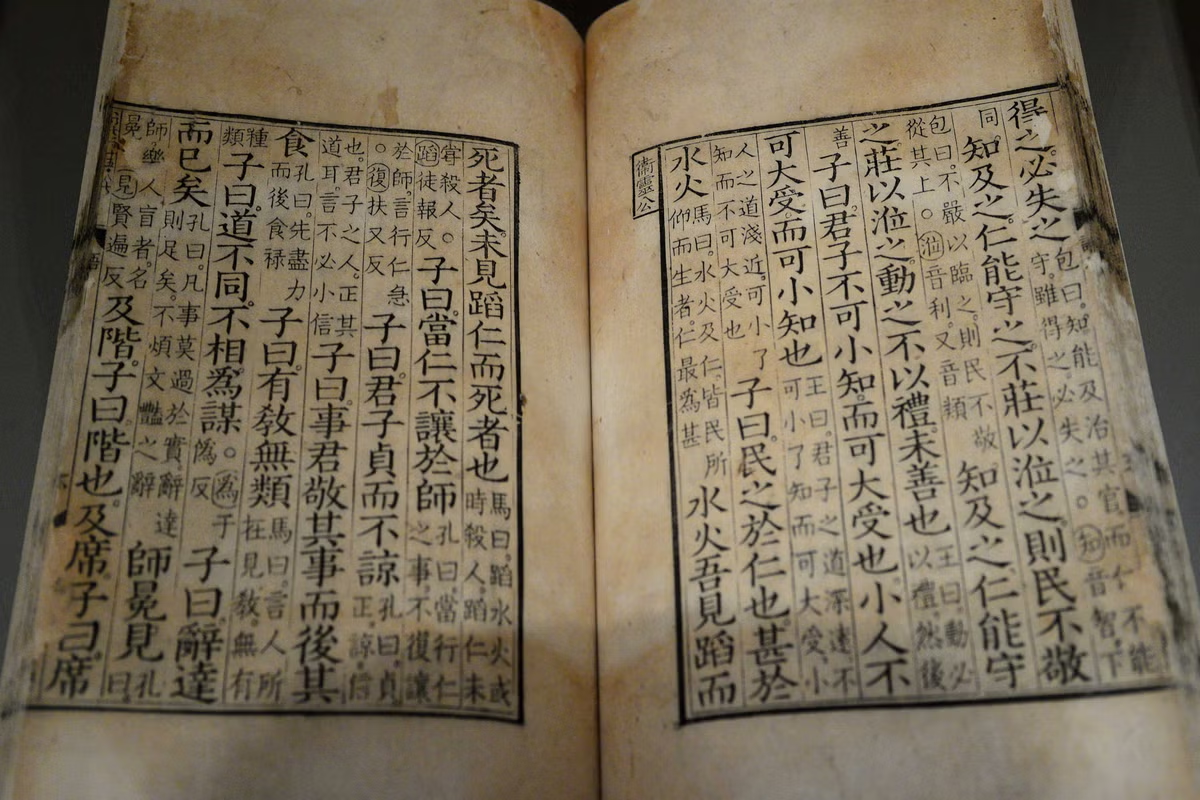
More than 2,000 years after Confucius (551-479 BC) and Socrates (469-399 BC) walked the Earth, an exhibition in Greece is bringing their ideas into the present, using artificial intelligence, immersive experiences and hands-on activities to bridge time, space and culture.The exhibition, Encounter & Enlighten: A Dialogue Across Time and Space, running from 8 to 10 June as part of the Second World Conference of Classics in Athens, highlights the profound intellectual achievements from roughly 800 BC to 200 BC, a time that German philosopher Karl Jaspers called the Axial Age.During this pivotal era, Eastern and Western civilisations independently produced enduring wisdom that continues to shape human thought.“Eastern civilisation gave rise to profound reflections from Chinese philosophers, including Confucians, Taoists, Mohists, and Legalists, on how to build an orderly society and establish moral norms for human relationships,” says Fu Yongju, director of the Qilu Institute of Technology’s Qilu Culture Research Institute.“Western civilisation, meanwhile, produced the enduring wisdom of Socrates, Plato (427-347 BC) and Aristotle (384-322 BC), who explored the nature of reason, the principles of logic, and the fundamental laws of the natural world.“Remarkably, both civilisations established institutional homes for intellectual dialogue and debate around the same time.”Plato’s Academy, founded in Athens around 387 BC by the philosopher himself, became a centre for philosophical and mathematical research that operated for centuries.The Jixia Academy was located in Linzi (in present-day Zibo, Shandong province), the capital of the ancient Qi state. Funded by the Qi state and operating for more than 150 years from roughly 374 BC to 221 BC, the academy is considered China’s earliest state-sponsored but privately run university.It brought together academic schools, including Confucians, Legalists, Taoists, Mohists, and logicians who freely lectured, debated, and advised rulers without holding official positions. According to historical records, there were dozens of schools of thought during the period before the Han Dynasty (206 BC-AD 220), and the Jixia Academy was a central venue where these schools exchanged ideas.This historical legacy is not just a subject of academic study in Shandong, the home of Confucius and Mencius (372-289 BC). It is being actively revived. As part of this effort, the Qilu Institute of Technology has built the Jixia Building, which re-creates the spirit of the ancient Jixia Academy through lectures, scholarly dialogues and debates. Using digital technology and diverse artistic forms, teachers and students can experience the inclusive, free-thinking spirit.The Athens exhibition highlights the resonance between Chinese and Greek thinkers. For example, Mencius’ teaching — a wise person first makes their own understanding clear, and then uses that clarity to make others clear — echoes the Greek belief that education is not the filling of a pail, but the lighting of a fire.“Both value knowledge by emphasising the methods of education and moral cultivation,” says Qi Jinjiang, a professor at the Qilu Culture Research Institute of the Qilu Institute of Technology.As the exhibition brings together the wisdom of East and West, its deeper significance is also being underscored by Chinese scholars.“Hosting this exhibition in Greece is not just about presenting an equal dialogue between Chinese and Western civilisations, but also about faithfully conveying the long continuity of Chinese civilisation and the essential values of Confucius and Confucianism, so that the world may truly understand China,” says Yang Chaoming, a distinguished professor at the Advanced Institute for Confucian Studies, Shandong University.Qi further explains that among the major schools of thought, Confucianism served as the foundation and core. Confucius compiled the Six Classics in his later life.“These Six Classics are not merely Confucian texts, but served as the common curriculum for all the schools during the Jixia Academy period,” Qi says. As the world faces unprecedented challenges, scholars say that Axial Age wisdom offers valuable insights for building a shared future for humanity.Fu says that through equality, respect, inclusiveness, and mutual learning, different civilisations can reach consensus and achieve common development.
Bringing ancient philosophy into the present
THE ARTICLES ON THESE PAGES ARE PRODUCED BY CHINA DAILY, WHICH TAKES SOLE RESPONSIBILITY FOR THE CONTENTS
644 words~3 min read