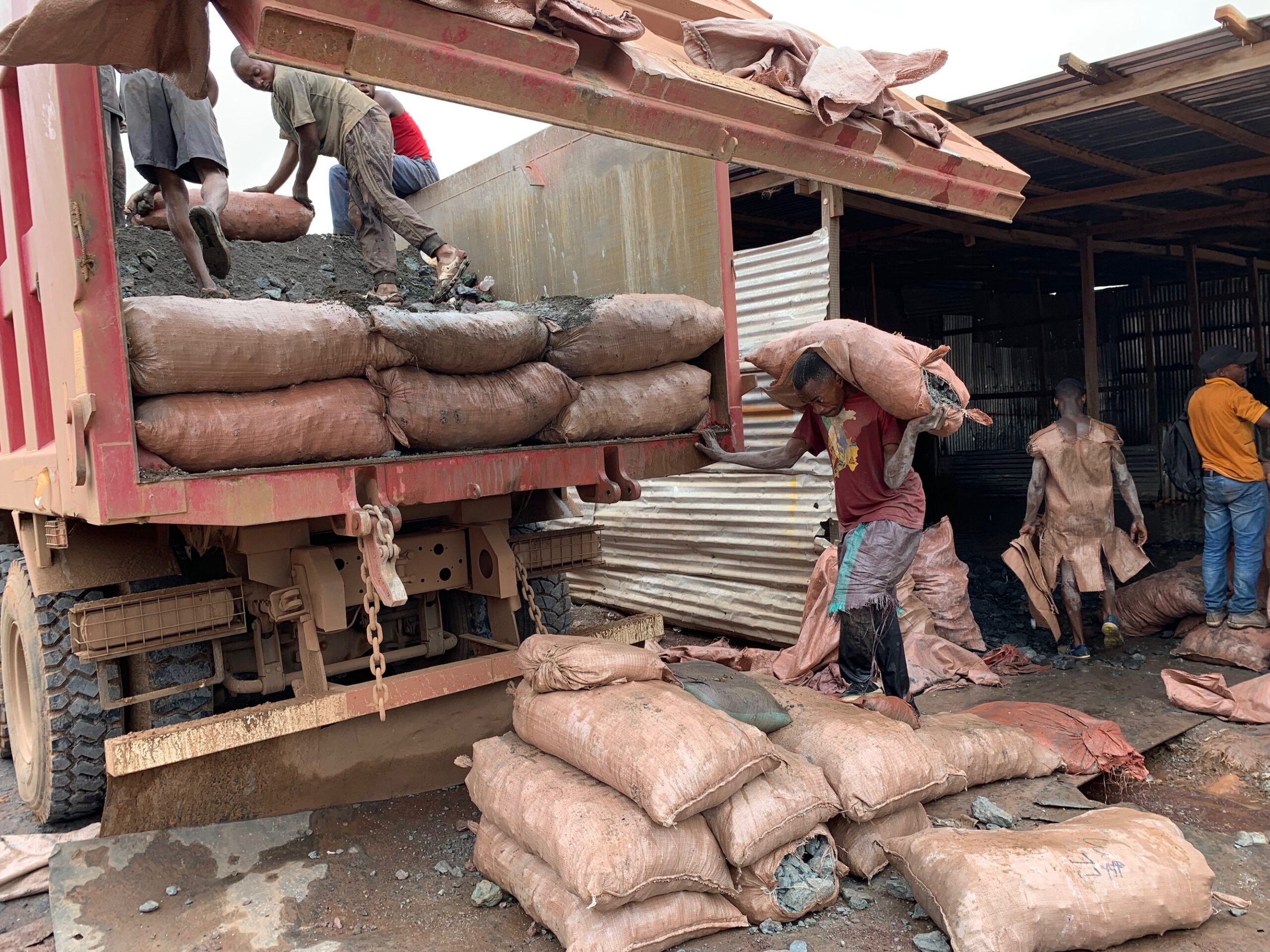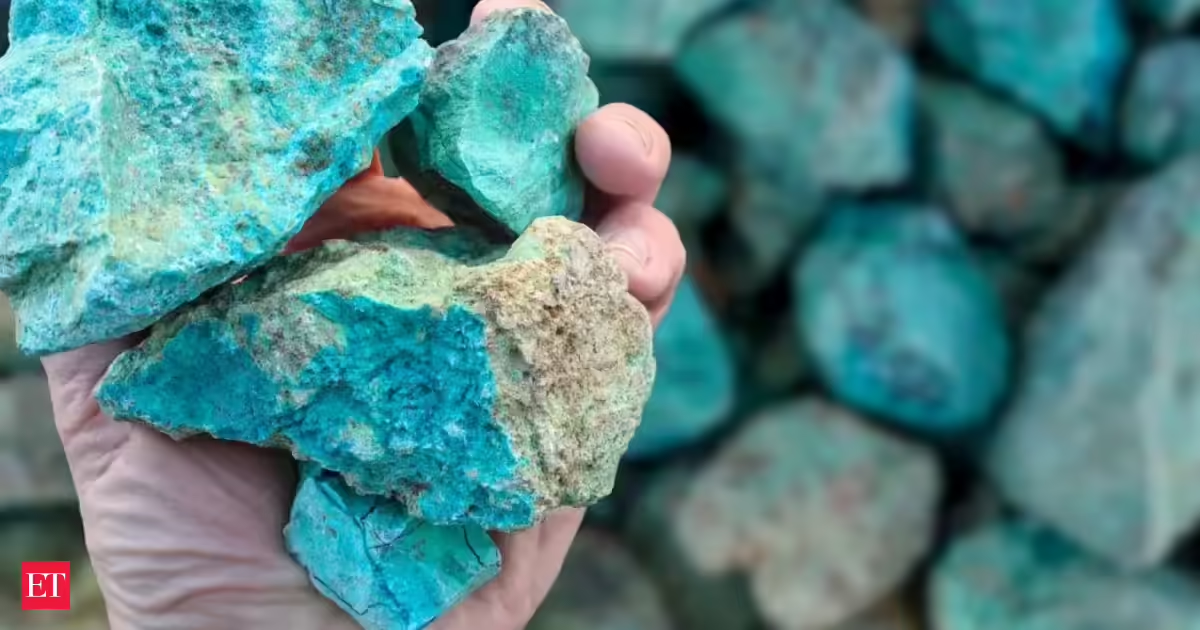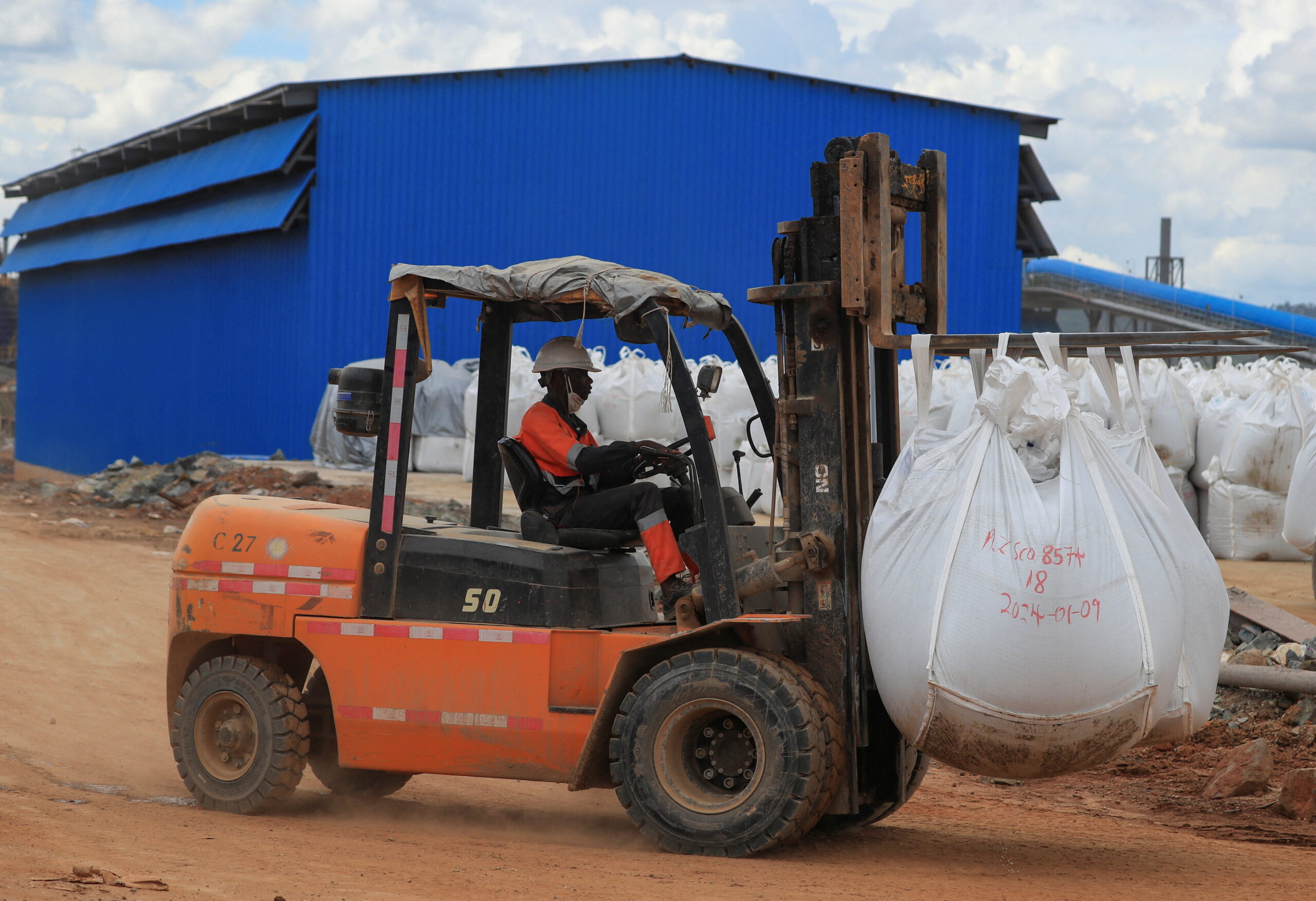
As competition for minerals needed to produce clean energy technologies intensifies, a growing number of countries have resorted to an age-old mechanism to cope with the threat of scarcity: stockpiling.The world’s biggest economies are racing to shore up reserves of cobalt, lithium, graphite and rare earths, which are needed to produce batteries, electric vehicles, wind turbines and electric systems to wean the global economy off fossil fuels. The same minerals are also increasingly sought after to manufacture military hardware and chips for AI, adding further pressure on supplies.But the cutthroat scramble to build up reserves threatens to drive up the costs of the energy transition by intensifying competition and pushing up prices of key materials needed to produce clean energy technologies, research published today has found.“If you undermine the financial viability of [clean energy] projects through higher raw material costs, you’re going to delay their roll-out,” co-author Hugh Miller, the critical minerals lead at the Centre for Economic Transition Expertise at the London School of Economics and Political Science, told Climate Home News.Stockpiling “is happening, whether we like it or not", said Miller. “But if we're going to do it, we need to have it in a coordinated manner that means we don’t have massive market volatility and adverse implications from every country trying to go at it alone,” he added.The rise of stockpilesA growing number of governments have adopted national stockpiling programmes in response to heightened geopolitical tensions around mineral supply chains.Earlier this year, US President Donald Trump announced the establishment of a critical mineral reserve known as “Project Vault” to protect American businesses from shortages after China imposed export restrictions on rare earth supplies.US Secretary of State Marco Rubio delivers opening remarks at the Critical Minerals Ministerial in Washington DC (Credit: Official State Department photo by Freddie Everett)Beijing suspended the measures until November as part of a trade truce with Washington but the episode spooked Western governments and exposed how strategic materials can be weaponised to achieve geopolitical objectives.Australia, China, the EU and India have also announced measures to create strategic mineral reserves. Japan and South Korea already have long-standing mineral stockpiling programmes."Legitimate concerns"“There are legitimate concerns with regards to potential global shortages of these minerals,” said Miller, citing rapidly rising and concurrent mineral demand for the energy transition, AI, data centres, and military technologies, combined with underinvestment in new supplies for some minerals, such as copper.While stockpiling can serve as an emergency response mechanism during acute shortages, it does nothing to address the underlying concentration risks in mineral supply chains. The Democratic Republic of Congo holds around 70% of the world's cobalt reserves, for example, while China dominates the processing of 19 out of 20 minerals deemed critical by a large number of nations.Uncoordinated stockpiling programmes risk heightening the price volatility they are designed to hedge against, according to the report.Researchers found that if Australia, China, the EU, India, Japan, South Korea and the US simultaneously built reserves of minerals to cover six months of imports, the aggregate stockpile demand could represent up to 34% of global annual cobalt supply and over 10% of global lithium, graphite and copper supply. That could cause a shock to the market, triggering the shortages and price spikes they are trying to avoid.Miller said it was unlikely that every country would stockpile at that rate, but aggregate stockpiling demand of just 5% of global mineral supply would have an impact on prices.Coordinating stockpiles: a role for the IEA?Researchers found that avoiding the negative impacts of stockpiling requires global coordination over how mineral stocks are accumulated and released – a mechanism which already exists for other commodities, including oil.Coordination should include agreed rules for countries to build up their stocks over a slow and staggered timeline and pre-agreed conditions for releasing reserves to provide market predictability and reduce the risk of price spikes.The International Energy Agency (IEA), which was established after the 1970s oil crisis to coordinate emergency oil stock releases among member countries, is best placed to oversee such a mechanism, they say.Earlier this year, IEA member countries called on the agency to strengthen its work on critical minerals, including by providing support to countries “that choose to establish and expand critical minerals stockpiling systems”.But Miller and his co-author Pau Morandi, a policy fellow at the Centre for Economic Transition Expertise, argue that members should go one step further and mandate the IEA to coordinate the security of supplies, rather than only helping individual governments.The IEA has been contacted for comment.A call to action for the G7Miller said he hoped the research could be picked up by the G7 group of wealthy countries, which could lead on mandating the IEA to take on this coordination role.France, which is presiding over the group this year and is hosting leaders in Evian on the shores of Lake Geneva in mid-June, has made strengthening the resilience of critical minerals value chains a priority.In a communique last month, finance ministers agreed to “deepen and expand our cooperation among G7 members and with like-minded partners” to strengthen and diversify critical mineral supply chains and to continue discussions “on how to best organise analytical cooperation”.Sebastien Treyer, executive director of the Paris-based Institute for Sustainable Development and International Relations (IDDRI), said he hoped the G7 leaders’ summit can help move the discussion on critical minerals towards greater international cooperation to secure the resources the world needs to build a clean economy.From inclusive and mutually beneficial partnerships to mine resources to stockpiling minerals, “we need to coordinate more like a trade organisation than something that is about securing supply," he said.
The scramble to stockpile minerals could drive up energy transition costs
Researchers warn that uncoordinated stockpiling could push up prices of minerals needed for clean energy technologies and delay their roll out
932 words~4 min read