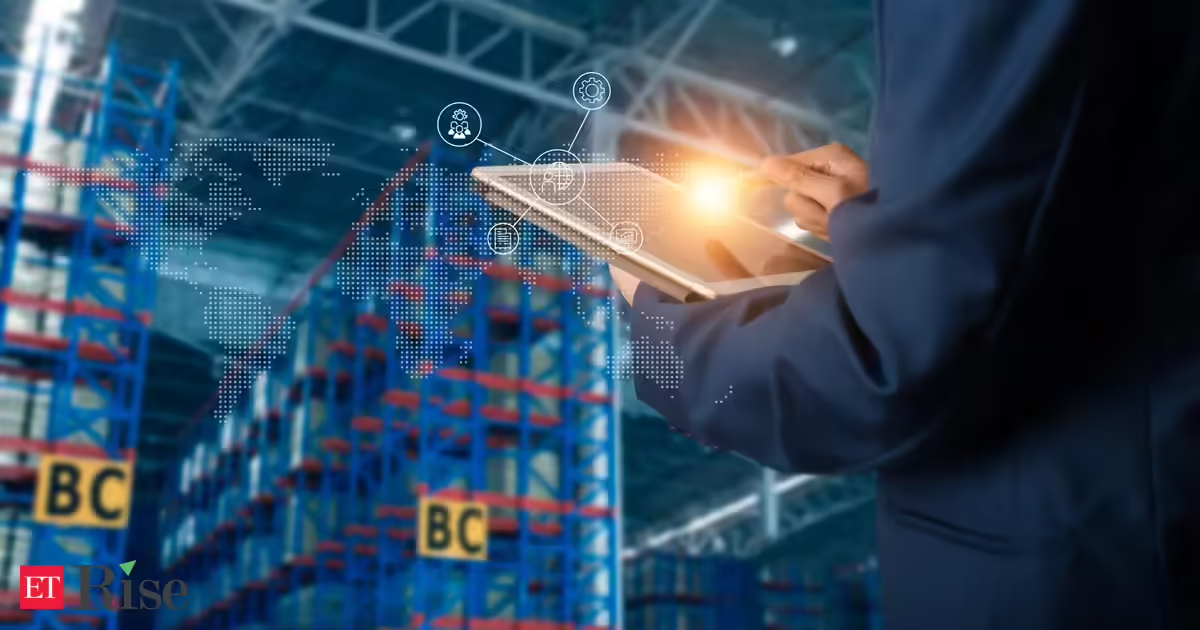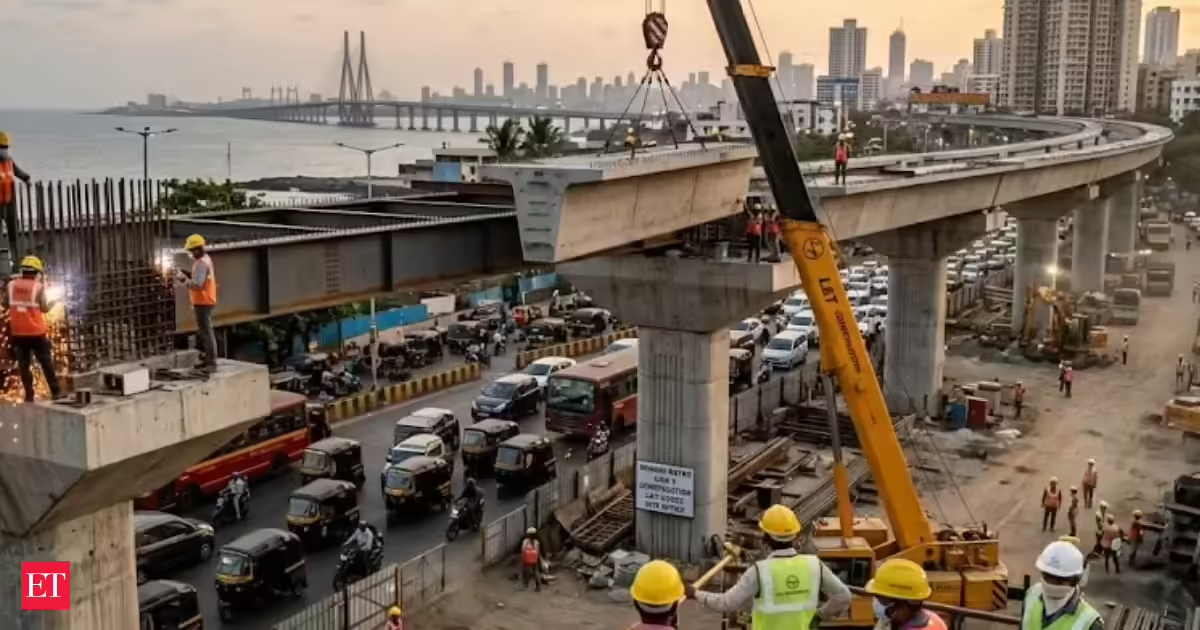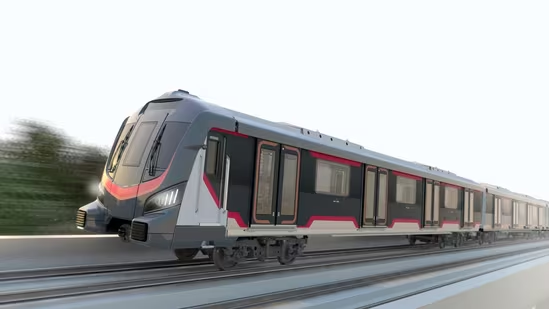
To achieve the ambition of Viksit Bharat, India needs more than economic growth; it requires a logistics backbone that is efficient, technologically advanced, and sustainable. The next decade will be decisive, with three pillars shaping the industry’s trajectory: cost reduction, technology integration, and decarbonisation. The Indian logistics will be positioned as a global supply chain leader with these pillars combined. Sustainable transport (Shutterstock)India has long wrestled with the challenge of high logistics costs. The revision of estimates by the National Council of Applied Economic Research places costs closer to 8% of GDP rather than the previously cited 13–14%, showing progress. Improving modal balance, strengthening multimodal hubs, and better connecting last-mile networks offers the real opportunity. Moving a larger proportion to rail and waterways can help to lower emissions, alleviate traffic, and unlock significant savings, as road freight still accounts for most freight. Studies suggest that improving modal share could cut vehicular freight activity by nearly half by 2050, reshaping both costs and sustainability outcomes.The evolving customer behaviour and growing company demands have spurred a wave of innovation and expenditure throughout the logistics value chain. Data-driven solutions, digital tools, and automation are rapidly becoming the norm rather than the exception. Real-time visibility is rising fast; about 53% of firms globally now use IoT for real-time shipment tracking, which underscores how visibility has become a need rather than a differentiator.Once a static link in the chain, warehousing is today an arena of rapid transformation. More and more businesses are using blockchain for data encryption, IoT for SKU-level monitoring, and augmented reality and drones for inventory audits. The prediction of variations in demand and adjusting it in real time is enabled due to big data analysis. Whereas digital twins let warehouses explore layouts, flows, and resource allocation before physically making modifications. These solutions boost productivity as well as give the resilience required to deal with demand spikes, supply chain interruptions, and changing formats like omnichannel retail and quick commerce.The Integrated Fleet Management system plays a pivotal role in enhancing sustainability within transport operations. Through path optimisation and decreased idle times, IFM maximises fuel efficiency; hence, less fuel is used and greenhouse gas emissions are lowered. Furthermore, frequent replacements and the consequent environmental impact are reduced by regular maintenance and timely repairs, which helps in increasing the lifespan of vehicles. Driven by both the circular economy push and the rising demand for returns management in e-commerce, reverse logistics is gaining prominence. Businesses must adopt cradle-to-cradle principles, which emphasise reuse, remanufacturing, and recycling, as the government actively promotes the shift from a linear to a circular economy, to stay competitive over time.The urgency to decarbonise India’s transport sector is a shared priority across government, businesses, and society. The sector stands at a crossroads. Continuing along a fossil fuel–dependent trajectory risks undermining India’s Paris Agreement commitments. Incremental measures, while reducing emissions growth, fall short of delivering the scale of change required.The alternative solutions, including accelerating the electrification of public and freight transport, scaling up electric vehicle adoption, and simultaneously decarbonising the power sector to ensure that the energy transition is genuinely clean, will help the nation achieve its ambition. Indian Railways’ commitment to 100% electrification by FY26 is one example of systemic change that blends cost savings with climate responsibility.Energy-efficient buildings, solar-powered facilities, and green certifications are becoming more common as sustainability is also extending into warehouses and distribution hubs. For companies, embedding sustainable practices throughout the value chain is a must; it creates goodwill, attracts environmentally conscious customers, and strengthens partnerships with global businesses to meet Scope 3 emission targets.While major metros remain crucial, the next phase of logistics growth will be defined by secondary markets. Tier 2 and Tier 3 cities are experiencing rising e-commerce penetration, prompting the development of micro-fulfilment centres, dark stores, and on-demand warehousing models. These formats are essential for efficient last-mile delivery and will play a central role in serving the expanding consumer base outside traditional urban centres.The Indian logistics sector will gain a competitive advantage once these three trajectories: Cost, technology, and decarbonisation, are aligned. Including technology will help to increase efficiency, therefore supporting fuel management and carbon tracking. Long-term cost reduction can come from decarbonisation projects like modal shift and green warehousing, sometimes simultaneously. Meeting sustainability goals, cost competitiveness will help India to reinforce its status as a production and export centre. The decisions taken now will shape logistics as a source of strategic advantage or as a cost centre. India can build a logistics system that supports growth, competitiveness, and sustainability in equal measure, by embracing smarter networks, integrating advanced technologies, and committing to ambitious decarbonisation.(The views expressed are personal)This article is authored by Nikhil Agarwal, president, CJ Darcl Logistics Ltd.
Transition towards sustainable transportation
This article is authored by Nikhil Agarwal, president, CJ Darcl Logistics Ltd.
784 words~4 min read