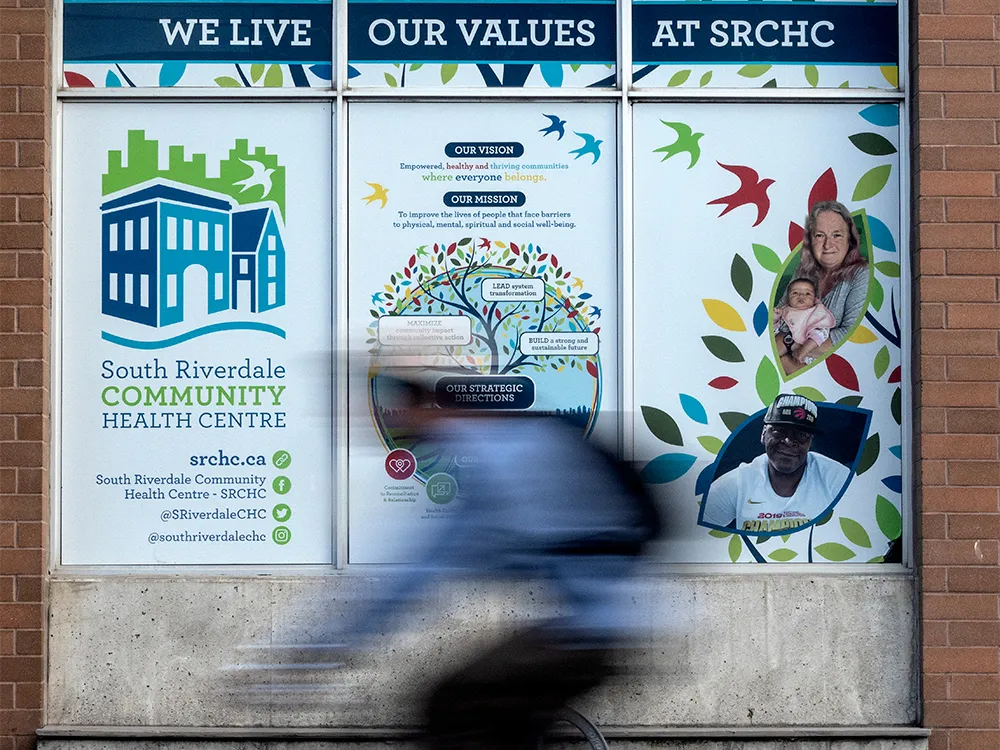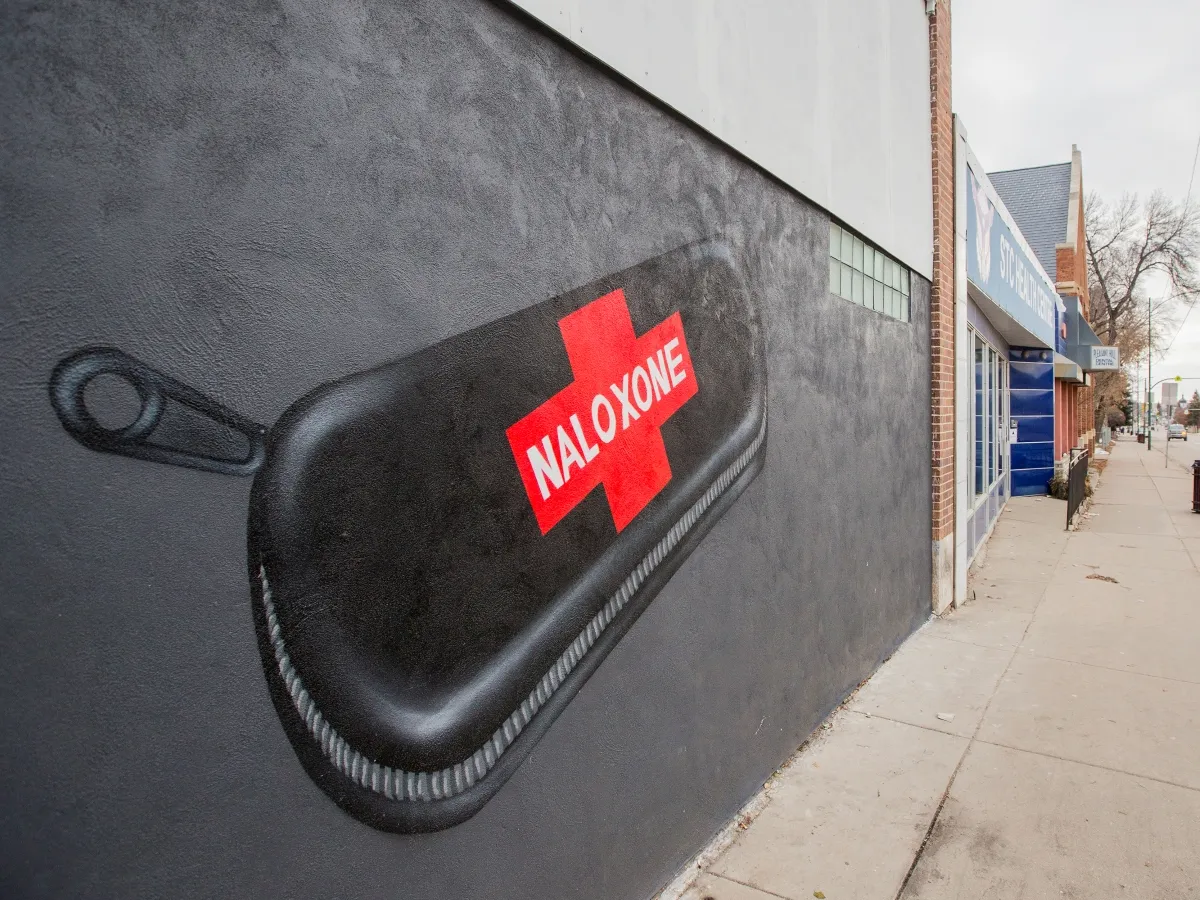
Skip to Content Subscribe Our Offers My Account Manage My Subscriptions FAQ Newsletters Canada Canadian True Crime Canadian Politics Health World Israel & Middle East Financial Post NP Comment Longreads Puzzmo Diversions Comics NP News Quiz New York Times Crossword Horoscopes Life Eating & Drinking Style Sponsored Play for Ontario Travel Travel Canada Travel USA Travel International Cruises Travel Essentials Culture Books Celebrity Movies Music Theatre Television Business Essentials Advice Lives Told Tails Told Shopping Buy Canadian Home Living Outdoor Living Tech Style & Beauty Kitchen & Dining Personal Care Entertainment & Hobbies Gift Guide Travel Guide Deals Savings National Post Store More Sports Hockey Baseball Basketball Football Soccer Golf Tennis Driving Vehicle Research Reviews News Gear Guide Obituaries Place an Obituary Place an In Memoriam Classifieds Place an Ad Celebrations Working Business Ads Archives Healthing Epaper Manage Print Subscription Profile Settings My Subscriptions Saved Articles My Offers Newsletters Customer Service FAQ Newsletters Canada World Financial Post NP Comment Longreads Puzzmo Diversions Life Shopping Epaper Manage Print Subscription HomeNP CommentDerek Finkle: Injection sites don't reduce harm, but activists won't listenWhen an Alberta injection site closed, its clients didn't have more fatalities and emergency department visitsLast updated 17 minutes ago You can save this article by registering for free here. Or sign-in if you have an account.A large mural of a Naloxone kit is featured on the front of AIDS Saskatoon's supervised consumption site in 2019. Photo by Saskatoon StarPhoenix/Matt SmithA recent study about what happened when an injection site in Red Deer, Alberta, shut down has opened a highly contentious new chapter in the ongoing debate over supervised consumption sites.Enjoy the latest local, national and international news.Exclusive articles by Conrad Black, Barbara Kay and others. Plus, special edition NP Platformed and First Reading newsletters and virtual events.Unlimited online access to National Post.National Post ePaper, an electronic replica of the print edition to view on any device, share and comment on.Daily puzzles including the New York Times Crossword.Support local journalism.Enjoy the latest local, national and international news.Exclusive articles by Conrad Black, Barbara Kay and others. Plus, special edition NP Platformed and First Reading newsletters and virtual events.Unlimited online access to National Post.National Post ePaper, an electronic replica of the print edition to view on any device, share and comment on.Daily puzzles including the New York Times Crossword.Support local journalism.Create an account or sign in to continue with your reading experience.Access articles from across Canada with one account.Share your thoughts and join the conversation in the comments.Enjoy additional articles per month.Get email updates from your favourite authors.Create an account or sign in to continue with your reading experience.Access articles from across Canada with one accountShare your thoughts and join the conversation in the commentsEnjoy additional articles per monthGet email updates from your favourite authorsSign In or Create an AccountorThe study, published in early March by the journal Addiction, concluded that fatalities and emergency department visits did not increase for the site’s clients after it closed. The findings attracted the attention of Alberta Premier Danielle Smith, who shared my column about it on social media.Days later, one of Canada’s most vocal pro-injection site social media influencers, Guy Felicella, denounced the study as “methodologically flawed.” “SOMETHING STINKS,” he insisted. More articulate criticism soon landed in the form of an op-ed in the Edmonton Journal, and later, a letter to the editor in Addiction.This newsletter from NP Comment tackles the topics you care about. (Subscriber-exclusive edition on Fridays)By signing up you consent to receive the above newsletter from Postmedia Network Inc.We encountered an issue signing you up. Please try againThe study also drew the ire of Dan Werb, a proponent of injection sites and scientist with MAP Centre for Urban Health Solutions in Toronto, who was quoted in a March CBC article, saying he found aspects of the Red Deer study “troubling as an academic.”The main criticism Werb levelled was that the study was produced by the Canadian Centre of Recovery Excellence (CoRE), a recovery-oriented research entity created in 2024 by the Alberta government. The study includes the following disclaimer about funding: “This research did not receive a specific project-based grant. (CoRE), with which several authors are affiliated, receives public funding from the Government of Alberta. The funder had no role in the study design, data analysis, interpretation of results, manuscript preparation or the decision to submit this work for publication.” Werb was concerned that this amounted to a conflict of interest.Werb also expressed dismay that CoRE had been able to track the Red Deer injection site clients by using their health-care numbers. In 2024, Alberta began requiring injection site clients to provide enough information (name, birth date) to connect to a personal health identifier, something other provinces don’t do. This data was used in the Red Deer study, which, to the authors’ knowledge, made them the first “to assess the effects of (injection site) closure using individual-level, linkable administrative health data.”Though the lead author of the study, Dr. Nathaniel Day, made it clear that the data CoRE received was “anonymized” to protect the privacy of the clients, Werb still saw the requirement for health numbers at injection sites as akin to being “surveiled” at what “are supposed to be low-barrier services.”Apart from the fact that research shows that providing personal information isn’t a barrier to service (a 2024 report by the University of Alberta on drug users in Edmonton’s inner city found that only 1.2 per cent of those surveyed said having to provide enough information to connect to their personal health numbers was a barrier to using an injection site), it’s a bit of a headscratcher that Werb would object to a study tracking what happened to clients after such a site was closed.Why? Because this is exactly what several of Werb’s fellow MAP scientists proposed to study when the Ontario government closed nine injection sites on March 31, 2025, for being too close to schools and daycare facilities.The January 2025 board meeting minutes for the South Riverdale Community Health Centre, which housed one of the nine Toronto sites that closed later that spring, state that the centre was “partnering with researchers to ensure that the number of overdoses in the community are tracked after the closure of consumption sites.”This research, which received a $1.4-million grant from the Canadian Institutes of Health Research in 2025, involves an all-star slate of pro-injection site crusaders who plan to study “the impact of changes to harm reduction service provision on health outcomes in Ontario.” The principal investigators are Gillian Kolla, an assistant professor at Memorial University in Newfoundland and a former postdoctoral fellow at MAP, along with MAP scientists Tara Gomes and Dr. Ahmed Bayoumi, who is known as the godfather of Toronto’s experiment with injection sites.A few of the co-investigators listed are Zoe Dodd, MAP’s “community scholar,” Elaine Hyshka, one of the co-authors of the Edmonton Journal op-ed criticizing the Red Deer study, and Dr. Andrea Sereda, a vocal proponent of injection sites based in London, Ont., whose involvement in drug policy matters have, like Dodd’s, been reported on in the Post.This project sets out to “evaluate the impacts of service closures using longitudinal qualitative interviews, ecological analysis of neighborhood-level data, simulation modeling, and health administrative data.” These researchers won’t be able to link to the individual healthcare data of injection site clients in Ontario because those sites didn’t require clients to provide it. The study will therefore be forced to rely on lower quality, “qualitative interviews” with whatever former site clients they’re able to track down.In other words, the MAP-affiliated scientists decided to embark on a study based on “ecological analysis” and “simulation modeling” in lieu of superior healthcare data not available to them, but when confronted with such superior data in the Red Deer study, Dan Werb and Elaine Hyshka chose to undermine it over some questionable ethical objections.In April, Gomes appeared on a podcast to discuss, with other panellists, the Red Deer study and media coverage it garnered. There was collective grief that the headlines the study was generating were not necessarily justified by its findings.At no time did Gomes or her co-panellists complain about a study published late last year that tracked publicly available crime data around Toronto injection sites, which was also mischaracterized in the media. A McGill University news release about the study, which called increased crime around injection sites a “myth,” was also misleading and was followed by media coverage with headlines like “No link between supervised consumption sites and crime rates.” In January, the study’s author told radio host Elias Makos that such headlines did not accurately describe her findings.While the back and forth about the Red Deer study continued, another op-ed, this time in The Washington Post, was published in April entitled “ ‘Safe Drug Sites’ don’t work. The data proves it.” The authors summarized a new report for the Foundation for Drug Policy Solutions, concluding that such sites “disrupt communities,” “have no effect whatsoever on overdose deaths” and are “clearly illegal” under American federal law.This column inspired a letter to the editor with the headline: “Safe drug sites work. Our data proves it.” This time, one of the co-authors was none other than Dan Werb. He wrote that “neighborhoods with supervised consumption facilities experienced a lower rate of overdose deaths over time,” offering a 2024 study he co-authored as evidence.Of course, nowhere does Werb mention that expert witnesses raised serious concerns with his study’s conclusions in a court case heard in Toronto in March of last year, which I reported on. One of those witnesses was Robert Platt, the associate dean and director of McGill University’s School of Population and Global Health.In his affidavit, which was submitted about two months prior to the hearing, Platt all but accused Werb and his co-authors of cherry-picking data: one of their study periods took place over three months in 2019 that coincided with a drastic drop in overdose rates across Toronto. These were compared to the same three months in 2017, before any injection sites had opened. The data, Platt concluded, raised “significant questions that affect their conclusions.”“It is evident,” Platt wrote, “that rates of overdose were lower in 2019 than in 2018 or in subsequent years, both in the city overall and in neighborhoods close to a (injection site), and that the conclusion that (injection sites) reduce overdose rates is therefore not valid.”This endless thrust and parry around injection sites continued on May 21 in Addiction: following its publication of a letter to the editor which criticized the Red Deer study, the journal has now published a reply to that letter from Nathaniel Day and four colleagues.One of the criticisms levelled at the Red Deer study in the original letter was that a new mobile clinic in the parking lot of the site post-closure was not mentioned. How could such a targeted intervention not have impacted the study’s findings?Day replied by pointing out that such interventions are “not unique to this study.” Every injection site is in a province with its own interventions in place. Alberta was expanding rapid access addiction medicine (RAAM), while Ontario was rolling out more treatment-focused HART Hubs.Health Canada renewed the drug law exemption for the South Riverdale injection site for four months in November 2024, in part so that clients could be properly transitioned to the appropriate services prior to its closure. These types of targeted interventions were, indeed, not unique to Red Deer. As Day put it, they are “a defining feature of real-world policy evaluation rather than a methodological flaw.”Nevertheless, the fact that scientists who produced a study that casts doubt on the efficacy of injection sites are being pilloried for ties to a province-backed research outfit by a much larger group of scientists, armed with five years of federal government funding, whose careers are tied to the success of such sites in a very real way, is a campaign that’s hard to take seriously.If the authors of the Red Deer study are tainted by bias, it’s hard to see the scientists making those allegations as being anything close to bias-free.National Post Join the Conversation This website uses cookies to personalize your content (including ads), and allows us to analyze our traffic. Read more about cookies here. By continuing to use our site, you agree to our Terms of Use and Privacy Policy.
Derek Finkle: Injection sites don't reduce harm, but activists won't listen
When an Alberta injection site closed, its clients didn't have more fatalities and emergency department visits
2,053 words~9 min read