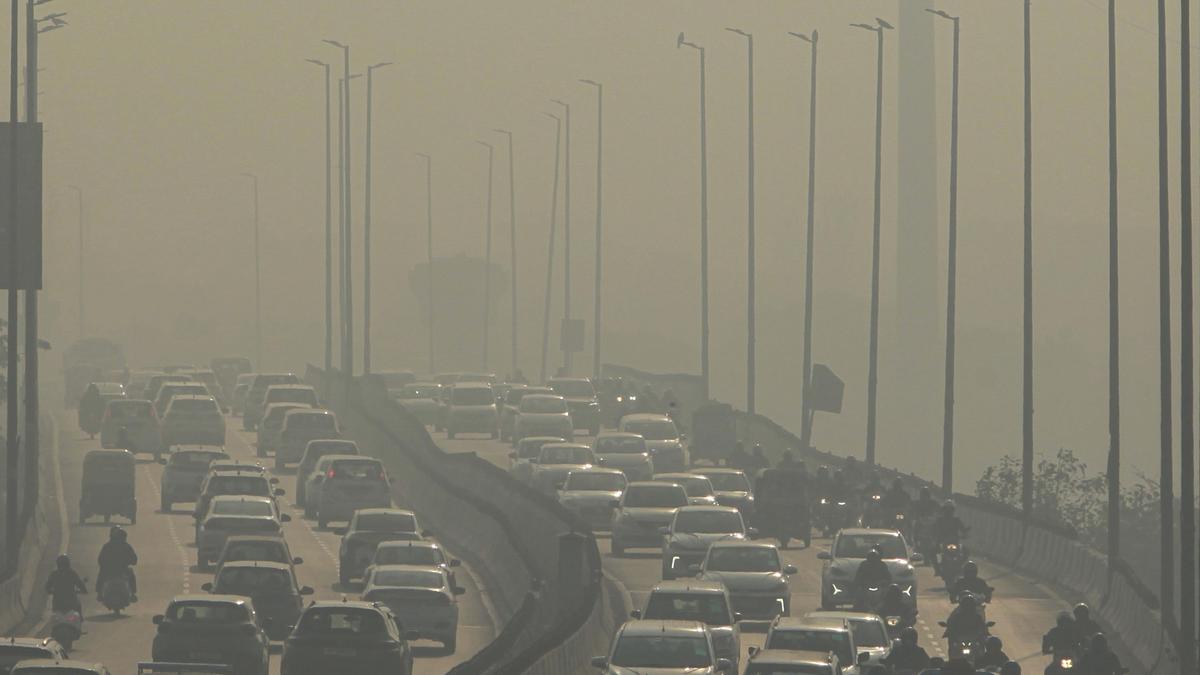
New Delhi, Despite multiple regulatory mechanisms to monitor and control industrial emissions in the National Capital Region , the information needed to evaluate their effectiveness remains fragmented and often difficult to access, according to a new analysis.NCR industrial emission data fragmented, undermining pollution control efforts: CSEThe analysis by the Centre for Science and Environment has revealed that emission monitoring data is inconsistently available across public portals, and ambient air quality monitoring reports are often dispersed across different administrative systems.This has led to significant gaps in transparency and traceability of industrial emissions in the region, according to CSE's report, 'Behind the Smoke: Industrial Fuel Use, Emission Monitoring and Regulatory Blind Spots in the National Capital Region'.Speaking to PTI on Friday, Nivit Kumar Yadav, programme director at CSE's sustainable industrialisation unit, said the analysis shows that the root of the region's pollution problem was not just the winter spike but also the lack of data-driven action taken during the summer months."Until regulatory bodies are strengthened with the capacity to compile, understand, and make data-driven decisions and plan accordingly, the massive monitoring network remains practically useless," he added.For the analysis, the authors examined continuous emission monitoring system data from the real-time data monitoring system platform for 142 industrial units in the NCR region of Rajasthan and Haryana during the period November 10-20, 2025.CEMS data is supposed to show pollutant releases from industries' air emissions and effluent discharges.However, the authors found that of the industrial facilities examined, only 58 facilities had CEMS data available for download and analysis.The remaining 84 facilities either showed no data availability or had access restrictions that prevented data retrieval."This substantial data unavailability raises concerns about monitoring effectiveness and regulatory compliance," said the analysis.The authors also looked at how the industries' ambient air quality monitoring data is recorded in the NCR region and disclosed in practice.For this, they filed RTI applications with 18 State Pollution Control Board regional offices across Uttar Pradesh, Haryana, and Rajasthan.Thirteen of these offices provided a documented response, while five, Haryana State Pollution Control Board Nuh, HSPCB Palwal, HSPCB Mahendragarh, HSPCB Bahadurgarh, and UP Pollution Control Board in Meerut, had no response recorded.And, even among the offices that responded, the nature of disclosure remained limited.The HSPCB Faridabad was the only office to provide ambient and workplace air quality monitoring reports, while the remaining twelve offices did not furnish such data."A recurring pattern across responses was the absence of data at source. Four HSPCB offices, Ballabhgarh, Gurugram North, Gurugram South, and Sonipat, stated that the requested information is not available or not maintained in their offices, while the HSPCB regional office, Rewari, reported that no mining project exists within its jurisdiction," said the analysis.Another key finding is that industries switching away from high-emission fuels such as coal, furnace oil, and pet coke are rarely documented as traceable regulatory events.Note that switching to relatively cleaner fuels has emerged as a key step in industrial air pollution control strategies implemented in the NCR in recent years.In response to the RTIs requesting correspondence or permissions related to fuel switching, many SPCB regional offices across UP, Haryana, and Rajasthan said such information is either not available in a compiled form or is not maintained as a separate record, according to the analysis.It added that for individuals seeking to understand industrial fuel use across the region, accessing this information in a consolidated form remains extremely difficult.Subhrajit Goswami, programme officer at CSE, told PTI, "If environmental monitoring data is not routinely compiled at the source, it loses its day-to-day utility for effective decision-making. Air quality and industrial emission datasets should ideally be maintained as organised, readily accessible records for both the public and the regulators.""When regional boards find it difficult to compile these reports, it highlights that even internal teams may be planning without a fully consolidated view of the region's compliance data," he added.This article was generated from an automated news agency feed without modifications to text.
NCR industrial emission data fragmented, undermining pollution control efforts: CSE
NCR industrial emission data fragmented, undermining pollution control efforts: CSE
655 words~3 min read