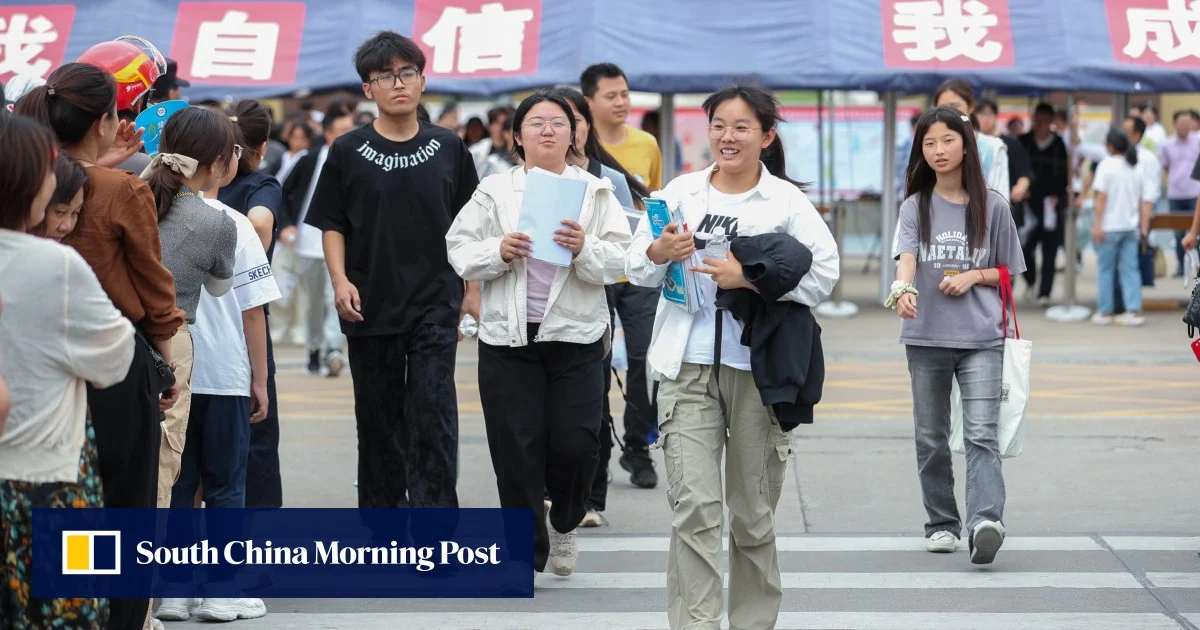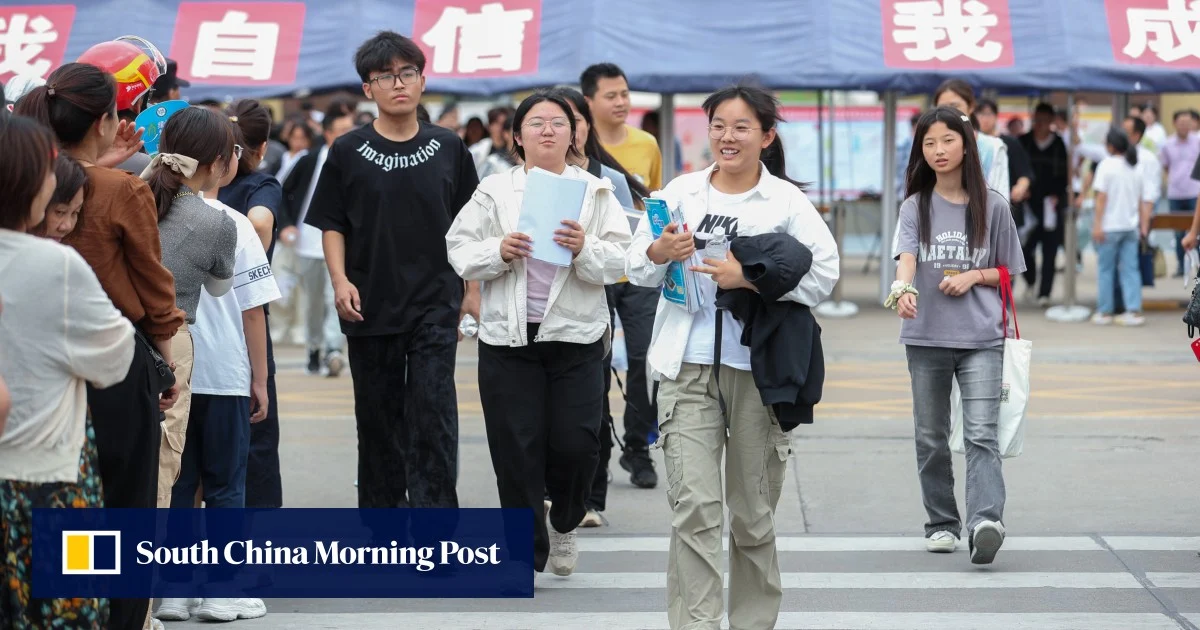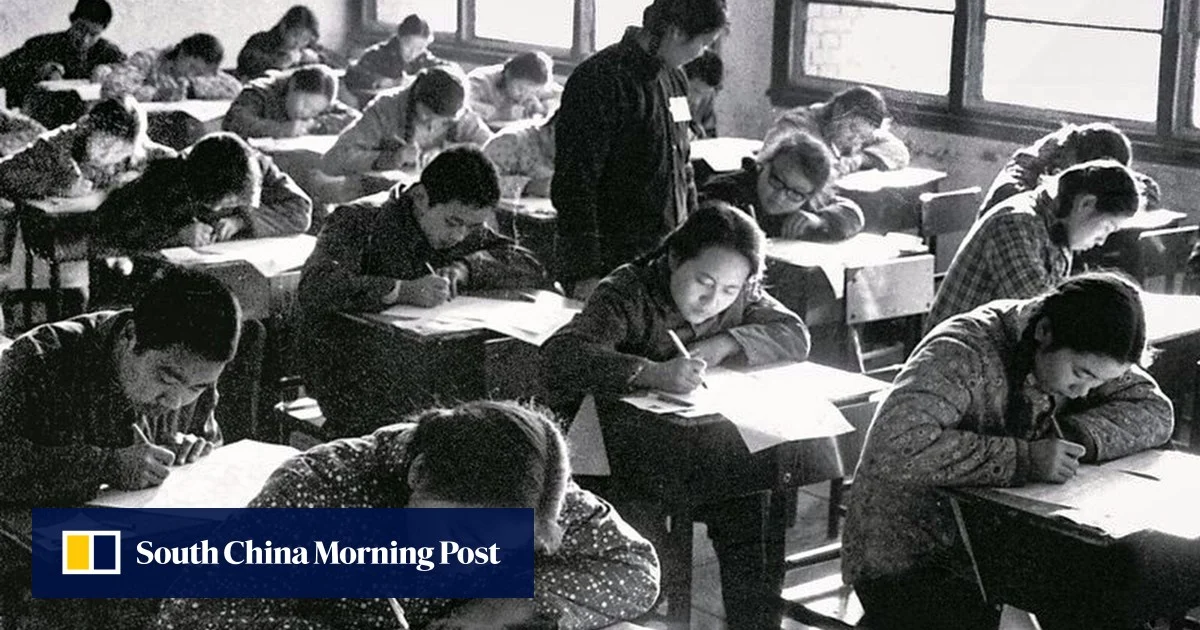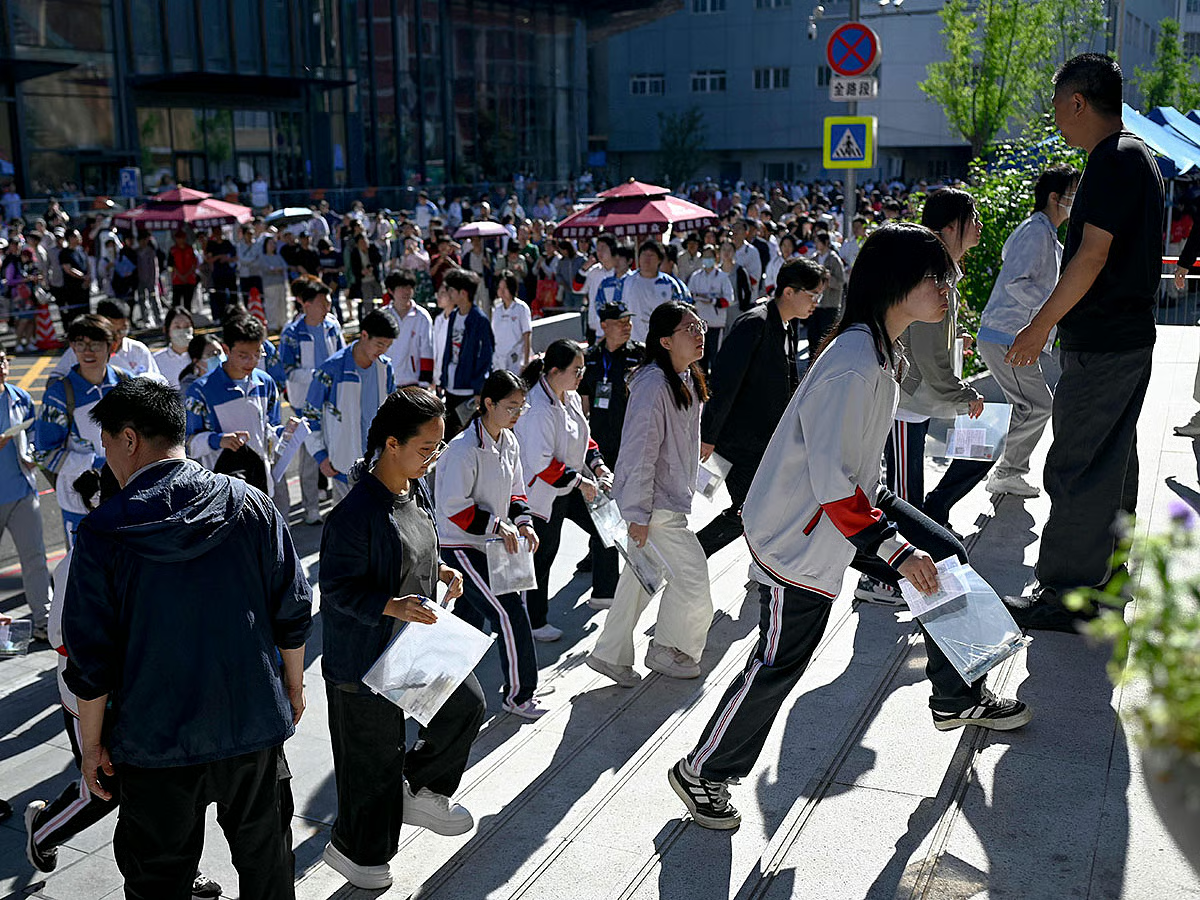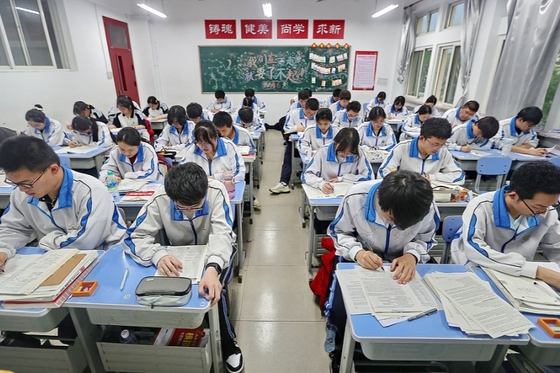
1. [para. 1][para. 2] The number of students registering for China's Gaokao has fallen for the second consecutive year. In 2026, 12.9 million students registered, a decrease of 450,000 from 2025's 13.35 million. This signals a major demographic shift redrawing higher education.2. [para. 3] The back-to-back declines follow a period of rapid expansion. Registrations peaked at a record 13.42 million in 2024, then dropped to 13.35 million in 2025, marking the first drop in seven years, and further declined in 2026.3. [para. 4][para. 5][para. 6] Analysts attribute the slide to several factors: a shrinking pool of eligible candidates (total high school admissions in 2023 fell by about 100,000 compared with 2022), reforms discouraging rote learning leading to fewer "repeaters", and fewer vocational school students signing up for the vocational exam as college degrees become less valuable.4. [para. 7][para. 8][para. 9] Demographic research indicates a roller-coaster decade ahead. The college-age population (18-22) will rise from 79.4 million in 2025 to a peak of 91.26 million in 2034, growing at 2.36% annually, then plummet by 30.83% between 2035 and 2040, shedding an average of 5.5 million people yearly.5. [para. 10][para. 11] Regional disparities will create different pressure points. Hu Juan's study categorizes 31 provinces into four distinct demographic groups, creating starkly different challenges for local governments and universities.6. [para. 12][para. 13] Group 1: Megacities Beijing, Shanghai, and Tianjin face a wild ride. Beijing's college-age population nearly doubles (97.14% increase) by 2035, then drops 20.54% in five years. These wealthier cities have high university density but may face stiffer competition without capacity expansion.7. [para. 14] Group 2: Guangdong, Guangxi, Xizang, Shaanxi, Qinghai, and Ningxia see more moderate fluctuations. Guangdong's college-age population grows gradually from 5.36 million in 2025 to a peak of 6.90 million in 2038; the other five regions experience gentle declines.8. [para. 15] Group 3: The largest group includes 14 provinces and municipalities (e.g., Hebei, Jiangsu, Zhejiang, Shandong) accounting for over 60% of China's college-age population. They mirror the national trend: steady growth followed by a cliff-like descent. Hebei peaks in 2032 at 4.25 million, then plunges 30.12% in five years; by 2040 it has nearly 1 million fewer college-age residents than in 2025.9. [para. 16] Group 4: Eight provinces including Shanxi, Inner Mongolia, and northeastern provinces like Heilongjiang, Jilin, and Liaoning are already in or entering sustained decline. Heilongjiang's college-age population is projected to shrink 45.8% over 15 years, from 1.45 million in 2025 to 784,500 in 2040.10. [para. 18][para. 19] Winners and losers depend on existing educational resources. Beijing, Shanghai, and Tianjin have the strongest positions, with over 55% of higher education institutions offering four-year bachelor's degrees and high concentrations of elite Double First-Class universities, cushioning demographic shocks.11. [para. 20][para. 21][para. 22] Guangdong is well-positioned due to aggressive expansion of its higher education system for high-tech industries. Conversely, 11 populous provinces like Henan, Shandong, Hebei, and Sichuan face severe structural pressure; they relied heavily on vocational colleges during expansion, and post-2034 declines threaten their survival. Researchers advise scaling back vocational capacity and upgrading to four-year programs. Jiangsu, Hubei, and Zhejiang have more room to maneuver due to strong academic institutions.12. [para. 23] In the declining northeast, population drops could make college admission easier. Provinces like Heilongjiang and Jilin have high university density per capita, and excess capacity could attract students from other regions, helping offset population declines.13. [para. 24] To navigate this shifting landscape, researchers call for national-level planning to coordinate higher education resources across regions and demographic cycles, including adjusting enrollment quotas to address short-term surges and long-term contractions.AI generated, for reference only
Analysis: China’s Shifting Demographics Set to Reshape College Admissions
As Gaokao registrations fall for a second year, a pending demographic cliff threatens to upend the country’s higher education system
595 words~3 min read