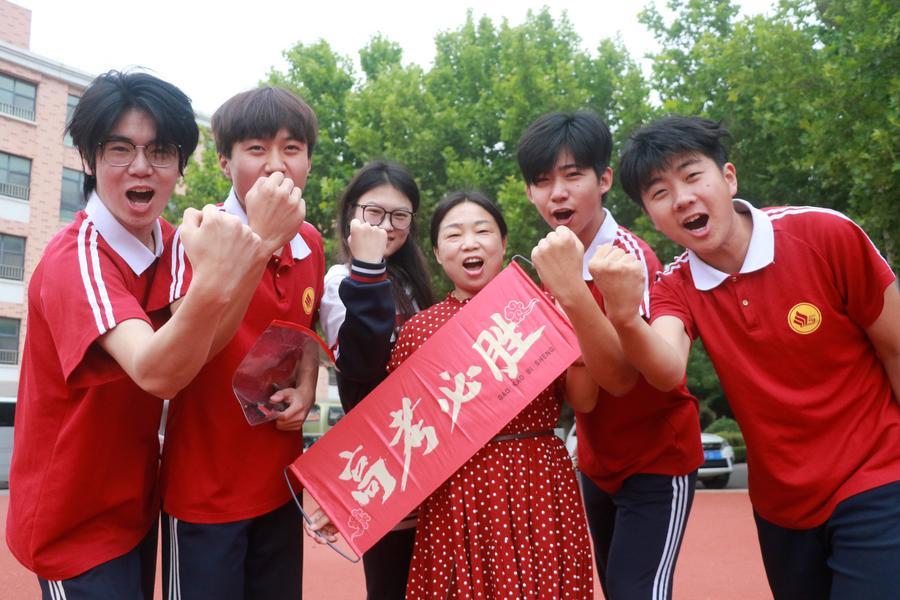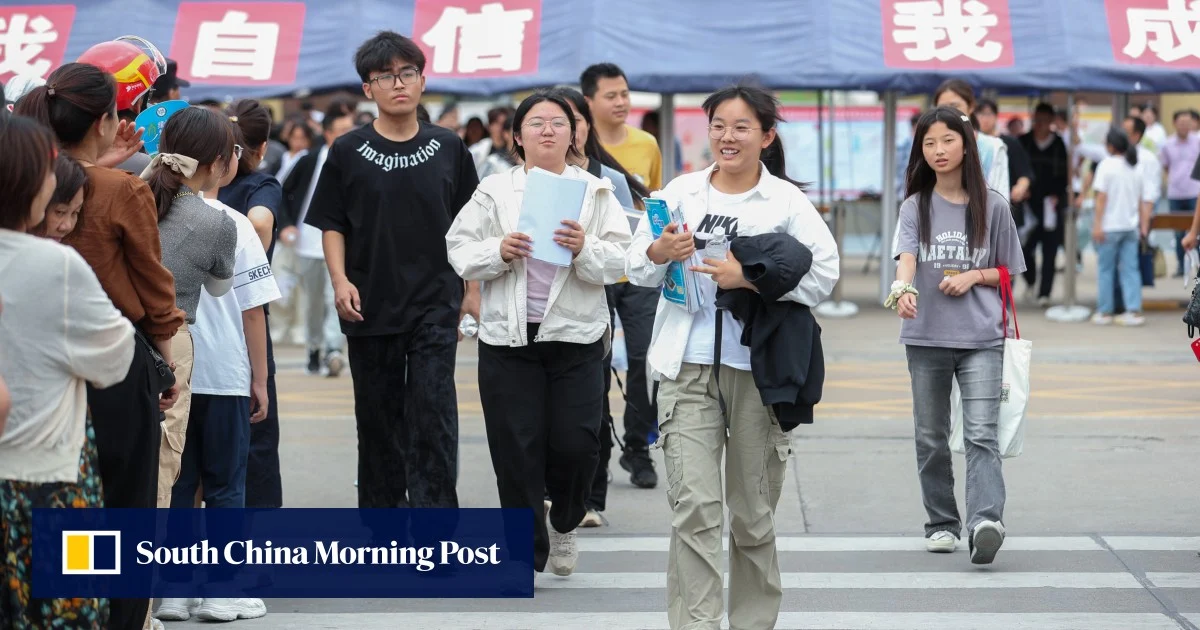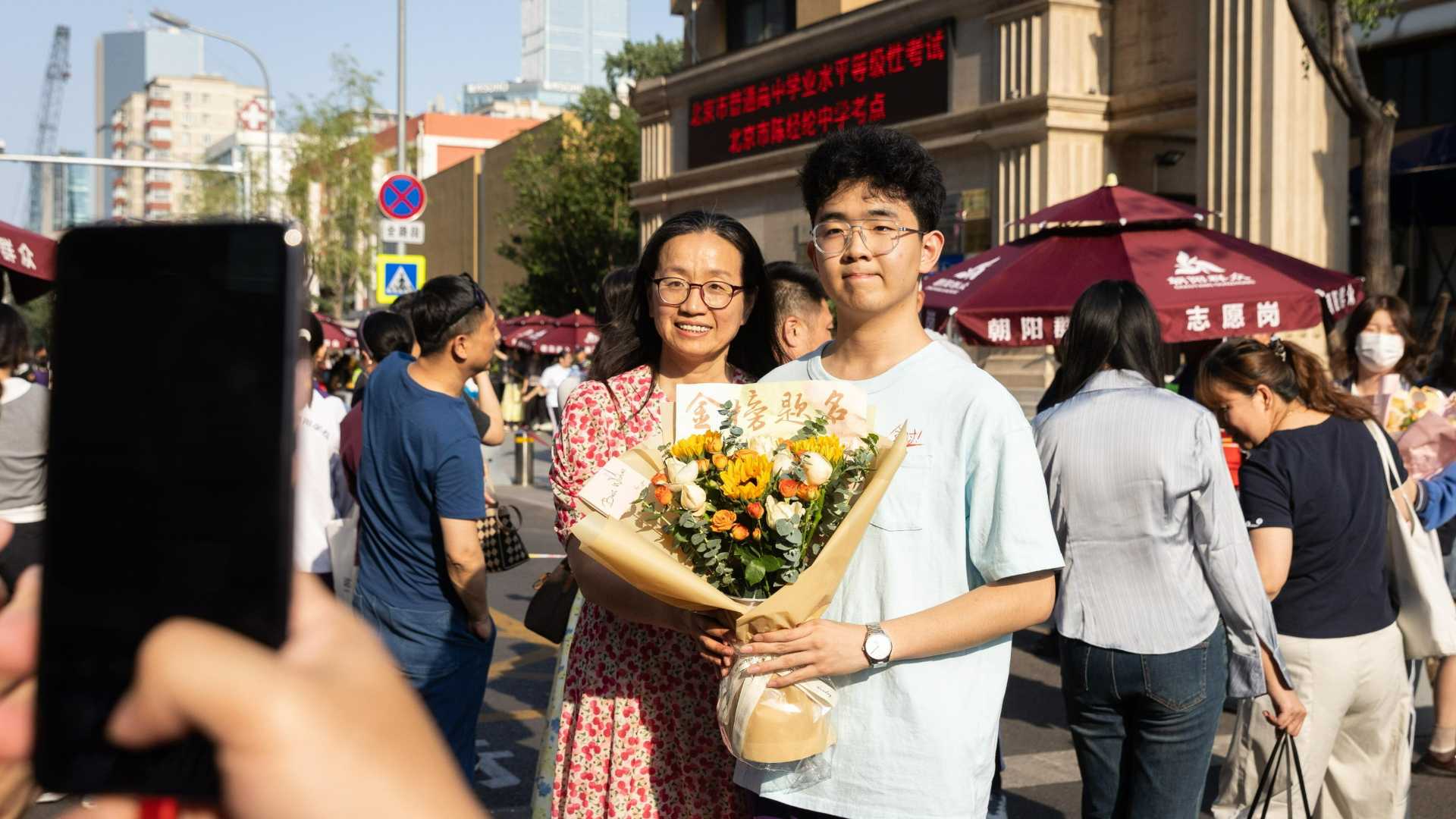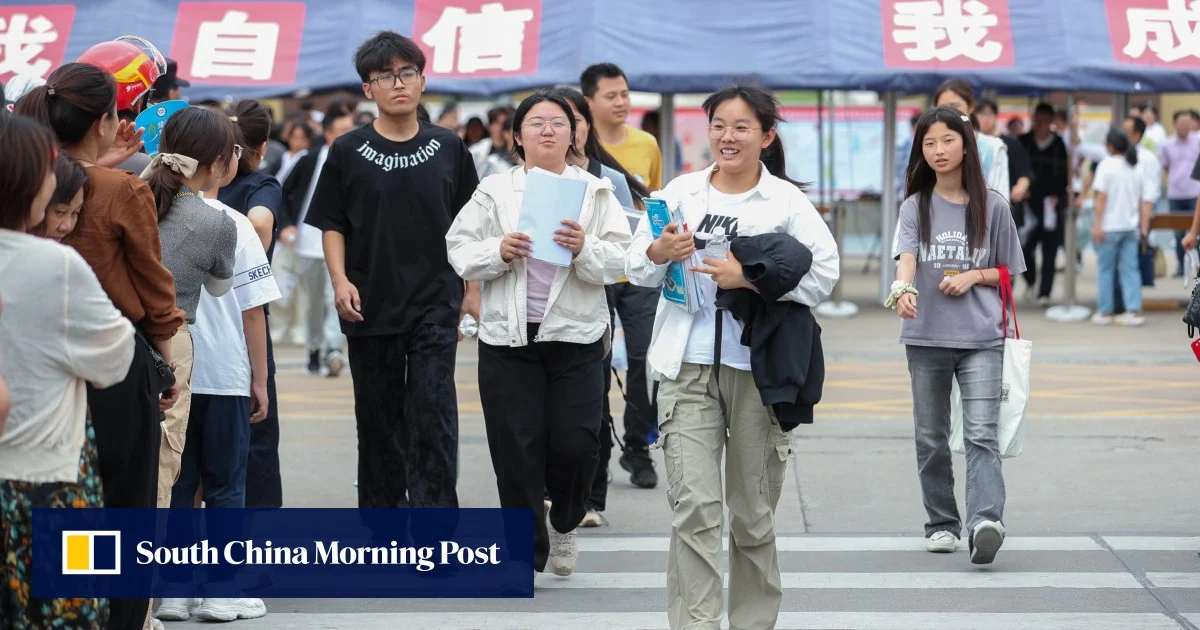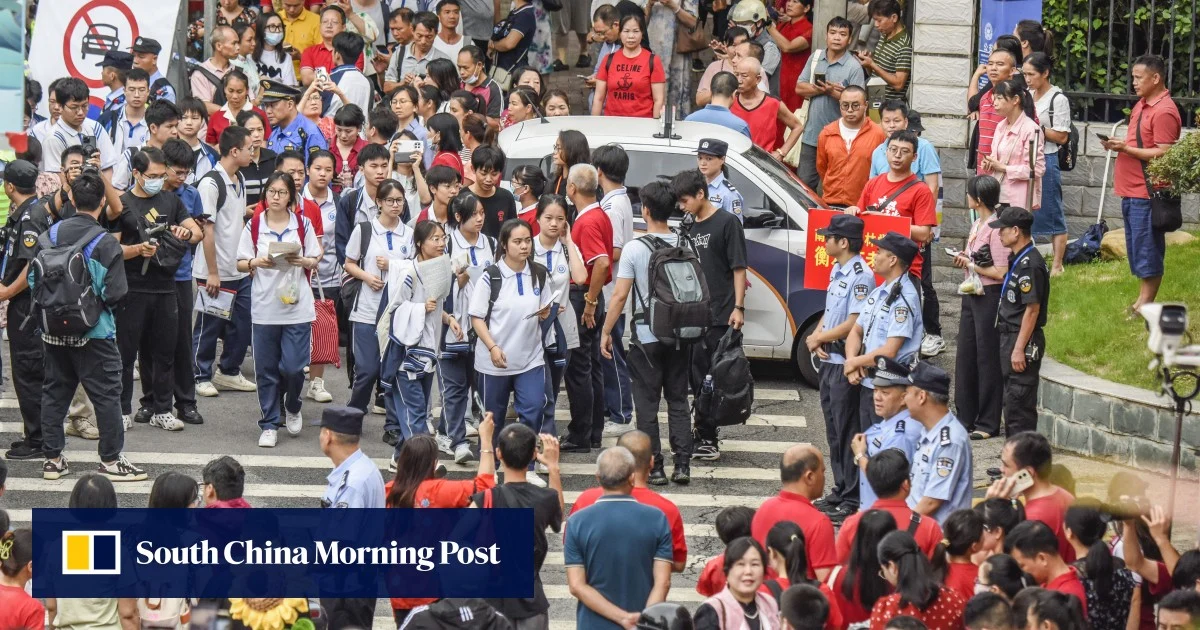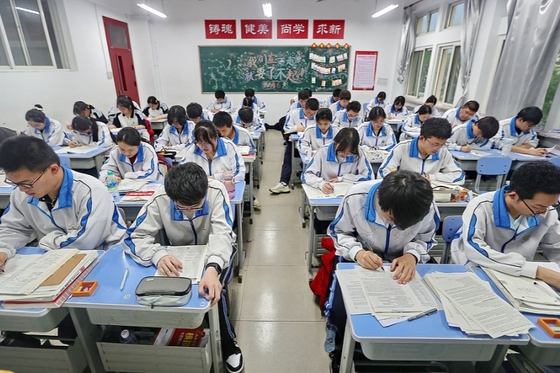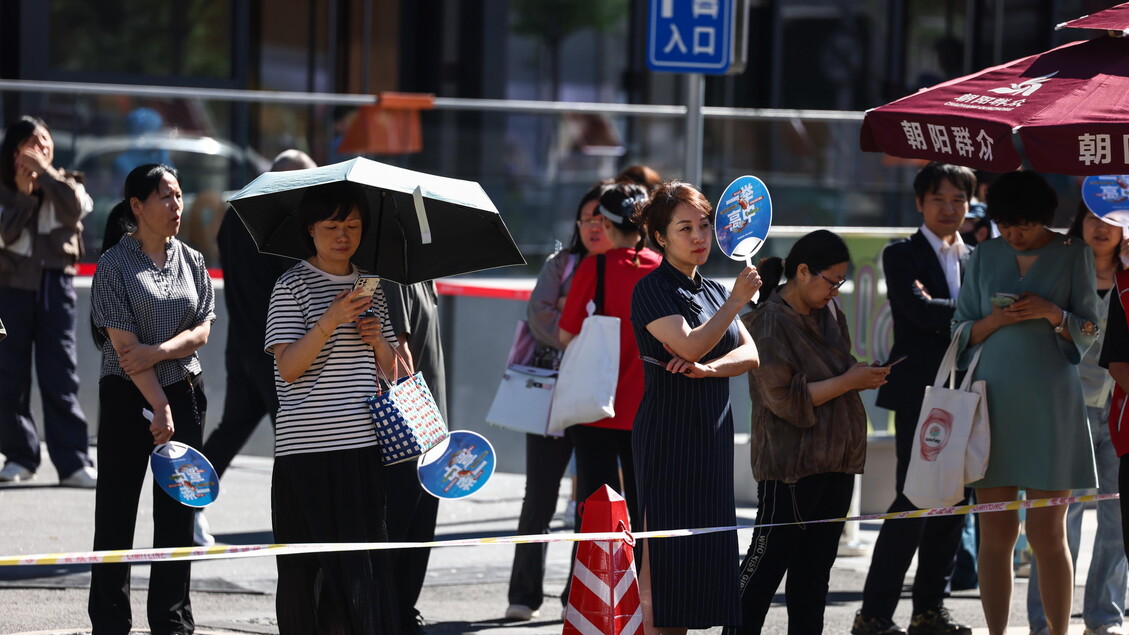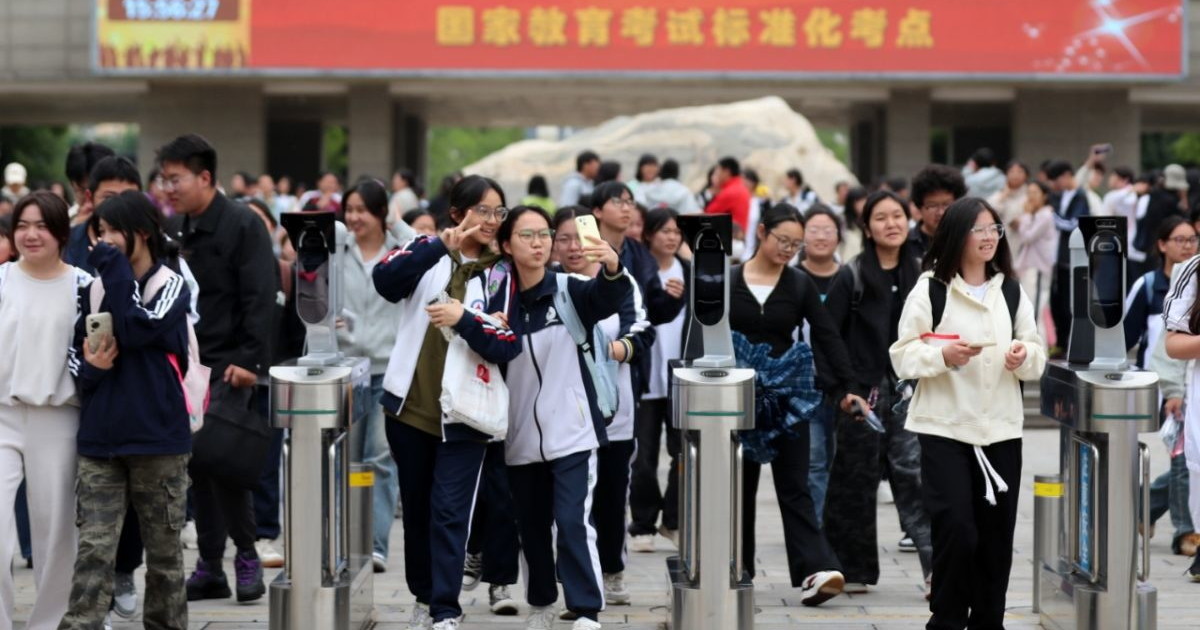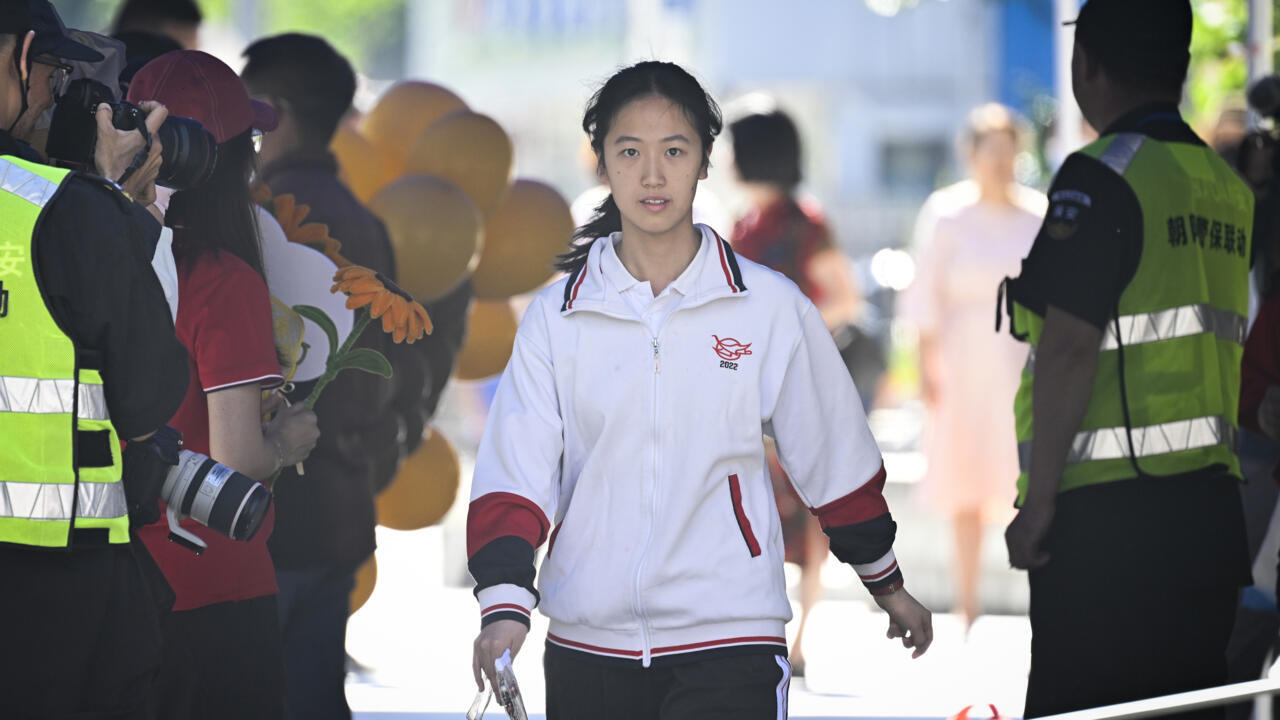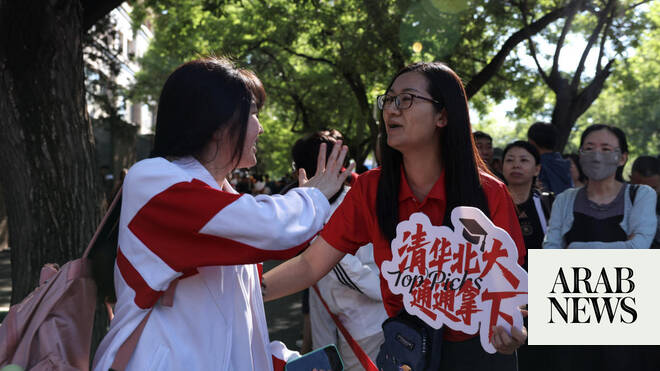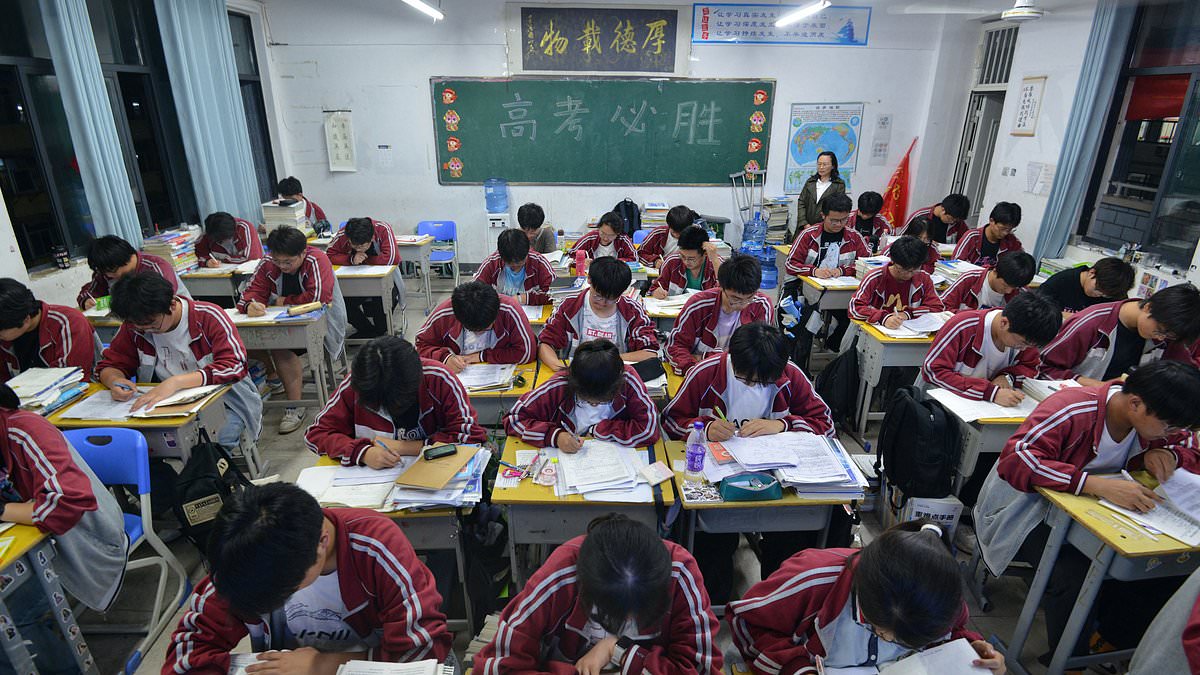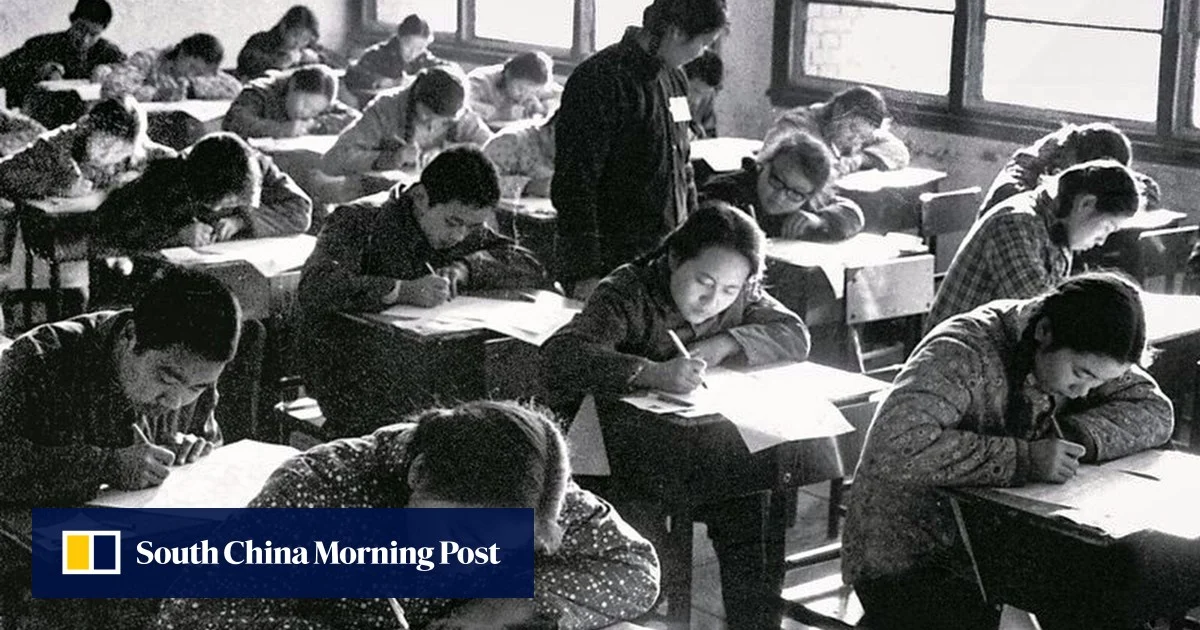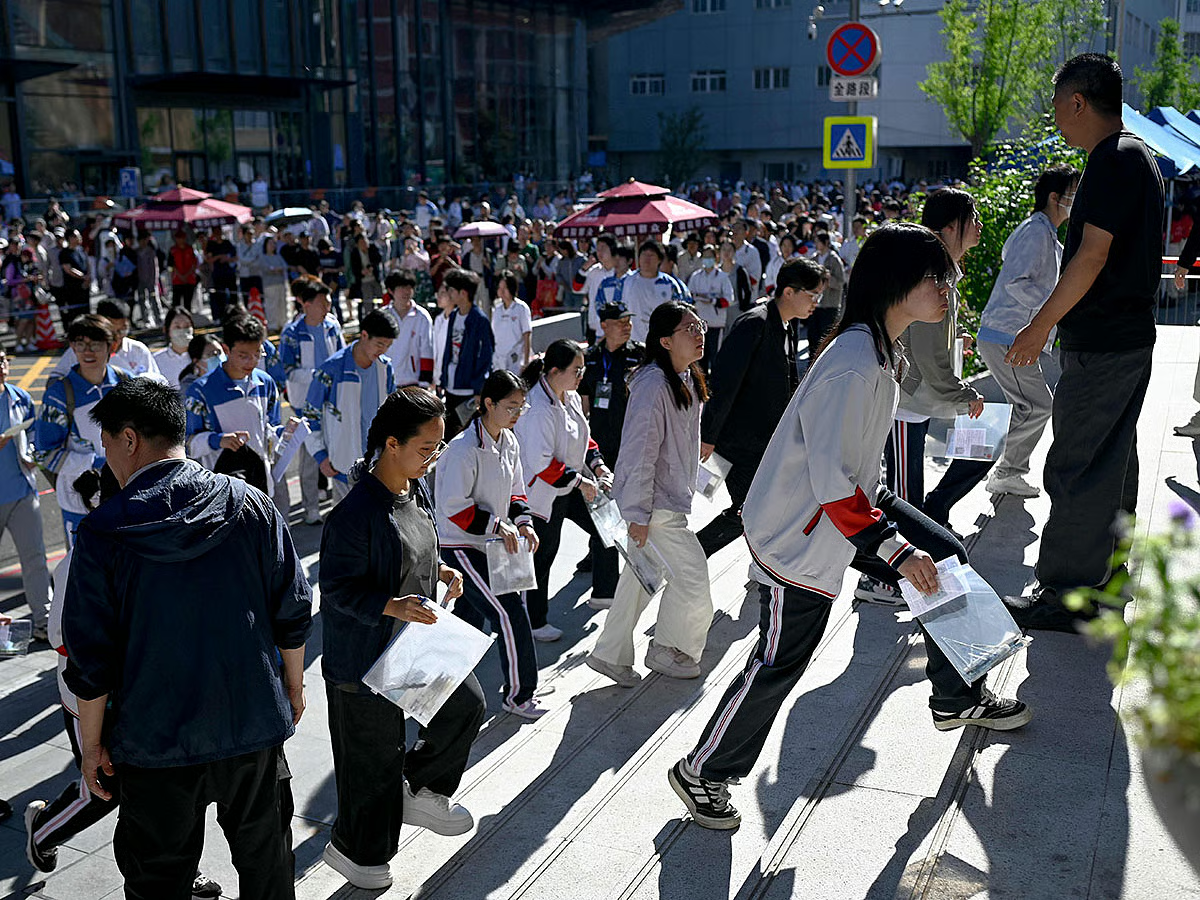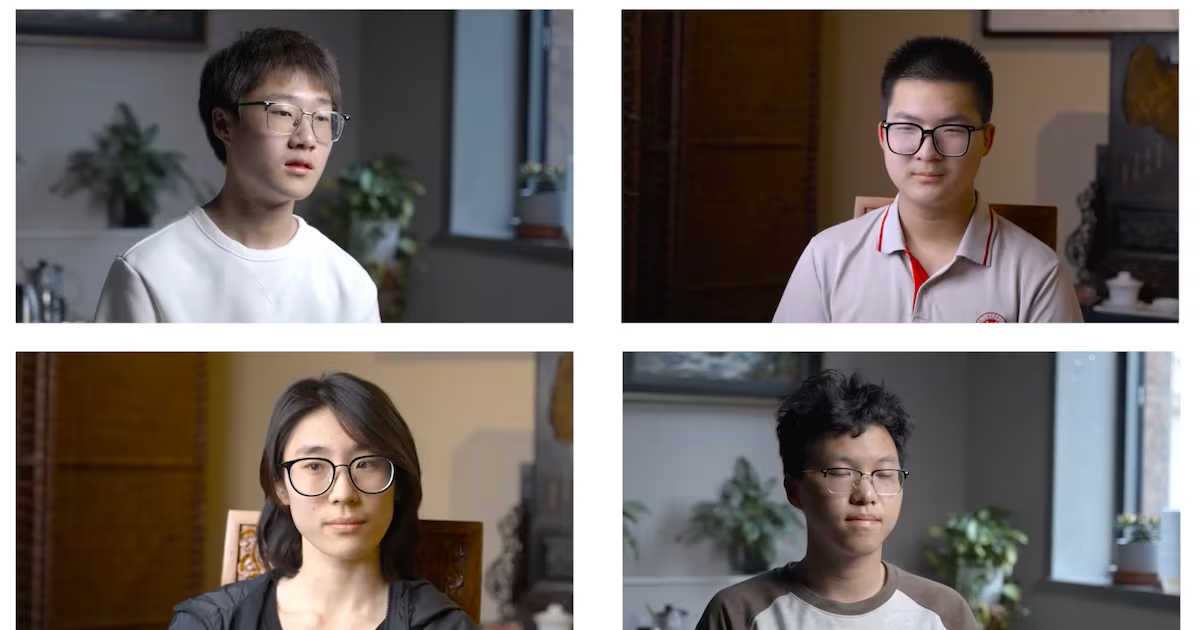
For three days from Sunday June 7th, a hush will descend around schools across China, roads will close and construction work nearby will stop. This is to avoid distracting the almost 13 million students sitting the gaokao, the world’s biggest exam and by some measures the most psychologically challenging.The gaokao, which literally means “the highest exam”, is officially called the National College Entrance Examination and it determines which students gain admission to the country’s top universities. For the most prestigious, including Beijing’s Tsinghua and Peking University, the success rate is less than 0.1 per cent, making them more difficult to get into than Harvard.Chinese students spend much of their secondary school education preparing for the gaokao and, in the two years before the exam, study crowds out almost everything else in their lives. Motivated students will typically study from early morning until late at night every day including weekends, often taking extra classes on Saturdays.Although China’s one-child policy has been gone for more than a decade, most families still have only one child and parents focus much of their time and resources on ensuring that their child receives the best education. This means doing everything possible to help them to achieve the best possible result in the gaokao, which awards a single numerical score with a maximum of 750.Students walk out to meet their parents after sitting China's National College Entrance Examination, known as the gaokao. Photograph: STR/AFP via Getty Images Secondary school students and their families pose for photos after taking the gaokao in Beijing, China. The exam is organised at the provincial level and is different in each province but all students must take tests in Chinese, mathematics and a foreign language. After that, they choose a science or humanities track with one primary elective subject, either physics or history, and two additional electives selected from chemistry, biology, geography and political science.[ Winner takes all in China’s ruthless race for university placesOpens in new window ]Teachers, parents and students have long complained about the pressure created by such a high-stakes exam, which can determine an individual’s fate during nine hours over three days. But the gaokao is part of a Chinese examination tradition stretching back 1,300 years and remains broadly accepted as a relatively fair and meritocratic system that facilitates social mobility.Wu Ronghaomin discusses the gaokao, China's university admissions test. Video: Nicolas Schmitt / The Irish Times ‘It’s quite exhausting ... it’s a turning point in life’Wu Ronghaomin (18), Beijing Normal University Affiliated High SchoolI’m at school for 7:20 in the morning. We begin with reading, mainly Chinese and English. We have about six classes a day. After class, we may have PE or self-study. During the week, we also have PE, art and music classes. Most importantly, we have a test every day. That is our daily routine.I think the gaokao is a relatively fair system. It gives us access to higher education opportunities. Preparing for it is quite exhausting. It requires more effort than before.I think it is a turning point in life. Your results will influence your future path.I will aim for the best result I can achieve. My target universities are ShanghaiTech University or Southern University of Science and Technology. I want to study chemistry or biology – because I am stronger in these subjects.Of course I feel nervous. The gaokao is very important. There is definitely pressure. But I find ways to relieve it. To relax, I would play table tennis with classmates, to relax through movement. Since we sit a lot while studying, I need to move.My dad drives me to and from school. He also prepares meals for me. This is basic support. My mom helps me gather information about the gaokao, such as special admission programmes. I hope they continue to support me and give me more motivation.Yes, I would feel disappointed [if I don’t meet expectations], but once the result is there, I have to face it. If the result is poor, I could consider repeating a year, but it probably won’t be that bad.If the gaokao was cancelled, I would go out to eat with friends. Then go travelling. And learn new skills, such as improving cooking.[After the exam] I may get a driver’s licence. Since there will be about three months, I would visit universities I’m interested in and think about my future major.Wang Xioale discusses the gaokao, China's university admission exam. Video: Nicolas Schmitt / The Irish Times ‘The gaokao is relatively fair. You can improve your results through preparation’Wang Xioale (18), RDFZ Chaoyang Branch School, BeijingWe arrive at school at 7:20am every weekday. We have eight classes each day. In the evening, we have self-study until 9pm. On weekends, we arrange our own schedules. I usually don’t spend much time on homework. I go to the gym or swimming or go out with my family.I think compared to overseas application systems, the gaokao is more single-dimensional. There are fewer diverse evaluation criteria. For example, sports-based admissions are relatively niche in China, whereas overseas systems consider more diverse factors. I think the gaokao is relatively fair. You can improve your results through preparation because past papers and information are widely available. Everyone prepares within the same system.I don’t have a very fixed goal. My scores fluctuate between around 620 and 660. If I score around 620–630, I may go to Duke Kunshan University. If I score around 640, I would like to study finance or computer science; I might go to schools like the finance and economics universities. If I score around 660, I may go to Beijing University of Posts and Telecommunications for computer science.I feel like I can only hope to perform well on the day. Performance can vary during the exam. Different questions affect results. I tell myself that as long as it’s within a reasonable range, it’s acceptable.My dad drives me to school every day and picks me up after evening study. They prepare lots of good food for me and fruit for me to take to school. It makes me feel very cared for. My mom helps a lot with choosing universities and application strategies including what options match different scores.My parents don’t have very strict expectations. They accept whatever result I get but if I do very badly, there will still be pressure. I would just try to find solutions.I would feel disappointed [if I don’t get my expected result]. The gaokao is very important in China. The higher the score, the more choices you have.Zhuang Zhuang discusses the gaokao, China's university admissions test. Video: Nicolas Schmitt / The Irish Times ‘It’s very tiring. The competition is intense. Every day feels exhausting’Zhuang Zhuang (18), Beijing Huimin Middle SchoolDuring school days, I wake up at 6am. It takes about 45 minutes to get to school. School starts morning reading at 7:30am. This is the schedule from Monday to Saturday. On weekends, only Sunday is free. On Sunday morning, I sleep until I wake up naturally, usually around 8am. In the morning, I do homework. If the weather is good, I go out for exercise in the afternoon. If not, I stay home to review or memorise English vocabulary.It’s very tiring. The competition is intense. Every day feels exhausting. The feeling is that it’s tiring and difficult. There’s nothing very special beyond that – just a lot of pressure.Why is the gaokao so important? It relates to the future. Education level is important. A good result makes future employment easier. Life will likely be better.The full score is 750 – I aim to get around 520; then I could attend Beijing Institute of Petrochemical Technology and study financial technology. I would definitely feel disappointed if I don’t [achieve it]. If it’s far off, I would feel even worse. But I would still choose a lower-ranked school. If it’s very bad, I would start working to help reduce my parents’ burden.The pressure is quite high, because I’m still short of my target score.I relax by sleeping for a whole day – sleep as long as I want; then I go exercise by playing basketball or table tennis.Right after the exams, I will go out with classmates. Eat together. During the summer, I will learn driving. And get my driver’s licence.Lü Lingshun on the gaokao, China's university admission exam. Video: Nicolas Schmitt / The Irish Times ‘I’m confident in myself ... my parents are open-minded’Lü Lingshun (17), Zhongguancun Foreign Language School in BeijingI usually wake up around 6:30am. I arrive at school at 7:20am and start a morning of self-study. Classes begin at 8am. Subjects include Chinese, English and business, as well as maths, advanced maths and physics.During the week, I complete assignments on time. On weekends, I take extra lessons in math and physics, and also take some time to relax.Our exam is a bit different from the traditional gaokao; it is closer to the Australian system. Our regular performance counts for 50 per cent and the final exam accounts for the other 50 per cent. So, both daily study and the final exam are important. I think it might be easier than the gaokao because the final exam pressure is lower. You have more time to prepare.There is some pressure, but it’s not very intense because my parents support me a lot and classmates help me with difficulties. My mother mainly drives me to and from school. They also prepare my meals. I am very grateful to them. On weekends, they take me out to relax, like walking or watching sports.I prefer to go to universities in Australia such as the University of Sydney or UNSW. I want to study computer science or medicine. I would feel a bit disappointed if I don’t, but I would keep moving forward.If the exams were cancelled, I would travel first; visit places I want to see. Then, stay home with my pets and relax on my phone.After the exams, I will go to Hainan with friends for two weeks. We’ve already planned it.Interviews have been edited for length and clarityStudents sitting their Leaving Cert. Photograph: Bryan O'Brien Gaokao vs the Leaving Cert: which is tougher?Stressed students, weighty parental expectations and fierce competition: China’s gaokao and the Leaving Cert share much in common. They both dominate the final years of second level, determine access to university and occupy a singular place in national culture.Yet, some of the differences in scale and consequences are striking.In Ireland, about 60,000 students will start their exams on Wednesday. The marathon set of papers, spread out over two or three weeks, are as much a test of endurance as it is of academic readiness. While the pressure to secure places in sought-after courses such as medicine is intense, most candidates (about 60-70 per cent) progress to third level. A growing focus on alternative pathways which do not require CAO points is also easing some of the pressure for candidates.In China, the gaokao operates on a different order of magnitude. More than 13 million students will sit the exams, making it about 200 times bigger. While the exams take place over two or three days, the competition to secure a place in an elite university is white hot. For many families, it is not just a rite of passage but a key determinant of social mobility.Chang Zhang is better placed than most to observe the differences between the two systems – he sat the gaokao before progressing to college and moved to Ireland in 2012. He now works across second-level schools and higher education institutions.This competition for elite university places is generating acute pressure for students to do well, he says.“Many Chinese people are obsessed wth universitiy rankings ... I think it’s way more stressful because of this,” says Zhang, education officer with Post-Primary Languages Ireland, which supports schools with language tuition.He says about 1 per will secure entry to the very top tier of universities, known as “985 universities”. About 5 per cent will get places in the next tier of prestigious colleges, known as “211″ universities.“Your degree is only seen as really useful by many people if you’re in this range. Otherwise, it doesn’t really shine,” he says.He says employers in China pay much more attention to what students achieved in the gaokao compared to Ireland, where Zhang feels there is a greater emphasis on job applicants’ competency for a post.Zhang also feels exam candidates in Ireland tend to have a better understanding of the world of work and job opportunities, thanks to initiatives such as transition year, which can involve work experience. Irish students, he adds, tend to be more entrepreneurial than in China, and are less reliant on having to find an employer.Another Chinese academic based in Ireland, who asked to remain anonymous, says the perception that students only have one shot at succeeding heaps pressure on Chinese students to a level that far exceeds the Leaving Cert.“Many Chinese families believe that the gaokao determines a child’s future prospects, and to some extent this is true. As a result, for many Chinese people, the gaokao is genuinely regarded as one of the most significant turning points in life.” - Carl O’Brien
‘A turning point in life’: Four students confront China’s high-stakes college entrance exams
Four Chinese students on sitting the gaokao, a challenging national test that will shape their futures
TL;DRAI
Nearly 13 million Chinese students sit the gaokao, a three-day exam with <0.1% success rate for top universities. This meritocratic system shapes China's tech talent pipeline, signaling structural competitive advantage in global innovation and AI development.
2,193 words~10 min read