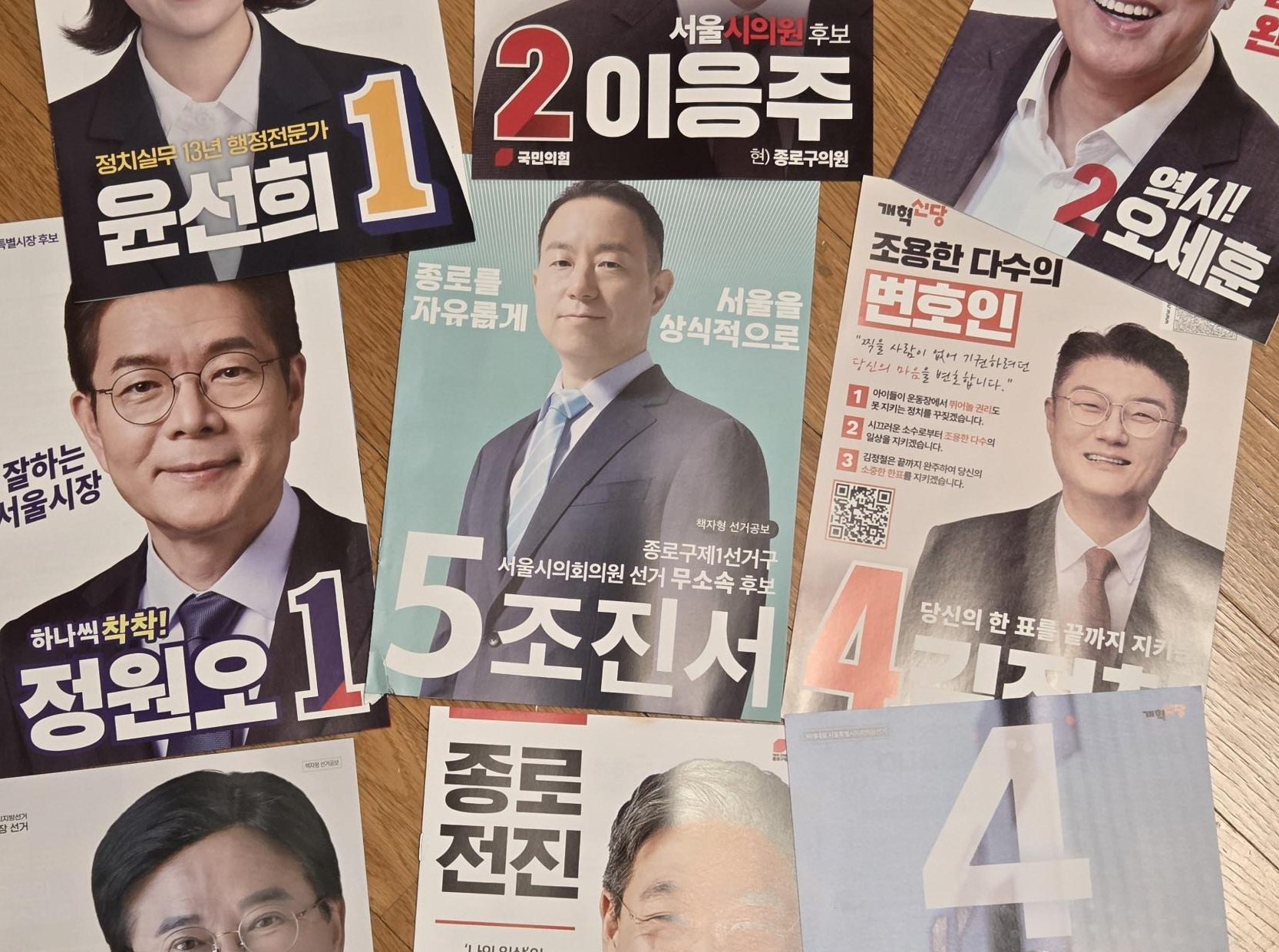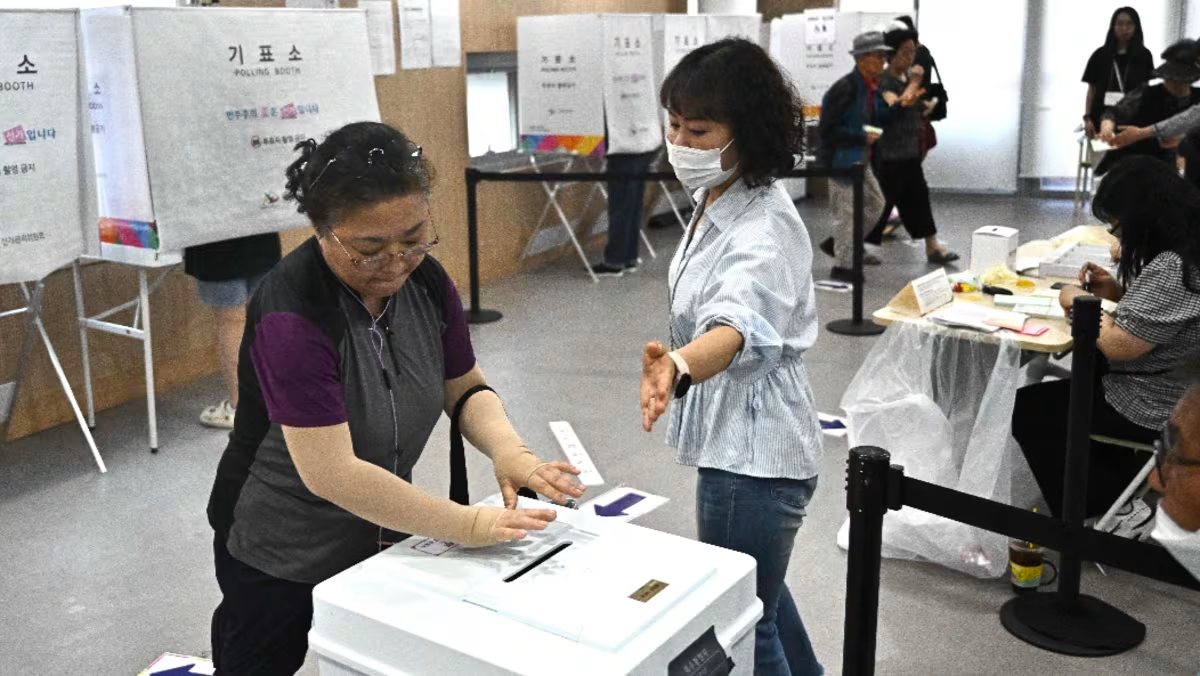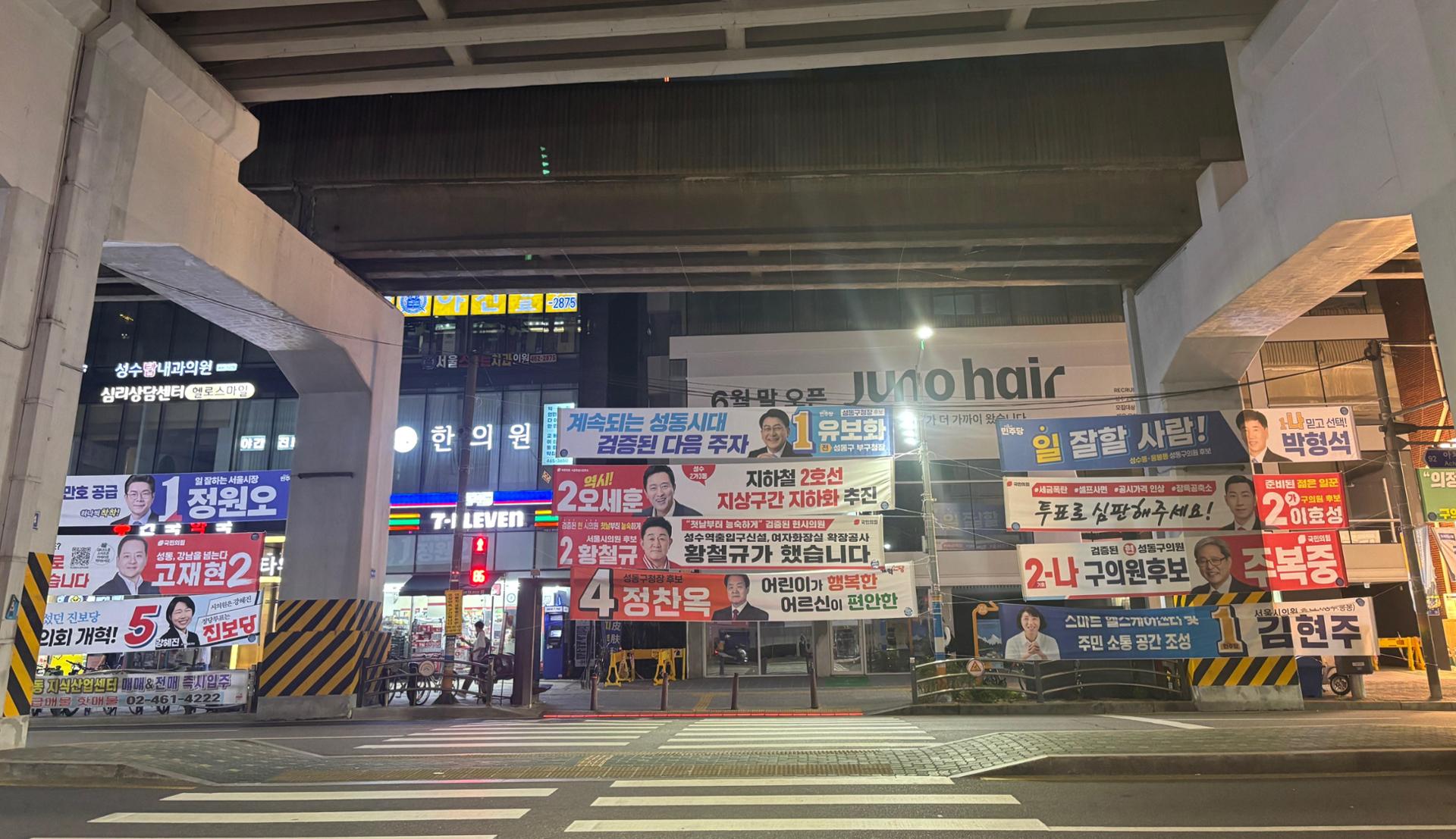
Election campaign banners hang near Seongsu Station in eastern Seoul, May 25, ahead of Korea's local elections. Korea Times photo by Yulu Ao
For many Chinese people born after the mid-1990s, Korea first arrived not as a country, but as a cultural phenomenon.
My generation grew up with Korean dramas and reality shows. I watched "Full House" with my mom, discussed "We Got Married" with classmates after school and later followed "My Love from the Star," which became a cultural sensation among young Chinese viewers.
Although cultural exchanges became less visible in China after the dispute over the deployment of the Terminal High Altitude Area Defense, or THAAD, in Korea erupted in 2016, causing a rift between the Chinese and Korean governments, interest in Korean society never entirely disappeared. Films such as "12.12: The Day" and works by writers like Han Kang and Kim Ae-ran have continued to attract young Chinese audiences, many of whom see echoes of their own experiences in the social pressures, competition and inequalities portrayed.
Perhaps that is why many young Chinese look to Korea not only for entertainment, but also for perspective.