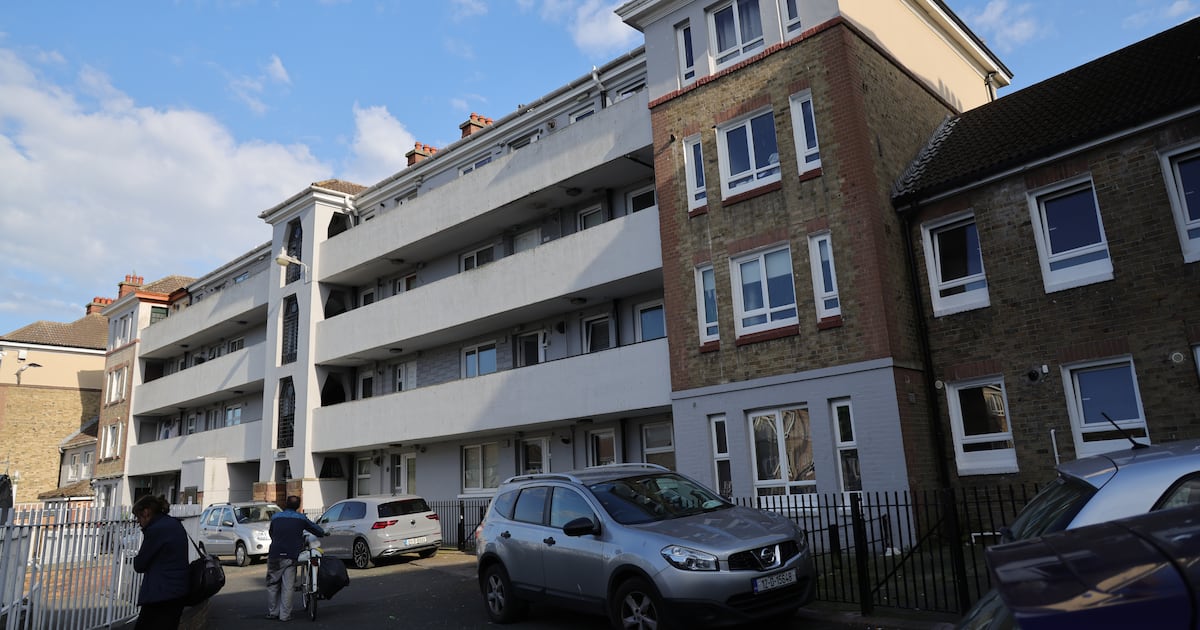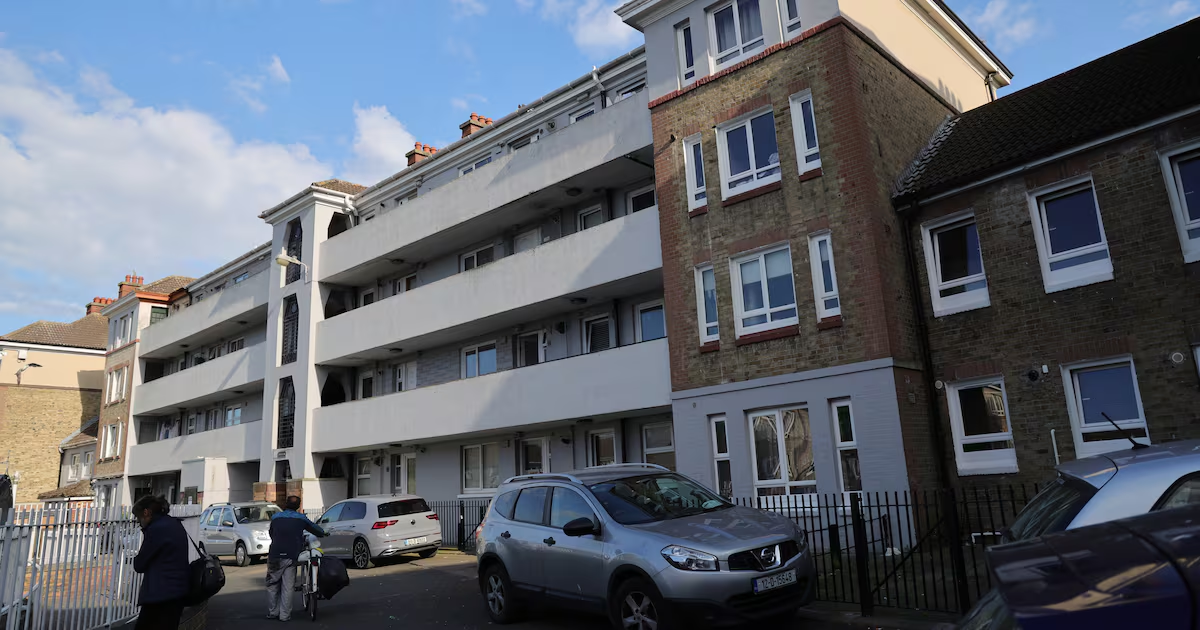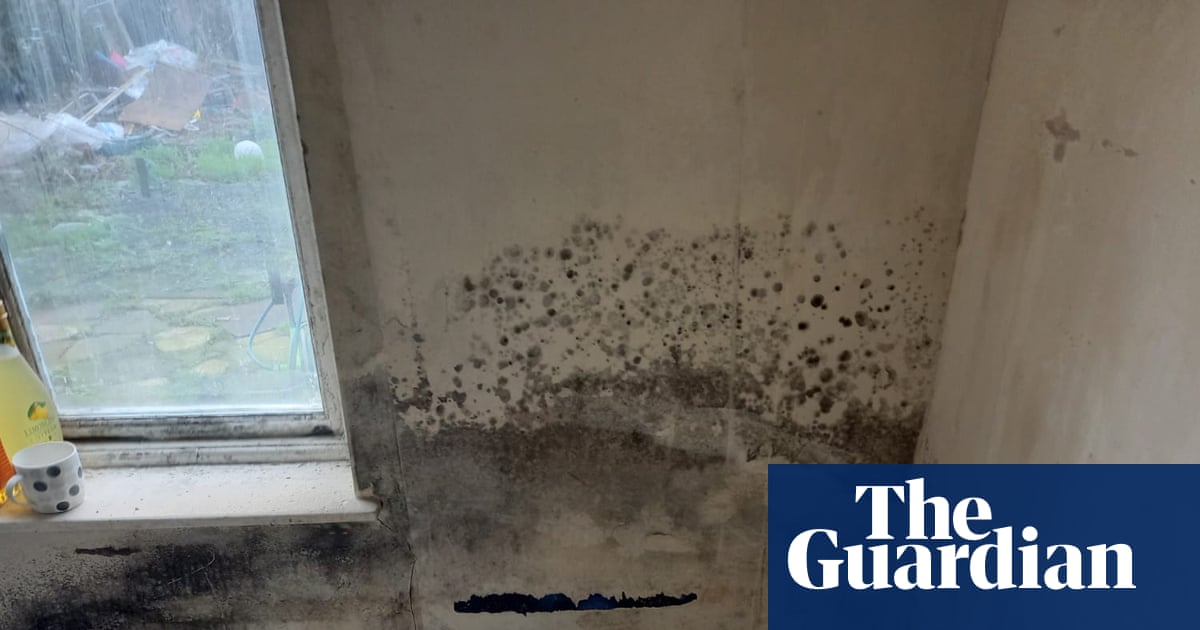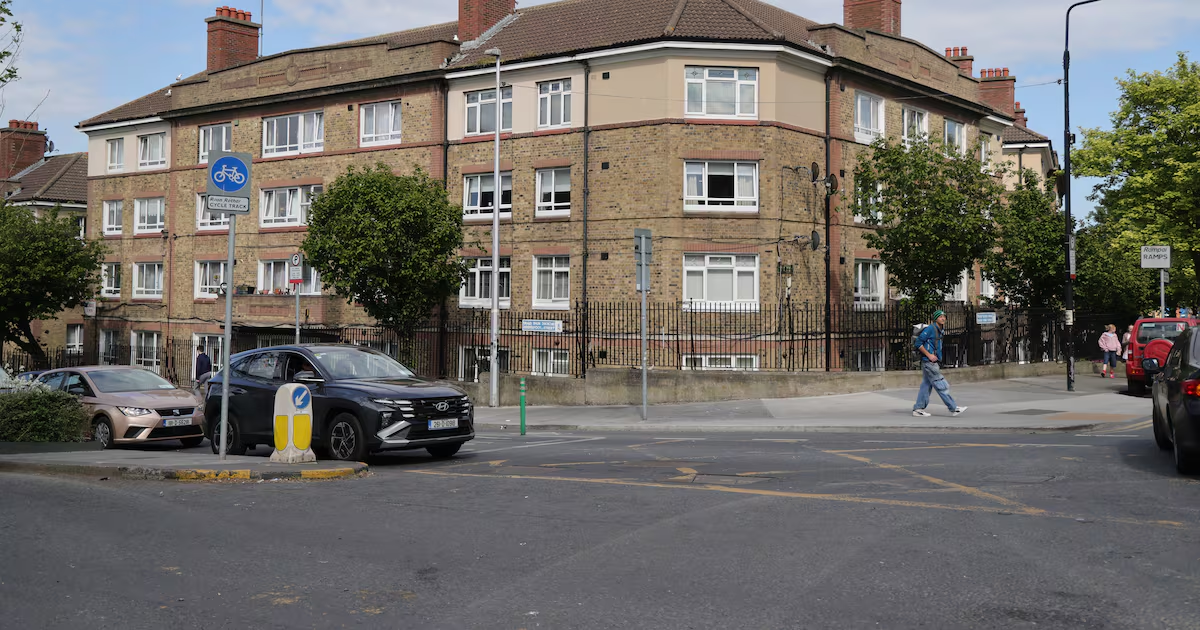
The people who live in Oliver Bond House in Dublin’s south inner city have been treated appallingly by their landlord, which is the State. This might not have happened had Ireland a constitutional right to housing.Built in 1936 on a former brewery site, the complex has 16 blocks and the average size of a flat is just 48sq m – meaning almost nine flats would fit on a standard basketball court. It has long suffered from dampness, mould and overcrowding, silverfish, rats and slugs. Poor indoor air quality has led to respiratory health issues in residents. Minister for housing James Browne has called the conditions “absolutely atrocious, totally unacceptable”.Ireland’s neglect of local authority tenants has already been criticised by the European Committee of Social Rights. Following a collective case, in 2017 the committee found Ireland had failed to take “sufficient and timely measures” to ensure housing of an adequate standard for many families living in local authority housing across the country. It also raised the impact on tenants of delays and stalling of regeneration programmes, a practice known as slow violence. [ Council’s Oliver Bond plans would have cost up to €700,000 per flat, housing committee toldOpens in new window ]Dublin City Council’s improvement plan for Oliver Bond House was due to go for planning permission later this year with construction starting in 2028. The Department of Housing then announced it would no longer fund the €20 million redevelopment due to the loss of 28 flats, as smaller flats were amalgamated to fewer larger ones. It could not back such “a large reduction in homes during a housing crisis”.It wanted to reduce the number of bed spaces per flat rather than make the small flats larger, thereby retaining the original 74 flats due for refurbishment, but decreasing the number of proposed bed spaces from 148 to 114. It’s hard to comprehend how, during a housing crisis and with record homeless numbers, the Department of Housing has decided it wants to house fewer people. Oliver Bond residents are left enduring the slow violence of output trumping outcomes, and petty bureaucracy dressed up as munificent administration. As part of the 2020 programme for government, the Housing Commission was asked to “examine and report on” a constitutional right to housing. Although the report is locked in a cupboard for which the key has been lost, the commission concluded that a constitutional amendment would clarify, for future generations, the State’s commitment to housing. If every new policy – including transport, finance, climate and welfare – had to be cognisant of a constitutional right to housing, it would change the basis of how decisions are made and how the State plans for the futureThe United Nations Committee on Economic, Social and Cultural Rights has noted that the right to adequate housing should not be interpreted in a narrow or restrictive sense “and should be seen as the right to live somewhere in security, peace and dignity”.The Housing Commission argued a constitutional right to housing would place an obligation on the State to secure the conditions in which access to adequate housing can be realised. This does not guarantee anybody a house, as such proposals are often misinterpreted. Three members of the Housing Commission argued in a minority report that a constitutional right to housing is unnecessary, as the Government already has the legal authority to tackle the housing crisis without constitutional amendments. Thirteen European countries protect the right to housing in their constitutions or legislation, and 13 are legally bound by the Council of Europe’s Revised European Social Charter. Ireland has no legal or constitutional provision on a right to housing and although it is signed up to the European Social Charter, it opted out of article 31 on the right to housing.[ ‘We must see action’: Resolution of Oliver Bond flats regeneration impasse expected in coming weeksOpens in new window ]In Finland, the constitution obliges public authorities to “promote the right of everyone to housing”. This ensures everyone has an affordable and secure home no matter their income, health problems or criminal record. They eradicated homelessness by 2018 (although it unsurprisingly rose again after election of a right-wing government). This constitutional right has economic benefits as it saves hundreds of millions of euro every year in other social supports.Ireland has shrugged off criticisms by the UN Committee on Economic, Social and Cultural Rights over systemic failures to meet its housing and homelessness obligations. Although member states are also obliged to take steps to address any violations, nearly a decade later local authority tenants are still living in 19th-century tenement conditions. And even though the State has the legal authority to tackle the housing crisis – which is one often-cited rationale for opposing a constitutional right to housing – there is currently no obligation on the Government to use it. A constitutional right to housing would give the residents of Oliver Bond House clearly identifiable rights and a mechanism to enforce those rights in court.If every new policy – including transport, finance, climate and welfare – had to be cognisant of a constitutional right to housing, it would change the basis of how decisions are made and how the State plans for the future. It would need to supply much more and would be required to ensure all its accommodation meets the standard of basic adequacy. Housing policy would become less susceptible to personal political ideologies and more consistent across ministers and time, which is good for both society and industry. At the same time, as in Finland, billions in supports could be saved and many lives improved.It would be a significant measure of confidence in its housing policies if the Government held a referendum on inserting a right to housing in the Constitution. Lorcan Sirr is a senior lecturer in housing at the Technological University Dublin
Lorcan Sirr: Oliver Bond residents are suffering the slow violence of State neglect
A constitutional right to housing would give residents of the inner-city Dublin complex a tool to pursue their rights
972 words~4 min read