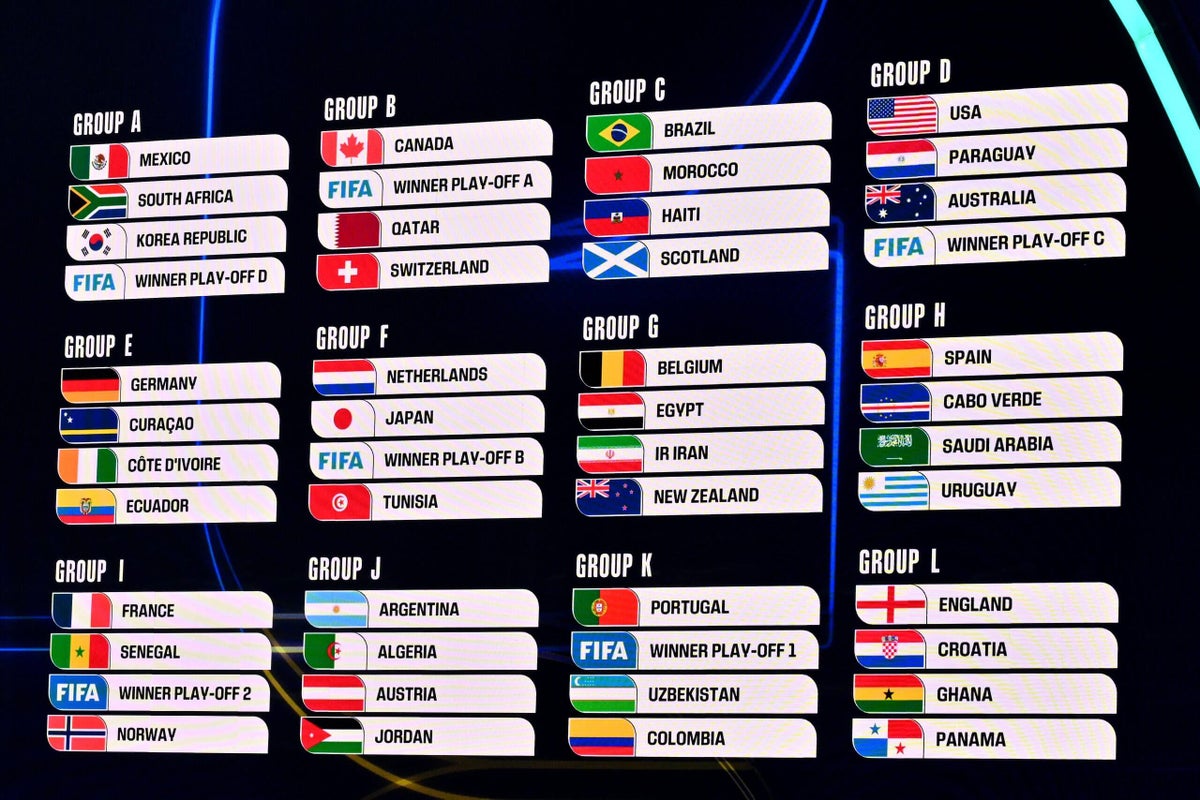
The format of the World Cup has evolved considerably over the years.There have been straight knockout tournaments (1934, 1938), a final group instead of semi-finals and finals (1950), a curious group format where the sides only played two matches (1954), and a second group round (1974, 1978, 1982).But 2026 will be very different.By going from 32 to 48 teams, the number of matches will increase from 64 to 104. There will be eight matches for the finalists rather than seven, and 12 groups rather than eight. There will be a round of 32 for the first time. All this will have an enormous impact on, well, almost everything. Here’s how the expansion — and the format — will probably shake out.The underdogs will keep it tightThree years ago, the expansion of the Women’s World Cup brought the first 32-team tournament. This was widely expected to produce a raft of results similar to the United States’ 13-0 win over Thailand in the 2019 edition.Instead, the underdogs fared much better than expected. When the USWNT took on newcomers Vietnam, for example, they won only 3-0. The newcomers rarely threatened to actually cause upsets, but they were able to organise themselves defensively.The likes of Iraq, Cape Verde, Jordan and Haiti may find themselves completely out of place at this summer’s tournament. But the likelihood is that they will accept the situation, defend in numbers against strong opposition, and — by and large — keep the scorelines respectable. Then they will probably come out to play against the third-best side in their group, in the knowledge that a single win in the group stage may take them through.Cape Verde will surely target the Saudi Arabia game as key to their progress out of the group (Carlos Rodrigues/Getty Images)Cape Verde, for example, will surely play overwhelmingly defensively against Spain and Uruguay, then have a proper go against Saudi Arabia. Any proper blowouts might come in that final group game, when the minnows realise they have to attack.Since the ranking of best third-placed sides will probably come down to goal difference, if Cape Verde go 1-0 down in those first two matches, the logical play might be trying to preserve a narrow defeat.Alternatively, winning three points and recording a goal difference of zero will probably take you through. Let’s hope no one plays for three 0-0s.The Golden Boot race will be more open than usualFor obvious reasons, the Golden Boot is usually won by a player whose side reaches at least the semi-final stage, and therefore plays the most matches.The most obvious exception was the last time the World Cup was hosted in North America: in 1994, Russia’s Oleg Salenko jointly won the Golden Boot with Hristo Stoichkov, despite his side not emerging from the group stage. Five of his six goals came in one match, a 6-1 win over Cameroon.
The World Cup has expanded from 32 to 48 teams. This is what that will mean
The number of matches at the summer's tournament will increase from 64 to 104 with a new round of 32, and will impact results and approaches
1,384 words~6 min read