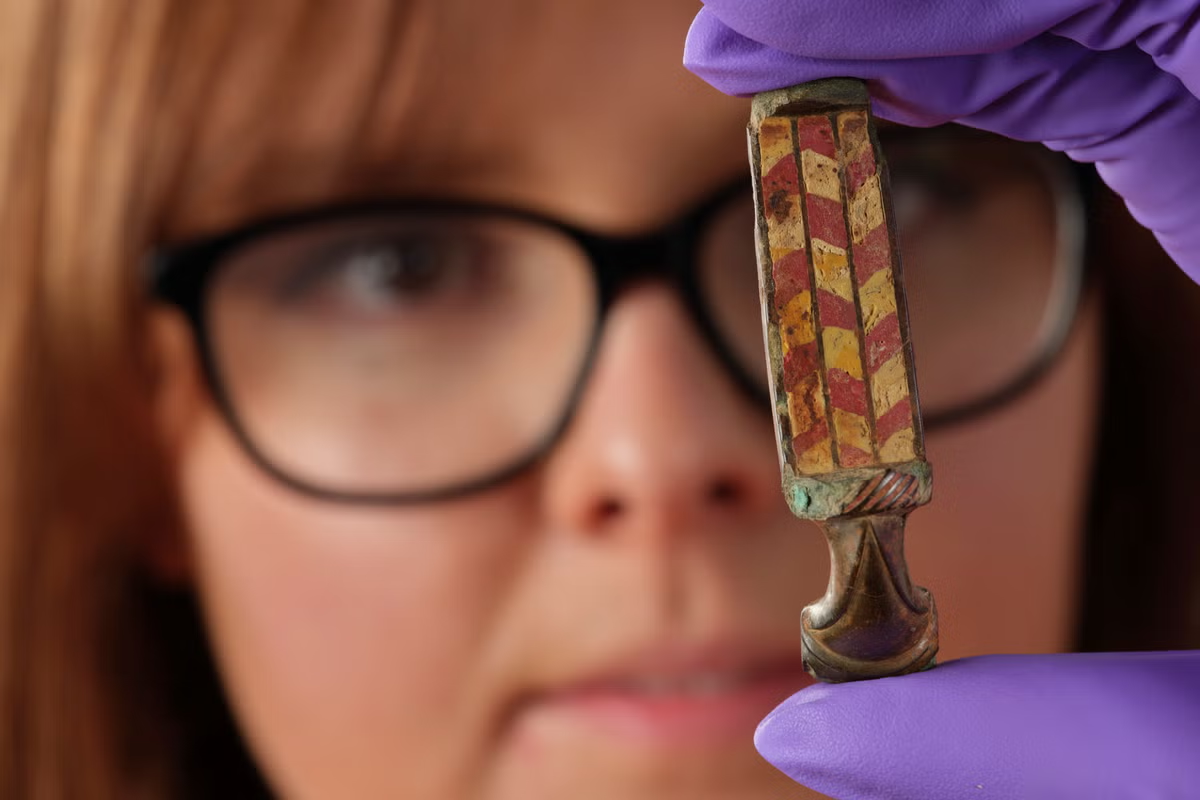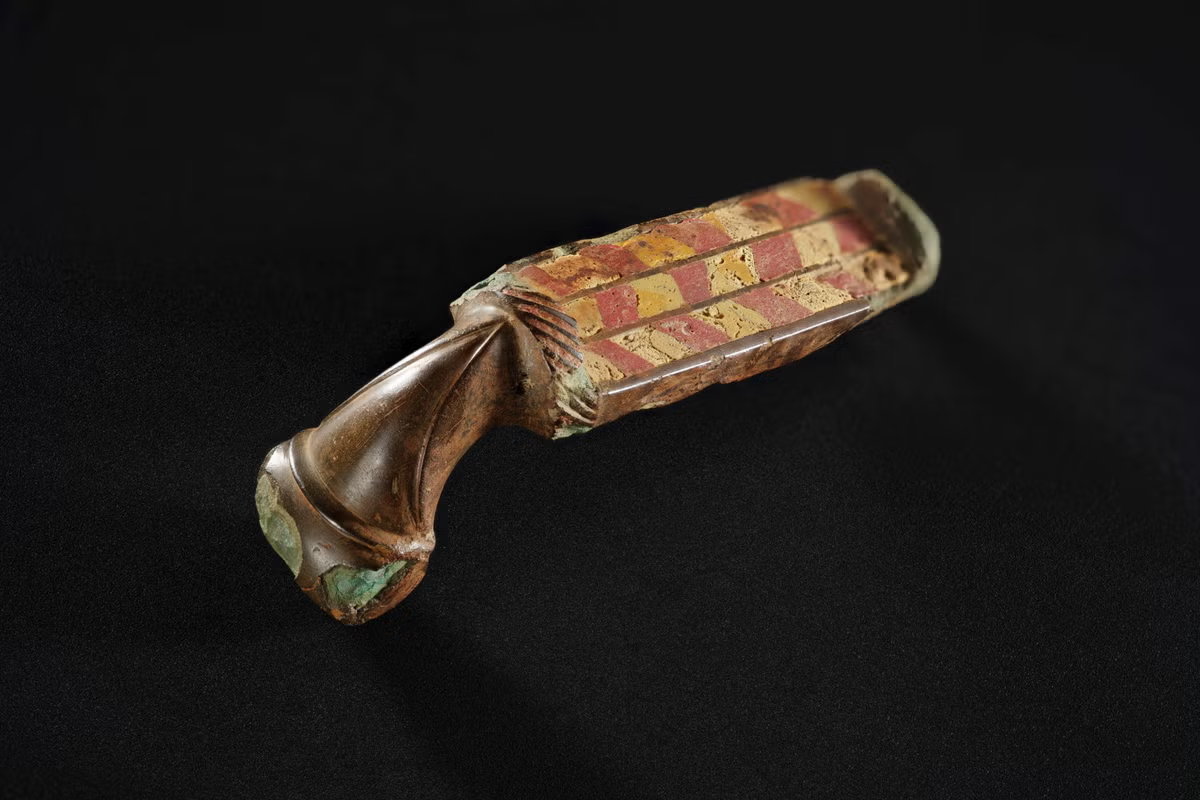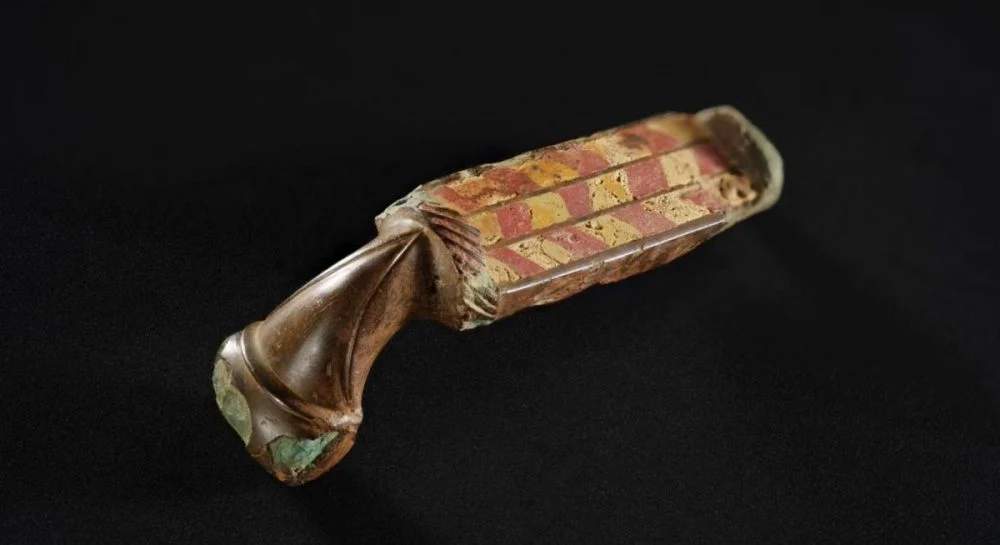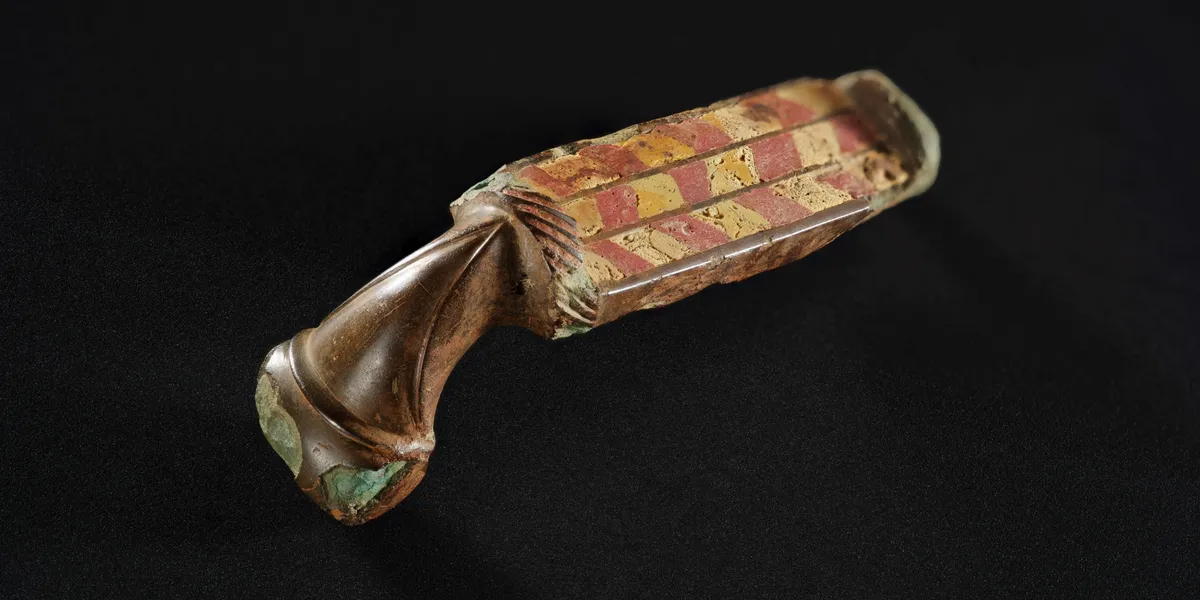
An “exquisite” Roman brooch discovered by a metal detectorist in Midlothian is to go on show for the first time in a major new exhibition.Described as a “miniature masterpiece”, the rare bronze brooch blends local and Roman design styles in a unique way.It was discovered in a field near Pathhead by a metal detectorist in 2022 but it is thought that it was probably made in northern England.Assistant curator Bethany Simpson with the brooch (National Museums Scotland/PA)The brooch will go on show for the first time in the exhibition Roman Scotland: Life on the Edge of Empire which opens at the National Museum of Scotland in Edinburgh in November.Dr Fraser Hunter, principal curator of prehistory and Roman archaeology at National Museums Scotland, said: “The Pathhead brooch is a miniature masterpiece of craftworking and the details are exquisite.“Fancy Roman pieces like this were unusual even at the time and were used to show off in local society.“Whoever wore it would have been out to impress and I’m sure visitors will be dazzled by it when they see it up close in Roman Scotland: Life on the Edge of Empire.”At the time the brooch was made, craftworkers took inspiration from brooches brought in with the Roman invasion and added touches reflecting local tastes and styles.Other archaeological finds suggest there was an Iron Age settlement in the area around where the brooch was found and that it was a community that engaged with Rome.The brooch features enamel which has been carefully laid out in a zig-zag pattern alternating between red and yellow blocks while the shape and design of the head of the brooch are said to be inspired by older traditions of Celtic art.The brooch dates to around 100-160 AD (National Museums Scotland/PA)PA Media - National Museums ScotlandScientific analysis suggests the surface of the brooch was once coated with tin, which would have created a silvery sheen to set off the bright colours.Experts said such a rare and valuable brooch is unlikely to have been available to buy or trade.It is thought the brooch, which dates to around 100-160 AD, probably came into local hands as a gift from the Roman world.The brooch may have been given to influence a local leader and it is suggested it was perhaps worn as a symbol of status and favour in the new regime.Dr Hunter said: “We’re really excited to be able to present new finds like this, things that have never been seen before, because they’re some of the things that really help drive the story and this, in particular, because it tells that story of interaction, because it’s a style of brooch that mixes the local and the Roman.”He added: “The basic idea of those sort of brooches is developed from ones that were coming into the north of Britain in the Roman period, but what you see is in different areas they adapt these, so local craft workers take these traditions and adapt and change them, and this is really powerful.“This is to do with adapting to living in this new world. You’re taking the new but adding bits of the old, bits of the familiar, and creating these new objects that mark out who you are.”The exhibition runs from mid-November to next April (National Museums Scotland/PA)PA Media - National Museums ScotlandThe brooch was allocated to National Museums Scotland after being processed by Treasure Trove.The exhibition aims to “reshape our understanding of Scotland’s relationship with the Roman world” and will look at the experience of a frontier.It will explore the experiences of the soldiers who tried to conquer the land as well as those of the communities who lived around each military base, and the locals whose lives were threatened by the Roman invasion.The fort of Inveresk, near Musselburgh in East Lothian, will be a key focus in the exhibition.The world’s most northerly temple to the god Mithras known of in the Roman empire was situated at the fort and two “spectacular” altars from the temple will be the centrepiece of the exhibition.Tickets for Roman Scotland: Life on the Edge of Empire are now available and can be booked at nms.ac.uk/RomanScotlandThe exhibition runs from November 14 2026 to April 28 2027.It has been made possible with the support of the Roman Scotland Exhibition Supporters Circle.
Rare Roman brooch found by metal detectorist to go on show for first time
The exhibition Roman Scotland: Life on the Edge of Empire opens in November.
713 words~3 min read