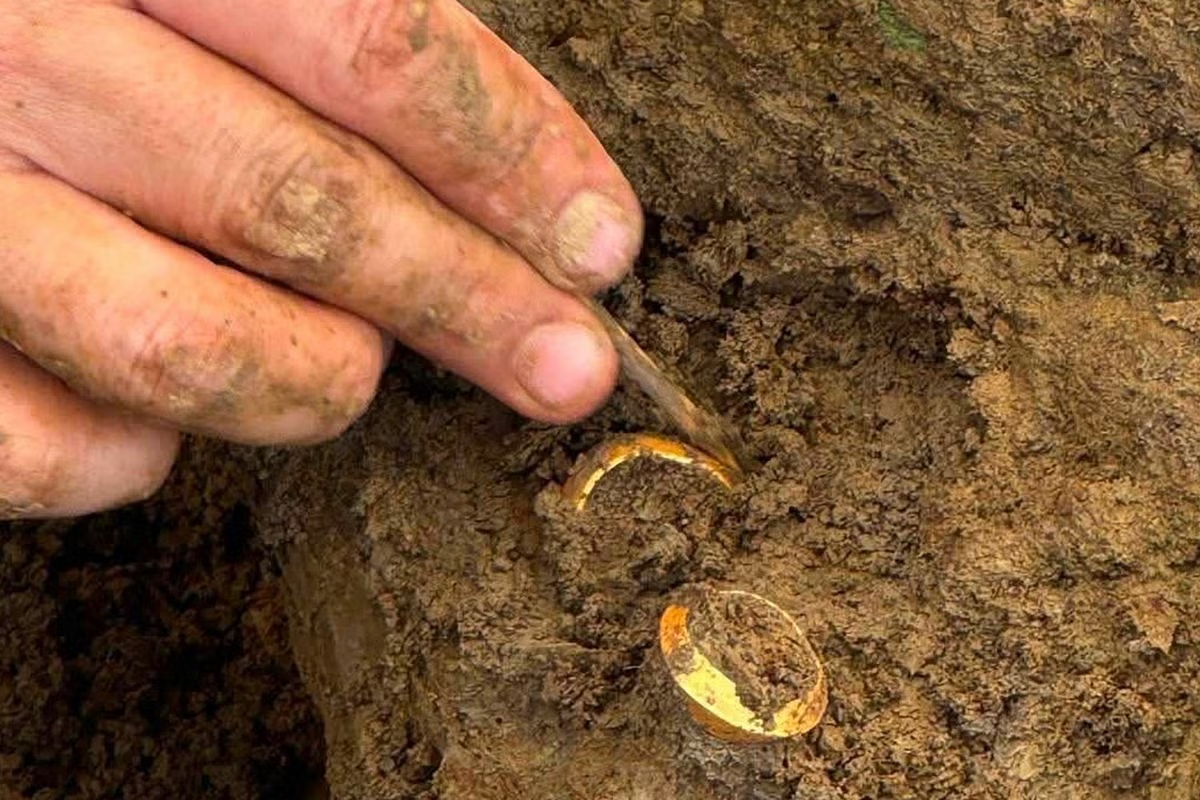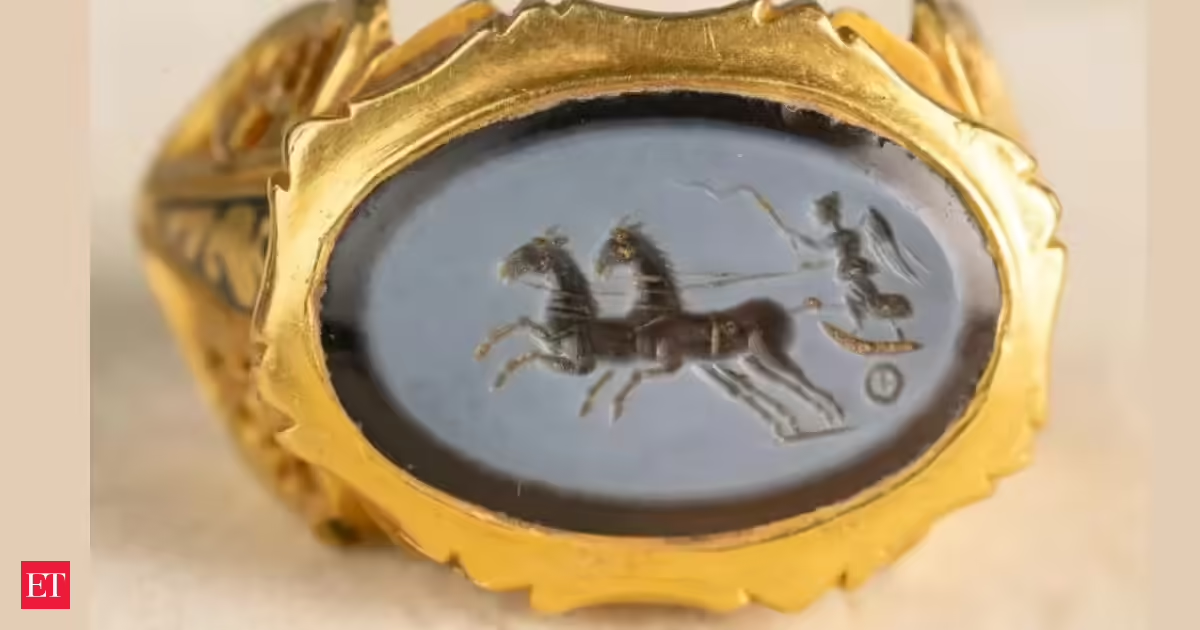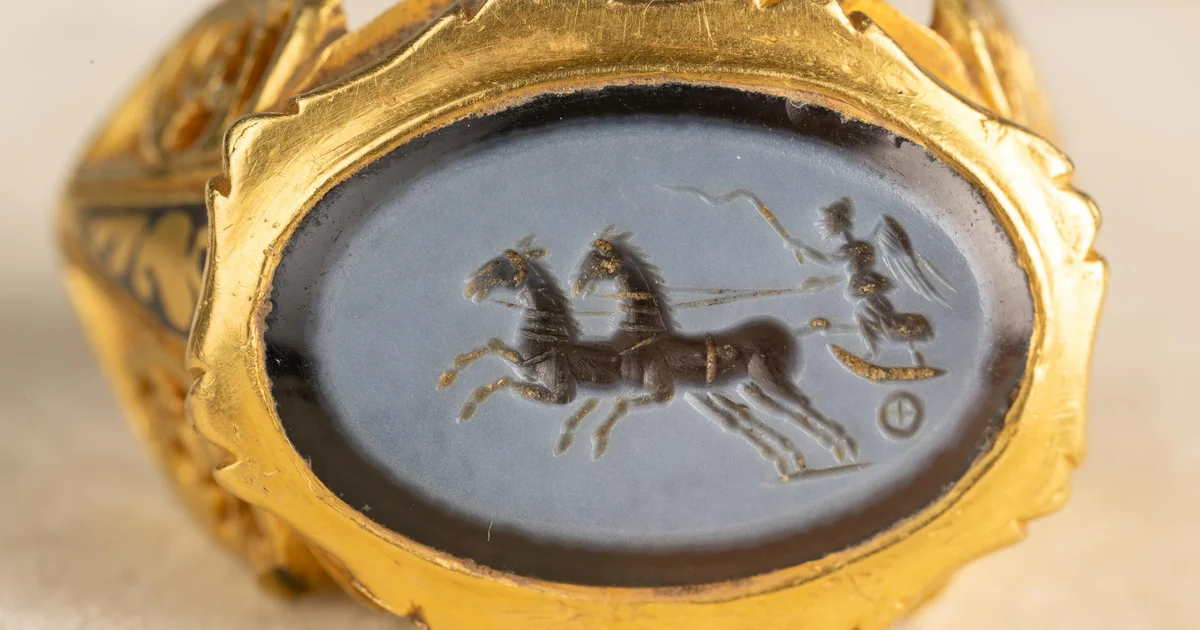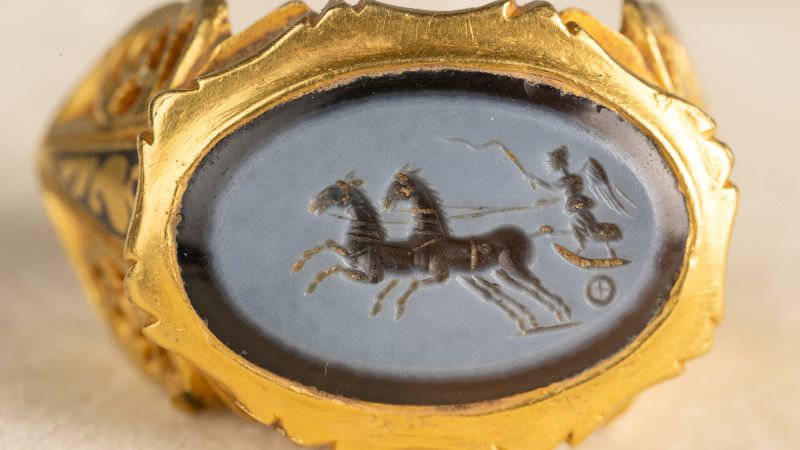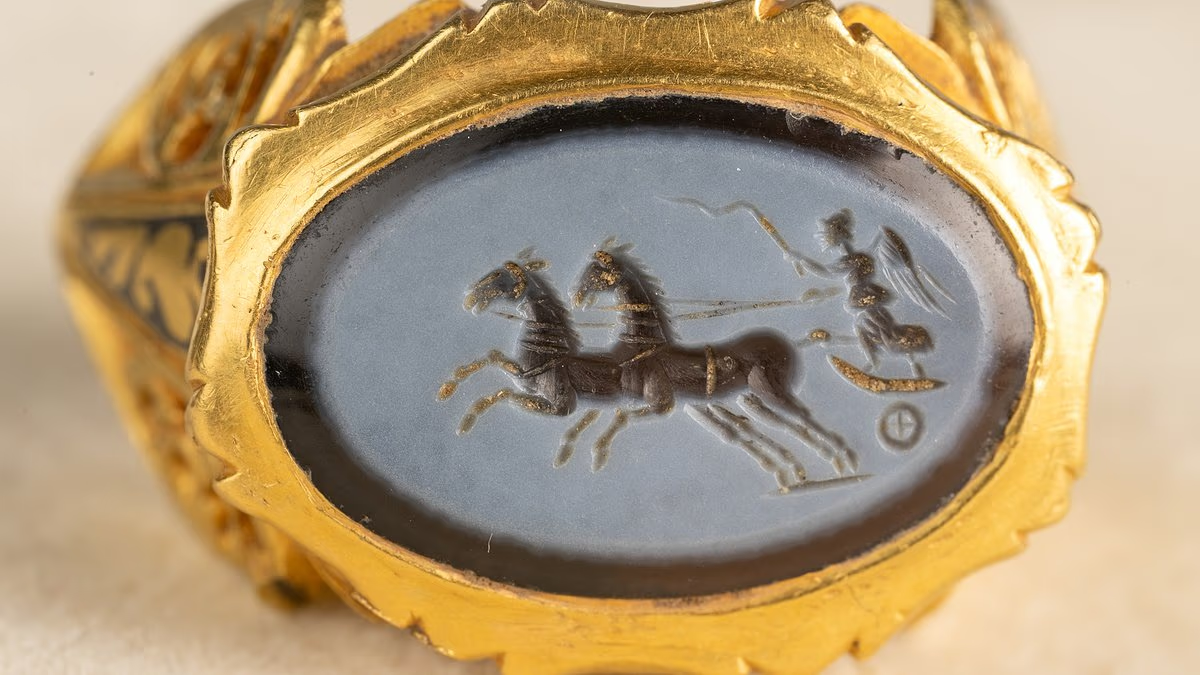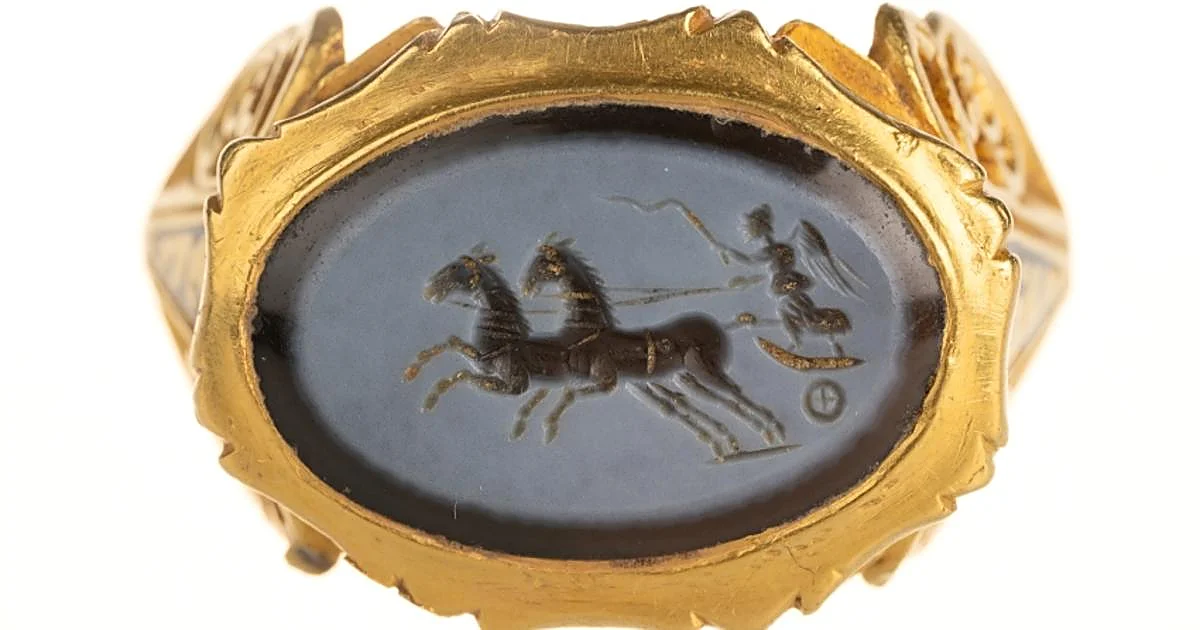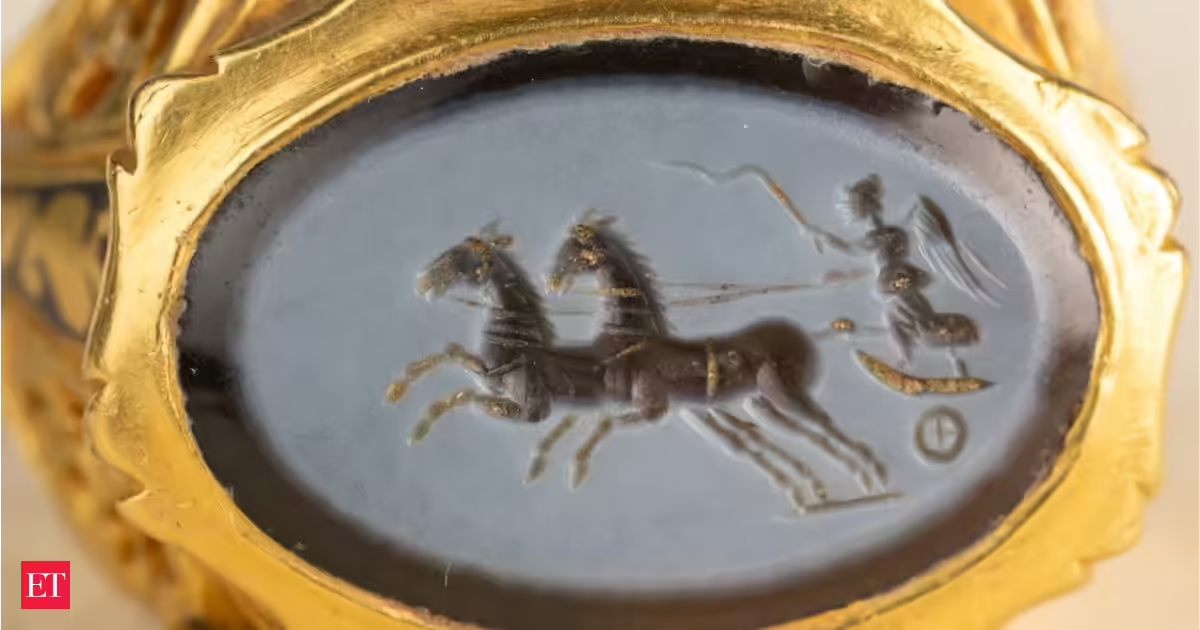
Imagine you're walking across an English countryside field with a metal detector, hoping to maybe find an old coin. Instead, you find a solid gold ring worn by a Roman nearly 1,700 years ago. That’s precisely what happened to Kevin Minto, a 68-year-old British lorry driver and ex-soldier who took up metal detecting to keep fit after leaving the army. Now his story is circulating among American audiences who just can't stop talking about it.According to the British Museum's Portable Antiquities Scheme, the UK has a legal system requiring anyone who finds hoards of gold, silver, or ancient coins to report the find to a coroner, so items like this can be studied and, in many cases, acquired for public museums instead of vanishing into private hands. But it's exactly that kind of system that allowed Minto's ring to end up somewhere people can actually see it.From "just a coin" to a museum-worthy masterpieceMinto had a history with this particular piece of land. In 2017, he first found Roman coins scattered around the site, probably spread by ploughing over the years, and he kept coming back. On one occasion, he even brought up a lead-lined coffin. Then, in 2018, while detecting with a group of military veterans at an organized rally, his detector picked up something different.Khreisheh with the ring: Senior curator Amal Khreisheh holds the "unparalleled" Roman gold ring acquired by the South West Heritage Trust. Image Credits: South West Heritage TrustAt first, he thought it was another coin, then thought it might be a brooch. It turned out to be a large, heavy gold ring set with a finely detailed engraved gem of the Roman goddess Victoria driving a chariot drawn by two horses. Minto said he felt “hit by an express train” at the time, and one of the friends who was detecting with him started shouting they were rich.The ring was revealed at an organized rally, and there was a disagreement over who was entitled to the proceeds. Minto says he is glad the question has finally been settled, even if it meant a long wait with the payout only coming through a couple of months ago.Why one gold ring has archaeologists this excitedIt was worth the wait. The ring has now been formally taken into the care of the South West Heritage Trust, the charity responsible for the heritage of Somerset and Devon, along with a hoard of 297 Roman coins found at the same site. The South West Heritage Trust said in an official statement that the trust had raised £78,010, around $105,000, to buy the ring and hoard, with support from a number of arts and heritage funders in the UK. Half of that went to the landowner, and Minto split his share with the friend who was detecting with him that day. He paid off his mortgage with the money and has already reduced his lorry-driving week to four days and will go down to three next year.Minto says he still returns to the field, hoping for more Roman treasure. Image Credits: Kevin MintoSenior curator Amal Khreisheh called the ring an "unparalleled discovery for Britain," pointing out that its size, the sheer amount of gold used, and the quality of its engraved gemstone are matched only by a handful of finds on mainland Europe. She pointed out an interesting contrast: the design of the gemstone is simply elegant, but the gold setting around it is downright “extravagant.” The gold itself did not need cleaning, and one can still see specks of red soil in the stone. Now scientists are planning further analysis to see if the ring was made in Britain or imported from elsewhere.A ring with a turbulent backstoryThere is a bigger historical story tucked inside this discovery. According to a chapter on hoarding patterns in Roman Britain published by Oxford Academic, the late third century AD is described as a period of real instability for Roman Britain, when a breakaway regime took control of the province before Rome’s central government reasserted control. The ring and its hoard, which also contained lead and pottery objects, were probably buried around AD 297, shortly after that unrest, as a way of protecting valuables, Khreisheh thinks. Because wealthy residents lived in Ilminster and trade routes passed through the area, she believes the ring may have belonged to a governor, merchant or major landowner. Researchers also hope to learn whether the coffin Minto found nearby is part of the same tale.The chapter draws on an AHRC-funded British Museum–Leicester University project, led by Roger Bland, that compiled data on all Iron Age and Roman coin hoards found in Britain. It argues that combining numismatic evidence with archaeological and landscape context, alongside the Portable Antiquities Scheme’s single-finds database, can place hoards back into broader social narratives while also exposing methodological problems in how hoards are defined and interpreted.A find with a life of its ownThe ring is currently touring primary schools in the region, with a special “Ilminster ring discovery day” planned for the town’s art center in August. Later, it will find a permanent home at the Museum of Somerset in Taunton. It’s not very often you get something this intact, said Khreisheh, noting that archaeologists usually deal with broken pottery or bone.For Minto, keeping the ring local mattered as much as the payout. And, in true detectorist form, he's already out again in the same field, hoping the ground still has more Roman history to give up.
A man searching a field in England found a 1,700-year-old Roman gold ring so rare that it later sold for £78,000
A British lorry driver uncovered a rare Roman gold ring dating back 1,700 years while metal detecting in England. This remarkable find highlights the rich history of Roman Britain and the ongoing excitement surrounding archaeological discoveries.
912 words~4 min read