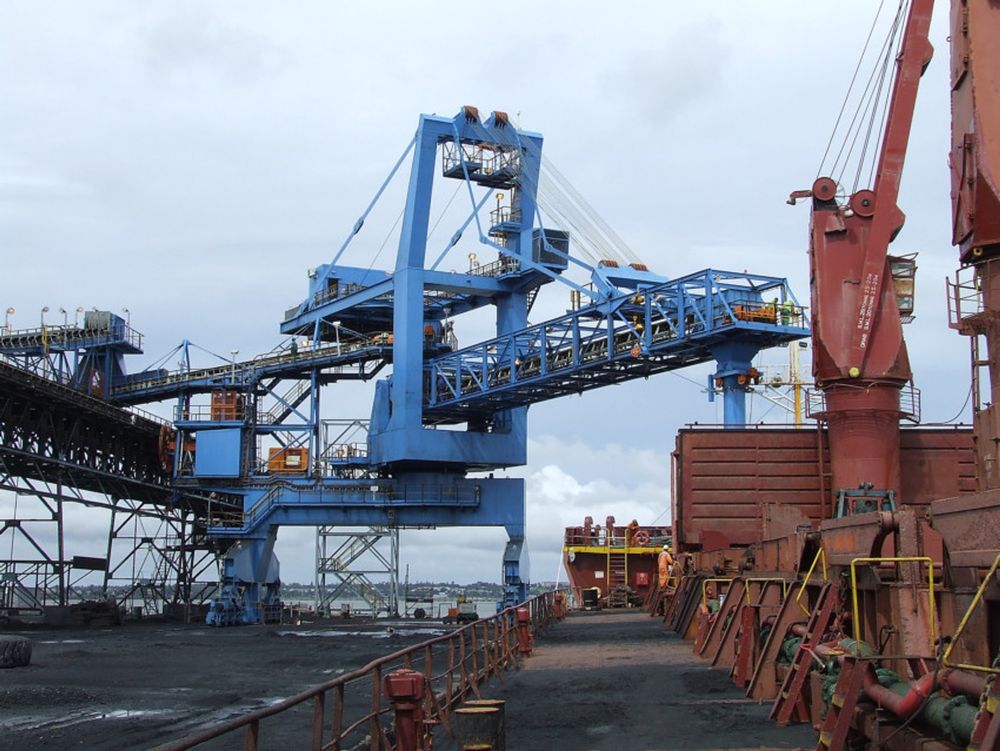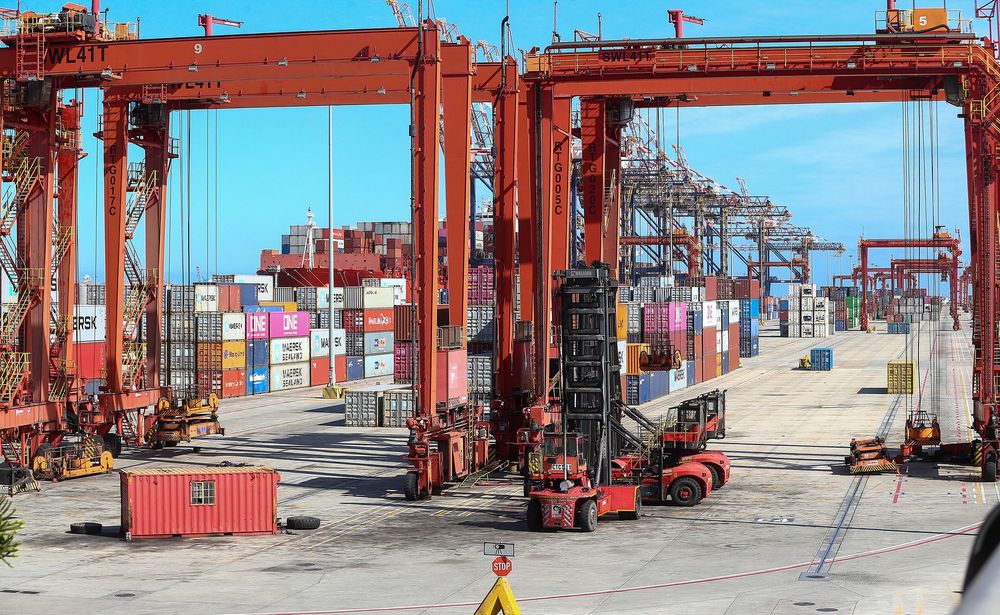
The economist Albert Hirschman spent his career studying why structural reform is harder than expected but more achievable than assumed. He wrote about reform-mongers: people engaged in the unglamorous, difficult and politically contested work of navigating resistance, building coalitions and making partial progress under imperfect conditions. Improvisation mattered as much as design, and outcomes often surprised advocates and critics. South Africa does not suffer from a shortage of ideas on how to transform the economy and create the conditions for faster growth. The challenge has been to translate those ideas into action. Operation Vulindlela was launched in 2020 as a joint initiative of the presidency and the National Treasury to drive the implementation of structural reforms. Its name, and much of its inspiration, came from the late Tito Mboweni, the former finance minister and Reserve Bank governor in whose honour the Reserve Bank hosted a memorial lecture on Thursday.Reforms are about reducing costs and barriers to entry, increasing competition, stimulating new investment and creating space for new entrants in the market. They are about building a dynamic, fast-growing and inclusive economy, and positioning South Africa to compete globally. Ultimately they are about improving the quality of life for ordinary people. The reform programme was built to reduce obstacles to growth, working with the departments, regulators and public entities that had to implement the reforms. It aimed to act with the speed and cross-institutional reach that government processes don’t generally sustain.The choice of structural reforms prioritised by Operation Vulindlela was informed by the most pressing socioeconomic problems of the day, as a forthcoming new report will detail. A major focus was the interrupted power supply and escalating electricity prices, which made South African companies uncompetitive and put enormous strain on households. A logistics system characterised by a struggling rail and port network was a further area of focus, as was the deterioration of water services to the point where reliable supply could not be taken for granted.The initial success achieved by Operation Vulindlela in driving these reforms has contributed to a nascent recovery in business and consumer confidence. In energy, a fundamental transformation of the electricity sector to achieve energy security and drive down prices is under way. The pipeline of new private renewable energy projects is unprecedented, reflecting the success of reforms to open up the market since government removed the licensing threshold in 2021. New investmentThe renewable energy investment pipeline has grown to 24GW currently in the grid connection process, with more than 19,000MW of new generation capacity already registered by the national energy regulator.Environmental impact assessment timelines for new generation projects were reduced from 100 days to 57. The reforms have opened the way for about R600bn of new investment over the next two to three years.In logistics, private concessions are being rolled out. The 25-year concession for the Durban Container Terminal Pier 2 became effective in January and has already translated into operational improvements. Eleven train operating companies have been selected on 41 routes across six of Transnet’s freight corridors, with seven expected to commence operations in the second quarter of next year. As a result, we are seeing strong private investment in rolling stock. In water, water use licence turnaround times were reduced from 300 to 90 days, and a backlog of more than 1,000 outstanding applications was cleared. Only 35% of water use licence applications were approved within 30 days in 2022/23, but this rose to 80% in 2025/26. An independent assessment placed the GDP contribution of that administrative change at R56.5bn and about 2,500 jobs since 2022. More than 300,000 visa applications were resolved, some outstanding for more than a decade, and more than 100,000 tourists from new source markets were fast-tracked through a reformed system. The cost of 2 gigabytes of mobile data fell from R149 to R99. Phase 2 of Operation Vulindlela, which was launched in May 2025, must engage with far more difficult challenges. These include the deterioration of basic municipal services, the near collapse of passenger rail, and the financial and operational challenges in local government. These are not obstructions in otherwise functioning systems. They are the consequences of systems that have decayed over many years through fiscal strain, weakened institutional capacity and decades of delayed infrastructure investment. Of 144 water service authorities, where the municipality is responsible for delivering water and sanitation services, 107 were scored “poor” (33) or “critical” (74) on the performance of their drinking water systems. These figures reflect a structural unravelling of the municipal service delivery model rather than isolated failures. Turning this around will demand a new service delivery model underpinned by the reform recommendations in the local government white paper. Metrorail, which served about 450-million passenger trips annually before the Covid-19 pandemic, has recovered to only a fraction of that volume, leaving many commuters without affordable, reliable public transport. Over the next few years the Passenger Rail Agency of South Africa will benefit from a R23.1bn investment in signalling systems across the Metrorail network, and a R7.4bn increase to its operations budget to allow it to continue opening new lines. A further R5.7bn will ensure its rolling stock programme continues to deliver new trains as investment in signalling allows more trains onto the network.Social grant applicationsMzansiXchange, a government data exchange platform currently in pilot phase, will enable near-instantaneous verification of social grant applications across government databases. A new end-to-end electronic procurement system will extend that logic of system integrity to create far greater procurement transparency across government.The model that produced results in phase 1 of Operation Vulindlela was of a focused team in the presidency and National Treasury supporting reform implementers, the government departments and state-owned entities at the heart of driving actual implementation.Building on the success of phase 1, we must acknowledge the problems we seek to address in phase 2 are harder, the timelines are longer, and the institutional engagement must go deeper into the architecture of the state than required by previous reforms. A broader shift is now visible in South Africa’s international standing. Credit rating improvements, removal from the Financial Action Task Force greylist and recognition by the Organisation for Economic Co-operation & Development and the IMF reflect a genuine shift in reform credibility.This materially affects borrowing costs, investor sentiment and the fiscal latitude available to the state. But we face the more demanding tasks of achieving an economy that attracts investment, generates employment at a scale, delivers reliable services to households across the country, and progressively closes the distance between where people live and the opportunities they need to reach.Hirschman argued that what distinguishes reform-mongers is their capacity to find within seemingly intractable obstacles the specific possibilities that others have overlooked. Phase 2 of Operation Vulindlela demands that same capacity applied to deeper and more complex areas of reform — the same level of dedication and rigour the late Mboweni demanded from everyone he worked with. It is with that understanding, and no illusions about the difficulty of the next stage, that our work continues.• Dicks heads the project management office in the presidency. Pieterse is director-general of the National Treasury.
RUDI DICKS AND DUNCAN PIETERSE | Operation Vulindlela — what the evidence shows and what comes next
Phase 2 of Operation Vulindlela has far more difficult challenges to handle
1,183 words~5 min read