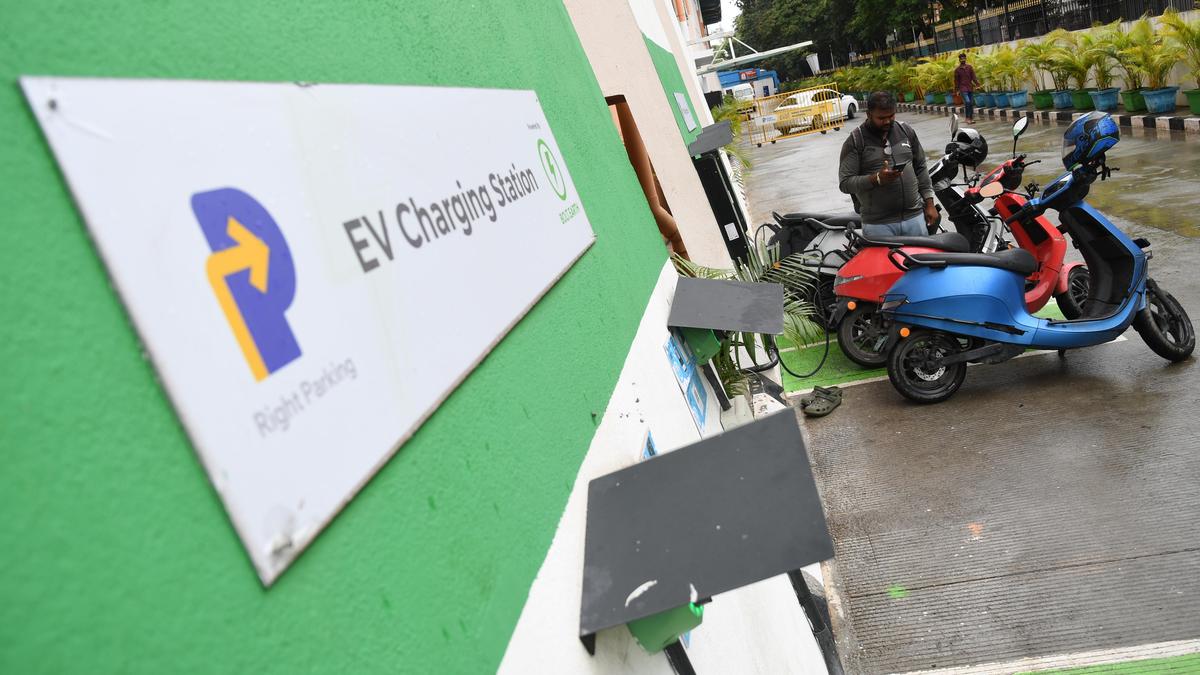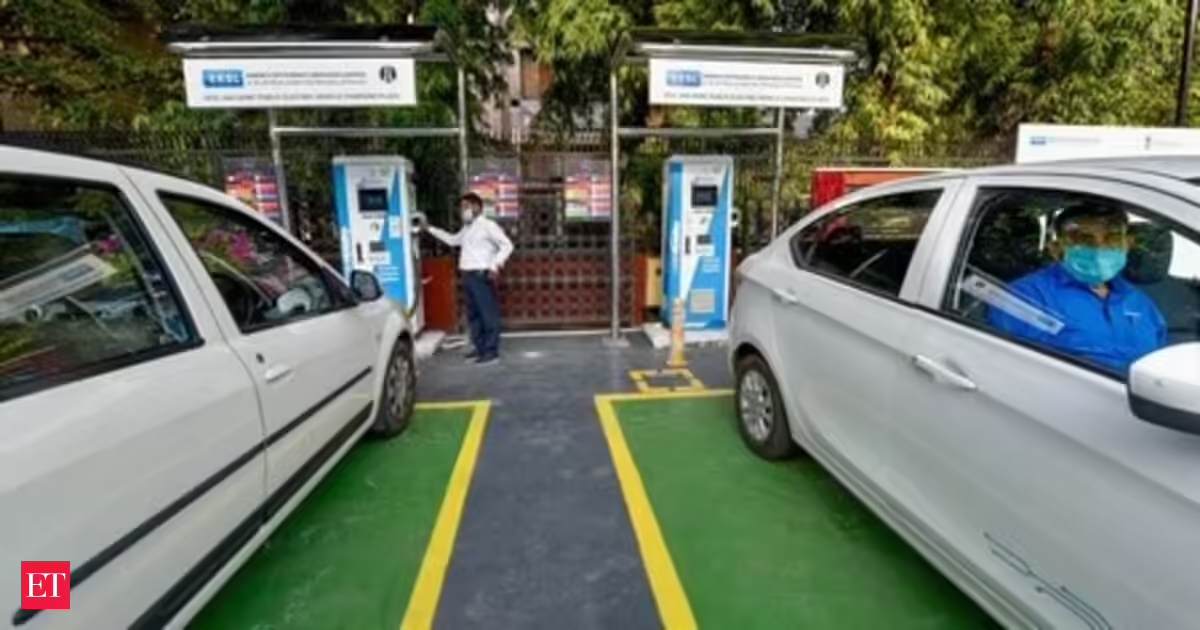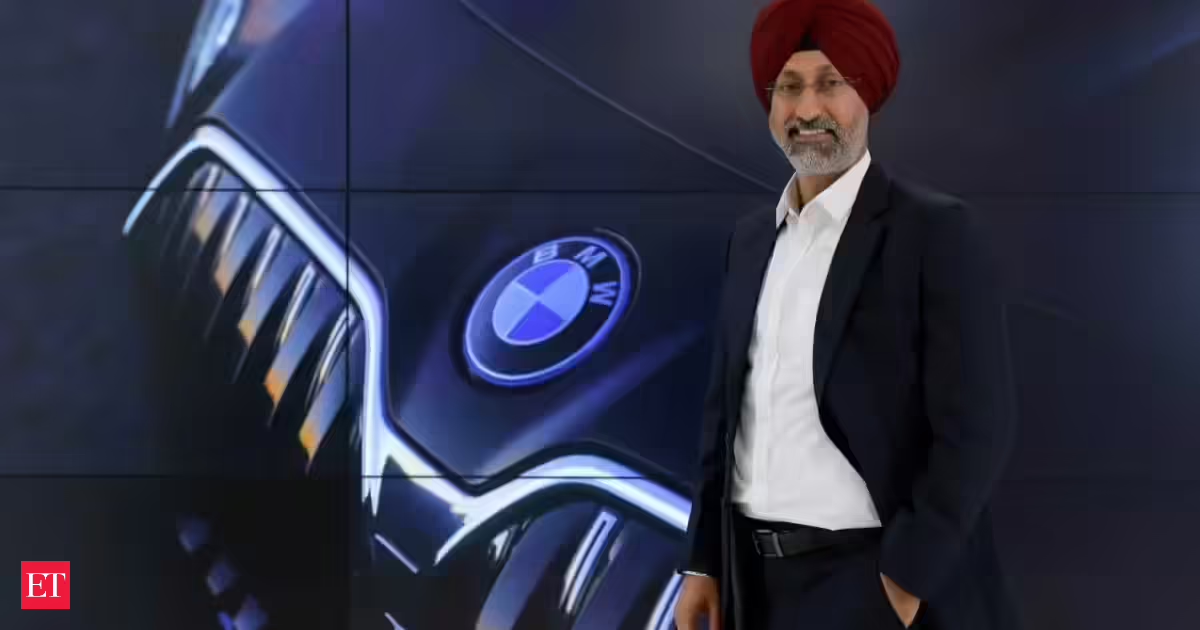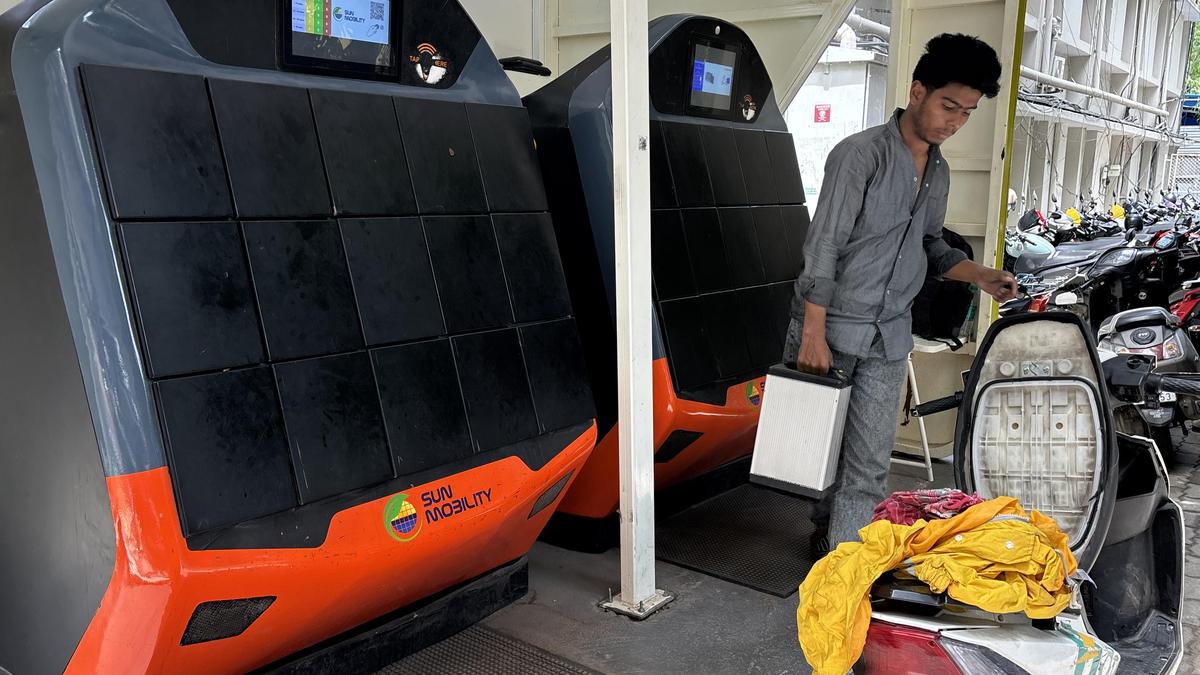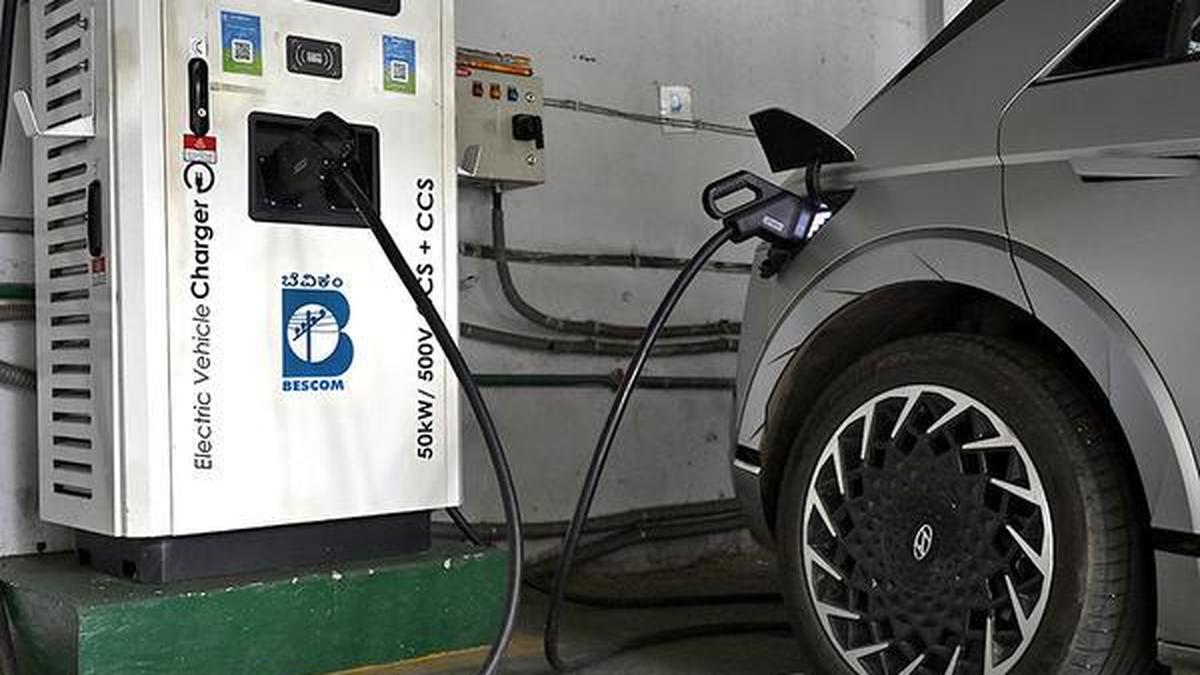
Buying an electric car has been a great decision for my daily commute in Bengaluru. It is comfortable to drive, and has reduced my fuel expenses. But whenever I travel to my hometown Mangaluru, I have to stop after around 220 km, and spend nearly an hour charging before continuing the journey, says Ramya Kumari, an IT professional from Bellandur. “While EVs are excellent for city driving, long-distance travel requires careful planning around charging stations, which can be frustrating.”Her experience mirrors that of thousands of electric vehicle (EV) owners across Karnataka, where the shift towards cleaner mobility is accelerating, but infrastructure continues to lag behind demand.Prime Minister Narendra Modi recently urged citizens to reduce dependence on petrol and diesel, citing the need to conserve foreign exchange and strengthen India’s energy security amid global uncertainties in fuel markets. Electric vehicles have emerged as a key pillar in India’s strategy to reduce oil imports and lower emissions.India’s overall EV market penetration is expected to reach approximately 10% in FY 2026-27, led by robust two-wheeler sales from major manufacturers and growing four-wheeler adoption. While national public charging infrastructure has grown to over 29,000 units, deployment remains urban-centric with a high EV-to-charger ratio (235:1). Karnataka spearheads this deployment, housing 23% of the nation’s chargers, though 75% of these are deployed in Bengaluru, say industry observers.Indeed, for Bengaluru residents, EVs have become increasingly attractive due to soaring fuel prices, rising environmental awareness and government incentives. Yet, once drivers venture beyond the city limits, concerns over charging infrastructure often overshadow the benefits, like in the case of Ramya.Says Ramya, “Whenever I drive to Mangaluru, I usually stop around Sakleshpur, where a limited number of charging points are available. During weekends or holiday periods, there can be queues. Even though the number of charging stations is increasing, it is still nowhere near sufficient for the growing number of EV users. The biggest challenge is range anxiety, constantly worrying about whether the next charging station will be available and operational before the battery runs low.”The Bengaluru-Mangaluru route, one of Karnataka’s busiest inter-city corridors, illustrates the challenge. Drivers often have to plan journeys around available charging points rather than choosing the most convenient route or schedule.Charging durationApart from the availability of charging stations, charging duration remains a major concern. Unlike conventional fuel vehicles that can be refuelled within minutes, EVs require significantly more time. Depending on battery size and charging capacity, a standard home charger can take anywhere between six and 12 hours to fully charge a vehicle. Fast chargers can reduce charging times to between 30 minutes and one hour for a substantial battery refill, but such facilities remain limited, especially outside cities.For apartment dwellers in Bengaluru, even home charging is not always straightforward. Praveen S., a resident of J.P. Nagar who owns an electric vehicle, said that access to charging infrastructure within residential complexes remains a challenge.“Many people assume that EV owners can simply charge their vehicles at home. In reality, several apartment complexes were designed long before electric vehicles became common. Residents do not have dedicated parking slots or access to electrical connections required for installing personal chargers. Getting approvals from apartment associations can be time-consuming. Unless residential infrastructure evolves alongside EV adoption, many urban residents will continue facing practical difficulties,” he said.On-road priceAnother hurdle for many contemplating to buy EVs is the higher upfront cost of purchasing an electric vehicle. While operating costs are generally lower than those of petrol and diesel vehicles due to cheaper energy and reduced maintenance requirements, the initial investment remains substantial.Sukesh Hegde, a resident of Yelahanka, spent months researching electric vehicles before ultimately deciding to purchase a diesel car. “Everyone talks about the benefits of EVs, and I agree they make sense in many situations, especially two-wheelers are good. But when I compared prices, I realised that a good electric SUV costs significantly more than a comparable fuel-powered vehicle. For many middle-class families, that difference matters,” he said.Hegde also pointed to uncertainty about battery life. “Lithium-ion batteries degrade over time, and replacing them can be expensive. I was concerned about what the vehicle would be worth after several years and whether battery replacement costs would offset the savings from lower running expenses.”Key concerns among EV usersLimited charging stations outside major citiesRange anxiety during long-distance travelCharging takes 30 minutes to 1 hour at fast chargers; 6-12 hours at homeLack of charging facilities in many apartment complexesHigher upfront purchase cost compared to petrol/diesel vehiclesConcerns over battery degradation and replacement costsLong journeys require careful route planning around charging pointsInfrastructure growthAccording to data available on the VAHAN dashboard, Karnataka registered more than 54,000 electric vehicles between January and March 2026. At the same time, Karnataka has emerged as the second-largest hub for public EV charging stations installed by oil marketing companies (OMCs) in the country.Data accessed by The Hindu shows that 2,039 EV public charging stations installed by OMCs are currently operational across the State. Karnataka had only 36 charging stations in 2020-21. The number increased to 153 in 2021-22 before rising sharply to 542 in 2022-23 amid growing EV adoption.Although installations dipped slightly to 478 stations in 2023-24, the overall growth trajectory remained positive. The biggest expansion occurred in 2024-25, when 1,034 charging stations were added in a single year.In the previous financial year up to March 1, 2026, another 157 charging stations have been installed. This has taken the total installations over five years to approximately 2,400 stations, of which 2,039 are operational.OMCs comprising Indian Oil (IOCL), Bharat Petroleum (BPCL), and Hindustan Petroleum (HPCL) have already installed close to 30,000 charging sites across their fuel retail networks and fast-charging infrastructure on highways in India. BPCL has set up EV fast-charging corridors along busy routes like Bengaluru-Tirupati. Indian Oil in partnership with Sun Mobility deployed battery swapping stations to offer quick charging to commercial fleets and three-wheelers.IOCL is planning 608 EV charging stations across all 31 districts in Karnataka, of which 304 stations have already been onboarded. Siddharth Agarwal, Executive Director and State Head, Karnataka State Office, Indian Oil said all of these are fast DC chargers, enabling efficient and convenient charging. “We are planning 240 KW charging stations, which will cater to the heavy vehicles segment. Feasibility studies are being conducted and rollout is expected in the current financial year.”Currently, 124 chargers are already integrated with Indian Oil’s e-Charge platform. The remaining chargers are under various stages of onboarding.HPCL’s flagship brand HPeCharge, leveraging its extensive fuel retail network, has built one of the most expansive public EV charging infrastructures in the country, including Karnataka, according to the oil PSU.Private playersEV vehicle manufacturers and infrastructure developers say Karnataka has made important strides in this segment.Karnataka is one of the strongest examples of EV adoption, according to Ravneet S. Phokela, chief business offer at Ather Energy of Hero MotoCorp. The State was already seeing some of the highest electric two-wheeler penetration levels in the country, with EVs accounting for 13.1% of new two-wheeler registrations in FY26, supported by a strong ecosystem of startups, suppliers, manufacturers and charge point operators. More importantly, consumer behaviour has evolved, he observed, adding that concerns around range, battery life, and charging accessibility are reducing as products become more reliable and the supporting ecosystem matures.Phokela said his company has invested extensively in battery technology, safety systems, and validation for Indian conditions. On charging accessibility, Ather claims to have over 6,000 LECCS-powered fast-charging points across India, including more than 500 in Karnataka. Bengaluru alone has over 200 fast-charging points, with charging stations typically located within 2 kilometres of one another.Chetan Maini, co-founder and chairperson of SUN Mobility, said Karnataka, in particular, is among the States most prepared for EV transition, having been an early mover in EV policy and ecosystem development.Investment flowKarnataka has attracted over ₹25,000 crore in EV-related investment across manufacturing, batteries, charging infrastructure, and R&D, while also building one of the country’s largest charging networks with more than 5,000 charging stations. Over the years, SUN Mobility has established a network of more than 1,700 battery swapping stations across 23 cities, supporting over 95,000 vehicles and enabling more than 60 million battery swaps, claimed the company. The company also collaborates with Indian Oil Corporation, BESCOM, and the Indian Railways.A spokesperson of Tata Power, an integrated power company, said Bengaluru’s technology-driven ecosystem and sustainability-focused businesses have played an important role in accelerating this shift. Tata Power’s EZ Charge energised over 5,500 public charging points in over 700 cities across the country, including 320 in Karnataka.Karnataka government officials, meanwhile, say substantial investments are already under way. A senior official from the Transport Department in Bengaluru said that both the Centre and State governments are actively working to strengthen charging infrastructure.Another official pointed to major Central government initiatives aimed at accelerating deployment. “Under the FAME-II scheme, ₹912.5 crore has been sanctioned for EV charging infrastructure across the country. Of this, ₹895.48 crore has already been released, while ₹655.43 crore has been utilised. In addition, ₹2,000 crore has been earmarked under the PM E-DRIVE scheme specifically for expanding charging infrastructure nationwide.”He added that the focus is shifting from merely increasing number of charging stations to improving reliability and accessibility. “We are encouraging deployment of fast-charging networks, supporting private sector participation and working with oil marketing companies and urban local bodies,” the official said.Ecosystem at a critical stageDespite this progress, experts argue that infrastructure growth has not kept pace with the rapid increase in vehicle registration. Traffic and mobility expert M.N. Sreehari says, “Karnataka may have emerged as one of India’s very fast growing areas of electric mobility, but the next phase of growth will depend on user confidence. The challenge is no longer convincing consumers to buy EVs. It is ensuring they can use them conveniently across the State. A driver should never have to worry about finding a charging station within a reasonable distance.”Sreehari feels that charging technology and grid integration also require attention. “The government should encourage ultra-fast charging corridors along major highways connecting Bengaluru, Mysuru, Mangaluru, Hubballi-Dharwad, Kalaburagi and Belagavi. Apartment charging regulations need to be simplified, and incentives should be provided to housing societies that install common charging facilities,” he added. According to him, consumers need reliable information about battery life, operating costs and charging options.Legal, regulatory issuesDrawing attention to another oft-ignored but key factor, Sonam Chandwani, managing partner, KS Legal & Associates, emphasised the importance of the legal and regulatory ecosystem in accelerating EV transition. While policies such as FAME, the Production Linked Incentive (PLI) Scheme, State-level EV policies, and renewable energy initiatives have created momentum, implementation remains fragmented. Land acquisition for charging stations, power connectivity approvals, environmental clearances, battery waste management obligations under the Battery Waste Management Rules, 2022, and compliance with electricity and urban development regulations continue to present practical challenges.The next phase of India’s EV journey would require greater regulatory harmonisation between the Central and State governments, municipal authorities, electricity distribution companies, and private sector participants.“The EV transition is often viewed as a technological revolution, but it is equally a legal and regulatory transformation. Technology can create the vehicle, but laws, contracts, compliance frameworks, financing structures, and investor protections create the ecosystem within which that vehicle can operate at scale,” Chandwani said.
Spotlight: Karnataka’s EV users face charging, cost and infrastructure hurdles
Karnataka's EV users face significant challenges, including charging infrastructure, costs, and long-distance travel concerns amid rising electric mobility.
1,866 words~8 min read