Press return to see results.
cmd / ctrl + k to open and close.
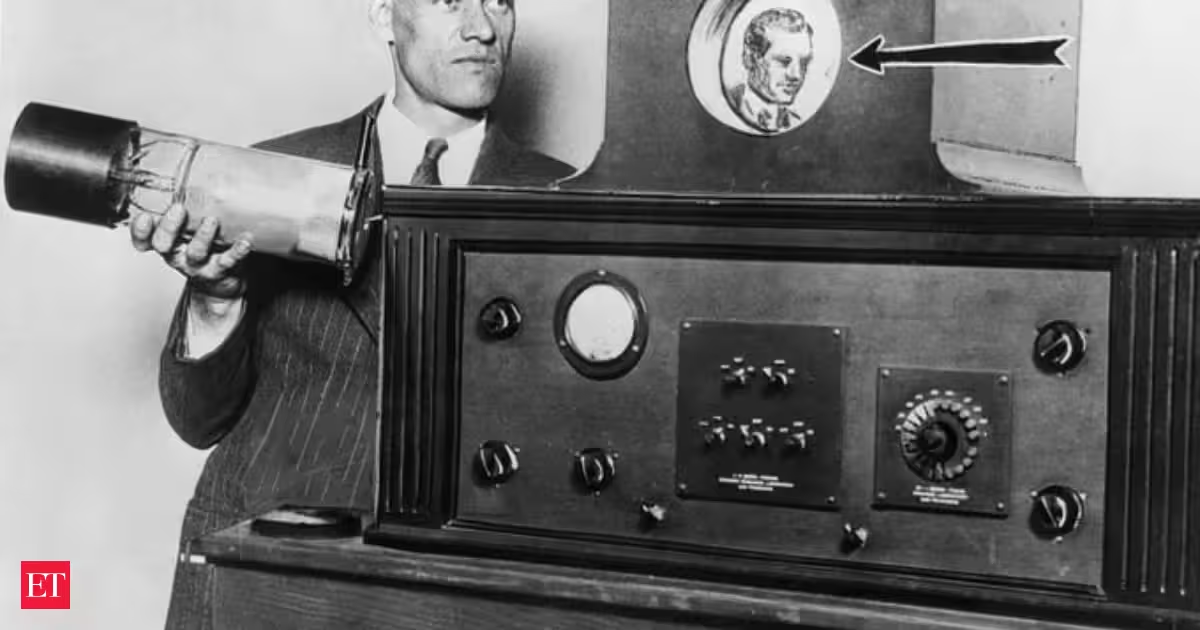
Nearly a century ago in a nondescript facility in the Telegraph Hill neighborhood of San Francisco, an engineer with the unlikely name of Philo T. Farnsworth broadcast the first live electronic image across space, that of a simple black line inscribed on a glass plate and backlit by a carbon arc lamp. From that initial broadcast on September 7, 1927, ultimately followed I Love Lucy and The Twilight Zone, All in the Family and MASH, The Simpsons and Seinfeld, Walter Cronkite’s announcement of the Kennedy assassination, images of the Apollo moon landing, the fall of the Berlin Wall, and the 9/11 attacks; The Sopranos, Mad Men, Breaking Bad, and The Wire. Farnsworth, a periphrastic inventor and devout Mormon, was the first to receive the federal patent for a television, over competitors like Westinghouse’s Vladimir K. Zworykin.
Only a little over a year later Schenectady, New York’s W3XK would incorporate and broadcast “radiomovies,” which were simply moving images of actor silhouettes. Largely a curiosity for electronics enthusiasts, commercial TV debuted at the 1939 World’s Fair in Queens. Television still belonged to a spectacularly futuristic world and featured in just a few thousand homes in the United States in 1940; eight years later the number of households with a TV set was still under 1 percent. By 1955, that number had risen to an astounding 65 percent, and by 1960, 90 percent of households owned televisions, more than those with indoor plumbing. Today, the omnipresent smartphone is in all of our pockets.