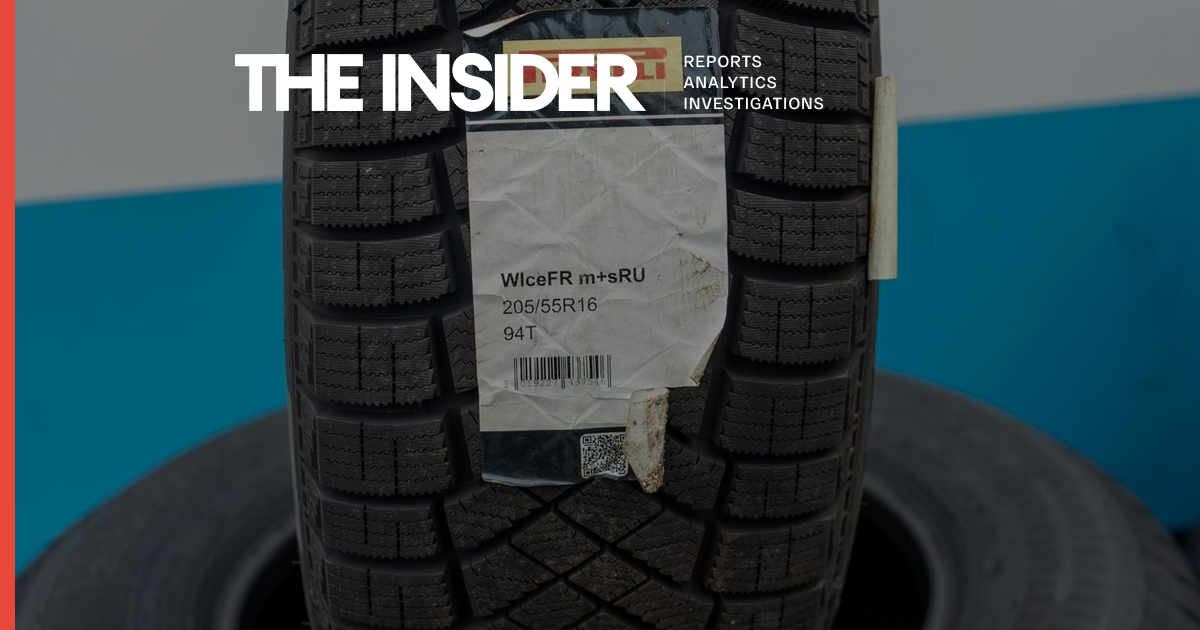
American short seller Grizzly Research has released an investigation accusing Italian tire manufacturer Pirelli of having “close relationships with Russia [that] pose a threat to Western national security.” In the report, the firm stated that the company is concealing the true scale of its Russian business from investors. According to Grizzly’s examination of Pirelli’s Russian financial reporting, the country accounts for approximately 10% of the manufacturer’s net profit. Meanwhile Pirelli itself attributes less than 6% of revenue to “Russia, Middle East, Africa, and India” combined.The main accusation concerns Pirelli’s Kirov plant, which, according to Grizzly, shares territory and infrastructure with a neighboring Russian state-owned enterprise that produces tires for Russian military equipment, including wheel platforms for nuclear warhead launch vehicles and armored vehicles used in the invasion of Ukraine. The enterprise is managed by the Research Institute of Rubber and Polymer Products, which is fully owned by sanctioned defense conglomerate Rostec. Rostec also holds a 25.005% stake in Pirelli Tyre Russia, the entity that controls the plants in Kirov and Voronezh. According to Grizzly, this stake and the proximity of the facilities has allowed Russia to gain access to Pirelli technologies critical to the country’s defense industry.The report’s authors claim that the plants are effectively interdependent: the neighboring research institute enterprise purportedly receives heat through pipes from Pirelli’s premises, and in one official document from Kirov authorities, the two plants are listed together under a single line for electricity consumption. As part of the investigation, a Grizzly analyst posing as a soldier fighting in Ukraine contacted Pirelli’s hotline requesting to purchase tires for their unit; he was given an internal email to place an order.In addition, a Grizzly analyst contacted the HR department of the Kirov plant, posing as a Russian contract soldier who was looking for a new job following the impending end of his service. According to the report:Our undercover analyst called HR at Pirelli’s Kirov factory posing as a member of the Russian military currently fighting in Ukraine whose contract would end soon and who wanted to move to Kirov for work. The analyst several times emphasised that they have a criminal conviction in Ukraine for the Bucha massacre, referring to the killings in Bucha, Ukraine where Russian forces committed some of their worst atrocities during the full-scale invasion.It did not seem to bother Pirelli’s HR.HR then told us Pirelli has recently hired veterans of the Russian invasion of Ukraine and that, despite the conviction in Ukraine, the usual hiring procedures would apply. They then listed the documents needed to apply for and shared the latest vacancies.Additionally, Pirelli lists a dealer on its website operating out of occupied Donetsk, in violation of EU sanctions.The report also mentions Pirelli’s ties to the Kremlin. In May 2014, two months after Russia’s illegal annexation of Crimea, Rosneft CEO Igor Sechin bought a 13% stake in Pirelli for €552.7 million, signing the documents in the presence of Vladimir Putin. Grizzly notes that Anastasia Ignatova, stepdaughter of Rostec chief Sergei Chemezov, appeared in Pirelli's 2017 calendar. According to the analysts’ assessment, the longer Pirelli remains in Russia, the more the current status quo “could turn into a liability” for the company’s reputation.Pirelli rejected the report, Bloomberg writes. In a statement, the company called it inaccurate, emphasizing that “it does not produce tyres for military use, as is already known and was communicated long ago to the relevant Italian authorities.” Pirelli has instructed its lawyers to “take action in all jurisdictions against those who have spread this false information.”Grizzly notes that Pirelli is the only Western tire manufacturer to maintain operations in Russia: Nokian, Michelin, Continental, Goodyear, and Bridgestone all wound down their businesses in the country after the start of the full-scale invasion of Ukraine. According to the Financial Times, Pirelli represents a broader trend: the management of more than 2,100 multinational corporations have reconsidered their decision to exit Russia in the years since 2022.
Italian tire manufacturer Pirelli connected to orders from Russian military, Grizzly Research reports
American short seller Grizzly Research has released an investigation accusing Italian tire manufacturer Pirelli of having “close relationships with Russia…
653 words~3 min read