Pixabay / Pexels
Philosophy has a reputation problem. It is widely understood to be important and widely suspected of being impractical — a discipline whose questions are real but whose answers are perpetually deferred, whose arguments are rigorous but whose conclusions rarely tell you what to do on a Tuesday morning. That reputation is not entirely wrong. But it misses something important about how philosophical ideas actually work in the world.
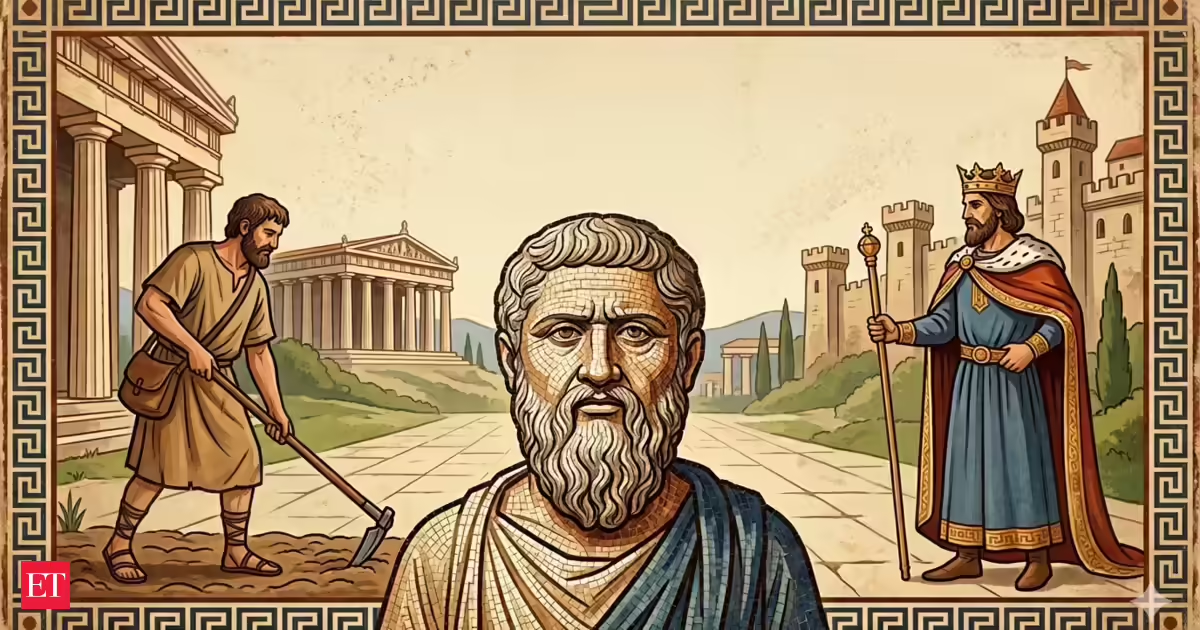
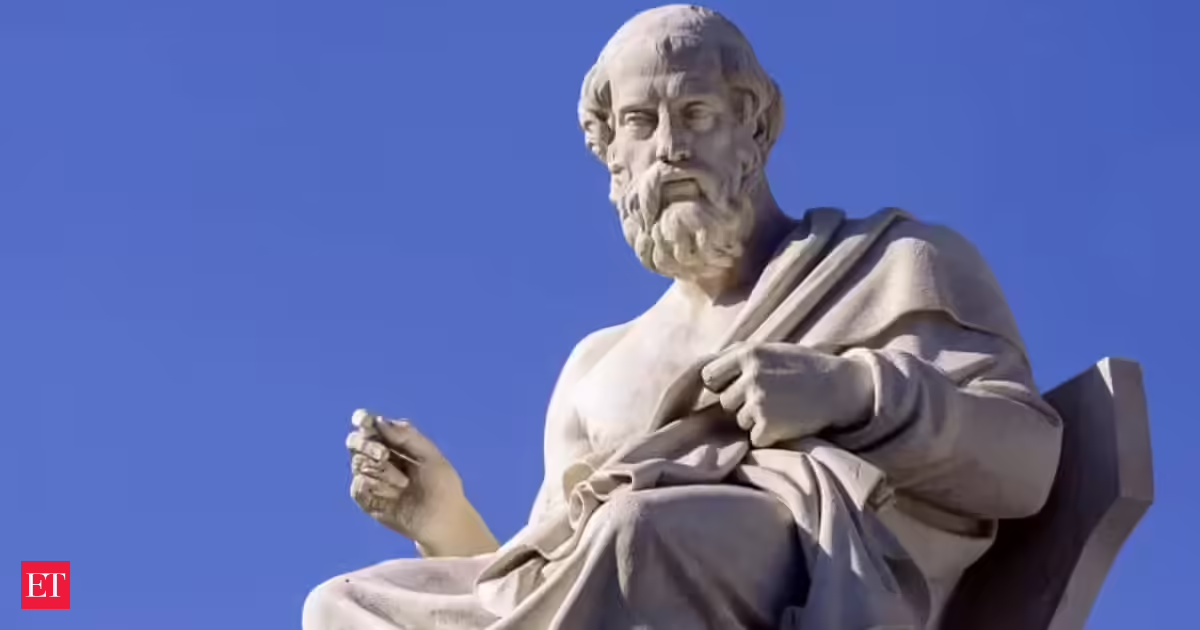
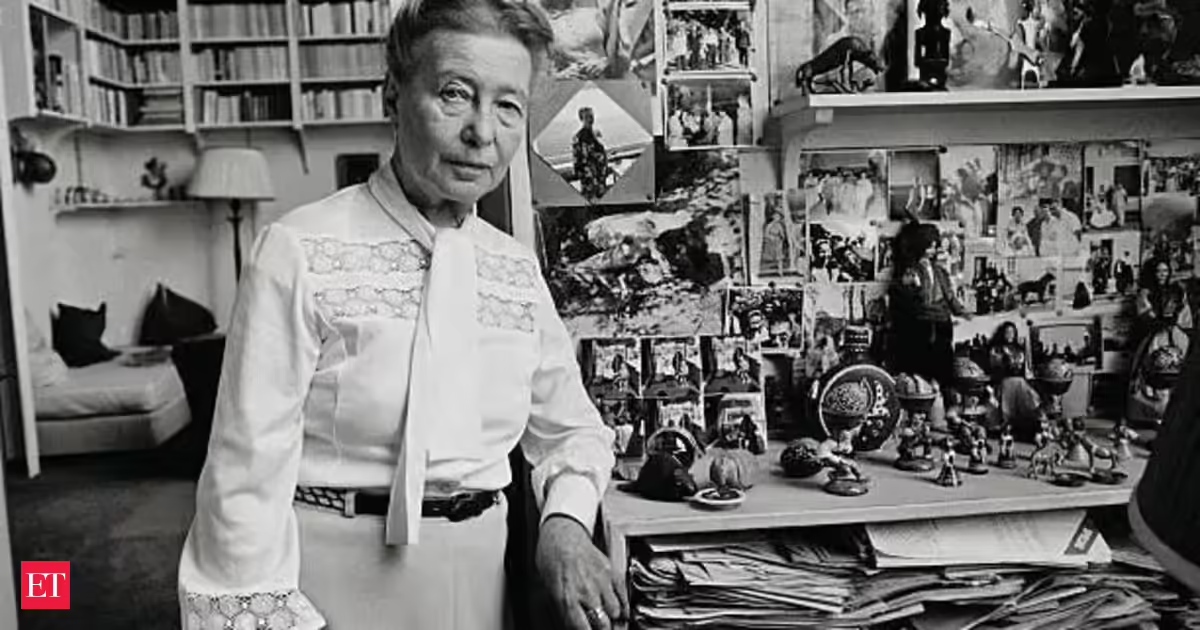
The ideas on this list did not stay in classrooms. Plato's Theory of Forms shaped Christian theology for a thousand years. Descartes' method of systematic doubt produced the epistemological framework on which modern science rests. Kant's categorical imperative is the philosophical foundation of human rights law. Marx's theory of historical materialism drove the political upheavals of the 20th century. De Beauvoir's argument that woman is made, not born, provided the theoretical foundation for second-wave feminism. These are not ideas that failed to find an audience. They are ideas that remade the audiences they found.
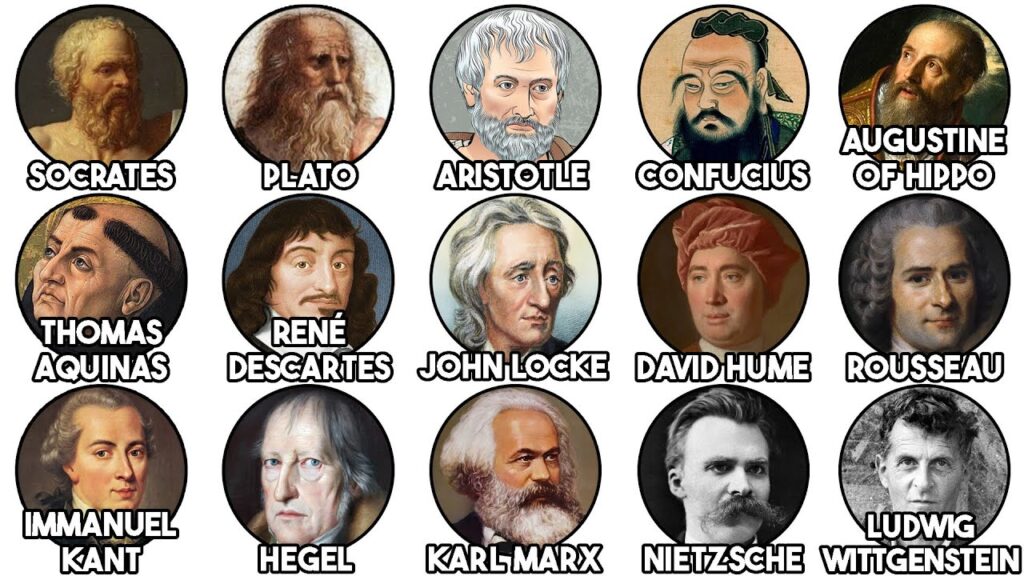
This list covers 15 philosophers and the single idea — or tightly connected cluster of ideas — that most defines each one's contribution. The selection principle is not comprehensiveness. Each philosopher here produced more than one important idea, and several produced bodies of work so large and varied that reducing them to one idea inevitably involves distortion. The justification for the reduction is usefulness: a person who understands the 15 ideas on this list has a working map of the major coordinates of Western philosophical thought, from ancient Greece to the 20th century, that can be extended and complicated through further reading.