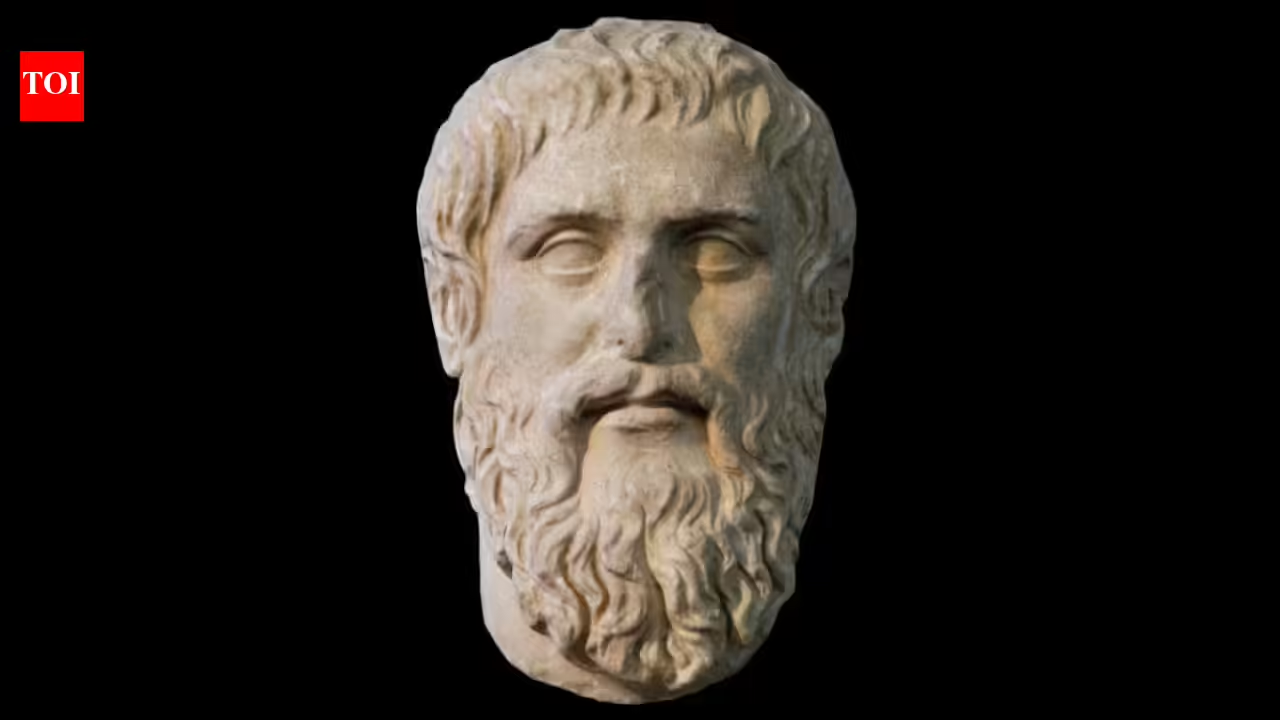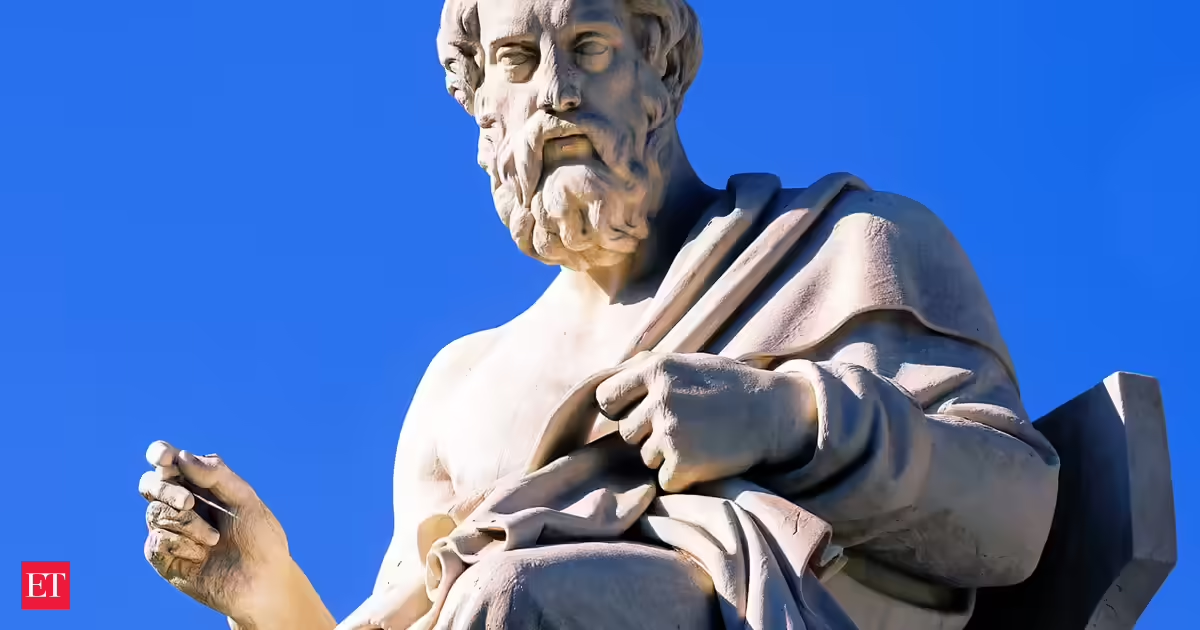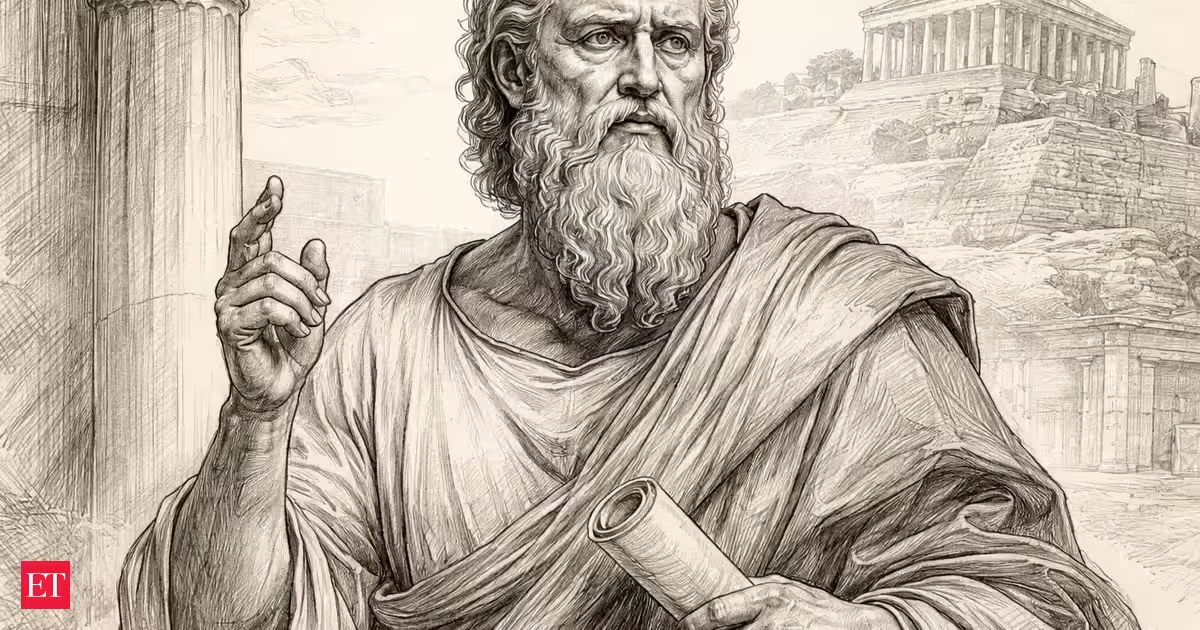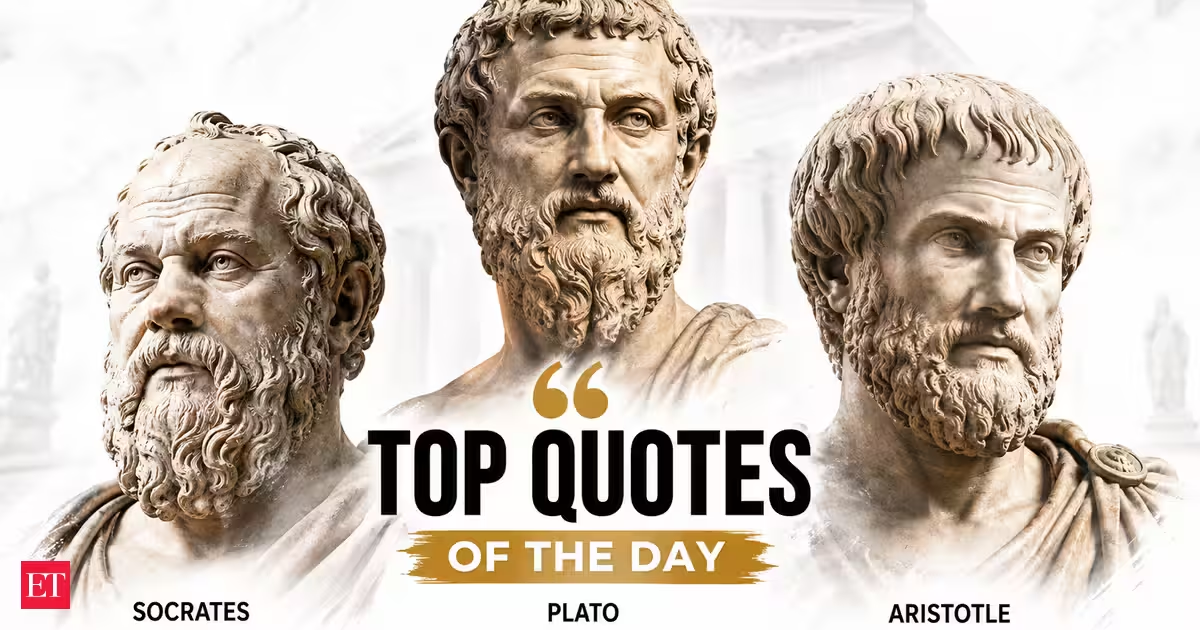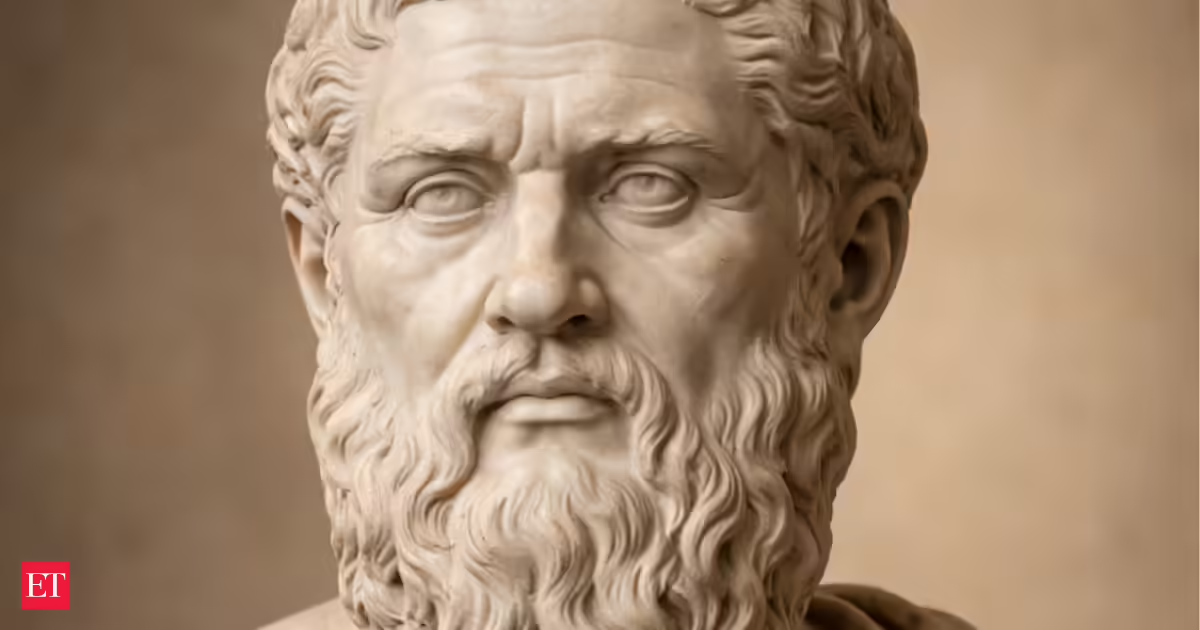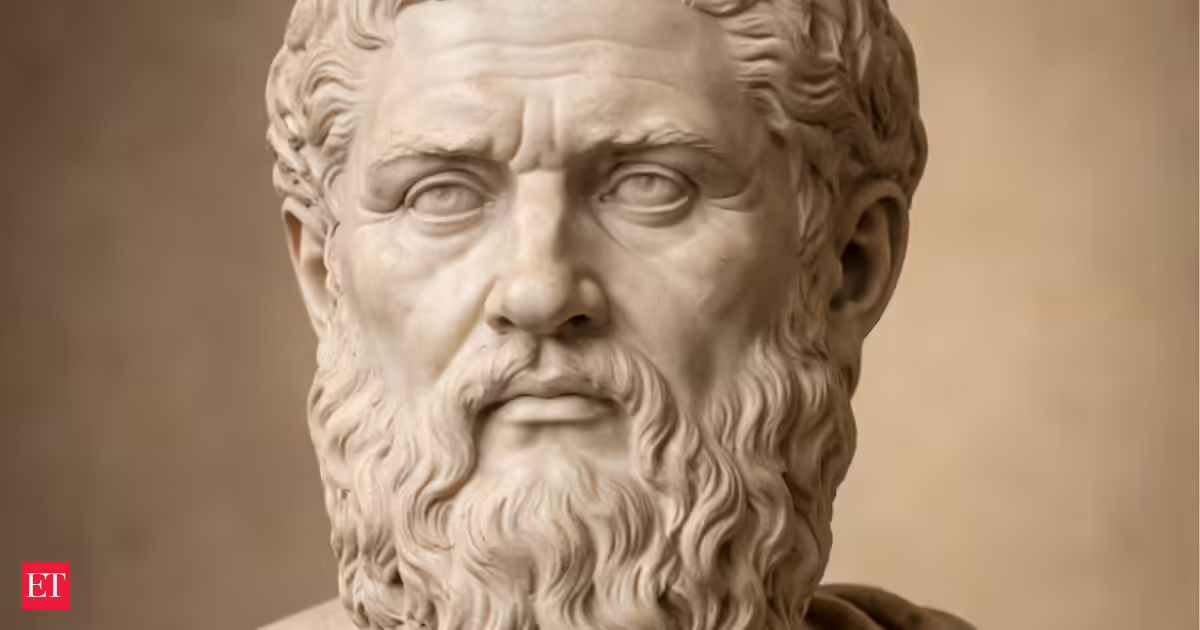
Most people spend their lives searching for answers. We want certainty about our careers, relationships, beliefs, and the world around us. Yet some of history's greatest thinkers argued that wisdom does not begin with having all the answers, it begins with recognizing the limits of our knowledge.Few philosophers explored this idea more deeply than Plato. More than 2,300 years after he wrote his famous works, his insights continue to shape debates about truth, education, politics, and human nature. Quote of the day by Plato: “Either we shall find what it is we are seeking or at least we shall free ourselves from the persuasion that we know what we do not know.”Who was Plato?Plato was one of the most influential philosophers in human history. Born in Athens around 428 BCE, he lived during a period of political turmoil, warfare, and cultural transformation in ancient Greece.Plato was a student of the legendary philosopher Socrates, whose method of questioning assumptions profoundly shaped his thinking. After Socrates was sentenced to death by the Athenian state in 399 BCE, Plato became determined to preserve and develop his teacher's ideas.He later founded the Platonic Academy in Athens, widely considered the first institution of higher learning in the Western world. The Academy operated for centuries and helped establish philosophy, mathematics, science, and political theory as formal fields of study.Plato wrote dozens of philosophical dialogues, including the famous The Republic, which explores justice, government, education, and the nature of reality. Perhaps most remarkably, Plato's intellectual legacy was carried forward by one of his own students, Aristotle, who would become another giant of Western thought. Together, Socrates, Plato, and Aristotle formed a philosophical tradition that still shapes how people think about truth and knowledge today.What does Plato’s quote mean?At first glance, the quote appears to describe a simple search for knowledge. Plato suggests that when people honestly investigate a question, one of two valuable outcomes will occur.The first possibility is obvious: they may discover the answer they are seeking. But Plato argues that even if they fail to find a definitive answer, the search is still worthwhile. Why? Because it helps remove the illusion of knowledge.The deeper message is that one of humanity's greatest obstacles is believing we understand things that we actually do not. False certainty can prevent learning, discourage curiosity, and lead to poor decisions. By questioning assumptions and examining our beliefs, we become more aware of what we truly know, and what we still need to learn.In Plato's view, wisdom is not about pretending to be certain. It is about pursuing truth with humility and intellectual honesty.How Plato practiced this philosophyMuch of Plato's work was inspired by Socrates' belief that genuine wisdom begins with recognizing one's ignorance. Rather than lecturing people, Socrates asked probing questions that exposed contradictions in their thinking.Plato adopted this method throughout his dialogues. Instead of presenting easy answers, he often guided readers through complex discussions that challenged assumptions and encouraged critical thinking.His goal was not simply to provide information but to teach people how to think more carefully and honestly about the world.More quotes by Plato“The beginning is the most important part of the work.”“Human behavior flows from three main sources: desire, emotion, and knowledge.”“Opinion is the medium between knowledge and ignorance.”“Knowledge becomes evil if the aim be not virtuous.”“Thinking is the talking of the soul with itself.”
Quote of the day by Plato: ‘Either we shall find what it is we are seeking or at least…’ – Greek philosopher on how ignorance can lead to true wisdom
Quote of the day: Ancient Greek philosopher Plato, a student of Socrates, believed true wisdom stems from acknowledging what we don't know. His dialogues, like 'The Republic,' explored justice and reality, founding the first Western institution of higher learning. Plato's legacy, carried by Aristotle, continues to influence thought, emphasizing intellectual honesty and the pursuit of truth over false certainty.
557 words~3 min read