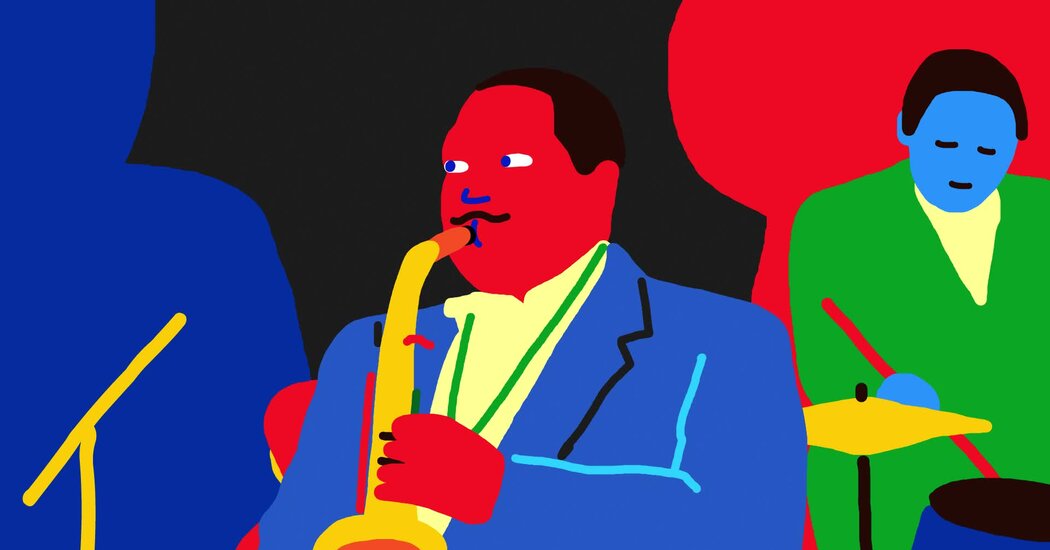
You have a preview view of this article while we are checking your access. When we have confirmed access, the full article content will load.Credit...Illustration by Dante ZaballaBird helped usher in bebop and transformed the alto saxophone into an instrument of startling possibility. Here’s an 11-song primer on his enduring legacy.Credit...Illustration by Dante ZaballaBy Marcus J. MooreJune 3, 2026Charlie Parker arrived at a moment when jazz seemed poised to outgrow itself. Born in Kansas City, Kan., in 1920 and raised amid the thriving nightlife of neighboring Missouri, Parker absorbed the blues, swing and improvisation style that defined the era. But by the time he emerged on the national stage in the mid-1940s, he had become something else entirely: the engineer of a new musical vocabulary.Nicknamed “Bird,” Parker transformed the alto saxophone into an instrument of startling possibility. His solos moved with uncommon speed and precision, weaving intricate melodic lines through harmonic structures that many listeners had never heard approached that way. Alongside innovators like Dizzy Gillespie, Thelonious Monk and Max Roach, Parker helped usher in bebop, a style that shifted jazz from popular dance music toward a more demanding and exploratory art form.The impact was immediate, but the legacy proved even greater. Parker’s approach became a blueprint for generations of musicians, influencing everyone from John Coltrane and Ornette Coleman to countless artists working beyond jazz’s borders. His ideas traveled across genres and decades, reshaping how others thought about melody, rhythm and expression.ImageYou can still hear traces of Charlie Parker’s restless spirit in the music of almost any ambitious improviser.Credit...William Gottlieb/Redferns, via Getty ImagesThough Parker died in 1955 at just 34 years old, his influence remains woven into the fabric of modern music. Listen closely to nearly any ambitious improviser, and you can still hear traces of Bird’s restless spirit: the pursuit of freedom, the embrace of complexity and the belief that music can always become something more. Read on and listen to our playlist for a primer on Charlie Parker’s enduring legacy, as told through the recordings, musicians and moments that continue to illuminate his genius, and be sure to leave your own favorites in the comments.◆ ◆ ◆‘Blue ‘N Boogie’William Hill III, pianist and composerCharlie Parker exemplifies what jazz music means to me, and that is joy and the freedom of expression. Hearing Parker play on “Blue ‘N Boogie” is almost as if he is dancing. His rhythmical phrasing and use of space allows the tune to flow and swing. The first time I heard Parker play this tune on this explosive live album at the historic jazz club Birdland, I was hooked. I listened to it over and over again, hearing something new every time I listened to it. In truth, Parker is a storyteller, and what better way to tell your story than playing the blues. To me, “Telling your story” means expressing your own life’s story. Where you’ve come from and the story of your own victories and challenges in life. Parker has laid a musical foundation for all musicians of any age to tell their story while playing this beautiful musical art form.Thank you for your patience while we verify access. If you are in Reader mode please exit and log into your Times account, or subscribe for all of The Times.Thank you for your patience while we verify access.Already a subscriber? Log in.Want all of The Times? Subscribe.AdvertisementSKIP ADVERTISEMENT
5 Minutes That Will Make You Love Charlie Parker
Bird helped usher in bebop and transformed the alto saxophone into an instrument of startling possibility. Here’s an 11-song primer on his enduring legacy.
565 words~3 min read