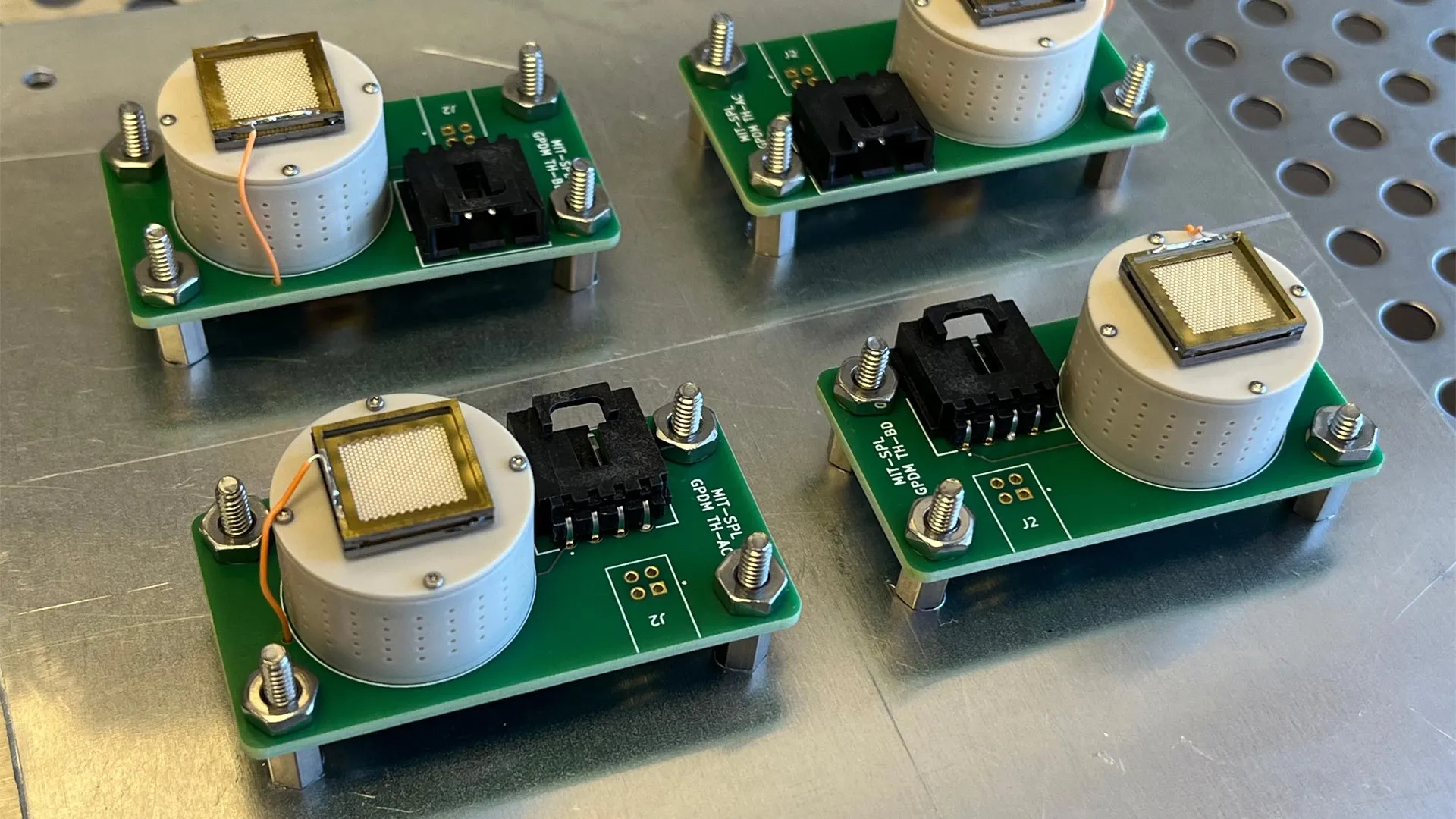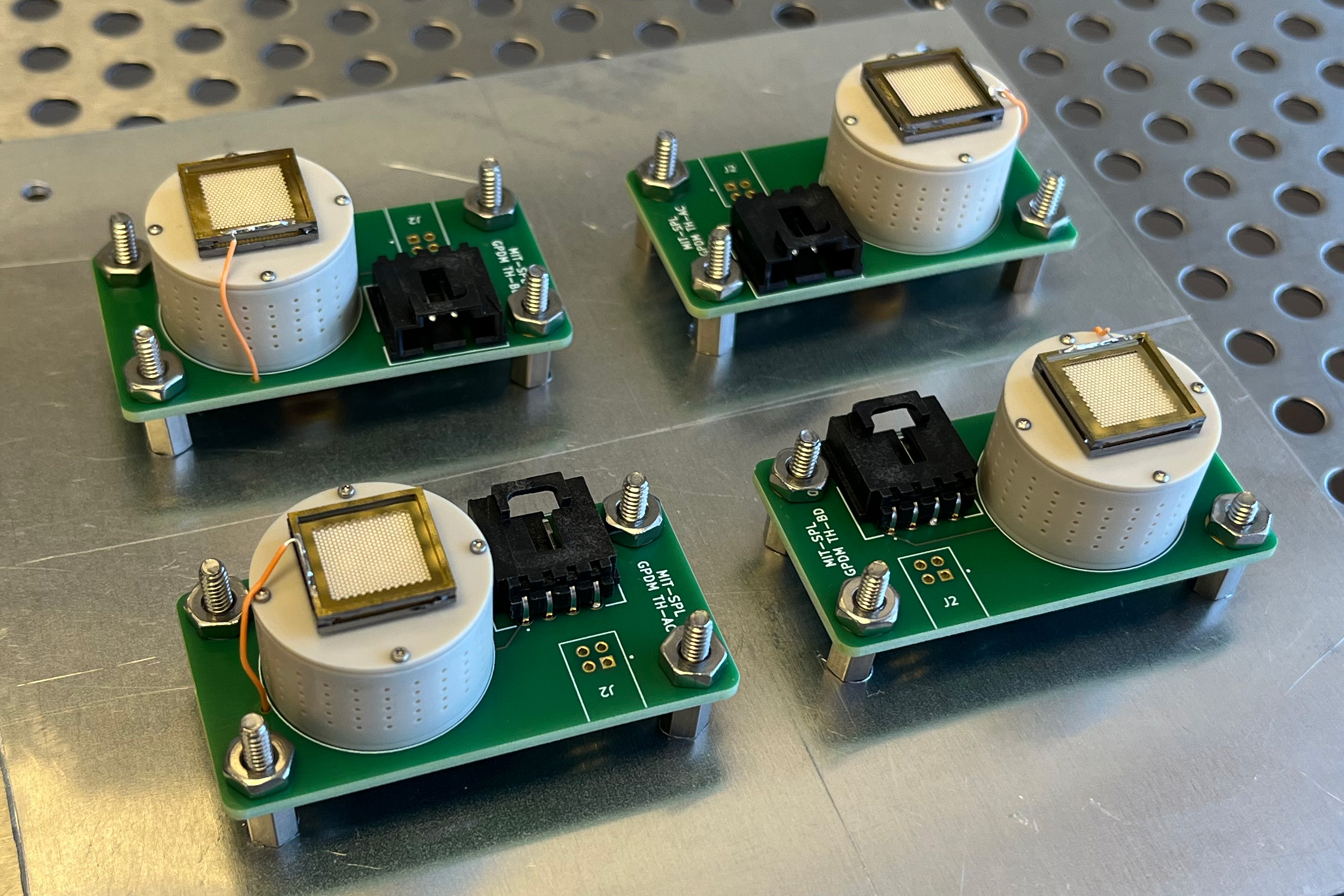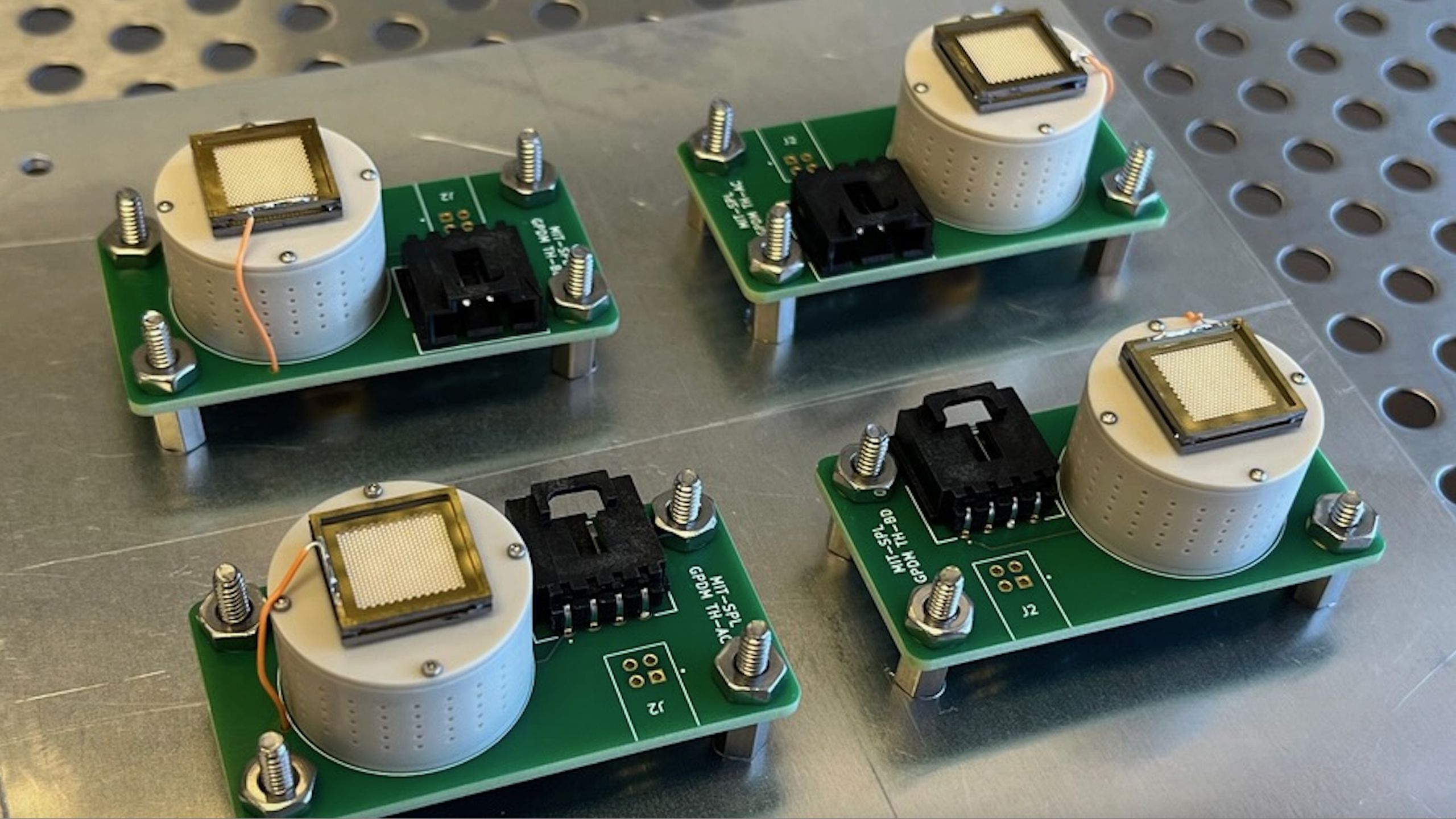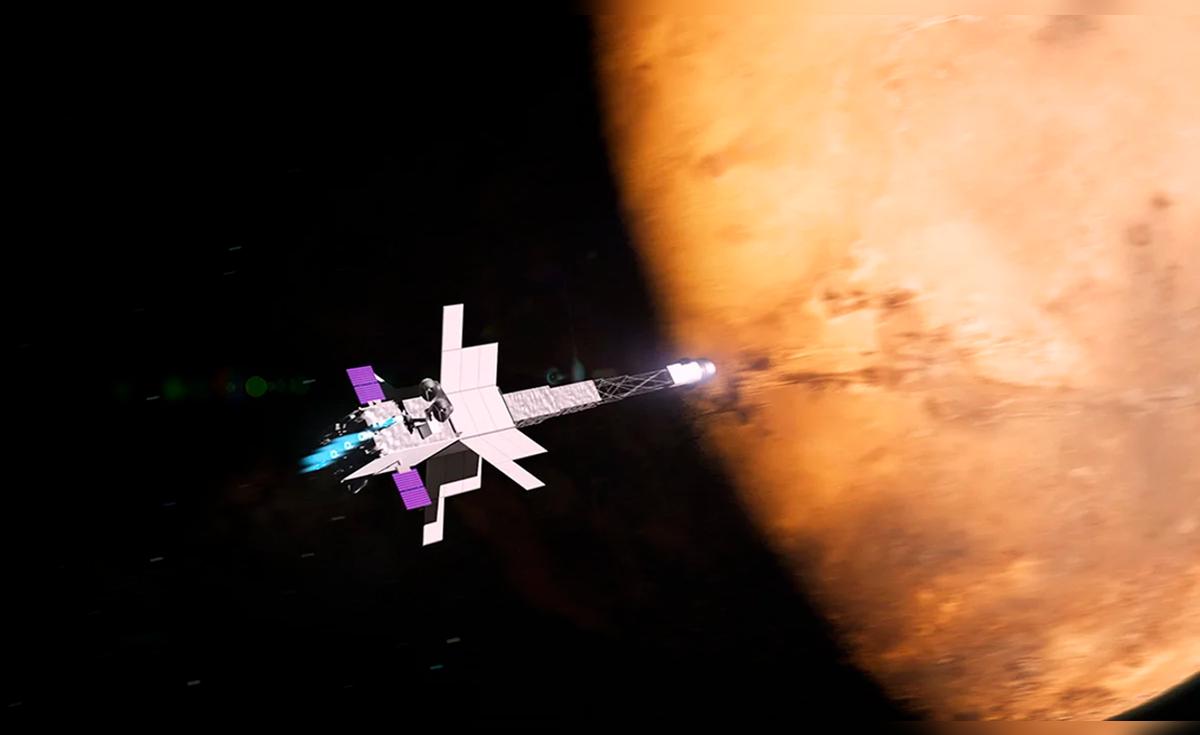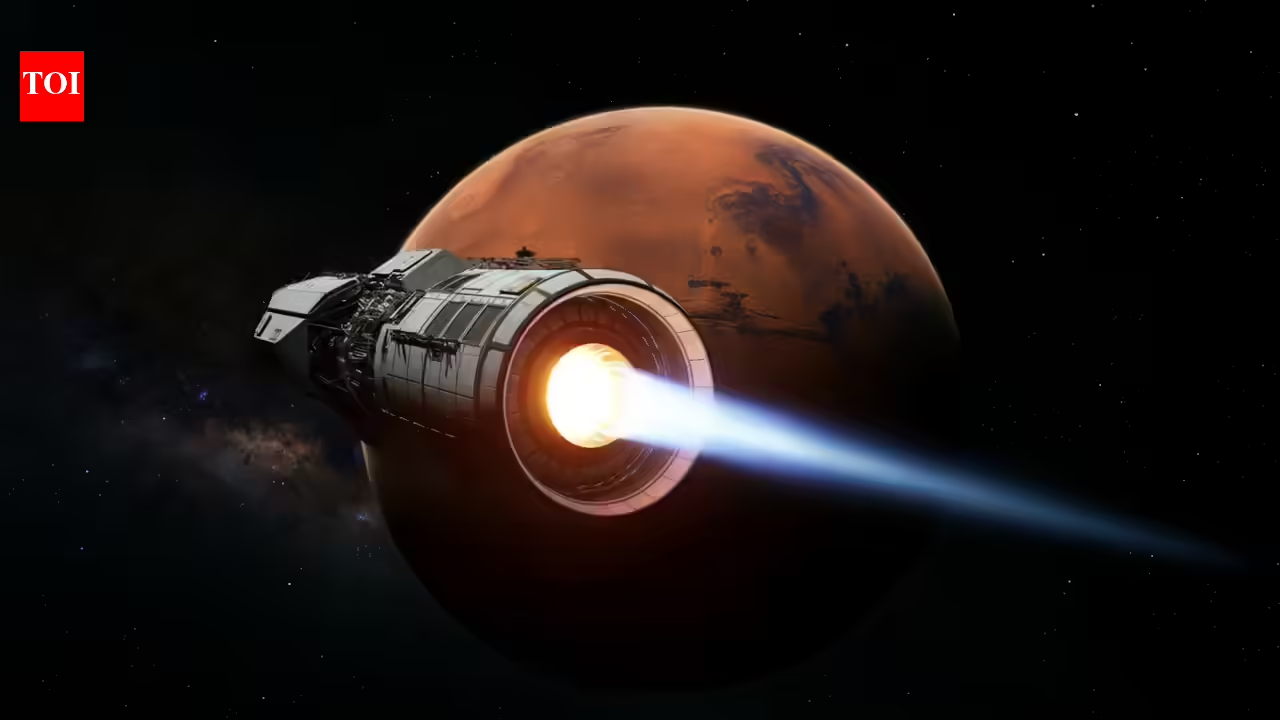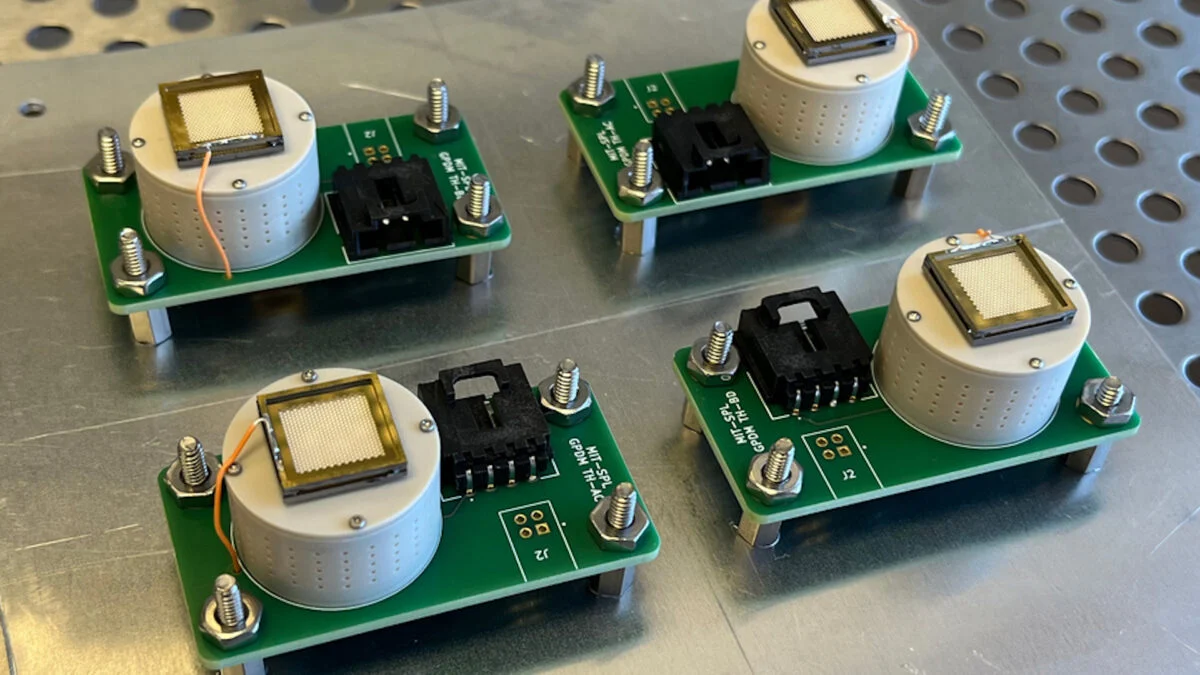
Engineers at MIT have developed a two-in-one propulsion system that can fuel both traditional chemical thrusters and electrical thrusters, combining speed and power with slower, more precise maneuverability for small satellites. The key to their research is a type of green monopropellant that was originally developed by the U.S. Air Force for use in chemical propulsion. In a new paper published in the Journal of Propulsion and Power, the researchers show that this propellant can also power tiny electrospray thrusters. The MIT team is working with NASA to launch a briefcase-sized cubesat that will carry a chemical thruster and four electrospray thrusters, which will all be fueled by a single propellant tank. The experimental technology could allow small satellites to travel beyond Earth’s orbit without being weighed down by two separate propellant tanks. “If you can have chemical and electrical propulsion in one small package, it’s the best of both worlds,” Amelia Bruno, a former postdoc in MIT’s Department of Aeronautics and Astronautics and lead author of the paper, said in a statement. “This opens the door for small satellites to do even more science, more observations, and more interesting missions, all on a smaller and cheaper platform.”
This Clever New Engine Could Send Briefcase-Size Spacecraft to Mars
"It's the best of both worlds."
804 words~4 min read