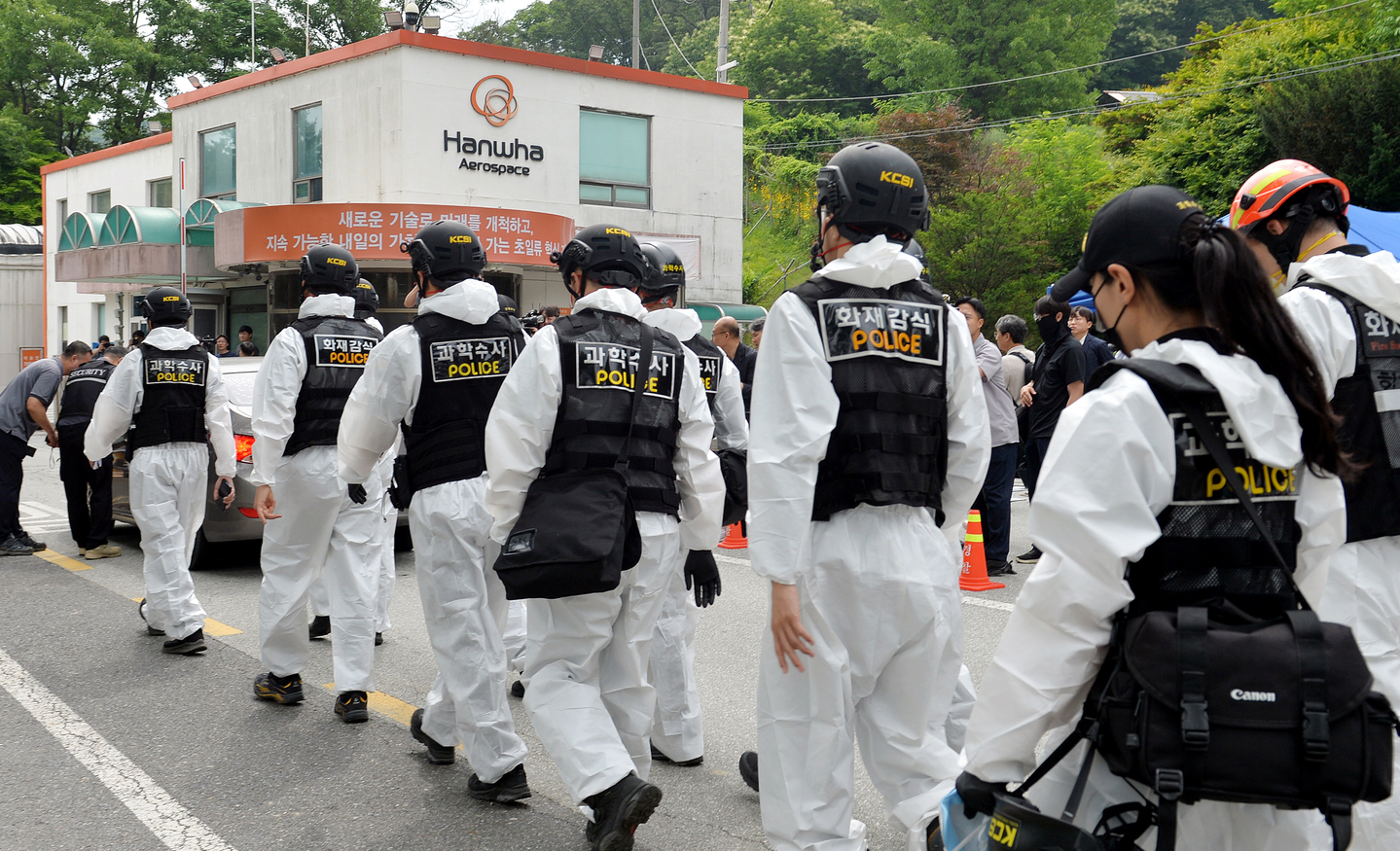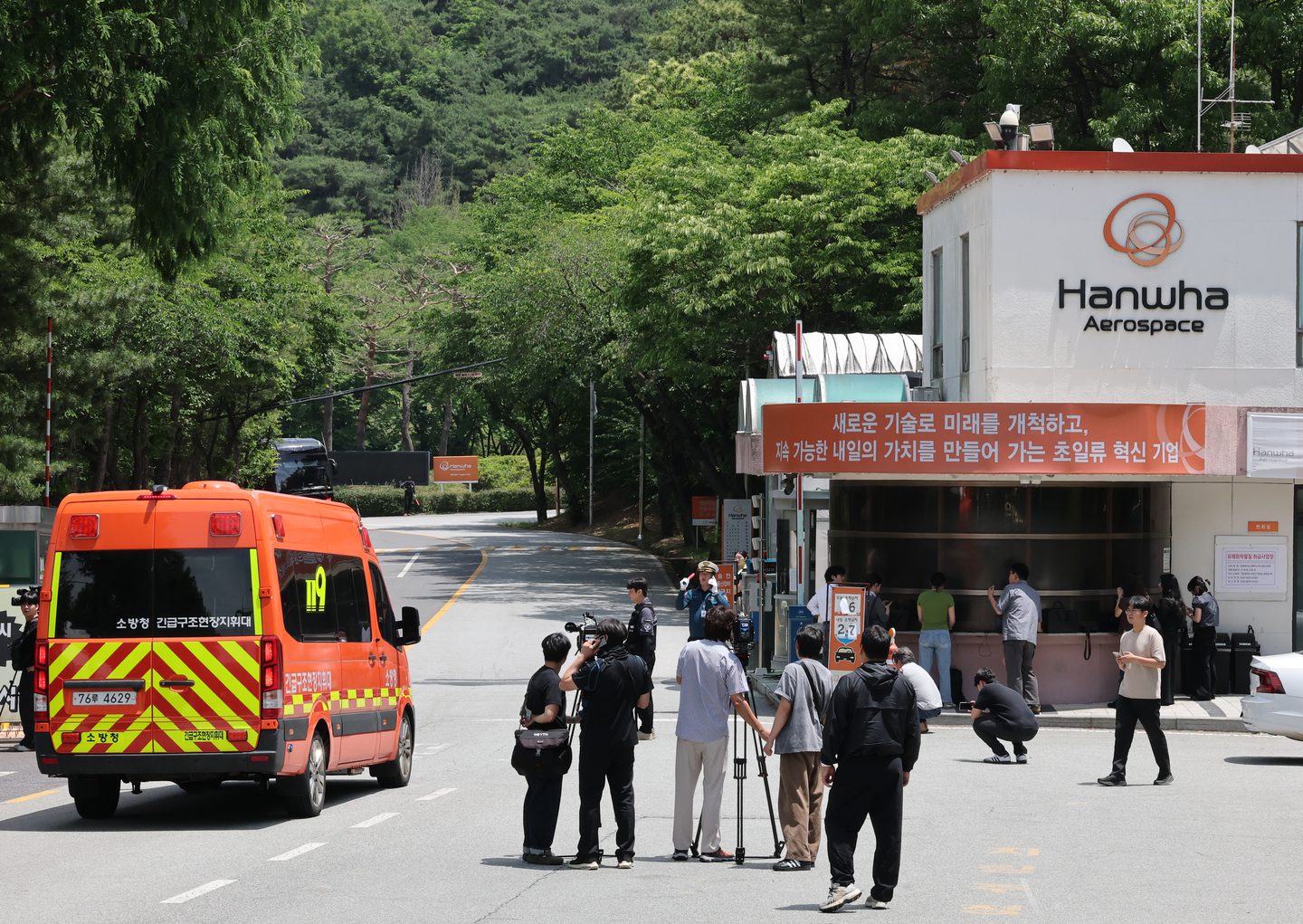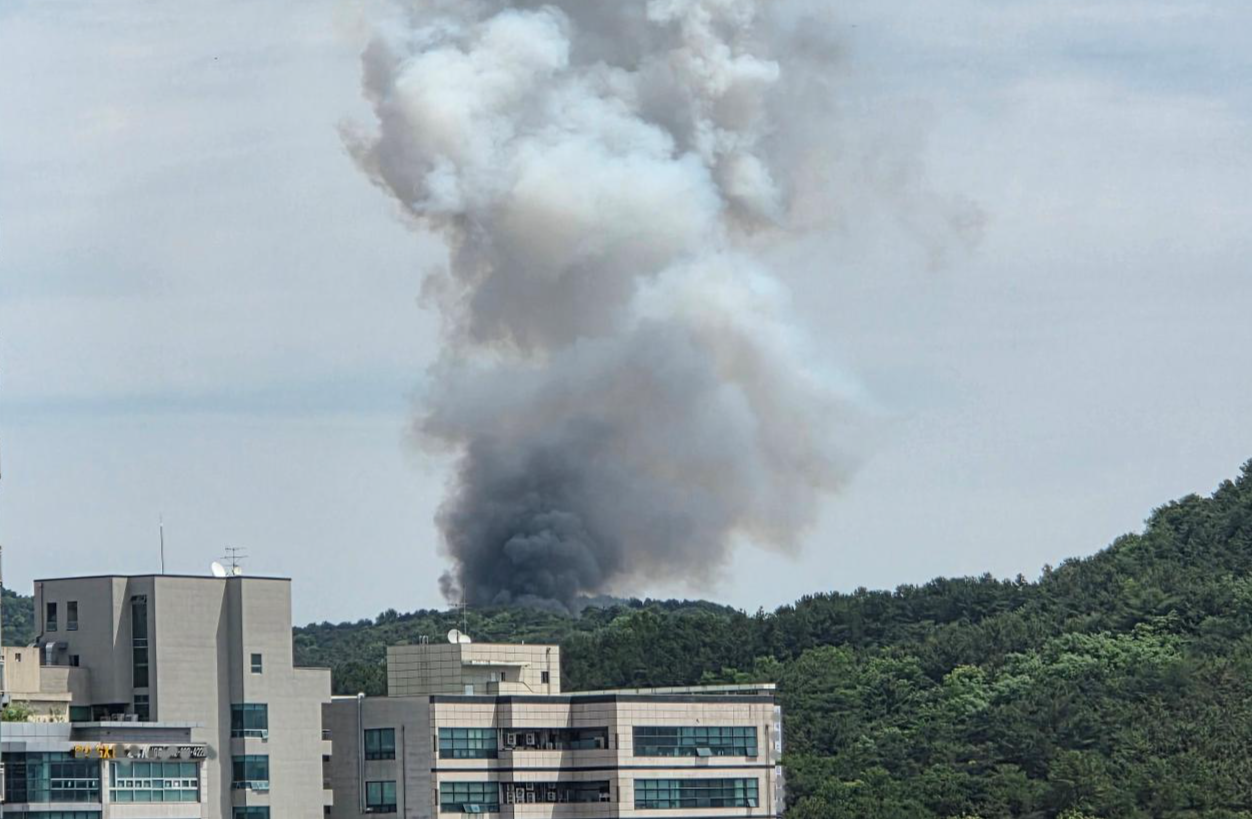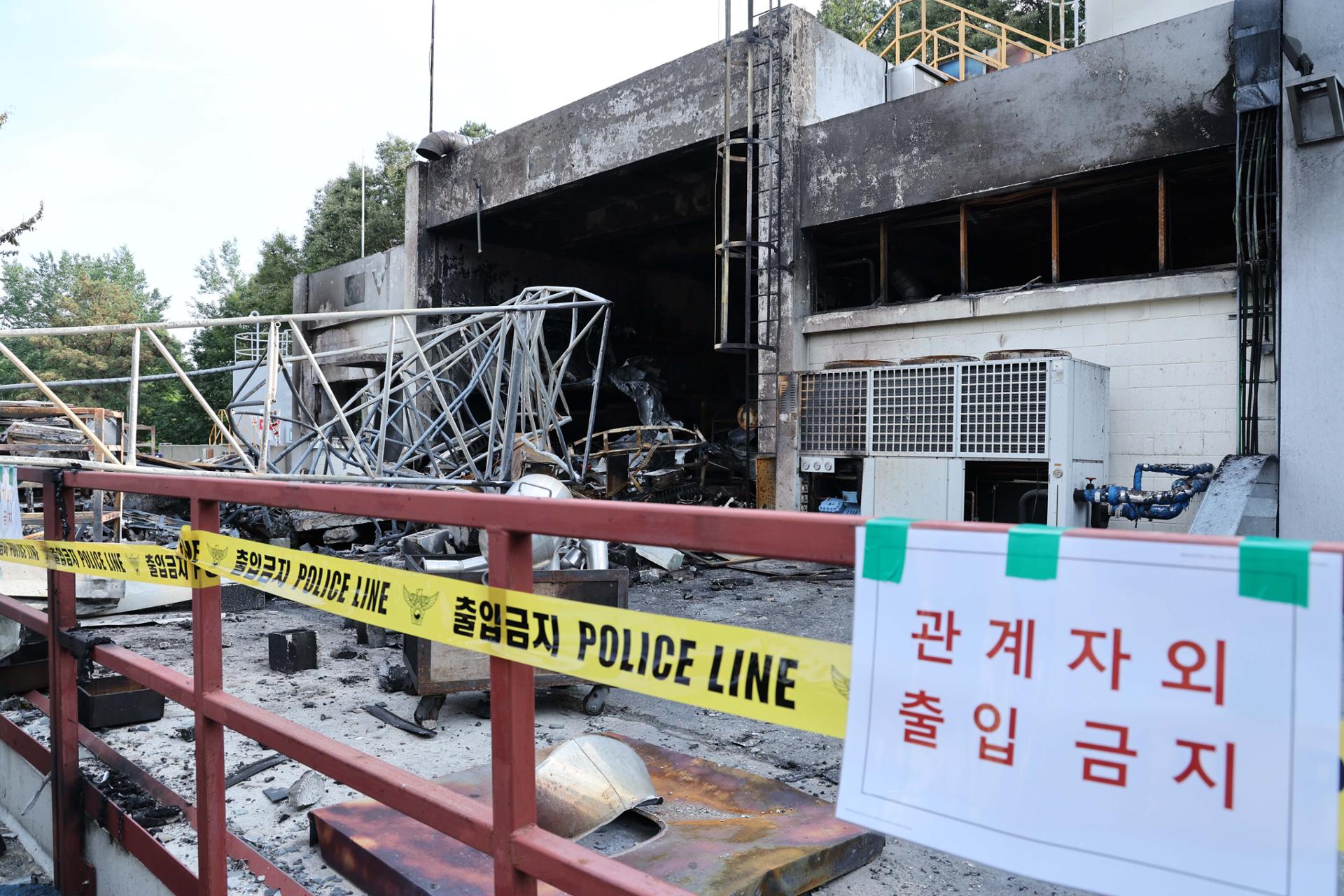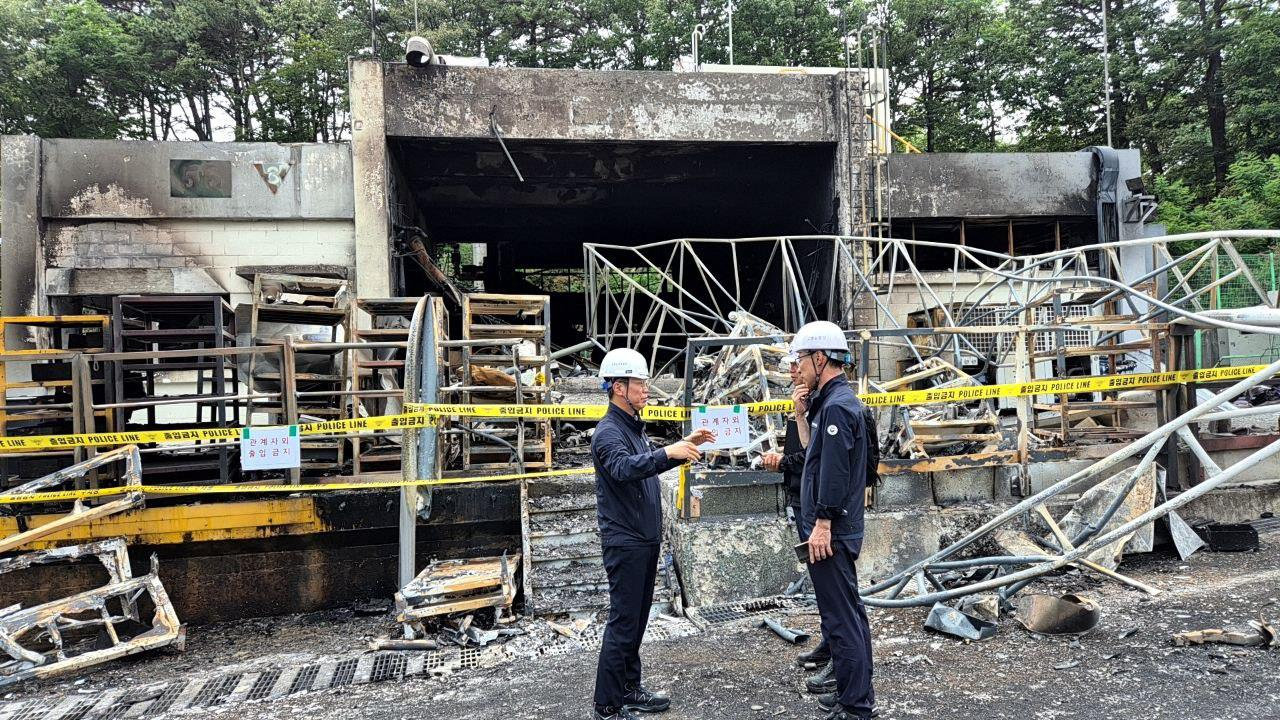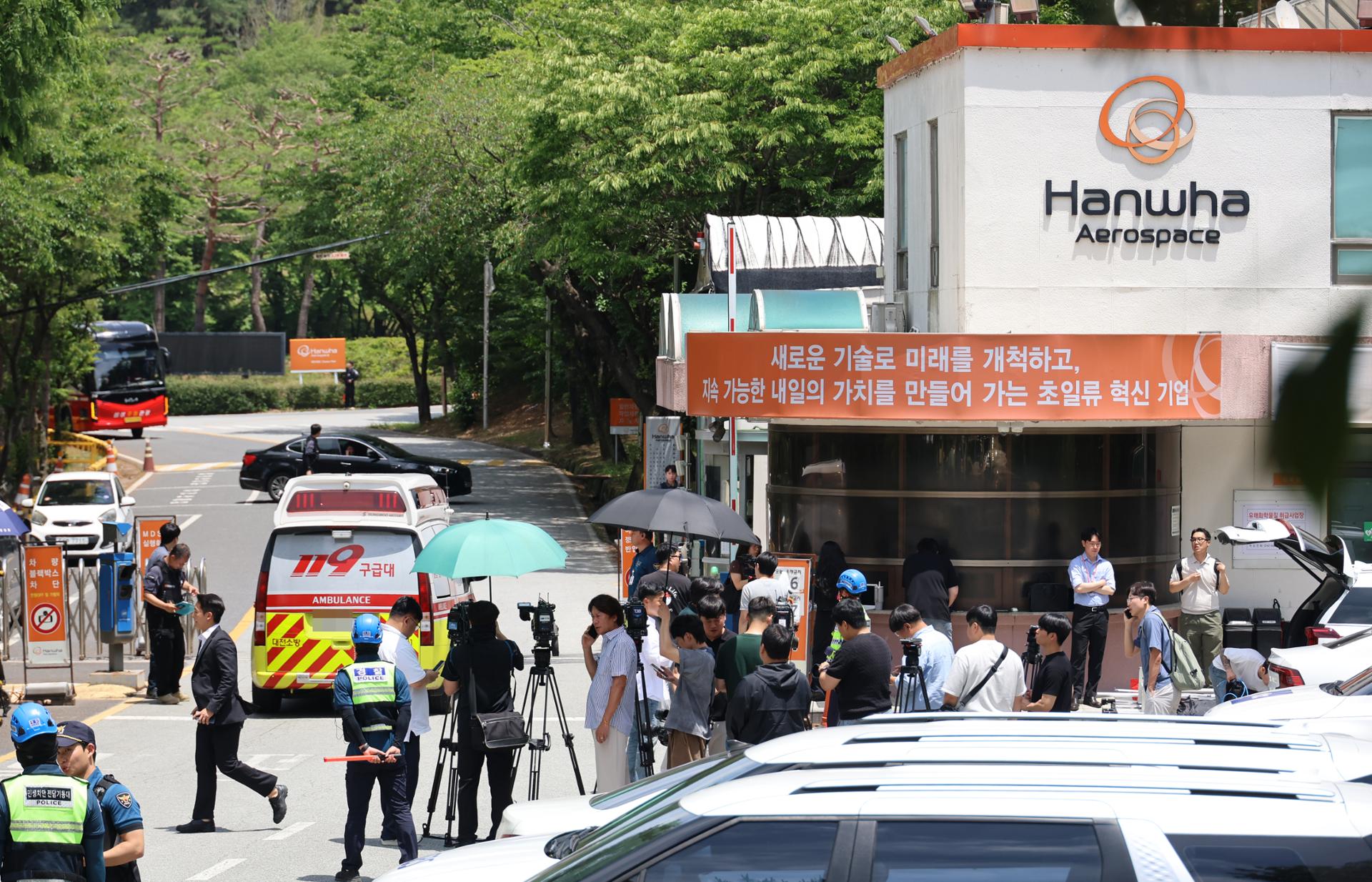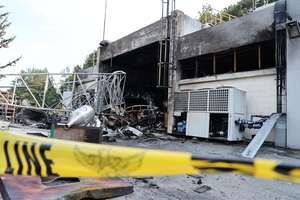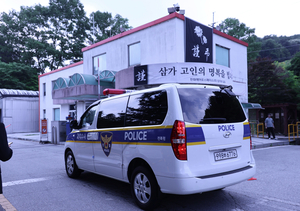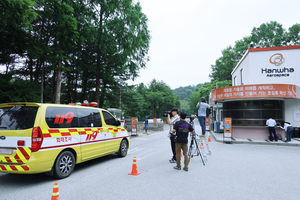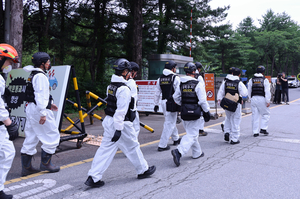
Police officials enter a Hanwha Aerospace factory in Daejeon on Tuesday to conduct an on-site inspection a day after a deadly explosion at the site. (Yonhap) The building at the center of the deadly explosion at Hanwha Aerospace's Daejeon facility handled large volumes of volatile solvents and materials for rocket propellants, according to safety reports Thursday.Reports submitted by the Korea Occupational Safety and Health Agency to Rep. Cho Ji-yeon of the People Power Party show that Building No. 56 — the site of Monday's blast — used roughly 8.2 metric tons of cleaning solvents and 36 metric tons of propellants each month during the second half of last year.Among the materials used at the facility was 1,2-dichloroethylene, a volatile solvent that can ignite when vapor accumulates in the air. While flammable on its own, experts say the danger increases when it is present with propellant residue, aluminum powder or other ignition sources such as a spark or static electricity.The facility also handled propellant materials containing aluminum powder and toluene. Toluene can ignite or explode when vapors build up in enclosed spaces and are exposed to a spark or other ignition source.The disclosures emerged as Hanwha Aerospace suspended nonessential operations across its major domestic facilities and launched companywide safety inspections following the accident.Authorities have yet to determine the cause of the blast, which killed five workers and injured two others.
Blast-hit Hanwha facility handled volatile solvents, propellants: report
The building at the center of the deadly explosion at Hanwha Aerospace's Daejeon facility handled large volumes of volatile solvents and materials for rocket pr
230 words~1 min read