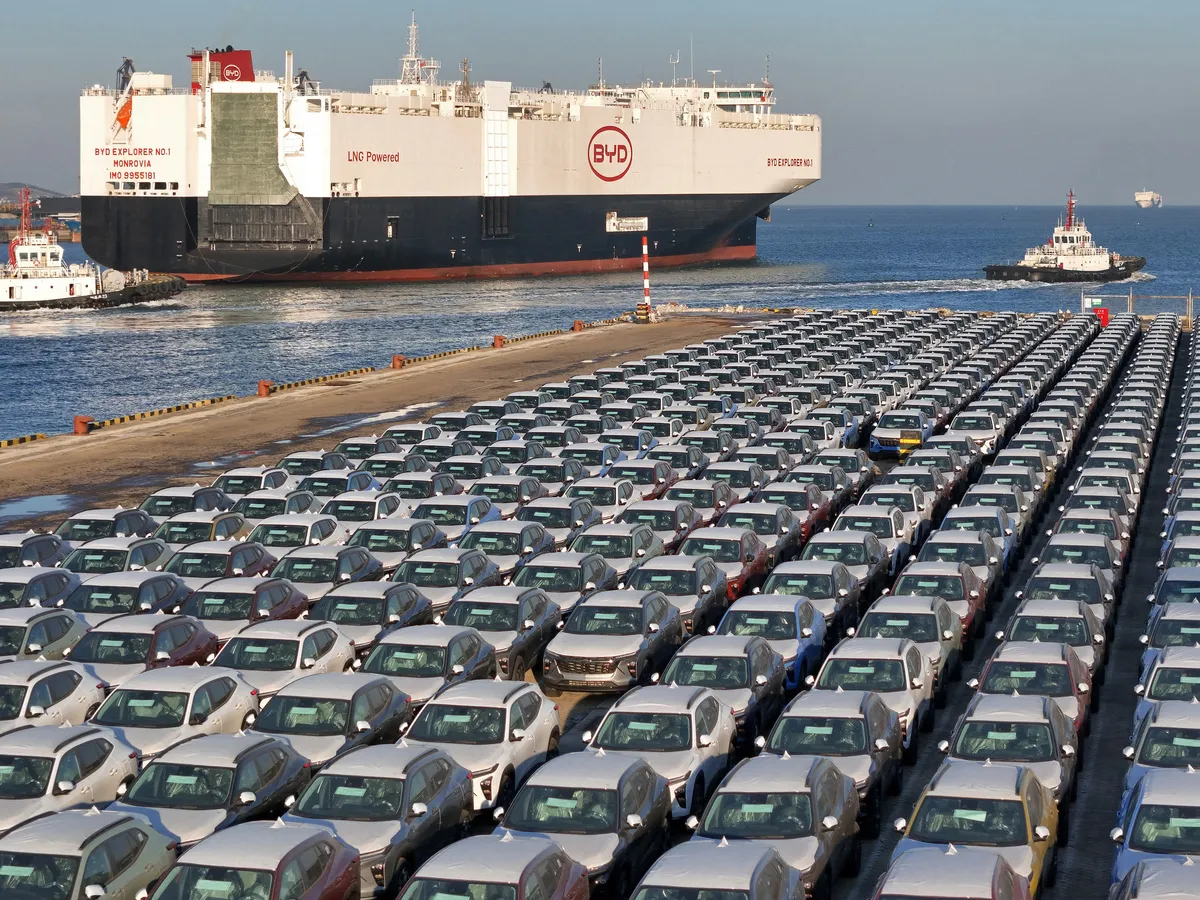
Skip to Content News Archives Economy Energy Oil & Gas Renewables Electric Vehicles Mining Commodities Agriculture Real Estate Mortgages Mortgage Rates Finance Banking Insurance Fintech Cryptocurrency Work Wealth Smart Money Wealth Management Investor Personal Finance Family Finance Retirement Taxes High Net Worth FP Comment Executive Women Puzzmo Newsletters Financial Times Business Essentials More Innovation Information Technology FP500 Podcasts Small Business Lives Told Tails Told Shopping Financial Post Store Obituaries Place a Notice Advertising Advertising With Us Advertising Solutions Postmedia Ad Manager Sponsorship Requests Classifieds Place a Classifieds ad Working Profile Settings My Subscriptions Saved Articles My Offers Newsletters Customer Service FAQ News Economy Energy Mining Real Estate Finance Work Wealth Investor FP Comment Executive Women Puzzmo Newsletters Financial Times Business Essentials HomeFP CommentOpinion: Canada’s EV pivot from superproducer to superconsumerChanges in the economics of EVs have doomed Canada's dreams of being a major producer. But never fear: China is here with cheap EVs aplentyLast updated 1 hour ago You can save this article by registering for free here. Or sign-in if you have an account.This photograph taken on January 10, 2024 shows electric cars for export waiting to be loaded on the "BYD Explorer NO.1", a domestically manufactured vessel intended to export Chinese automobiles, at Yantai port, in eastern China's Shandong province. Photo by AFP via Getty ImagesThe dream of automotive electrification is old. The first wave of interest in electrifying cars began in the United States at the turn of the century — not this one: the last one. Battery-electric car enthusiasts in New York were pushing the tech in 1901, the same year the Los Angeles Times reported that “The electric automobile will quickly and easily take precedence over all other.” As the website RealClearEnergy reminds us, in 1915 the Washington Post claimed “prices on electric cars will continue to drop until they are within reach of the average family.” Sound familiar? As transport policy scholar Robert Bryce observes, “Electric vehicles are the next Big Thing, and they always will be.”Subscribe now to read the latest news in your city and across Canada.Exclusive articles from Barbara Shecter, Joe O'Connor, Gabriel Friedman, and others.Daily content from Financial Times, the world's leading global business publication.Unlimited online access to read articles from Financial Post, National Post and 15 news sites across Canada with one account.National Post ePaper, an electronic replica of the print edition to view on any device, share and comment on.Daily puzzles, including the New York Times Crossword.Subscribe now to read the latest news in your city and across Canada.Exclusive articles from Barbara Shecter, Joe O'Connor, Gabriel Friedman and others.Daily content from Financial Times, the world's leading global business publication.Unlimited online access to read articles from Financial Post, National Post and 15 news sites across Canada with one account.National Post ePaper, an electronic replica of the print edition to view on any device, share and comment on.Daily puzzles, including the New York Times Crossword.Create an account or sign in to continue with your reading experience.Access articles from across Canada with one account.Share your thoughts and join the conversation in the comments.Enjoy additional articles per month.Get email updates from your favourite authors.Create an account or sign in to continue with your reading experience.Access articles from across Canada with one accountShare your thoughts and join the conversation in the commentsEnjoy additional articles per monthGet email updates from your favourite authorsSign In or Create an AccountorIn the long view, Canada’s ambitious push to become an EV manufacturing powerhouse is relatively new, having been certified only in 2023 with the confusingly named “electric vehicle availability standard.” This federal mandate, which essentially required all new-car sales in 2035 to be of EVs (both battery and some plug-in hybrids), was wildly unpopular with auto manufacturers and dealers. So, in recent policy sleight of hand, Prime Minister Mark Carney simply cloaked the EV mandate in existing air pollution regulations likely to force the adoption of EVs over essentially the same time frame as the mandate would have.Get the latest headlines, breaking news and columns.By signing up you consent to receive the above newsletter from Postmedia Network Inc.A welcome email is on its way. If you don't see it, please check your junk folder.The next issue of Top Stories will soon be in your inbox.We encountered an issue signing you up. Please try againAnd yet, like electric dreams of yore, the lights on Canada’s great future as an EV powerhouse have been flickering for some time now. In 2024, Ford Motor Co. scrapped its $1.8-billion plan to convert its Oakville, Ont., assembly plant into a hub for three-row electric SUVs. Instead, it’s investing more than $2 billion to produce gasoline-powered Super Duty pickup trucks starting this year. Ironically, this loss for electric dreamers is a win for Ontarians.And it isn’t just Ford. Honda recently postponed a $15-billion EV supply-chain project in Alliston, Ont. Northvolt, Stellantis and others have also faced delays, pauses or re-evaluations. Billions in promised investments have stalled. All of this despite federal and provincial governments pouring tens of billions of dollars in subsidies into battery plants (Volkswagen in St. Thomas, Ont., for example, and Stellantis-LG in Windsor, Ont.) hoping to anchor a “green” auto future.According to the Parliamentary Budget Officer, of the $43.6 billion spent bucking up EVs, 62 per cent is from Ottawa and 38 per cent from Ontario and Quebec. If Canada’s EV superpower dreams are dying, it’s clearly not for want of effort.But have no fear, EV fans, your dreams of owning an affordable electric car are not dead yet. China is ready and willing to sell you a battery car, with necessary accoutrements, at low prices all but guaranteed to prevent the revival of domestic EV production. January’s Canada-China “strategic partnership” will allow the Chinese to help “build up our domestic manufacturing sector,” while up to 49,000 Chinese EVs a year will enter our market at a most-favoured-nation tariff rate of 6.1 per cent.That represents only about three per cent of the Canadian market for new vehicles but it’s expected that within three years the agreement will drive new Chinese joint-venture investment in Canada to “ensure a robust build-out of Canada’s EV supply chain.” The Carney government envisions that in five years, more than 50 per cent of these vehicles will be affordable EVs with a price below $35,000.The combined effects of the death of Canadian EV manufacturing, “elbows-up” aversion to imports from the U.S., the return of consumer rebates for EV purchases, and the stealth requirement that new vehicles sold in Canada still have near-zero greenhouse gas emissions by 2035 practically guarantee a market for more Chinese EVs, whether made here or in the motherland.Canada’s dreams of being an EV superpower and building EVs for the Canadian and U.S. markets are pretty much dead. Ford’s Oakville pivot back to internal combustion makes that clear. But never fear, China is here, and ready to sell you the cheap electric vehicle of your dreams.Kenneth Green is a senior fellow of the Fraser Institute. Join the Conversation This website uses cookies to personalize your content (including ads), and allows us to analyze our traffic. Read more about cookies here. By continuing to use our site, you agree to our Terms of Use and Privacy Policy.
Opinion: Canada’s EV pivot from superproducer to superconsumer
Kenneth Green: Changes in the economics of EVs have doomed Canada's dreams of being a major producer. Read more.
1,203 words~5 min read