(Image credit: AMD)
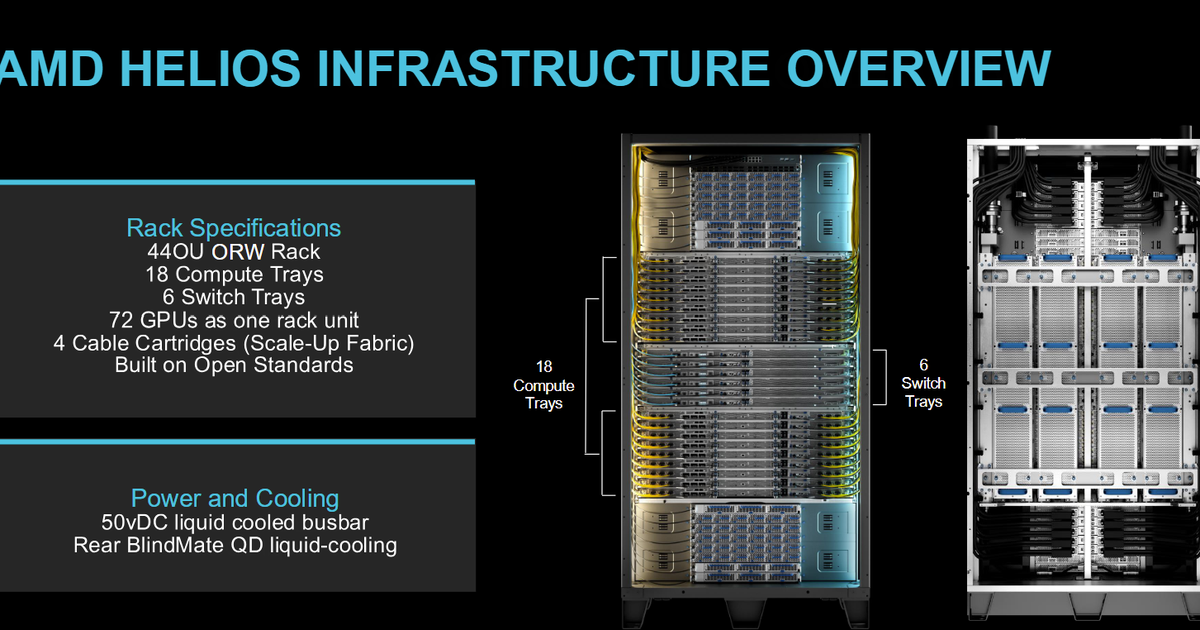
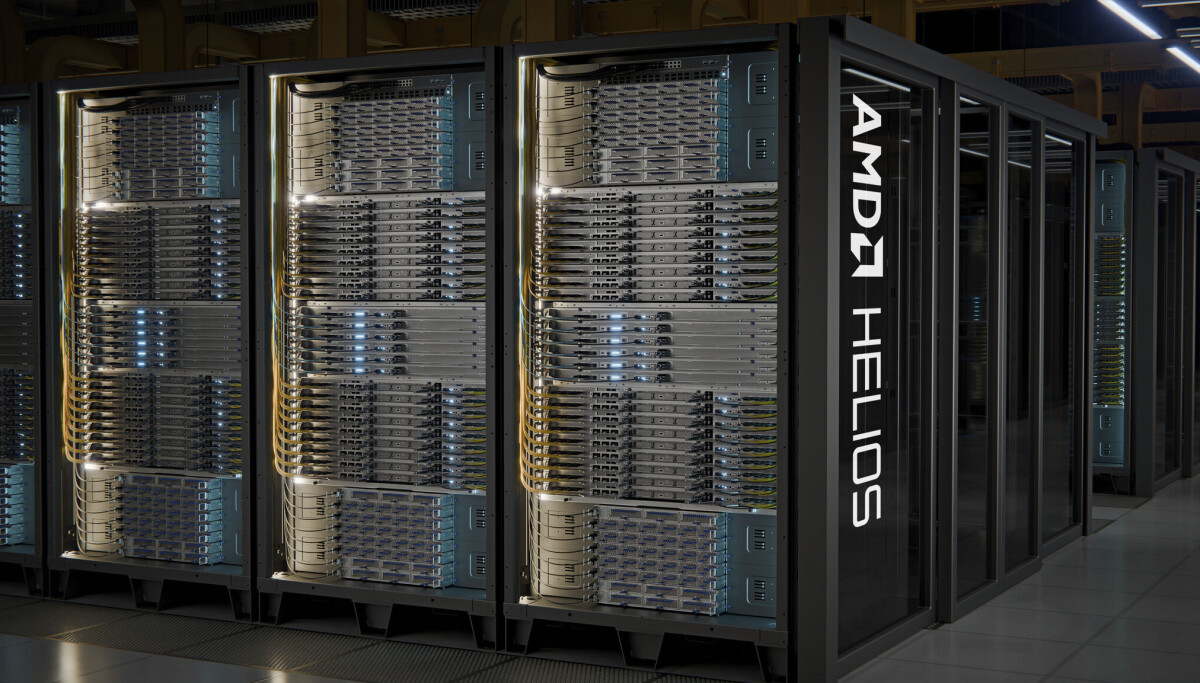
Several AMD partners are showing off the company’s next-generation Helios rack-scale solution running AMD’s EPYC ‘Venice’ processors and Instinct MI455X AI accelerators at Computex 2026 in Taipei, Taiwan. The units are set to become available later this year. There is one major catch, though: they all use UALink-over-Ethernet scale-up connectivity, which may limit their performance in certain workloads that depend on the connection performance. That said, Helios systems with ‘true’ UALink interconnects will also be available.AMD’s Helios is the company's first rack-scale AI system, and is set to rival Nvidia’s NVL72 VR200 machines based on the next-generation Vera Rubin platform. Helios will rely on AMD’s 6th Generation EPYC Venice CPUs with up to 256 cores, pack 72 Instinct MI455X accelerators with a total of 31 TB of HBM4 memory, and 1400 TB/s of bandwidth. AMD estimates that its performance will be around 2900 FP4 dense PFLOPS, which puts the unit behind Nvidia's VR200 NVL72 system in terms of compute performance, but ahead of it with HBM4 memory capacity. This promises to provide Helios-based systems an advantage in memory-intensive workloads, such as when running large LLMs.The AI accelerators are interconnected and make use of a UALink-over-Ethernet connection, which provides up to 260 TB/s aggregated scale-up bandwidth (in line with Nvidia’s NVL72 VR200). Helios will also feature Pensando Vulcano network interface cards (NICs), which are among the industry's first 800 GbE network cards that comply with the Ultra Ethernet specification and provide up to 43 TB/s of scale-out bandwidth.