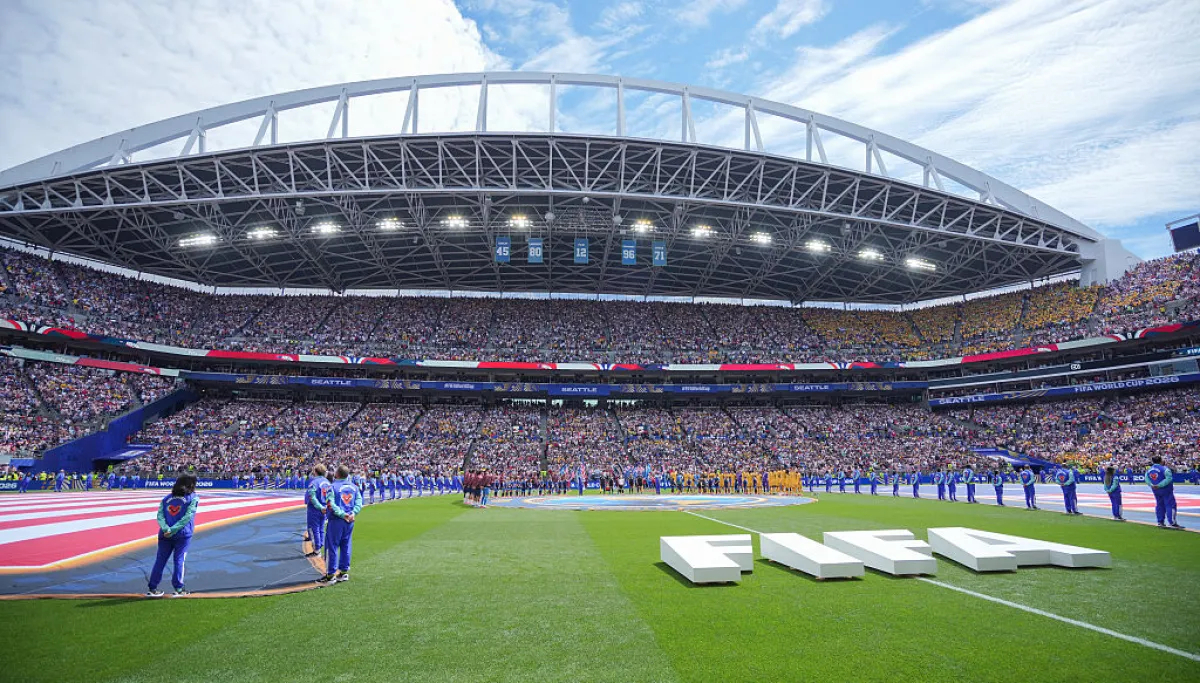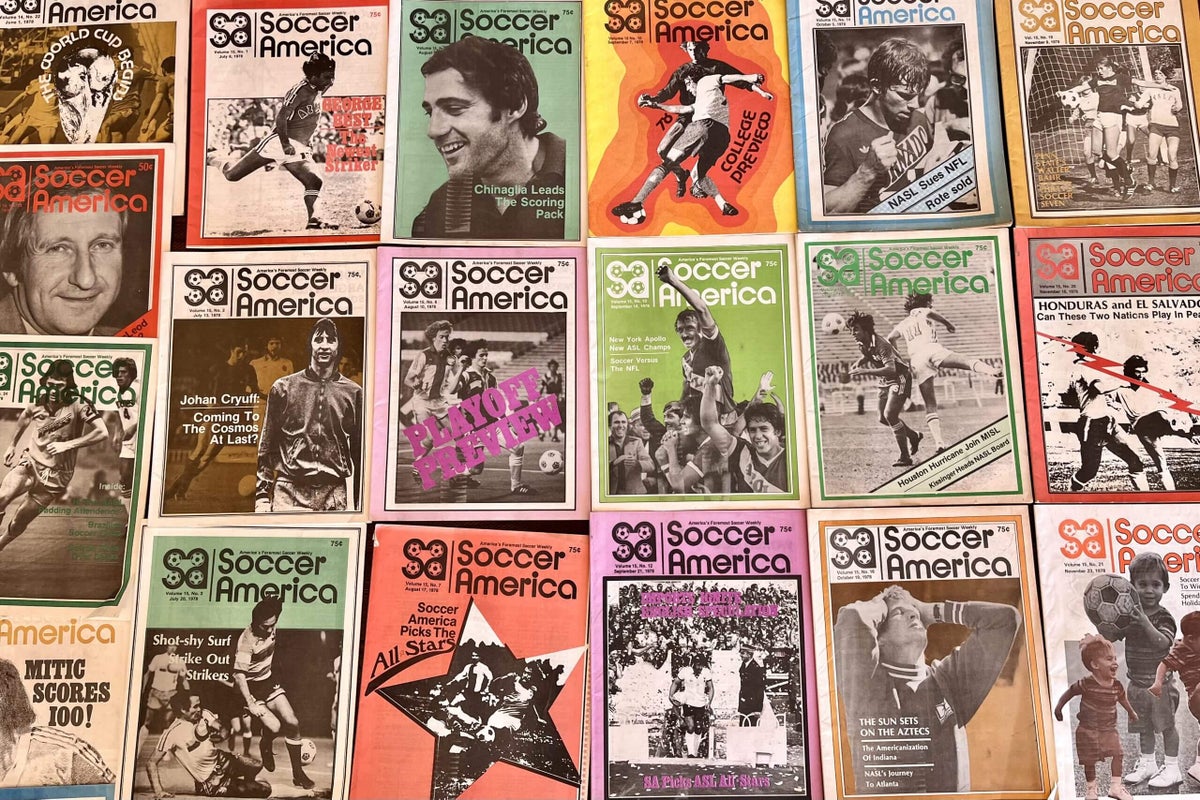
Sitting at his kitchen table in Albany, Calif., 55 years before America became the epicenter of soccer, Clay Berling fed paper into a typewriter and tapped out zealous words about a sport that nobody around him knew or loved.“Let’s not kid ourselves!” Berling, a State Farm insurance agent and father of six, began on the very first page of Soccer West’s very first issue in April 1971. “Soccer is hardly a household word in the United States at this time.”Berling, though, went on a mission to change that.Over the years and decades that followed, Soccer West became Soccer America, which became the U.S. authority on all things footy. First as a magazine, then digitally, it chronicled the rise of this “foreign” sport into the American mainstream. It became the “throughline,” as former CEO and publisher Lynn Berling-Manuel says, connecting every stage and tentacle of the sport’s stateside evolution. “Our story does tell the story of how soccer has grown,” longtime editor-in-chief Paul Kennedy says.And those parallel tales, of the magazine and the sport in the U.S., begin with very little.In 1971, soccer was popular in some immigrant communities but invisible in most everyday American lives. It eluded TV networks and newspapers. “There was no information,” Berling-Manuel, Clay’s eldest daughter, says. There was one fledgling professional league of eight clubs and countless gimmicks; it averaged around 4,000 fans per match. There was one college division and, for a span of three years, zero national team games — men’s or women’s.So how did we get here, to a World Cup projected to generate $11 billion in revenue? To a landscape soon to have four top-flight leagues? To an era in which soccer is everywhere in the U.S.?Kennedy, sitting at his home in Albany, across the street from the Methodist church where Berling sometimes laid out Soccer America’s early issues, leans toward his laptop. His encyclopedic mind spins.The following is his, and Soccer America’s, answer.The late Clay Berling, founder of Soccer America and its predecessor, the Soccer West newsletter (Courtesy of Soccer America)The foundationSoccer came to the U.S., as it came to most of the Americas, via European immigrants in the late 19th century. It spread in some towns, especially after World War I; then largely died out during and after World War II as baseball, basketball and American football took hold. When the U.S. shocked England at the 1950 World Cup in Brazil, hardly anyone back home knew or cared. Not even a teenage Berling, who, as Berling-Manuel says, had “no soccer background at all.”The Dark Ages, as some now call them, stretched into the 1960s. The first glimmer of light was satellite television. It allowed NBC to air a tape-delayed broadcast of the 1966 World Cup final, which planted seeds in the brains of businessmen who owned American sports franchises. They concocted plans for soccer leagues, and initially formed two. One essentially imported entire teams from Europe and South America during their offseasons. Then, after months of political sparring, the two merged to form the North American Soccer League. And for 17 years, the NASL introduced countless Americans to this quirky, unfamiliar sport.One of the many was Berling, who, wooed by a cheap family deal on tickets, took his wife Ruth and six children to Oakland Clippers games at the Coliseum.Like most of the NASL’s original 17 teams, the Clippers folded after a few seasons. The league quickly went on life support, contracting to five clubs after just one year. But Berling, Lynn says, “fell in love.”He started Soccer West, a biweekly regional newsletter, because he wanted others to feel the joy and connection that he felt. He would trek to amateur games throughout the Bay Area, collecting news, nuggets and match results. He would typeset each issue on his kitchen table, or during downtime at his State Farm office, or even in a Sunday school room rented from the local church. As he expanded nationally, he hired staff, including Berling-Manuel, but he never took a salary. “It became a passion that I think is rare in this world,” Berling-Manuel says. At times, it was just about the only soccer coverage Americans could find.Pelé signs with the New York Cosmos in 1975 (Eric Schweikardt / Sports Illustrated / Getty Images)That changed in 1975, when Pelé arrived. O Rei, the Brazilian soccer king, and a steady stream of other global stars, lifted the NASL from a league languishing in mostly-empty football and baseball stadiums to a subject of mainstream affection. Pelé’s team, the New York Cosmos, “owned Manhattan. They were the superstars, they were the rockstars,” Berling-Manuel recalls. Average attendance quadrupled throughout the 1970s, and the league tripled in size.The phenomenon, however, was fleeting.The NASL ultimately failed because it never had a foundation. It paid twice the market rate for international stars but pennies to everyone else, and it had no pipeline of homegrown players. It “was tremendously transitory,” Kennedy notes. It tried to Americanize teams of foreigners — with cheerleaders, pregame stunts featuring live animals, and blasphemous rules. But when the novelty wore off and some stars left, in 1984, the league crumbled.“Without it,” though, Kennedy says, soccer “wouldn’t have taken off.”The NASL played two integral roles, he explains.First, it connected the game that schoolchildren played to the game beloved by billions globally. When Kennedy and his classmates, as fifth graders in 1965, played soccer on the sloping lawn behind Tuxedo Park School in New York, with shinguards made from tomato stakes, “we had no idea how the sport looked,” he says. By the 1980s, many kids did.And second, the pros who came to the NASL from afar didn’t just perform for curious audiences, they became evangelists. They ran soccer camps or clinics across the U.S. Even amid contraction, “the players and coaches who stayed on in the small league, the Ron Newmans and Gordon Bradleys, would spend their weekdays going from school to school and doing show-and-tell soccer sessions,” Kennedy recalls. “They were hugely important.”
American soccer’s extraordinary growth story, as told by those who’ve chronicled it
Soccer, and the consumption of it, in the U.S. has changed dramatically over the decades. One publication has been a constant throughout
2,988 words~14 min read