in History, Language, Literature | June 4th, 2026 Leave a Comment
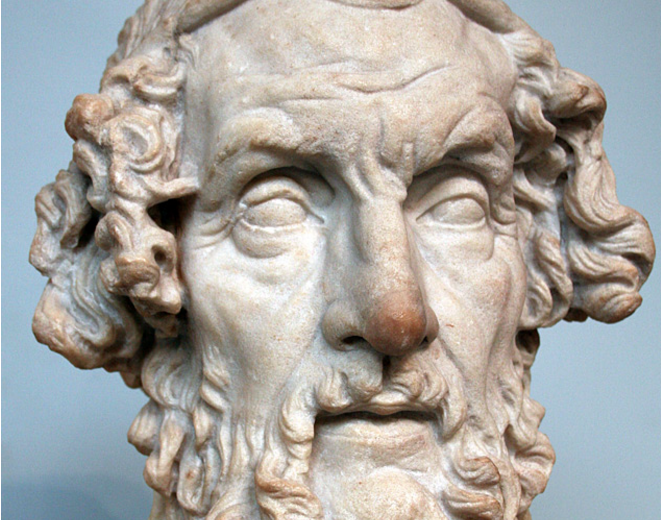
You can, of course, learn the Greek language as it’s spoken today. You can also learn Greek as it was spoken in antiquity — and as it was, until fairly recently in historical time, taught to students in the modern West. But it’s a fairly different endeavor again to learn Greek as Homer spoke it. The fact of the matter is that no human being ever really spoke like Achilles, Agamemnon, Odysseus, Penelope, or any of the other characters in the Iliad and Odyssey. Homer’s many literary achievements through these works include the creation and command of a kind of synthesized poetic Greek, combining qualities of regional Ionic and Aeolic dialects with various forms and expressions that were outdated even in the eighth century BC. If it served the meter, Homer used it.
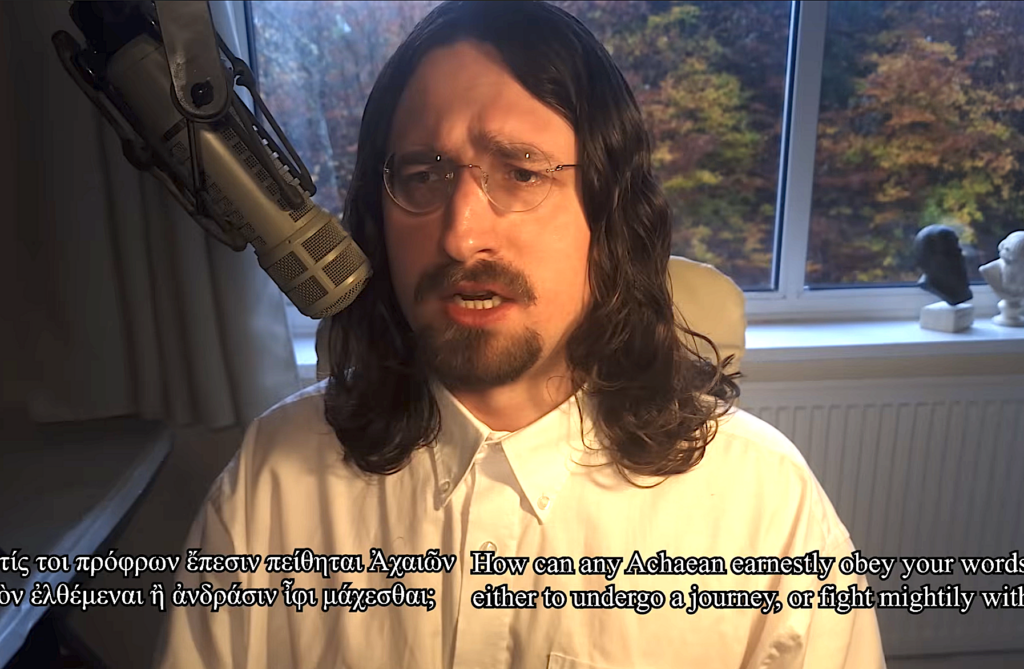
Needless to say, when most of us attempt to read Homer aloud in the original, we get it all or mostly wrong, even if we’re familiar with modern Greek. We’d have to spend a long time indeed in the world of classicists before hearing a more accurate recording than the one above, delivered by a YouTuber called Thomas Whichello.