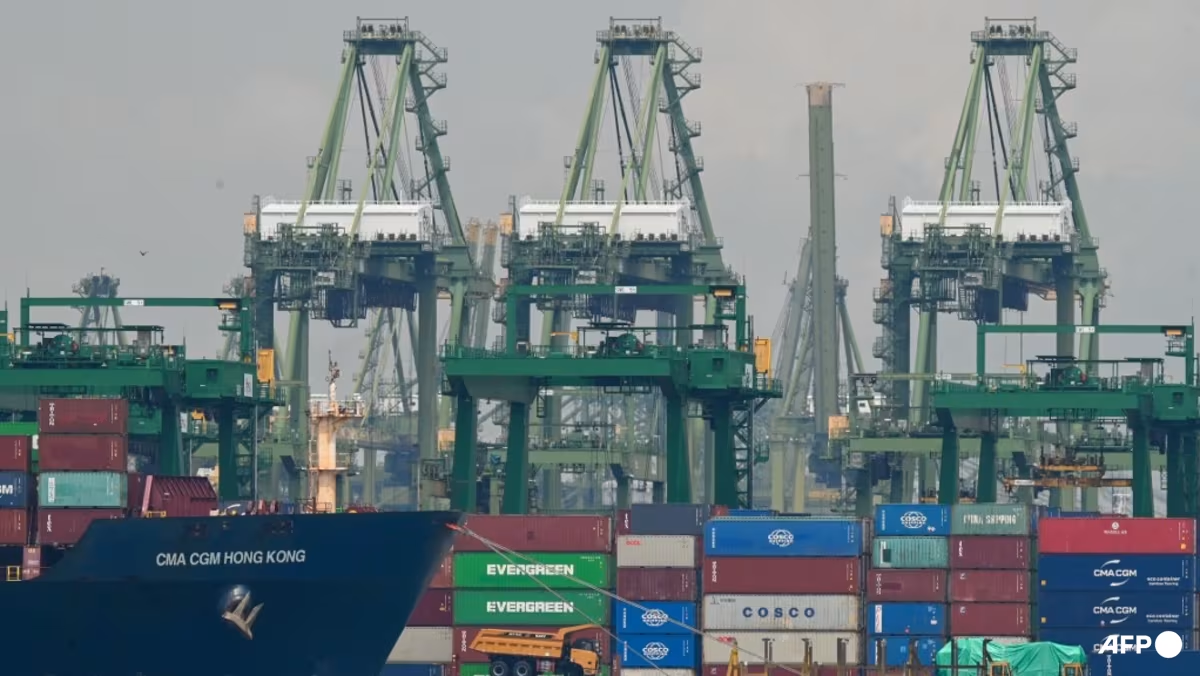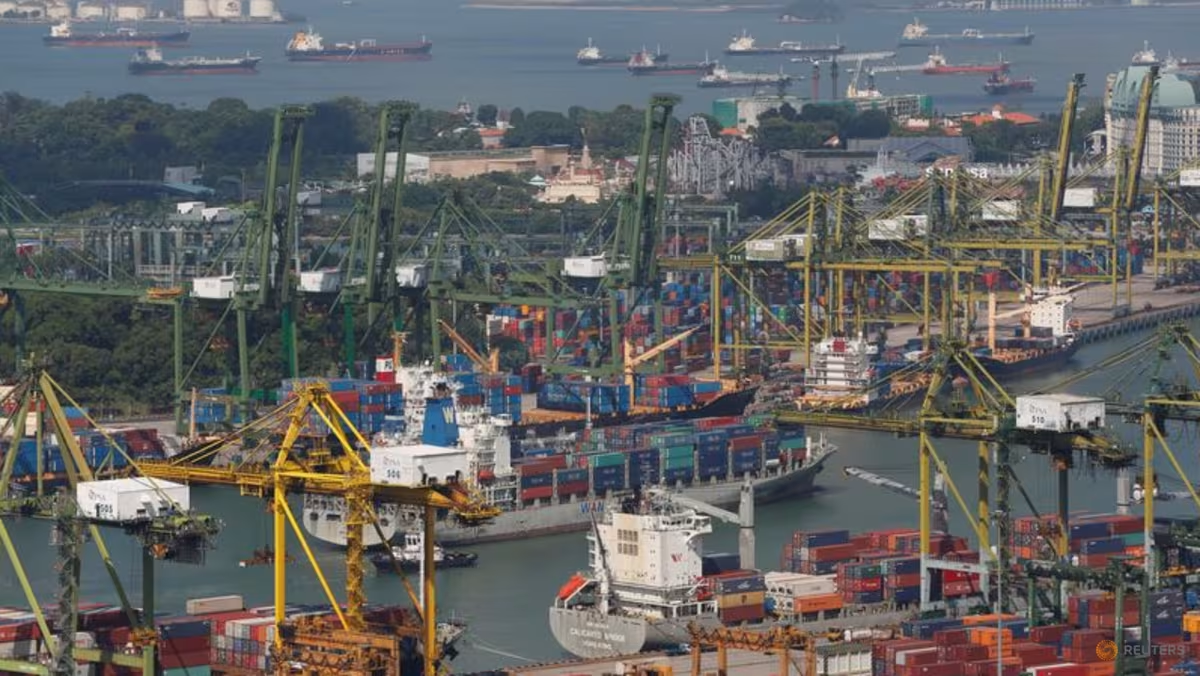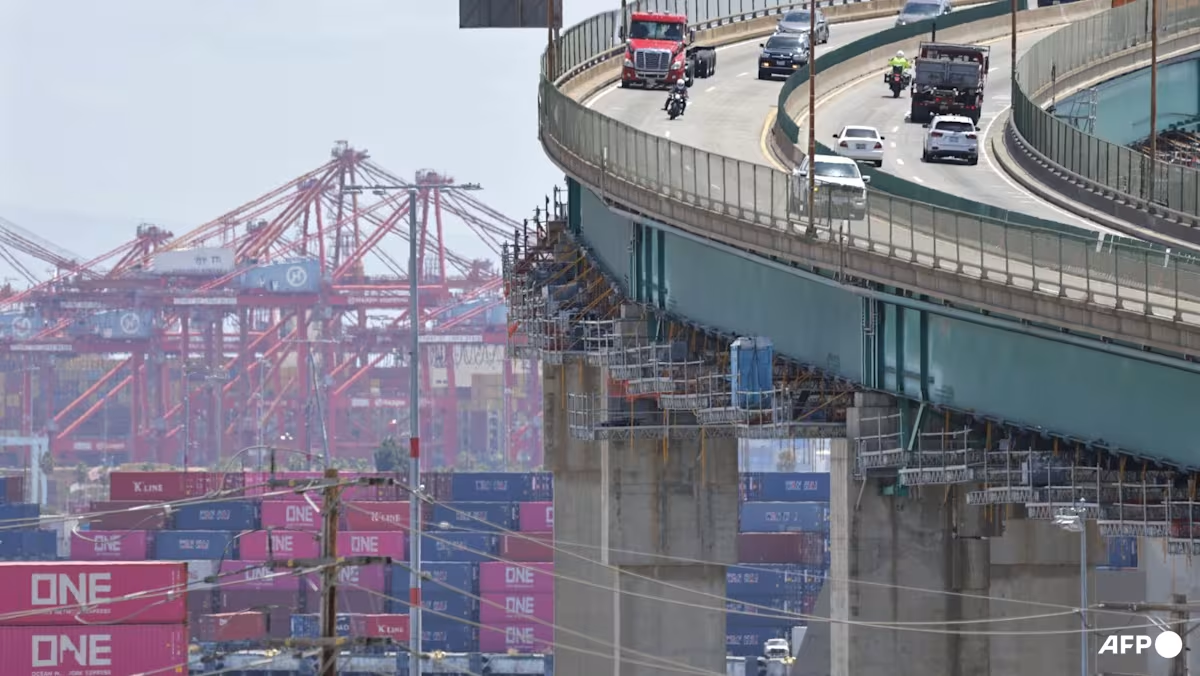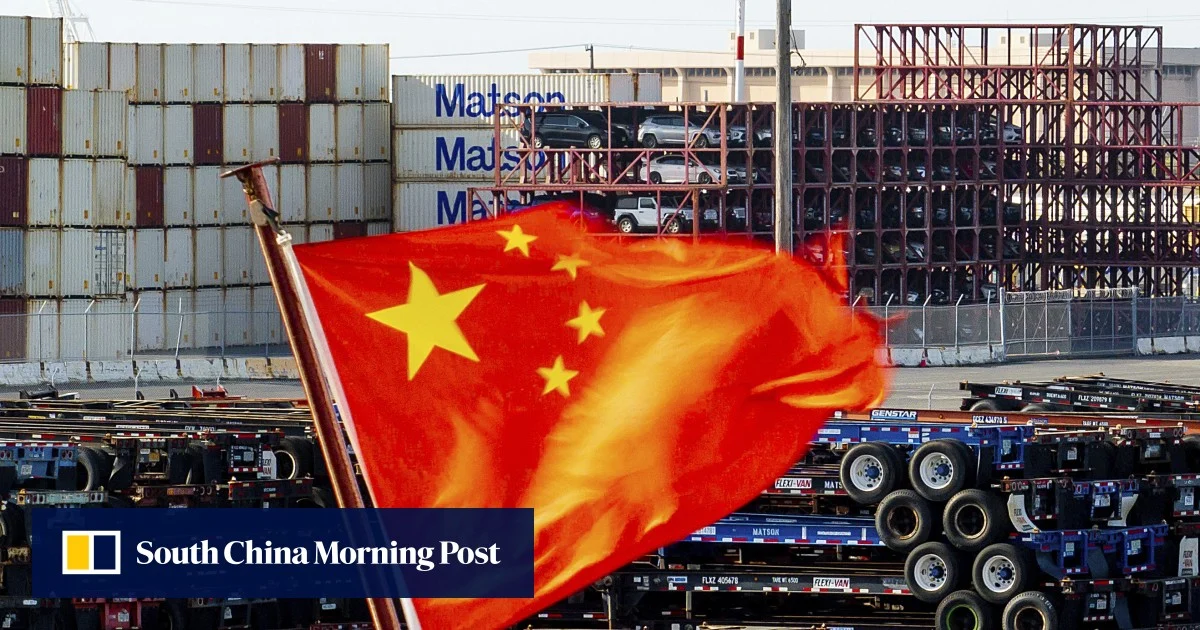
SINGAPORE - Four months after losing his sweeping reciprocal tariffs to a court decision, US President Donald Trump has made his first move to replace them with trade levies that he believes are less vulnerable to legal challenges.On June 2, his trade office in Washington issued a comprehensive 98-page report proposing double-digit tariffs against 60 countries - who represent about 99 per cent of all US imports - after an investigation initiated on March 12 showed they were not doing enough to restrict trade in goods produced by “forced labour”.The Office of the United States Trade Representative (USTR) placed the trading partners into two groups, depending on what it considered as varying degrees of ineffective enforcement of rules on trade in “forced-labour goods” and whether they have already struck a trade deal with the Trump administration.The USTR said it would charge tariffs at the rate of 10 per cent on imports from Canada, the European Union, the UK, Indonesia, Mexico, Pakistan, Argentina, Bangladesh, Cambodia, El Salvador, Guatemala, Indonesia, Malaysia and Taiwan.The remaining 45 countries, which include Singapore, China and India, would face higher duties of 12.5 per cent.However, nothing is settled yet. The tariff rates may change for some countries, including Singapore, as the proposed measure is subject to the process receiving public comments and holding hearings by a USTR trade panel. This will start next month and may take weeks, if not months.There is also at least one more USTR investigation that could lead to another tariff measure - pertaining to excess manufacturing capacity - that has yet to come.Despite the tariff tumult since 2025, Singapore has continued to clock strong growth in exports, thanks to the AI boom and increased trade with other partners across Asia.For now, not much would change for companies that count the US as an export market, if and when the new tax relating to forced labour applies.The new measure will replace the 10 per cent global tariff - set to expire in late July - imposed soon after the Feb 20 Supreme Court ruling. That would raise the US effective tariff rate by just 0.5 per cent, according to experts.The effective tariff rate reflects the average tariff paid across all imported goods into a country.Some of the sectoral exemptions, if not all, such as those for certain electronics and pharmaceuticals imports into the US, will also continue.Hence, semiconductor manufacturers and drugmakers in Singapore may have to continue their negotiations with the Trump administration to ensure the waivers apply to their exports. The waivers depend on a host of factors, including their commitment and plans to invest in the US.The Feb 20 Supreme Court ruling also did not affect other targeted sectoral tariffs. That means the 50 per cent tariff on steel, aluminium, and copper, as well as the 25 per cent tariff on foreign-made cars, heavy-duty trucks and engines, will remain in place.The Feb 20 decision that declared tariffs based on the 1977 International Emergency Economic Powers Act (IEEPA) unconstitutional remains effective.All companies that paid these IEEPA tariffs - totalling about US$166 billion (S$213 billion) - can continue to receive refunds.In fact, the Supreme Court ruling against IEEPA and a subsequent decision by the US Court of International Trade (CIT) against the temporary 10 per cent global duty in May have set a pattern of judicial scrutiny against the US president’s broad executive tariff imposing authority. Hence, legal challenges against the new measure are very much likely.The Trump administration has used Section 301 of the Trade Act of 1974 as the legal basis for imposing the new tariff on trade in forced labour goods because it has no statutory expiration dates or maximum percentage caps.Historically, measures imposed under this law have also proven far more resilient against judicial overturns.While the CIT and the US Court of Appeals for the Federal Circuit have upheld the executive branch’s broad authority under Section 301 in previous cases, experts argue that using the statute as a dragnet to apply blanket universal or multilateral tariffs to dozens of countries stretches the law beyond Congress’s intent. Section 301 was originally written using singular language to target the unfair trade practices of “a foreign country”.The US has prohibited the import of goods made with forced labour since 1930.It has also targeted goods from specific places, for instance in 2021 the US banned all imports from the Xinjiang region of China on the presumption that they are made with forced labour.But unlike the 2021 ban, the latest USTR report does not say whether specific nations are actually importing goods made with forced labour, nor does it look at whether products are being made in those countries using forced labour.USTR only assessed whether a country has a formal ban in place on goods imported using forced labour, and if it is enforcing a ban or attempting to block such imports.The trade office is simply arguing that if a nation is failing to enforce a ban on forced labour, it burdens or restricts US commerce by subjecting US producers to unfair competition.Experts anticipate immediate lawsuits once the tariff goes into effect.The proposed forced-labour tariff drew immediate criticism from major economies such as the EU and China. Hence, countries across Asia, Europe and North America may attempt to drag out the public comment, hearings and review periods.DBS Bank said in a note on June 4 that the US no longer holds the same economic leverage over its allies as it did in past trade disputes.“Since Trump 2.0, tariff escalation and geopolitical shocks have reshaped policy priorities, making retaliation increasingly viewed as economic self-preservation rather than a negotiating tactic,” it said.By targeting 60 economies under a legal rationale that many governments may challenge, Washington risks turning a bilateral pressure strategy into a broader multilateral response, the Singapore bank noted.Ovais Subhani is senior business correspondent at The Straits Times. He writes stories that demystify the latest economics, trade and finance news.
Trump tariffs and Singapore trade impact
Discover the implications of Trump's new forced labour tariffs on Singapore's trade and how they might affect businesses. Read more at straitstimes.com. Read more at straitstimes.com.
985 words~4 min read