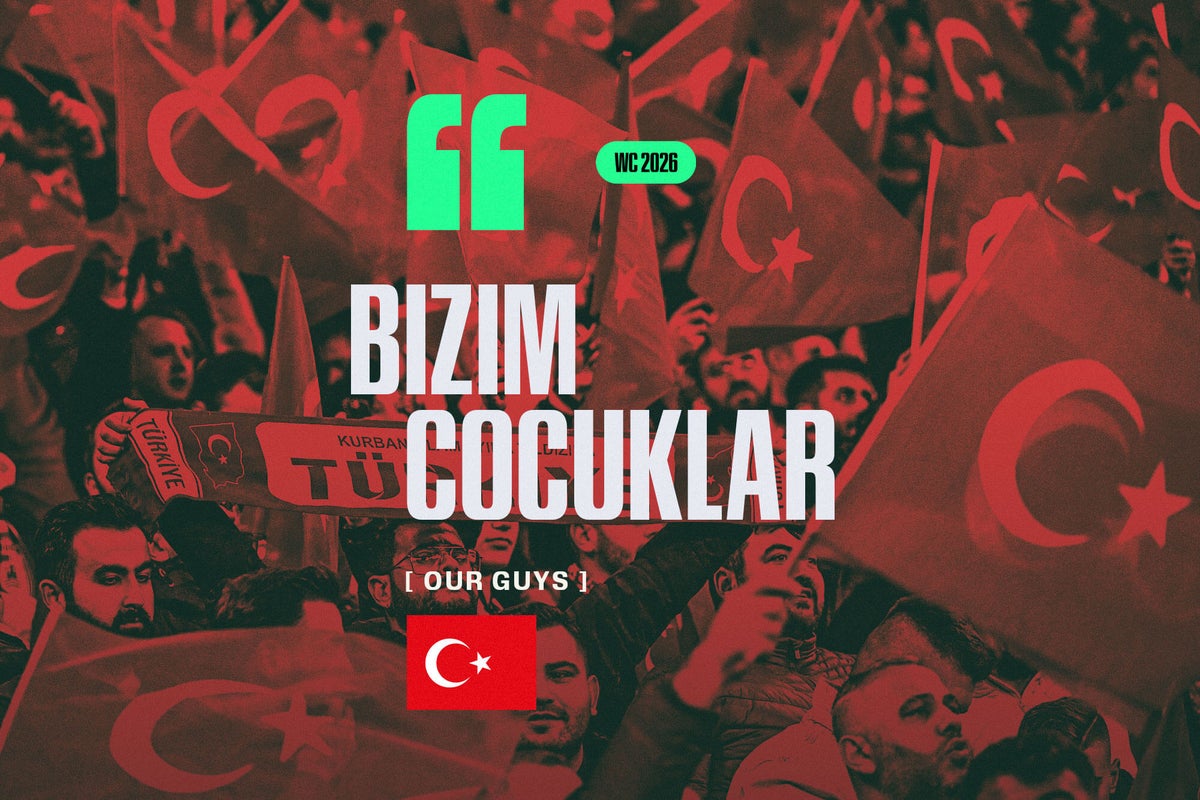
As part of our Language of Soccer World Cup series, The Athletic is speaking to supporters of all 48 nations competing at the 2026 edition to capture their unique football culture, distilled into a single phrase. You can read the articles in one place here.Bizim Cocuklar – Our GuysIt has been a long time coming, but generations of Turkey fans are celebrating a new connection with the national team as they get ready for their first World Cup appearance in 24 years.For a country of almost 87million people with a fervent passion for football, not qualifying since 2002 has been a huge source of national frustration.That hurt was deeper because Turkey promised so much by finishing third in their last tournament, in Japan and South Korea.But two years later they failed to qualify for Euro 2004, and as their domestic Super Lig grew ever stronger, club allegiances began to supplant interest in the national team.“Turkey fans expect a lot from their teams,” says supporter Emre Gozutok. “That is especially true at club level, and with the national side they have lacked a tournament legacy since 2002.“The love of club football is so huge, with the fans expecting and demanding their own team’s success, that when they apply those sometimes unrealistic standards to the national team, there’s been disappointment.“Failing to qualify for the 2004 Euros was a major trauma for Turkey fans, coming so soon after the World Cup. It really did hurt and the worst part was losing to Latvia, who were one of the lower-ranked teams.“Expectations had been high. That was a big part of the disconnect.”Emre, a politics graduate from Istanbul, says Turkey have not always had the unified support of other countries for cultural reasons.“I think the reason it hasn’t fully become something embraced by the whole nation is more about the general atmosphere in the country,” explains the 24-year-old, who is currently studying for a Master’s degree in political science at London School of Economics.“It is very difficult to find anything that everyone can claim as their own. We could give writers or singers as examples of this, or TV shows.“Also because there’s a really tense atmosphere in club football. People do think about their clubs first, instead of the national team.“When you think about the Netherlands fans, you immediately picture them all wearing orange. But Turkish supporters following their national team tend to wear their club jerseys — they have a very hard time getting them to come to the games in red.“That culture hasn’t really been there.”Fans are now more likely to wear Turkey colours and shirts to matches than was previously the case (Yasin Akgul/AFP via Getty Images)Now he senses that lack of fervour for the national team is changing. The new generation, led by established stars such as Inter’s Hakan Calhanoglu and exciting young talents like Real Madrid’s Arda Guler and Kenan Yildiz at Juventus, have captured the imagination.“The phrase ‘Our Guys’ marked an important turning point for the national team,” he adds. “Its popularity shows the team’s progress in helping to unite people. The current generation of Turkey players really are viewed as ‘Our Guys’ and we can feel it is a team that represents us.”
Turkey fans finally feel like they have a team which represents them. They are ‘Our Guys’
As part of a special World Cup series, The Athletic is speaking to fans of all 48 competing nations to capture their unique football culture
1,512 words~7 min read