Kim Eun-mi
The author is a professor of communications at Seoul National University.
The heated local elections have come to an end. Yet more significant than the outcome itself is the fact that the infrastructure of political participation has shifted rapidly toward YouTube Shorts and large political YouTube channels.
Jeon Han-gil, a YouTuber and former Korean history instructor who had been under police investigation on allegations of defaming President Lee Jae Myung and Reform Party leader Lee Jun-seok, answers reporters’ questions as he leaves Yeongdeungpo Police Station in Seoul on April 16 after a court rejected a request for his arrest warrant following a pretrial detention hearing. [YONHAP]
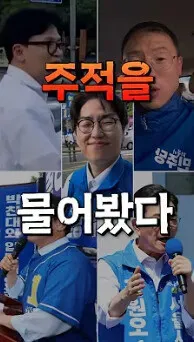
Algorithm-driven media continuously recommend content similar to what users have already watched. Shorts are even more powerful because videos begin playing automatically. Even when televised debates contain substantive policy discussions, a verbal slip or awkward facial expression is often edited with captions and repackaged into a clip lasting only a few seconds. Stripped of context, such content spreads rapidly and can cloud voters’ judgment as much as misinformation.