Walk through the despatch bay of a mid-sized auto-component plant in Manesar, Haryana and ask the plant head what keeps him awake. A year ago, the answer would have been capacity; more orders than the line could absorb. Today the answer is different.A long-standing European buyer will be introducing a new requirement: full carbon traceability data, shipment by shipment, as a condition of continued supply under the EU’s Carbon Border Adjustment Mechanism (CBAM). The plant can produce, but it cannot yet prove. In global manufacturing, the inability to prove is rapidly becoming indistinguishable from the inability to perform.This is not an isolated episode. Trade, technology and carbon policy have ceased to be neutral terrain. They shape market access, define the terms of participation in global value chains and determine which nations retain industrial agency. The question for Bharat is whether we build the depth this moment demands, or whether we scale capacity while the architecture lags behind.The shift to physical AIArtificial intelligence has, until recently, been largely a phenomenon of the screen; content, retail, software. That is changing. The next phase of AI is physical: applied to factories, logistics, energy grids and supply chains where interaction between software and machines must be seamless and reliable. This is not a distant prospect. It is already under way in the most competitive manufacturing economies and beginning unevenly in Bharat.The applications are concrete. Predictive maintenance systems flag equipment stress before a breakdown occurs. Digital twins allow factories to be stress-tested virtually before capital is committed to build physically. Machine vision replaces subjective quality inference with real-time assurance. Energy management algorithms reduce industrial consumption that bear directly on carbon compliance. None of these require frontier AI research. They require disciplined deployment of techniques that are already proven.The concern is not awareness. It is adoption depth. Several large automotive and engineering firms in Bharat are beginning this journey. But the gap between these early movers and the wider MSME base is significant. A mid-sized component supplier operating across three shifts may grasp the value of predictive maintenance in principle. The challenge is integration: legacy equipment, mixed data architectures and the absence of in-house capability to deploy and sustain these systems. The B2B clusters — foundries, machining shops — are where the adoption gap is widest and the competitive risk, most acute.The ecosystem imperativeManufacturing competitiveness is rarely the achievement of individual firms. It is the product of ecosystems. In Shenzhen, a hardware prototype moves from concept to revision in days, not because of one exceptional factory but because suppliers, tooling specialists, designers and process engineers operate within a dense, interdependent cluster where learning circulates rapidly.Bharat has analogues; the auto-component clusters of Pune and Chennai, the textile ecosystem of Tiruppur, the electronics base emerging in Tamil Nadu and Telangana. The question is whether these clusters are developing the institutional depth that converts proximity into compounding advantage, i.e. shared testing infrastructure, training pipelines, standards bodies in which industry actively participates and research institutions engaged with problems the shopfloor actually wrestles with. Without these, a cluster is geography, not ecosystem.The standards dimension deserves particular attention. Mechanisms like CBAM and the EU’s Digital Product Passport are not administrative inconveniences, they are the new architecture of market access. Those who shape such standards retain influence over the terms of global trade. Bharat’s ambition to be a trusted partner in diversified supply chains requires a deliberate shift from compliance to co-authorship at standards bodies, in trade negotiations and in value chain design.Weak pointsThe risk Bharat faces is not that it misses this manufacturing moment. The geopolitical realignment of supply chains, the China-plus-one strategies of global corporations, the friend-shoring logic of western procurement creates structural demand for India as a manufacturing destination. That tailwind is real. The risk is that we respond by scaling capacity without upgrading the underlying architecture, producing growth that is brittle rather than durable.Most manufacturing systems expand initially through stretch; additional shifts, higher equipment utilisation, extended managerial spans. Stretch releases latent capacity efficiently. But beyond a threshold accountability blurs, variability accumulates and delivery credibility built patiently erodes faster than it was earned. Global buyers managing their own compliance obligations have limited tolerance for inconsistency.AI investment layered onto poorly designed operating systems will not rescue this situation. It will amplify the underlying weaknesses.A way forwardBharat enters this transition with genuine structural advantages; a large engineering base, demonstrated capacity for digital deployment at scale, deepening integration into global supply chains across automotive, pharmaceuticals, electronics and defence.Converting these advantages into durable industrial sovereignty requires three specific shifts. First, the PLI framework must evolve beyond output incentives because volume-linked subsidies have served their purpose. The next phase must reward ecosystem formation: supplier depth, shared infrastructure and technical workforce pipelines.Second, the valley between research capability and industrial application must be bridged through co-funded mechanisms with shared accountability. National laboratories like CMTI and SAMEER carry deep technical capability that is not being converted into production-grade tools consistently. The missing link is not science but industrial partners willing to take prototypes from TRL 4 to TRL 7.Third, Bharat must treat the convergence of AI and physical systems as a talent formation priority. Engineers who can navigate both algorithms and material systems — thermodynamics, robotics, reliability engineering — will determine which countries shape the next industrial era. Bharat produces exactly this profile. The question is whether institutional conditions exist to deploy that capability at home.The factory that can trace its carbon footprint, anticipate its failures and integrate cleanly into evolving global value chains is the operational baseline that serious manufacturing buyers are already beginning to demand.And so, while scale will build presence, architecture will build sovereignty.Sondhi is Independent Director: Global – India, Former MD & CEO, Ashok Leyland and JCB India; Sundararaman is Chief Scientist and Head of Wipro Research. Views expressed are personalPublished on June 4, 2026
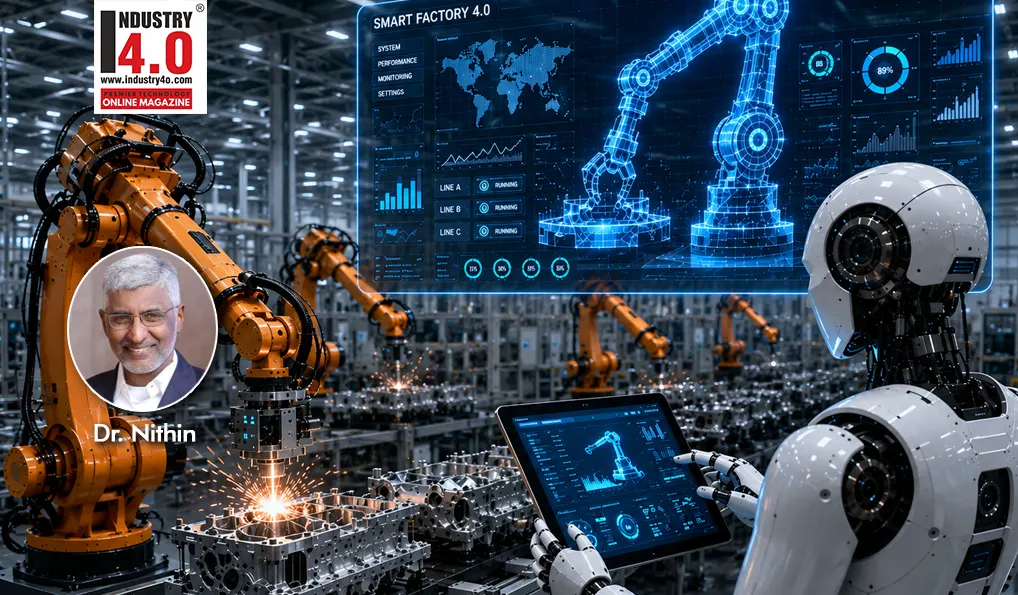
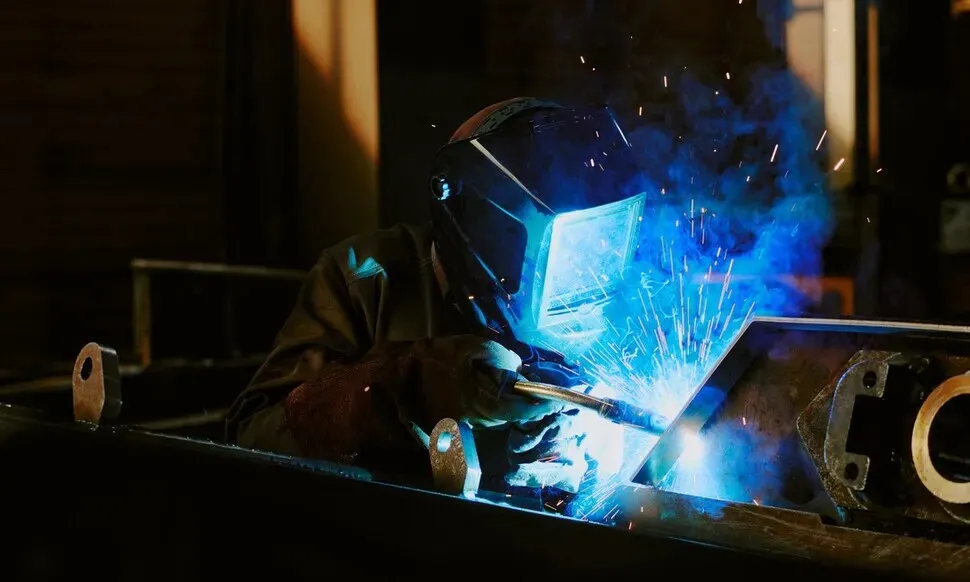
Welding AI with manufacturing systems
Tweaking the PLI framework to create ecosystems, converging AI and physical systems for talent formation are vital
971 words~4 min read