Food has long served as a tool of diplomacy, persuasion, and cultural exchange. New tastes have opened markets, forged commercial ties, and familiarised distant societies with one another.
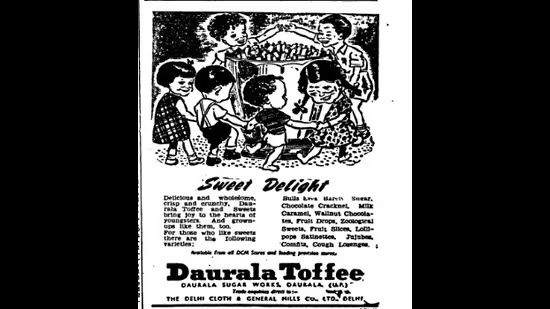
Toffees made by Mackintosh’s company of Halifax, England, had been available in Bombay since at least 1898. But this promotional offer announced its grand arrival in Poona. Mackintosh’s toffee was soft and chewy and stood apart from the other hard and brittle toffees sold at the time, offering something new to local consumers and helping to create a growing taste for British confectionery in the city.
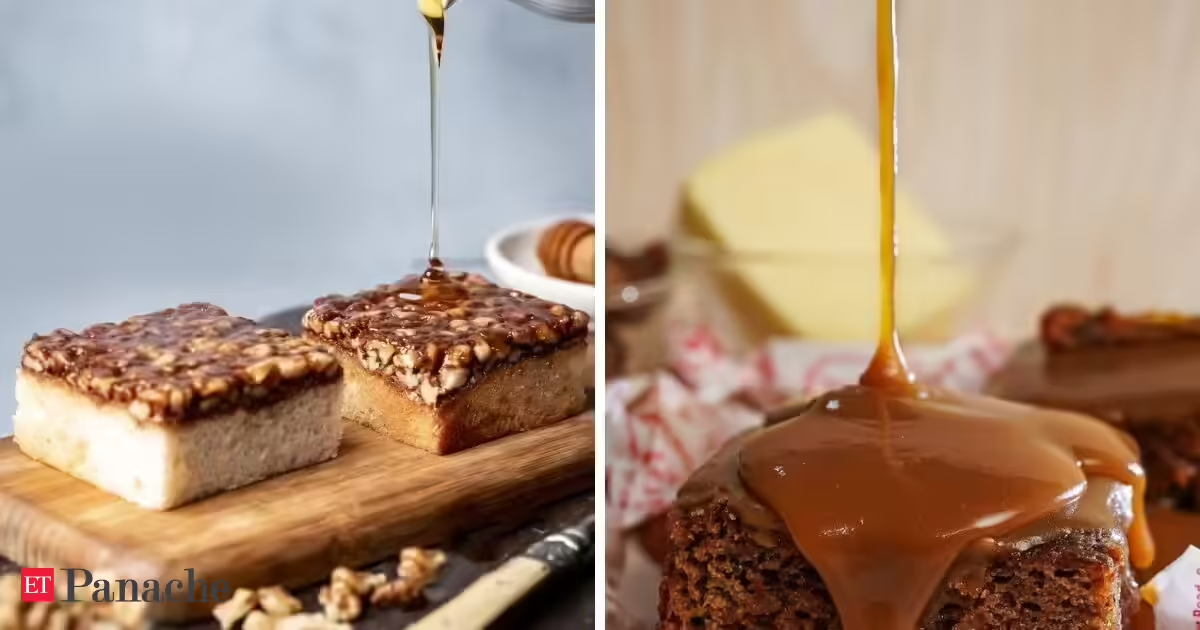
Originally developed in Britain, toffee is a confection made by caramelising sugar or molasses with butter and occasionally flour. The word “toffee” was first recorded in the Oxford English Dictionary in 1825 as a dialectal variation of “taffy”.
American versions are often made with nuts, especially almonds, while traditional English toffees are usually nut-free. Till the mid-twentieth century, English toffee was sold in European stores, confectioneries and railway stations as a solid slab rather than in individual pieces. Customers were often provided with a small mallet, known as a toffee hammer, to break it into bite-sized chunks.