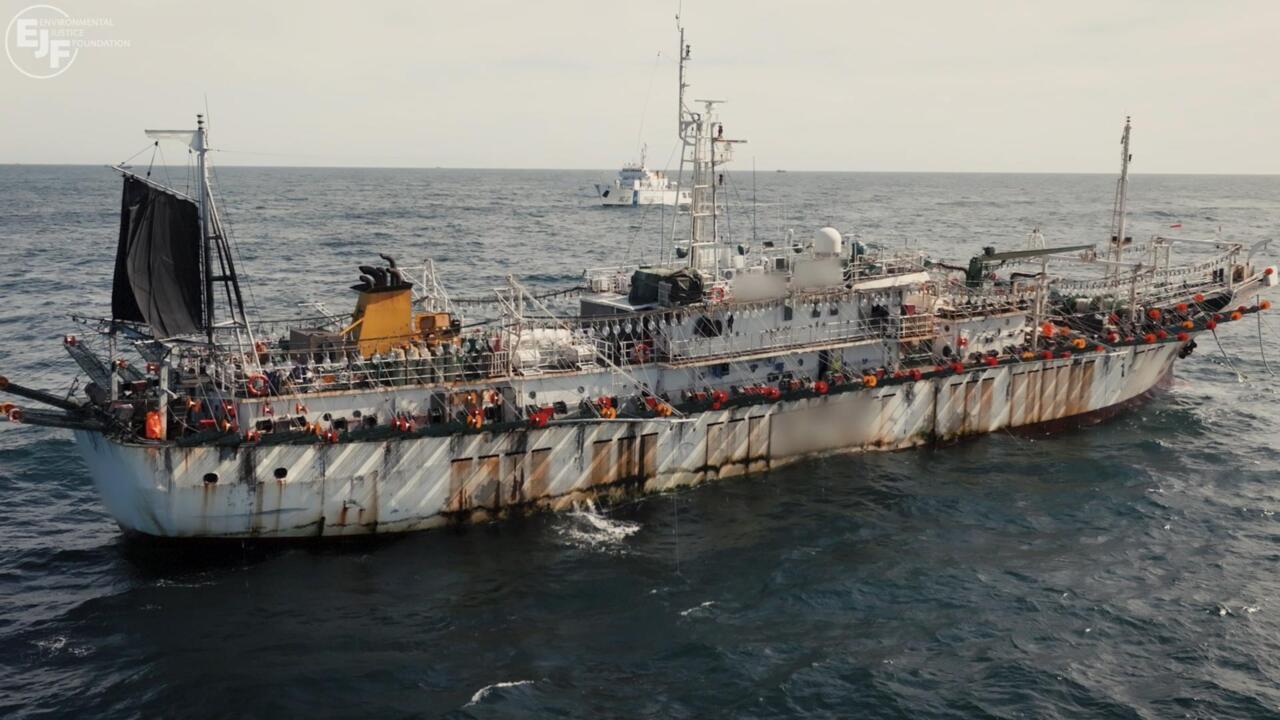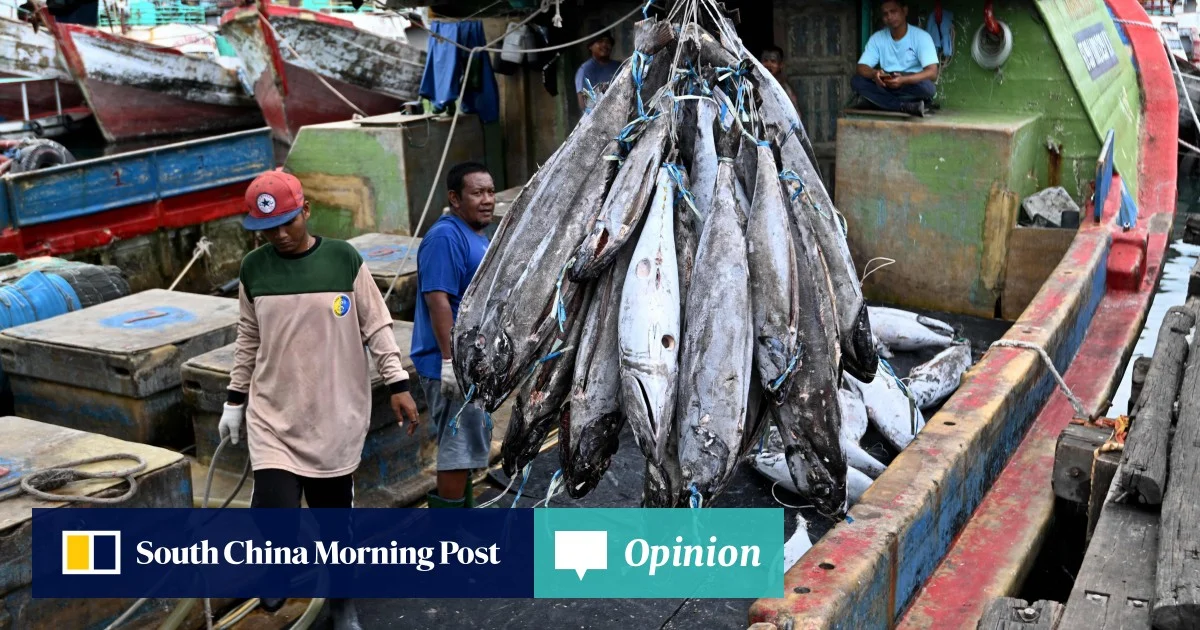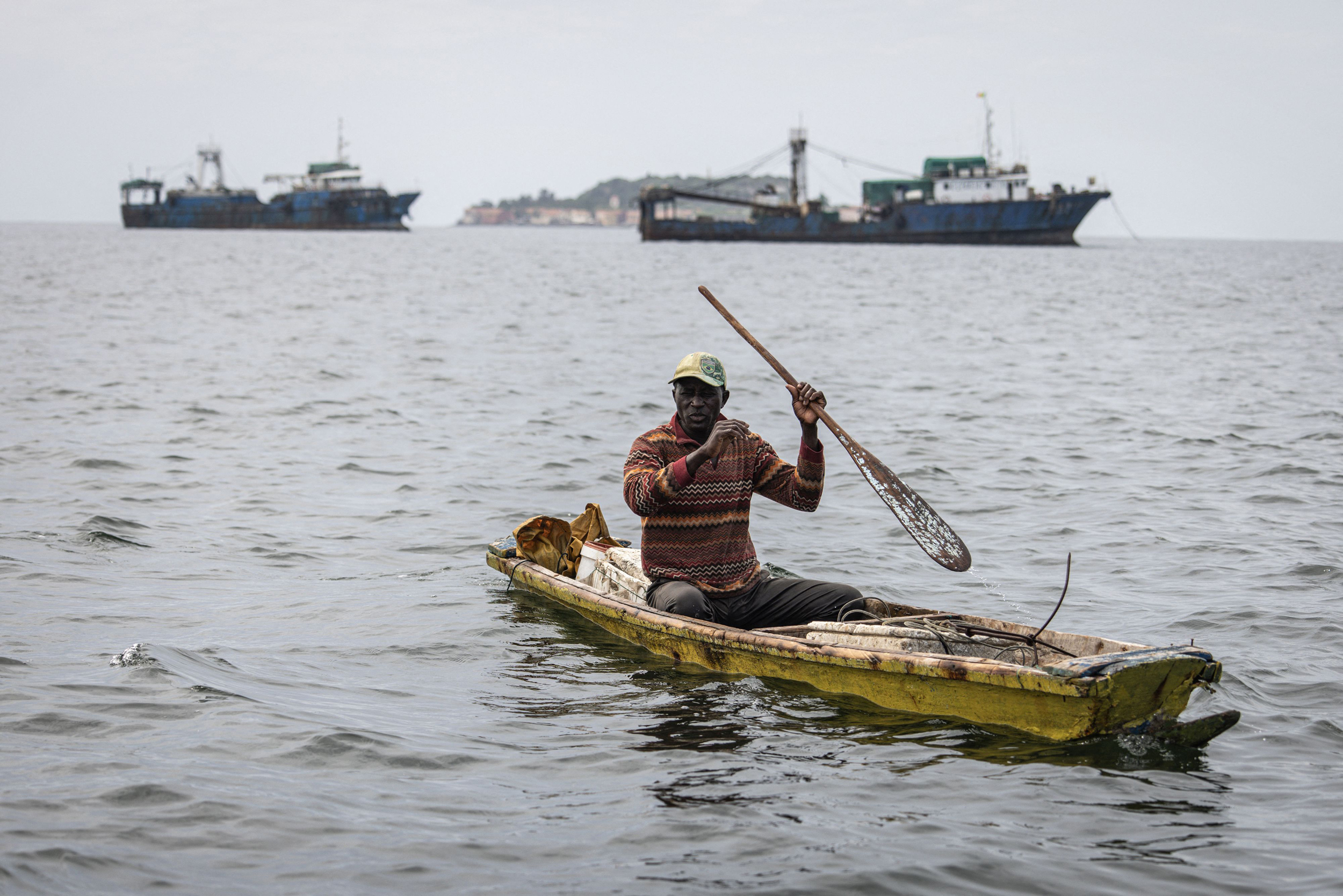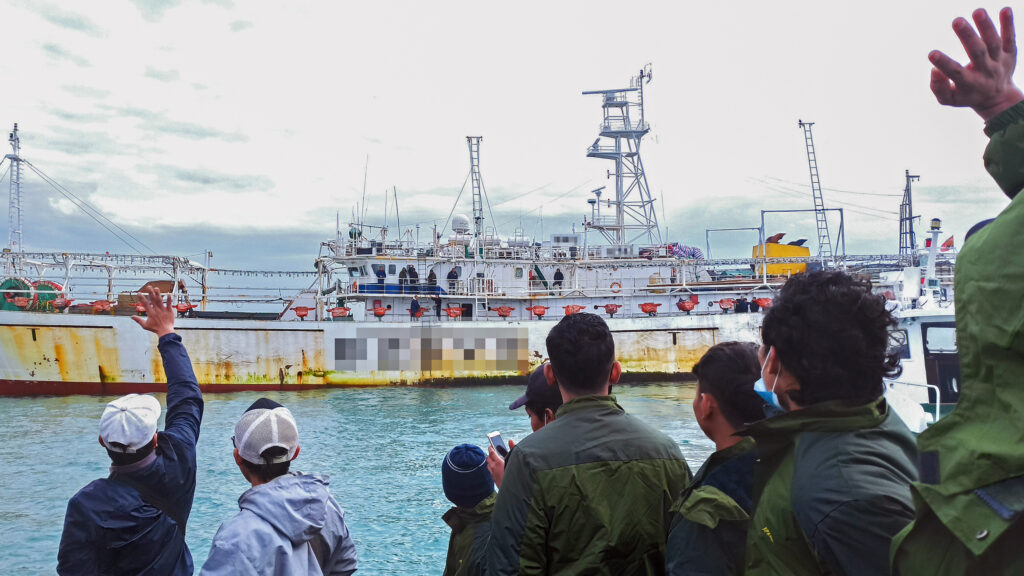
While their dazzling bright lights are visible from space, much of the global squid fleet operates in total darkness.
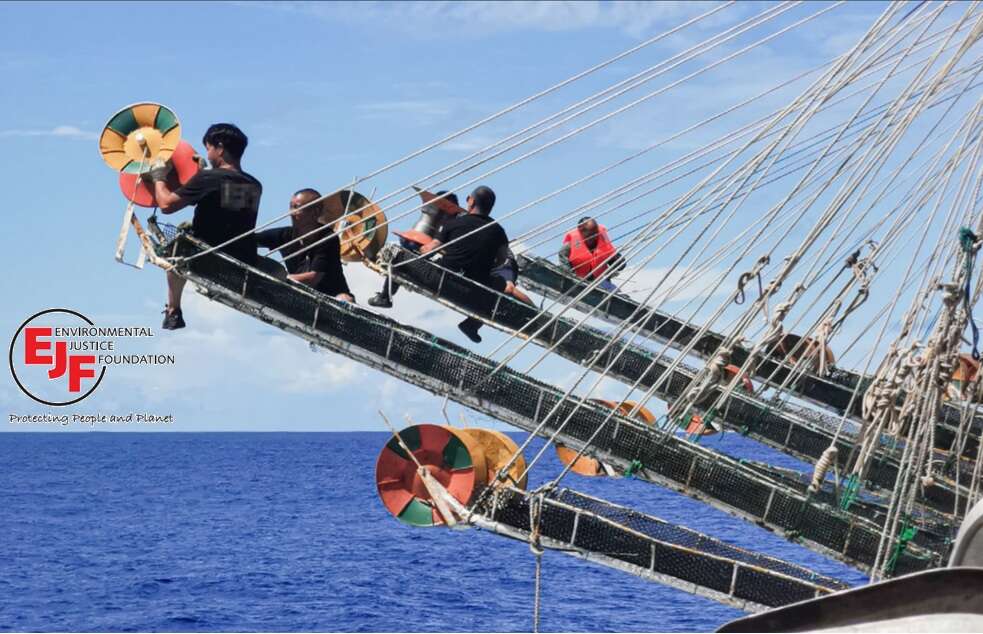
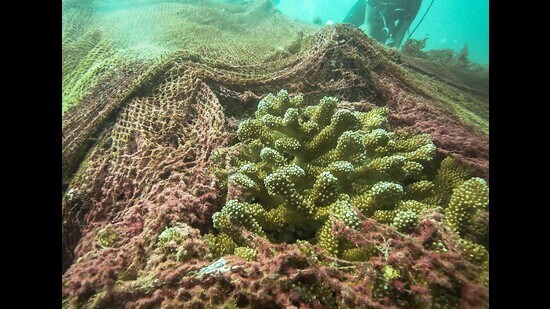
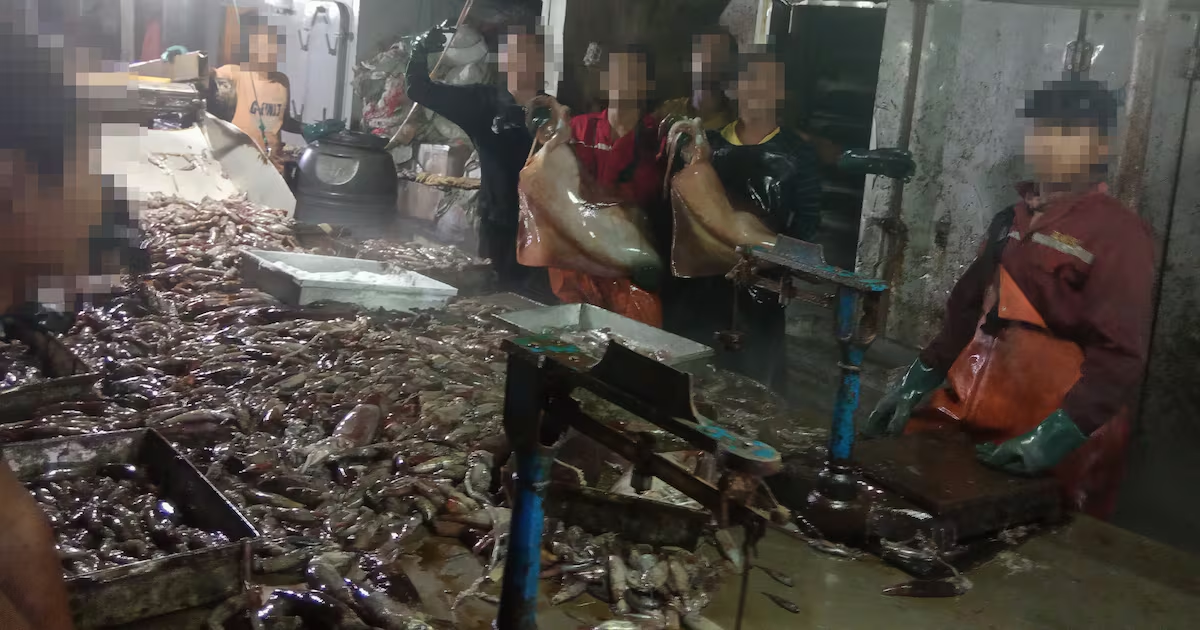
Hundreds of former Indonesian and Filipino crew members working onboard squid ships have exposed widespread environmental crimes and human rights abuses on the high seas every day, according to a new report by the nonprofit Environmental Justice Foundation (EJF).
The report focuses on three unregulated regions—the Northwest Indian Ocean, the Southeast Pacific and the Southwest Atlantic—which collectively supply over 60 percent of the planet’s squid.
“What we have uncovered through these investigations reveals a level of secrecy and opacity that would be completely unacceptable in any other industry,” said Dominic Thomson, the director of squid fisheries at EJF. “Fishers that we spoke to even reported that they contemplated suicide just because the conditions were so desperate.”
While squid has surged from a regional speciality to a highly desired $12.7 billion global commodity in recent decades, the majority of squid fishing fleets exploit a regulatory vacuum.