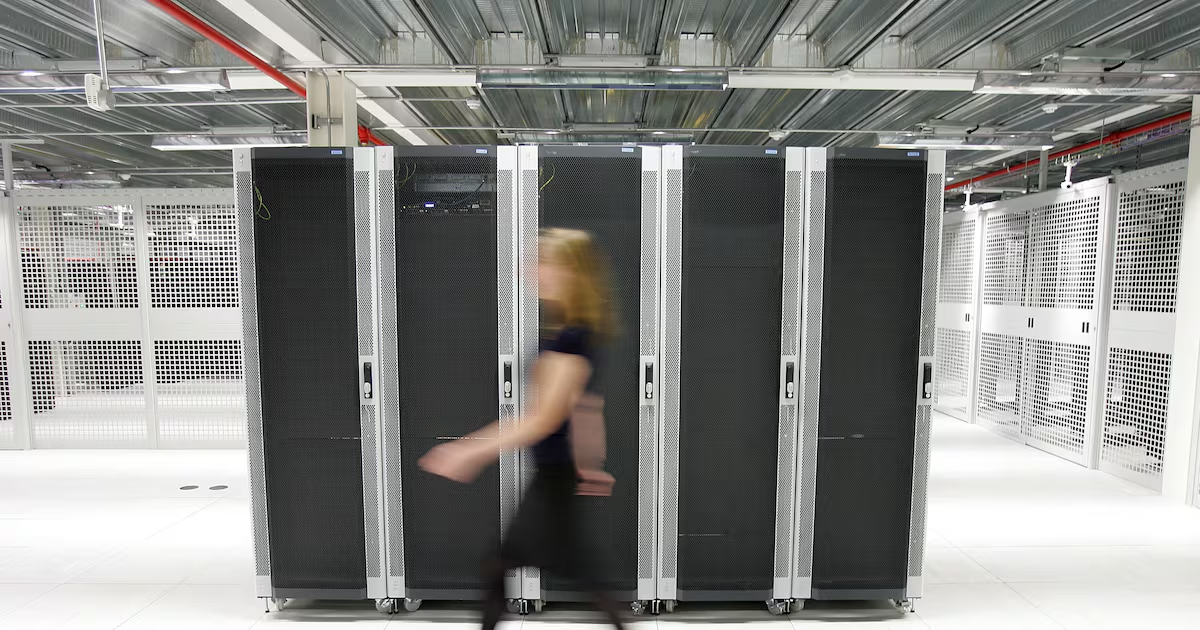
Across the world, debates over the proliferation of data centres are becoming more heated. Ireland is no exception. Minister for Enterprise Peter Burke has been touting a new KPMG report on the issue, commissioned by his own department, as evidence of the need to press on with data centre construction.The report has some eye-catching numbers: 876,000 jobs enabled; €104bn in annual economic output underpinned; 94,000 jobs at risk if development stalls. But by the authors’ own admission, it is not a full cost-benefit analysis.The figures, earnestly recited last week by Minister for Finance Simon Harris, deserve scrutiny. The 876,000 jobs attributed to data centres are spread across six sectors of the Irish economy – ICT, finance, healthcare, transport, retail and professional services – adjusted for their estimated dependency on digital infrastructure. This is an absurd argument. By this logic, a large share of every job in Irish services is attributable to data centres. In fact, the actual number of people employed in operational data centres in 2024 was around 3,300. And the construction jobs which bulk up the figures considerably are, by definition, temporary and projected to fall to zero by 2030. Data centres now account for 22 per cent of Ireland’s total metered electricity consumption, more than all urban households combined. The country already has the highest household electricity prices in the EU and recent research for Friends of the Earth suggests data centre demand has added hundreds of euro to the average household bill, with significantly more to come. None of this features in the KPMG assessment.Nor does the fact that Ireland is already projected to miss its legally binding 2030 emissions targets. The Fiscal Advisory Council has warned that this could cost the State €20bn. Instead, the report paints a benign scenario under which data centre growth requires 80 per cent renewable electricity generation by 2030 while conceding in a footnote that Ireland is set to fall well short of that figure.The claim that tech multinationals require their data centres to be physically located in Ireland, rather than elsewhere in Europe, has never been convincingly demonstrated. What draws these companies here is just as likely to be the corporate tax rate and a favourable regulatory environment, rather than any operational need to keep their servers close to their Dublin offices. And the implication that this strategy is designed to protect tech jobs sits uneasily alongside the fact that Meta, Amazon, Microsoft and others are spending hundreds of billions on data centre infrastructure globally while simultaneously cutting thousands of jobs, including in Ireland.The Government clearly remains firmly behind the data centre roll-out. The public is entitled to view it with rather more scepticism.
The Irish Times view on the Government’s data centre argument: how not to make the case
The figures earnestly recited by Minister for Finance Simon Harris deserve scrutiny
445 words~2 min read