‘Sustained peace will require addressing deeper structural issues’
| Photo Credit: FILE PHOTO: THE HINDU/ROY CHOWDHURY A.
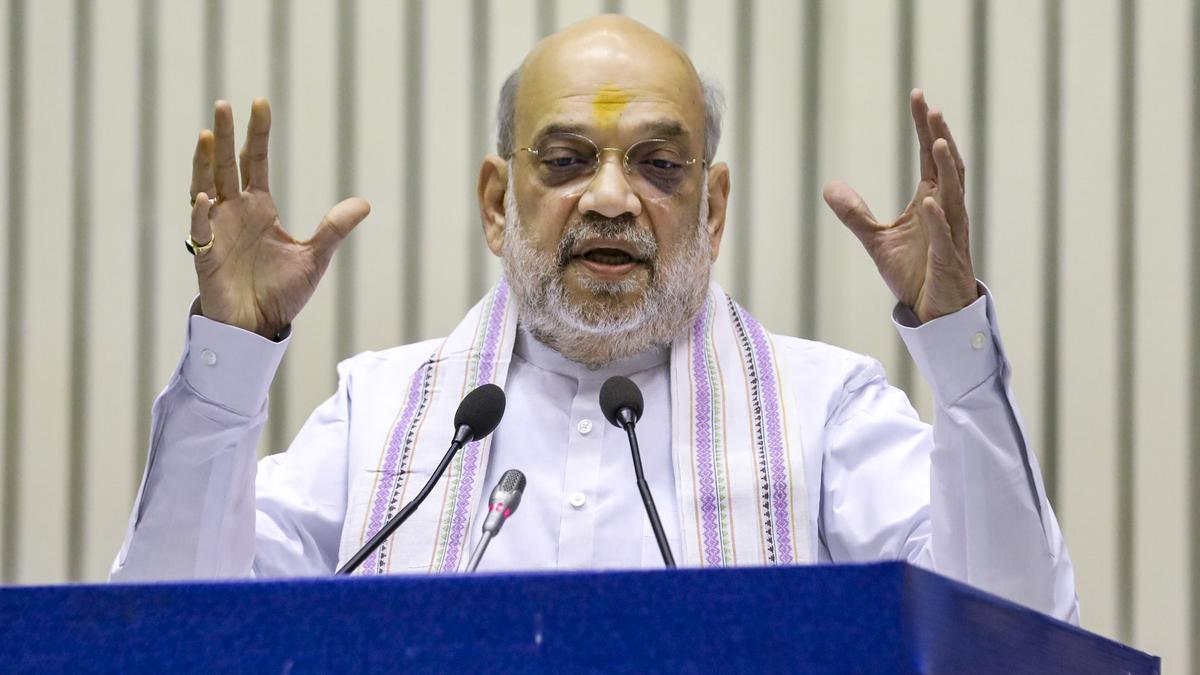
On May 19, 2026, the Union Home Minister addressed a press conference in Jagdalpur, Chhattisgarh, his first since March 31, 2026, when India was officially declared Maoist-free. The most encouraging aspect of the briefing was his assertion that “the fight against Maoism would remain incomplete until every resident of Bastar is integrated into the mainstream”.The road to 2031Having accomplished the March 31 objective, the Union Home Minister mentioned that 2031 would be the next milestone for ensuring the overall welfare of Bastar’s Adivasis. This is welcome, since insurgencies do not have an expiry date. According to the Home Minister, this objective is to be achieved through democratic values, cooperation and development. The government also intends to expand its outreach by delivering welfare schemes to the doorsteps of local communities through designated centres operated by the security forces.One of the methodologies that the Home Minister emphasised for the empowerment of Adivasis was a commitment to the tiered system of governance, from the tehsil level upwards to the Centre. The constitutional vision of this system was to be based on two parallel channels. The first comprised the Panchayati Raj Institutions, with the Gram Sabha as the basic unit. The second consisted of government-appointed officials such as tehsildars, District Collectors and others. The distinction is that the former is elected by the people, while the latter is appointed by the government. These channels were not to converge or be overshadowed by the government-appointed channel, which normally has been the case on the ground. The Home Minister outlined a blueprint for the government’s future initiatives. However, sustained peace will require addressing deeper structural issues. Surprisingly, his press conference made no mention of the most crucial of these concerning grassroots governance as guaranteed by the Constitution.Welfare schemes, the road laying, and the installation of mobile communication towers do contribute significantly to improving the ease of living. However, the larger issues relate to jal, jungle and zameen (water, forest, and land). These are the concerns that will ultimately determine the people’s trust in the government.Implementing PESA in earnestNow is an opportunity for the government to complete the unfinished agenda of implementing the Panchayats (Extension to Scheduled Areas) (PESA) Act, 1996. Across India’s Fifth Schedule Area States, the record of PESA implementation has been dismal. Since implementation was left to the States, each interpreted and applied the Act differently, often undermining its spirit and intent.Grassroots governance centred on the Gram Sabha forms the basis of the PESA Act. Its effective implementation in letter and spirit has the potential to deliver justice to the Adivasi. Today, the Adivasi is with the government, largely due to the security forces’ tactical victory over the Maoists. However, as the security challenges recede, the government will be tested by the Adivasi on the parameters of justice delivery. The Adivasis are aware of the guarantees that the Constitutional Acts provide and are unlikely to scale down their aspirations.With decentralised governance at its core, the PESA Act elevates the Gram Sabha to the cornerstone of local self-governance. Under the Act, the Gram Sabha is granted decisive powers to safeguard Adivasi identity, manage community resources and resolve local disputes in accordance with customary laws. The consent of the Gram Sabha on matters affecting lives and livelihoods has the potential to bring about the structural change necessary for positive peace — one that goes far beyond the mere absence of violence. However, State governments have often attempted to circumvent the authority of the Gram Sabha in pursuit of other objectives. A case in point was the Chhattisgarh government’s 2022 proposal to amend the Act by replacing “consent” with “consultation”. This would have diluted the Gram Sabha’s veto power and undermined the essence of the PESA Act. There have also been instances where Gram Sabha resolutions and consent records were allegedly forged or fabricated with mala fide intent.The imperative of trustThe intent here is not to express scepticism about the sincerity of what the Home Minister said during his press briefing. However, for people to place their trust in the government, structural and historical issues must be addressed. Upholding and strengthening constitutional guarantees should be the primary concern of the government. This would help allay the lingering doubts in the minds of Adivasis, many of whom may still be ambivalent. Through genuinely participatory governance, the government should allow Adivasis to define the “mainstream” into which the Home Minister seeks to integrate them.Shashank Ranjan is an Indian Army veteran (colonel) with substantial experience of serving in a counter-terrorism environment. He teaches at the O.P. Jindal Global University, Sonepat, Haryana Published - June 04, 2026 12:08 am IST